God does not permit man to keep his innocence, because to protect the innocent he must lose his innocence. Burdened with knowing, the best man can do is aspire to purity through unyielding defiance in the face of corruption - and so he must dance with the devil - traversing the traps strewn beneath the seductive haze laid for him, walking the fine line with his fingertip to trace the boundary - even in this dark corner God tests him - he feels the allure of evil and sees the profit of it without succumbing to it - and so from wisdom beautiful but unclean, he must align with his primordial intuition to embody his highest self - that which was to his soul, inherently right, just and good: all that is fair, beautiful and true - purity must become him - he must remember himself to become himself.
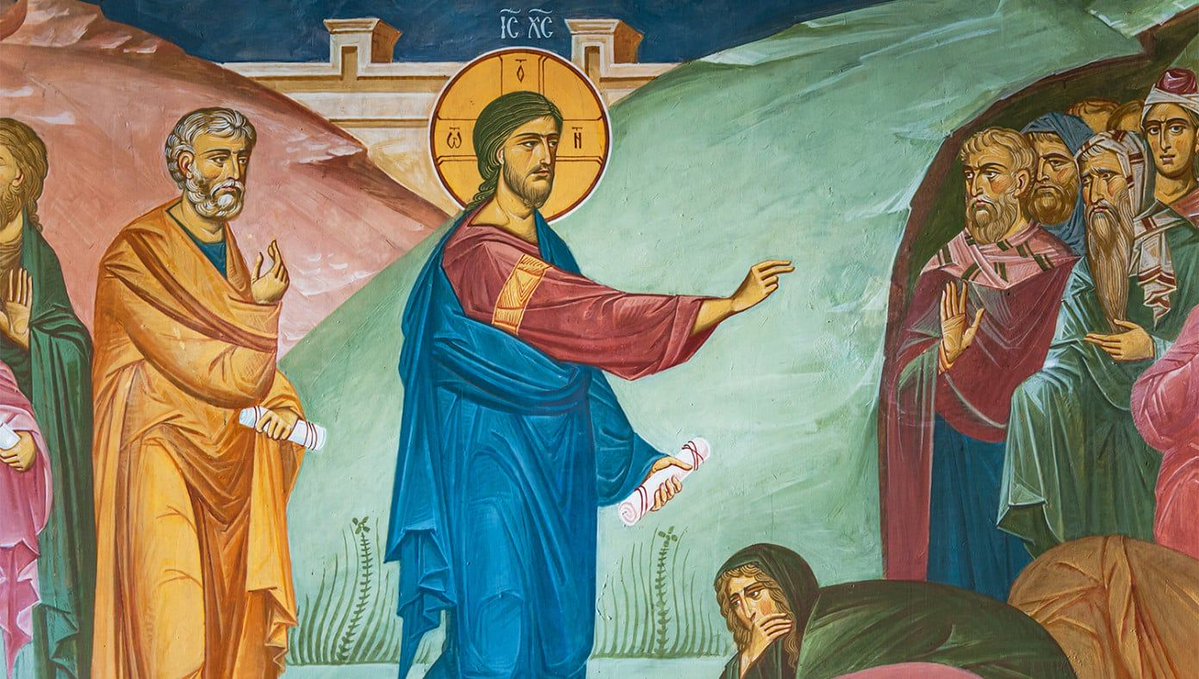
Jesus is asked around 180 questions in the Gospels.
He directly answers very few of them.
Instead, He asks over 300 of His own, and they are some of the most penetrating sentences ever put to a human being.
Here are ten of them.
Read them as though He's asking you. 🧵
To the Americans:
I've travelled all over the world. I've familiarized myself with many places, and met many people. And I'm a Canadian, although I’m privileged to reside once again in the States.
And here's something I've noticed, and it’s a key element of America's continuing greatness:
You bloody Americans value success, and you believe in its existence.
This is something that doesn't really happen anywhere else in the world. Even in other free democracies—the United Kingdom; Finland, Sweden, and Norway; Australia, New Zealand and Canada; Germany, France, and the Netherlands (great countries all)—a counterproductive cynicism too often reigns.
Success is equated with exploitation.
Ambition is looked upon with contempt.
This happens sometimes in the United States too—particularly among the miserable progressives, who confuse their resentment, ingratitude and unearned skepticism with wisdom.
But in your great country, by and large, striving is admired and success celebrated.
This means that more people strive and succeed in the US than anywhere else. And it's increasingly obvious. You remain stunningly more innovative and productive than any people anywhere else on the planet.
And so I say, as all should who are fortunate enough to live in the western world, let alone America:
Thank God for the United States.
Thank God for the wisdom of its founders.
Thank God for its faith in the free market and in the natural rights of man.
Happy birthday, you damn Yankees and Southerners.
Long may your admirable country dominate the world.
Long may your freedom and hope provide an example to those suffering everywhere at the hands of their malevolent states.
May your two and a half centuries of unparallelled success be just the beginning.
Your country is the light of the world, and the city on the hill.
Thank God for the USA.
Happy 250th.
Dr. Jordan B. Peterson
Jerry Seinfeld on why chasing your "passion" is embarrassing, and what to do instead:
Seinfeld pushes back against the popular advice to find your one great passion in life.
In his view, it's not just unnecessary, it's a little ridiculous.
"Let go of this idea that you have to find this one great thing that is my passion. My great passion with your shirt torn open and your heaving pec muscles. It's embarrassing."
Instead of chasing something dramatic, he offers a quieter alternative:
"Find fascination. Fascination is way better than passion. It's not so sweaty."
He explains why the heavy-breathing version of passion is actually counterproductive:
"Just be willing to do your work as hard as you can with the ability you have. We don't need the heavy breathing and the outstretched arm from your passion. It makes co-workers uncomfortable in the cubicle next to you."
Then Seinfeld offers what he calls his three real keys to life, no jokes:
"Number one, bust your ass. Number two, pay attention. Number three, fall in love."
@JerrySeinfeld elaborates on the first one:
"You obviously already know whatever you're doing, I don't care if it's your job, your hobby, a relationship, getting a reservation at M Sushi, make an effort. Just pure stupid… effort."
And here's the part worth sitting with:
"Effort always yields a positive value even if the outcome of the effort is absolute failure of the desired result. This is a rule of life. Just swing the bat and pray is not a bad approach to a lot of things."
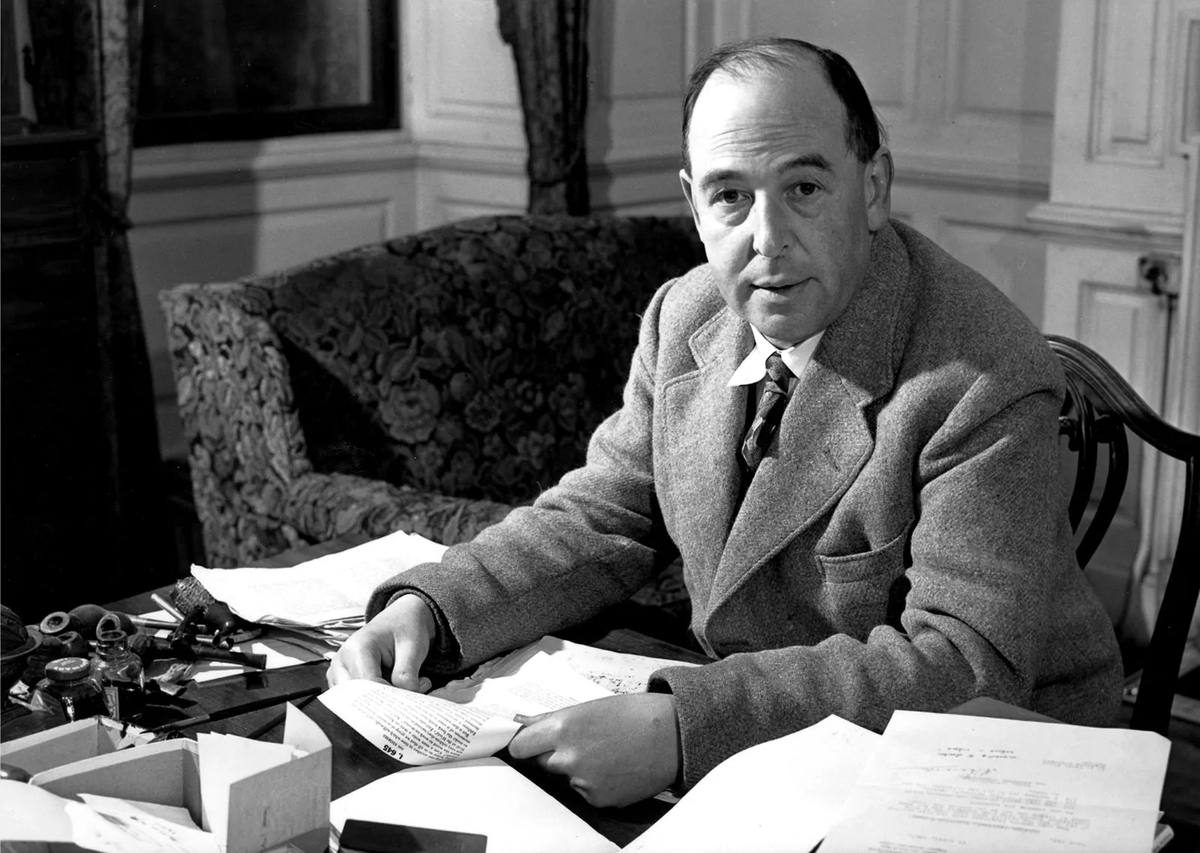
Imagine what we could have had if the world had consistently listened to the warnings of C.S. Lewis.
"Mercy, detached from Justice, grows unmerciful. That is the important paradox. As there are plants which will flourish only in mountain soil, so it appears that Mercy will flower only when it grows in the crannies of the rock of Justice: transplanted to the marshlands of mere Humanitarianism. it becomes a man-eating weed, all the more dangerous because it is still called by the same name as the mountain variety. But we ought long ago to have learned our lesson. We should be too old now to be deceived by those humane pretensions which have served to usher in every cruelty of the revolutionary period in which we live.
...
One last word. You may ask why I send this to an Australian periodical. The reason is simple and perhaps worth recording: I can get no hearing for it in England."
- C.S. Lewis, The Humanitarian Theory of Punishment
In the heart of every atom, the electron doesn’t glide; it vanishes.
Dr. Theresa Bullard on the quantum leap: that “gap” between orbitals isn’t empty. It’s the portal. The electron dissolves into the field of pure potential, then reappears elsewhere. No path. No travel. Just pure becoming.
We chase the particles, the light, the matter… but the cosmos is whispering through the silence between. The emptiness that holds everything.
This is the quiet engine of reality itself.
In meetings, there’s a familiar pattern. Someone asks, “What does everyone think?” and the first person to speak is usually the most confident. That initial comment sets the tone. Others—especially the more reserved—hesitate to challenge it. Over time, the discussion drifts toward a quiet consensus, not because everyone agrees, but because fewer people push back.
That’s how groupthink begins. And it’s costly. Good ideas go unspoken, while early, confident opinions carry disproportionate weight.
A simple fix is to separate idea generation from discussion. Ask people to submit thoughts anonymously or in writing beforehand. This captures a wider range of views and prevents the most assertive voice from dominating early.
This ties to a deeper tension: the “wisdom of crowds” versus the “madness of crowds.”
The wisdom of crowds shows that aggregating many independent judgments often produces accurate answers. Ask one person the distance between New York and Boston, and they might be wrong. Ask a hundred, and their average will be close.
The madness of crowds suggests the opposite. Individuals may be rational alone but less so in groups. Social pressure, conformity, and reputation concerns distort judgment. People stop trying to be right and start trying to look right.
Both are true. The key is independence.
You only get the wisdom of crowds effect when judgments are made independently—ideally anonymously. Once opinions are public, reputational concerns and fear of disagreement creep in, contaminating the signal.
The same group can be wise or mad, depending on how you ask.
If you want truth, you have to design for it.
Here’s Ben Stein in 1979 describing television as an engine of cultural demoralization. He argues that a small clique of producers and writers pushed a left-coded inversion of reality onto the public. They despised traditional power centers and hated figures like Buckley. They propagandized the nation into accepting a fake world where businessmen are villains, criminals are the good-guys, small towns are sinister, military officers are proto-fascists, and work barely exists.
"charisma is a combination of two traits: influence (the ability to guide others with confidence and competence) and affability (the ability to make other people feel comfortable and at ease)...charisma and professional success are strongly associated." https://t.co/yI83AH1LYF