This morning, CFABB publishes it’s first Defence report: ‘War Plan Britain’, outlining what the Government needs to spend to defend Britain. Read it here : https://t.co/76NIE8UmwA
The continued closure of the Strait of Hormuz will mean any new UK PM will face both the domestic debt crisis and severe economic headwinds from the global economic crisis: Literally and metaphorically no gas in the tank.
Lebanon is now the sticking point in any lasting peace deal in the Middle East. For our analysis on why Israel cannot accept long term linkage between a settlement in the Gulf and its ability to strike Hezbollah, see our CEO Jonathan Brown’s Spectator article from 10th April: https://t.co/yIhKivb2fU
Today I released a report - Energy Policy in the National Interest with @CfabbUK.
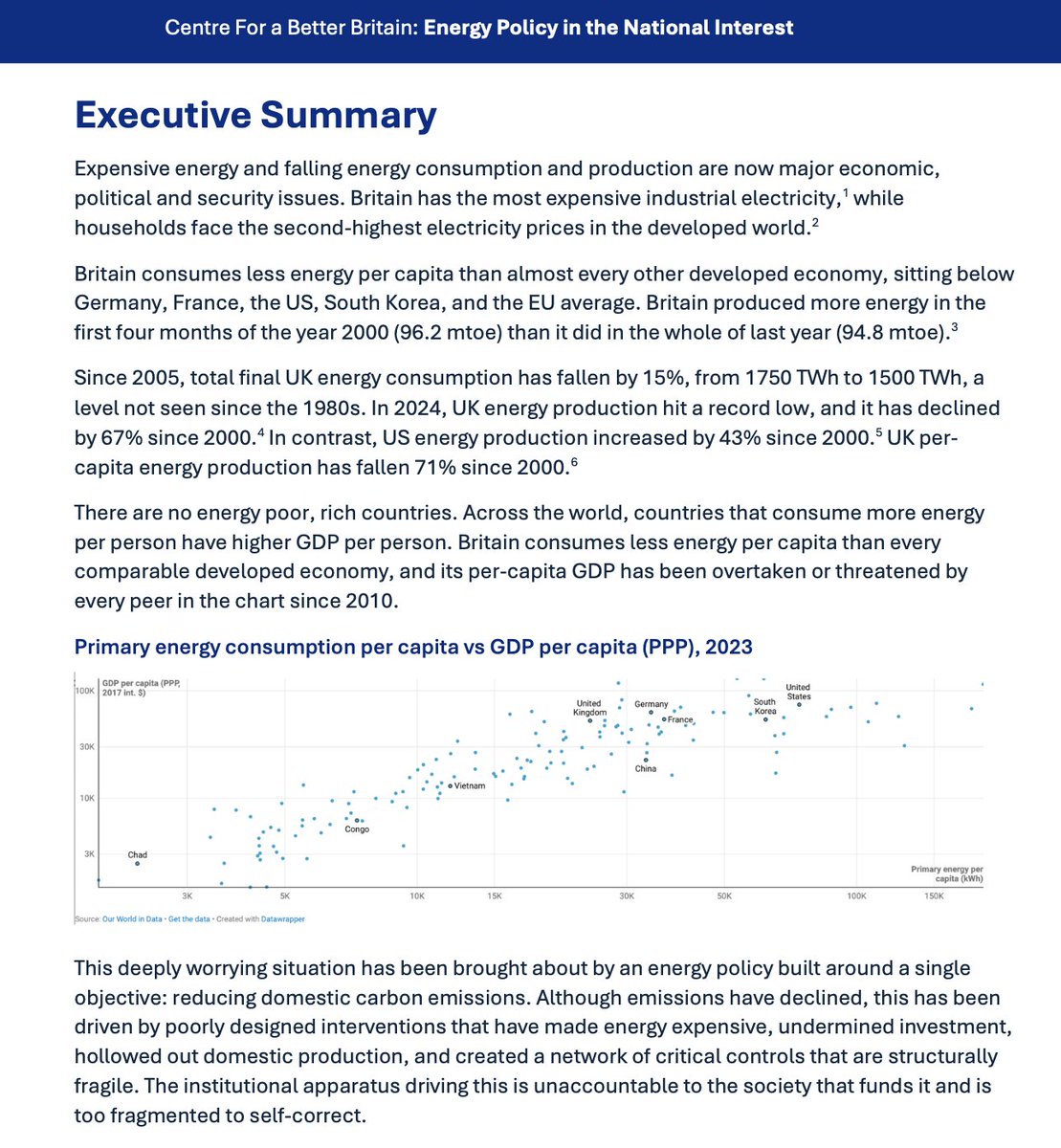
British energy policy is currently delivering the highest industrial electricity prices in the world. Although electricity accounts for only 18% of final energy consumption, it accounts for 43% of UK energy spending.
Since 2005, total final consumption of electricity in Britain has fallen by 22%, from 349 TWh to 272 TWh, with per capita usage down 32%.
Britain produced more energy in the first four months of the year 2000 (96.2 mtoe) than it did in the whole of last year (94.8 mtoe).
The report further details how energy policy is not currently working in the national interest. Britain needs competitively priced energy. The country needs to use more energy. And it needs to produce more electricity, oil, and gas.
This is an exceptionally interesting and perceptive new paper by @KitsonJ1 for @CfabbUK. Delighted to attend the launch breakfast this morning. This is a great development in Britain's energy policy debate and will help move us towards a rational energy policy.
Is it feasible to be self-sufficient in natural gas if we increase North Sea production and look at fracking. Consensus of energy industry participants is yes. #Energybreakfast
Key energy issues identified for an incoming government:
Energy Production (create more)
Energy Use (allow more)
Energy Cost (lower cost)
#energybreakfast#cfabb
Energy consumption is linked to GDP per Capita. Yet we are reducing energy production and consumption. This needs to be reversed;
#energypolicyinthenationalinterest
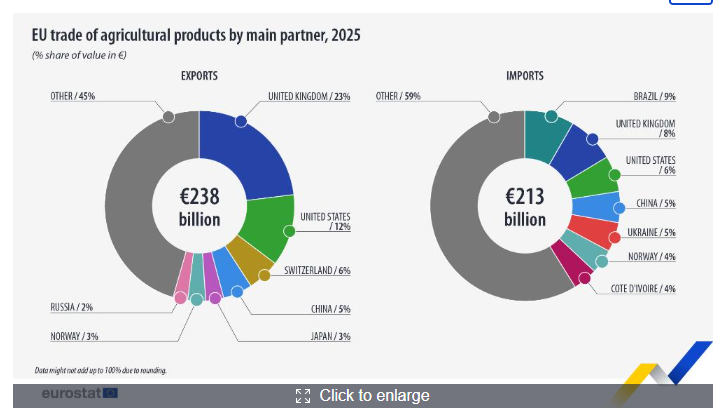
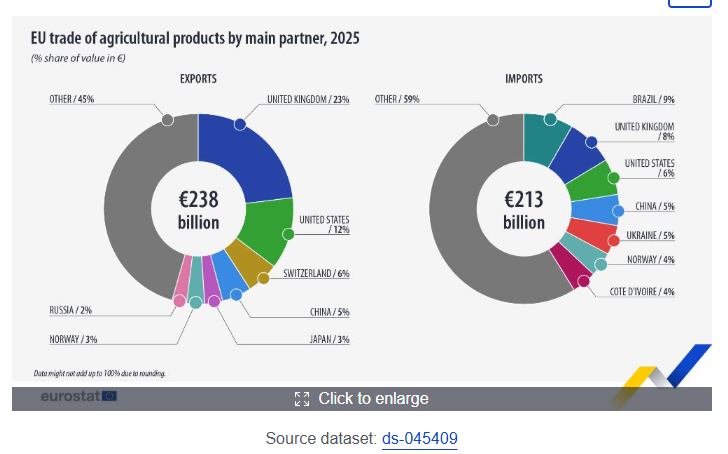
The idea that Food and Drink exports are a UK priority in any EU trade discussion that merit the UK accepting EU rules over the entire UK domestic economy could only be made by someone who hasn't seen the UK EU agricultural trade statistics. We are the EU's best export market.
https://t.co/aRdEtDI8Hf
'The European Partnership Bill' in the #KingsSpeech raises numerous questions. We exported c.£15bn in agricultural products to the EU in 2025 and imported c.£47 - yet the Bill claims it will increase UK exports by £5bn. Given limited production capacity and a structural import requirement, increasing agricultural exports is a strange focus. But there is more 1/3 🧵
3/3 The EU in bringing in a Carbon Border (CBAM) on carbon intensive products. This will make imports more expensive and act as a carbon 'tariff', the UK is proposing its own a slightly different one. If the UK decides to follow EU rules our trade will be decided by the EU, along with our Food and Drink rules. Add in an EU demand for us to pay an unknown amount for the privilege and its clear there are serious sovereignty and financial problems with this Bill. Yet it has been announced before the EU deal has been finalised.