We aim to drive science, innovation, and collaboration to transform food, land, and water systems for a climate-resilient, net-zero, and equitable future.
Climate shocks don’t stay in one lane. They can quickly become food, water, livelihood and economic shocks.
At #ClimateWeekNYC, @CGIAR is bringing a systems lens to climate action, connecting research, data and AI to better decisions and practical solutions.
Adaptation programmes can improve incomes, food security and resilience. How might they also affect peace and conflict?
In Jirapa, Ghana, @CGIAR researchers used the CSST to assess a Climate-Smart Village against local conflict risks.
⏩ Learn more: https://t.co/1meycjALc5
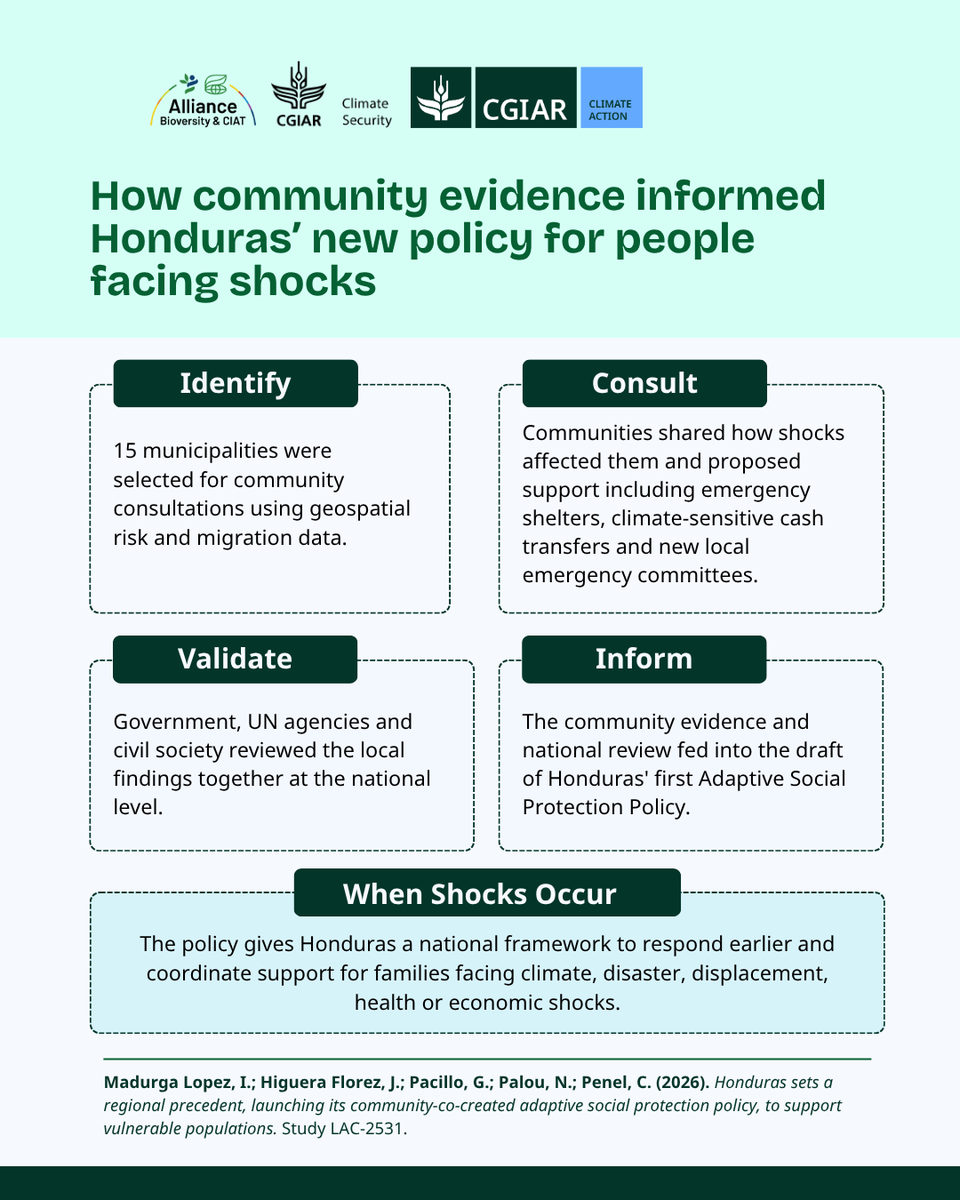
What changes when communities help shape policy before it is finalised?
In Honduras, local consultations across 15 high-vulnerability municipalities helped inform the country’s first Adaptive Social Protection Policy.
Read the report: https://t.co/UPLD5x0lsC
@CGIAR research has helped inform 3 provisions of Colombia’s new Ley 2585 de 2026, strengthening livestock traceability & action on deforestation.
The law links traceability, environmental standards, forest monitoring & public financing.
⏩ Learn more: https://t.co/eLHuoQk4zP
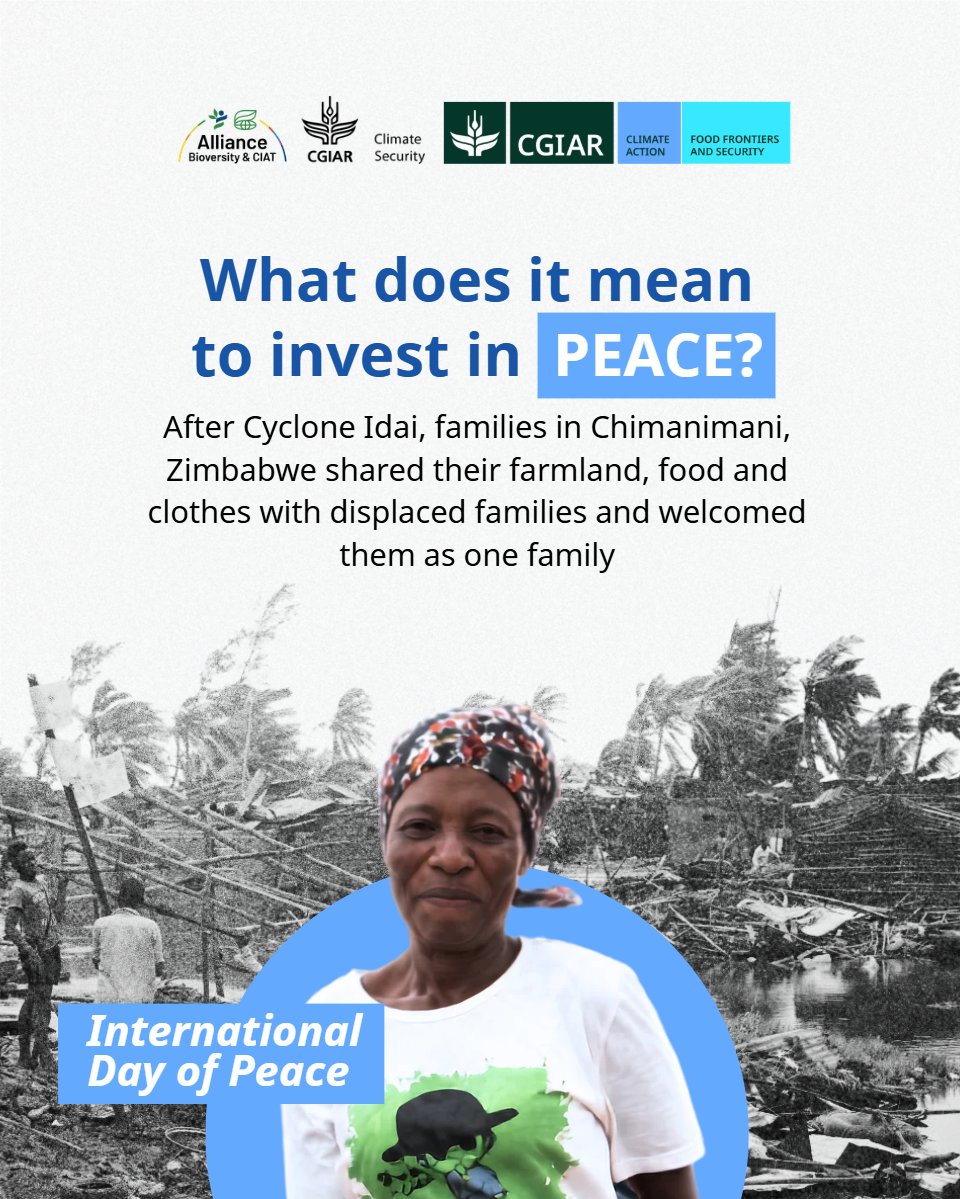
Investing in peace means investing in what held Chimanimani together after Cyclone Idai.
Leaders allocating resources, host families sharing what they had and displaced families sharing food from their first harvest in return.
@CGIAR#ClimateSecurity#Investinpeace
Restoring irrigation could accelerate Syria’s agricultural recovery but deepen its water crisis.
With aquifers already under pressure, rebuilding irrigation and recovery planning must weigh impacts across water, food and livelihoods.
Learn more: https://t.co/zeaZWlY8rA @CGIAR
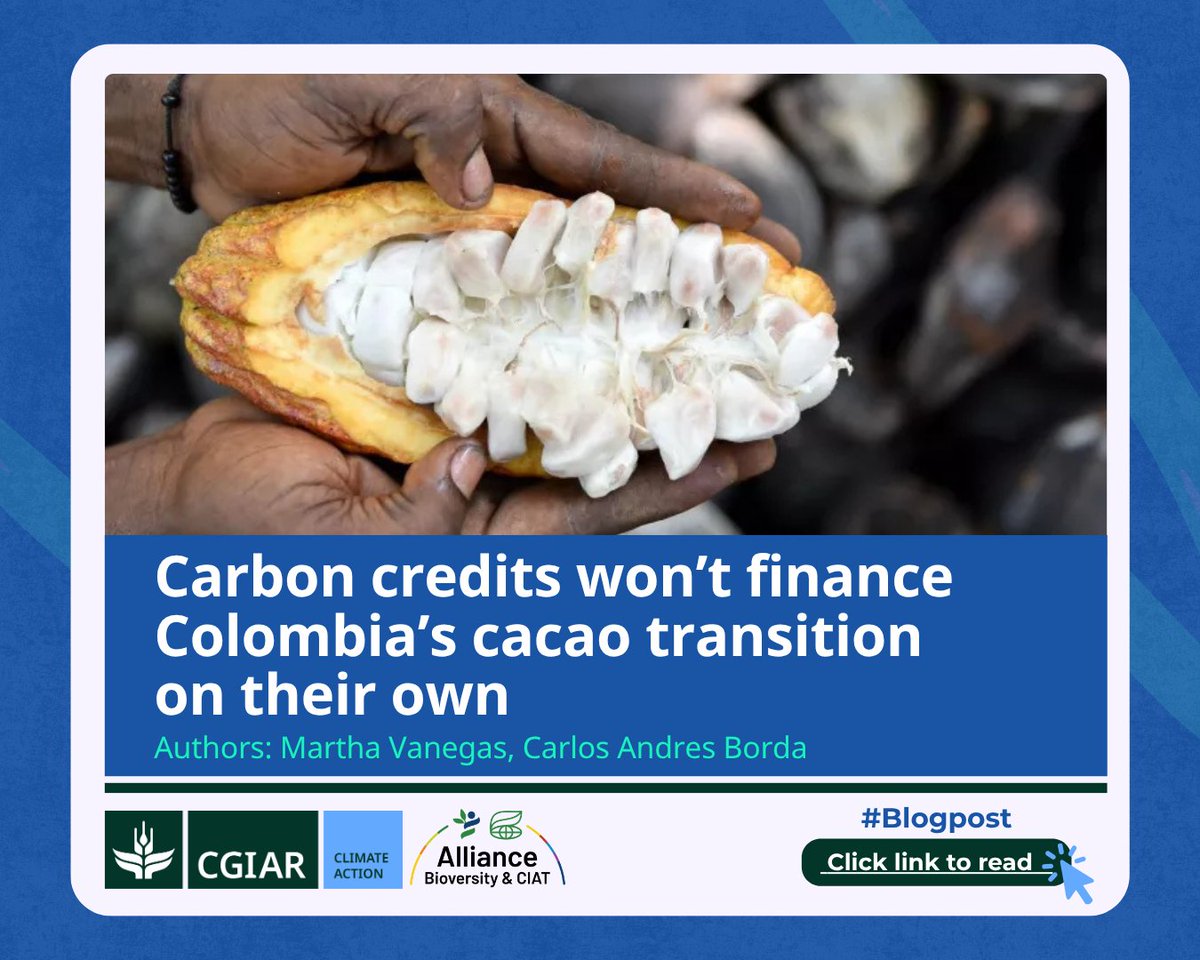
Carbon credits alone are unlikely to make cacao agroforestry affordable for farmers in Colombia.
@CGIAR research in Caquetá and César found that farmers still face several years of costs and reduced income before the main returns arrive.
⏩ Learn more: https://t.co/ZUWpp4gFXd
Climate adaptation is not politically neutral.
The @CGIAR Conflict Sensitivity Wheel helps practitioners examine power, participation, inequality & coordination to see where adaptation could deepen tensions and where it could support peace.
Read: https://t.co/2idGpnrTUI
When severe climate shocks hit several crops at once, how can Zambia safeguard nutrition?
New study by @UniversityLeeds & @CGIAR in @NatureFoodJnl finds that crop diversification can strengthen nutrition security more than simply increasing production
🔗 https://t.co/4y1bKbvyjU
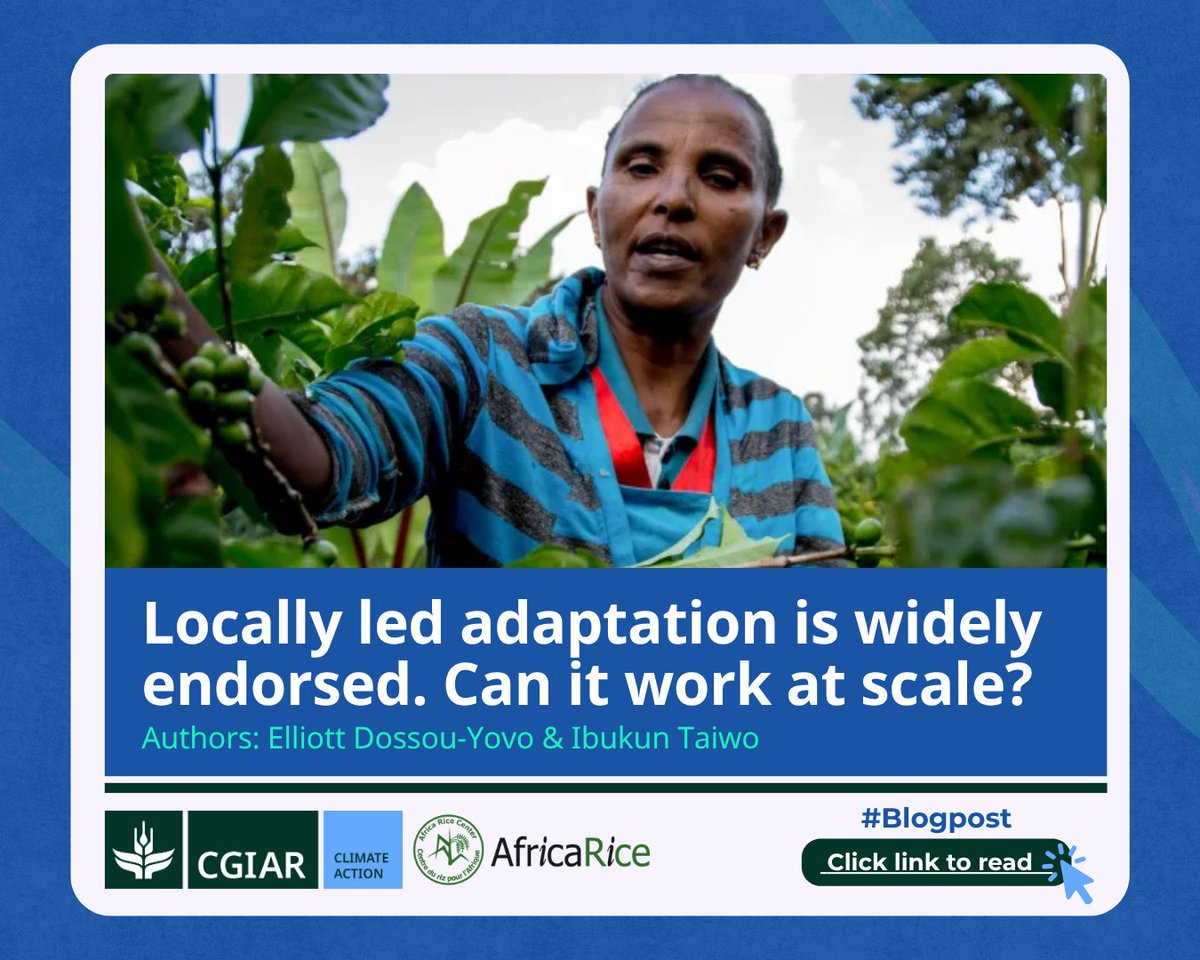
Endorsing locally led adaptation is not enough. Policymakers need evidence on whether it can remain inclusive, sustainable and locally controlled as it scales.
@CGIAR work in Ethiopia, Zambia & Mali is helping answer that question.
⏩ Learn more: https://t.co/UuUrorkwNU
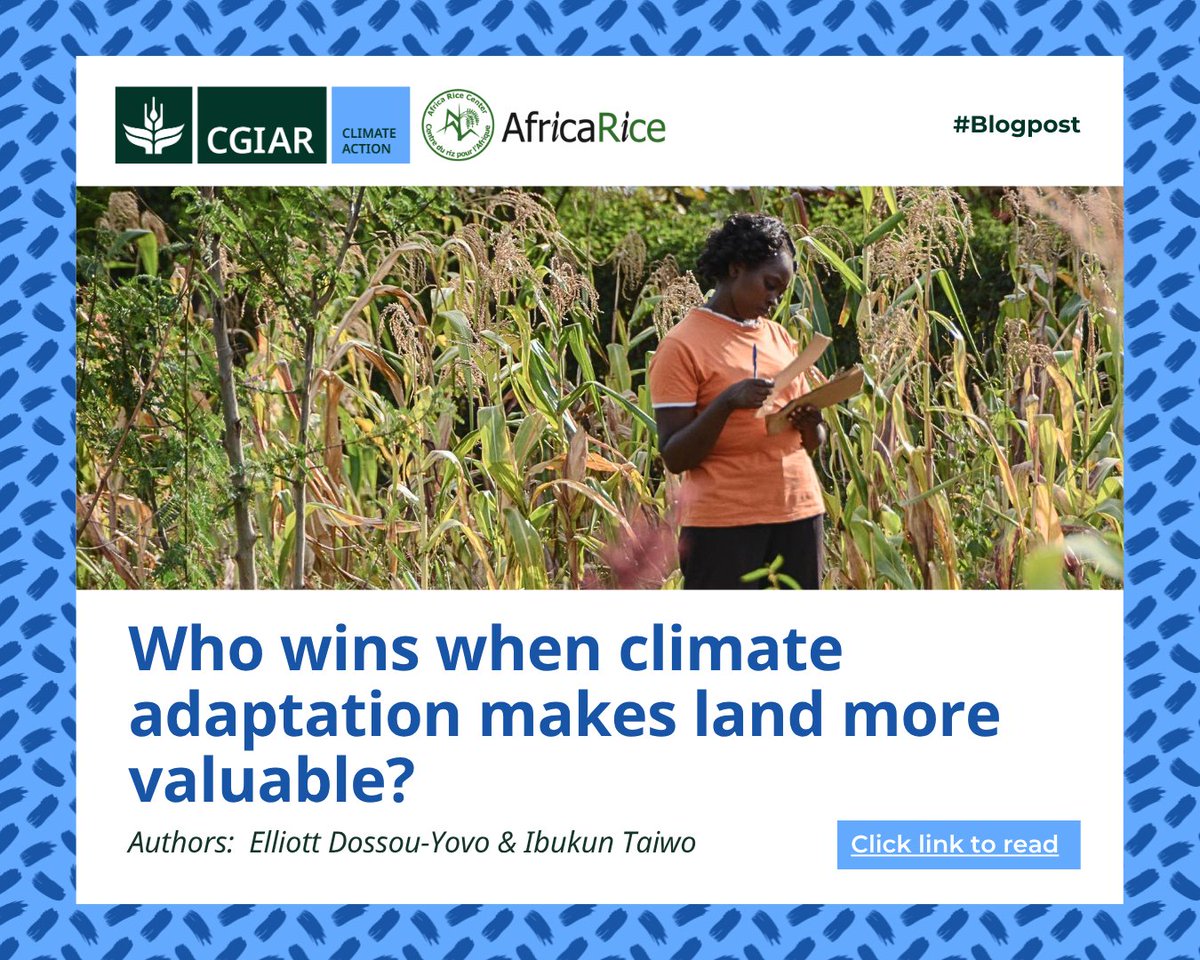
Climate adaptation & reduce risk and still deepen inequality.
In Sikasso, Mali, better water management made lowlands more productive. But as land values rose, women and migrants lost access while wealthier households gained.
Read ⏩: https://t.co/pdRz2m1W6f
@CGIAR@AfricaRice
Early career researcher in South Africa?
Apply for the 2026 Climate, Peace and Security Spring School: three days of practical training and regional exchange at the University of Fort Hare. Hosted by @ufh1916 and @CGIAR
⏳ Apply by 14 August
⏩ https://t.co/oYJfRmy0tc
Research by @CGIAR Climate Security across Kenya, Guatemala and the Philippines found that outcomes depend on who has a voice, which institutions people trust and how fairly resources are shared.
Adaptation must account for these dynamics.
Learn more⏩: https://t.co/mDOlYaXPDE
Fish losses can happen fast when pond temperatures rise or oxygen drops.
In Zambia, @WorldFishCenter & @CGIAR are testing IoT sensors that combine real-time pond data with weather forecasts, helping farmers act earlier on aeration & water management.
⏩ https://t.co/Uhbz4SxUHa
Post-flood reconstruction is meant to protect families from the next disaster.
In Sindh, Pakistan, @CGIAR researchers found durable housing also changed how 489 families spend their time and money: from repairs to investment.
⏩ Read more: https://t.co/5Szf5HF193
The new ENSO Outlook combines climate forecasts, exposure data, risk indicators and AI-supported guidance to help decision-makers prepare for droughts, floods and water stress.
Led by @IWMI_ under the @CGIAR@CGIARClimate & @CgiarFarming.
⏩ Learn more: https://t.co/80wUg3Q37Y
The newly approved LARACI project will scale climate information and agroforestry for rice, cassava, and yam production in Côte d’Ivoire.
A milestone made possible by our @CGIAR centers: @AfricaRice, @IITA_CGIAR, and @BiovIntCIAT_eng.
⏩ Read: https://t.co/P0VPlROYnT
In Bagerhat, farmers have observed climate change reshaping aquaculture for years.
@WorldFishCenter and @CGIAR brought farmers, researchers and institutions together to co-design practical responses to heat, floods and salinity.
⏩ Read more: https://t.co/ju1LdVzEiY
Strong adaptation needs more than technical results.
The @CGIAR#ClimateSecurity CSST checks governance, resource access and conflict dynamics before gaps become problems.
👉 Watch for insights
⏩ Read: https://t.co/1meycjALc5
A 2026 El Niño for South Asia’s food systems could mean tighter water supplies, lower crop yields & rising food prices.
Register for this regional webinar by @CGIARClimate & @CgiarFarming to explore how early warning can lead to early action.
⏩ https://t.co/snvaA5Frz5 | @CGIAR