We built our offices to feel like the house we grew up in.
Bedrooms right next to each other, a bathroom in the middle, the whole layout. When we designed this building from the ground up, we didn’t copy some corporate floor plan. We copied home, because that’s the feeling we wanted every single day. Christy’s been with us 26 years. My dad’s office gets used by my kids more than him. That’s not an accident. That’s the point.
Raising your price without raising your value is just daring your customers to leave. Most companies do exactly that.
Costs are going up, so prices have to go up, that part is unavoidable. But the number is the easy part. The real work is making sure the experience is worth more than it was before you touched the price. A sharper call center script. Tighter dispatch so you can take care of more people. A smoother process in the home that builds trust. Better installs so the customer never second-guesses the money they spent. Earn the higher price first, and the increase feels fair instead of greedy.
I walked through my $100M company and couldn’t tell you what half of it did.
Crazy right? That was the moment I knew something was really wrong.
We had grown too fast. And when you grow fast, you can throw people at every problem. It works, right up until the growth curve evolves.
Ours did. We’d staffed for “up and to the right,” and COVID bent the line.
So I had to ask the hard questions:
-How many people does this actual trajectory need?
-Where is our process so broken that we’ve been covering it with headcount?
We didn’t have a people problem. We had a process problem we’d hidden with people.
Loving your team doesn’t exempt you from facing what the business actually needs. It’s one of the hardest things I’ve ever done.
If you scaled quickly, audit it honestly. Is your org chart built for the growth you have, or the growth you assumed?
Owners will spend thousands to win a new customer and then let the ones they already have walk out the door for free.
That’s the most expensive habit in home services. You poured money and effort into earning that person’s trust, did great work, and then went silent. No follow-up, no check-in, nothing. So when something breaks again, they Google a competitor because you gave them no reason to remember you. The first job earns the relationship. The follow-up is what turns it into ten years of repeat work and referrals. Stop treating every call like a one-time transaction. The goldmine is the customer base you already built.
You can grow a company and still be trapped inside it. That’s not success, that’s a cage you built yourself.
The owner working 70-hour weeks who “can’t step back” almost always has the same problem: every decision has to go through them. They’ll tell you they delegate, but handing off tasks without the authority to go with them just makes you the middleman, and the work boomerangs right back. The fix is handing off the decision, guardrails and all, then letting people own it even when they do it their way. The goal was never to be needed for everything. It’s to build a team that doesn’t need you for anything.
Everyone thinks adding a second trade is how you grow. It’s actually one of the fastest ways to multiply your problems.
On paper it makes sense. Same customer, more services, more revenue. In reality, HVAC, plumbing, and electrical are three completely different businesses, and if you’re already fighting headaches in one trade, adding another doesn’t double them. It triples them. We did it, and honestly we did it at the wrong time. I’d do it totally differently today. My advice: get so good at your one trade that you become the industry standard. Earn the right to expand before you try to.
Callbacks aren’t just a cost.
They’re the most wasted teaching tool in your business.
Most companies just send the nearest tech, fix it, and move on. But the person who made the mistake never finds out.
So nobody learns, and it happens again.
We track every callback and KPI our techs on it.
A callback you learn from is cheap. A callback you repeat quietly bleeds you dry.
“Your prices are too high” usually means “I don’t understand what goes into that price.” So let me explain it.
A huge chunk of contractors just throw out a number to win the job. We don’t. Our pricing is a formula that covers the overhead it takes to run a real operation, pay our field pros fairly, give them benefits, keep their trucks fueled and insured, and make sure they’re trained to take care of your home right. That’s not expensive. That’s honest. The cheap guy isn’t cheaper. He’s just leaving something out, and you find out what later.
No software and no AI tool has ever grown a business. Not one. And I say that as someone who loves good tech.
Here’s the trap. Every shiny new tool promises to transform your company, so owners keep stacking them. I walk into small businesses running 14 different softwares, and nobody can tell me if a single one is actually working. They’re not more efficient, they just have more subscriptions. A tool only matters if you have the staff and the bandwidth to actually use it. You need some software. You do not need 14. Efficiency comes from how you run the business, not how many logins you have.
Realistic goals are how good companies stay small.
A goal you already know how to hit is just your current
reality with a little padding on top. It asks nothing of you. The goal that actually moves you is the one that makes you a little uncomfortable, because it forces you to grow into someone capable of reaching it. I don’t chase numbers anymore. I chase who I have to become to earn them. Set the goal that feels out of reach, and let it pull you forward.
Our dispatch team moves more money in a day than our salespeople.
Most owners treat dispatch like logistics. Scheduling. Admin.
Across 12+ locations, it’s one of the most important revenue functions we have.
Every call, dispatch is balancing three variables:
-Skill: can this tech do this specific job?
-Fit: can they have the right conversation with this homeowner?
-Geography: are they in the right place at the right time?
Get it right and the best possible tech walks through that door. Get it wrong and you’ve mis-deployed your most expensive asset.
And those decisions compound across every single ticket in the system.
Give dispatch the data. Give them the authority. Coach them like the high-leverage team they are.
If you run multiple locations, you already know the chaos they absorb.
The three things that make me want to hire someone immediately have nothing to do with their resume.
One, humility, because we’re a big team and ego breaks things. Two, coachability, because the willingness to take feedback is what separates people who grow from people who stall. And three, the big one, do they genuinely get excited about taking care of people? In home services, we’re guests in someone’s home trying to earn their trust. The skill we can train. The heart they bring with them. Hire for the heart.
The most expensive lessons I’ve learned as an owner didn’t come from a course. They came from writing checks I never should have written.
I’ve overpaid people by six figures over the years, mostly because I set up things I didn’t understand yet. That money’s only lost if you don’t get smarter from it. I’ve stopped calling those mistakes. They’re missteps, and a misstep you learn from and correct is just part of growing. We’ll keep making them. The difference is we analyze every one so the next decision is better than the last.
Why do some owners get stuck at a million while others blow past ten? It almost always comes down to one thing. Trust.
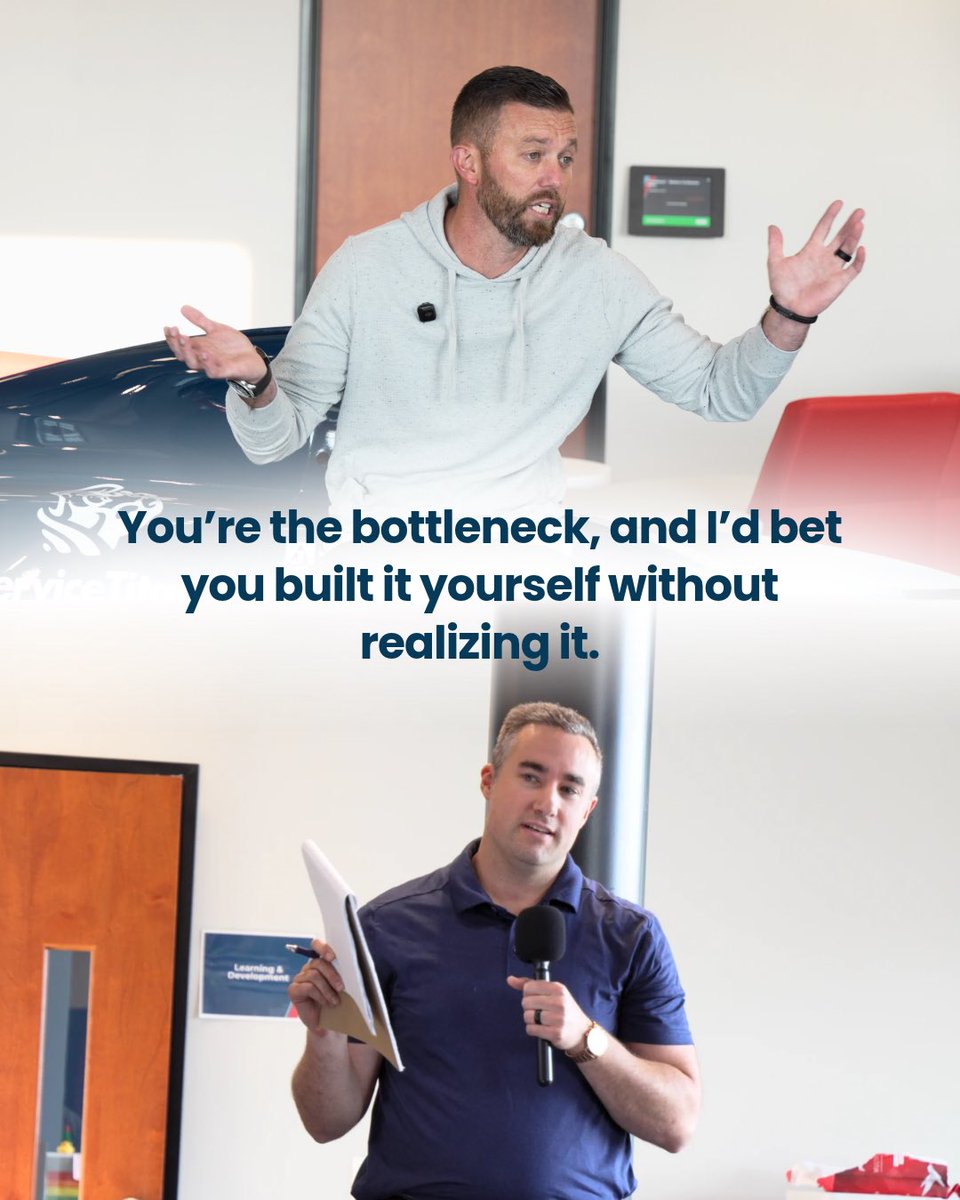
The owner stuck at a million is usually the most talented person in the building, and that’s the trap. When you’re better than everyone at everything, you hold onto everything, and you become the bottleneck. The owner who breaks through learned to empower people instead of proving they can do it better. Growth isn’t about being the best anymore. It’s about trusting the people who will get you there.
For years I thought being needed for every decision made me a great leader. It actually made me the ceiling.
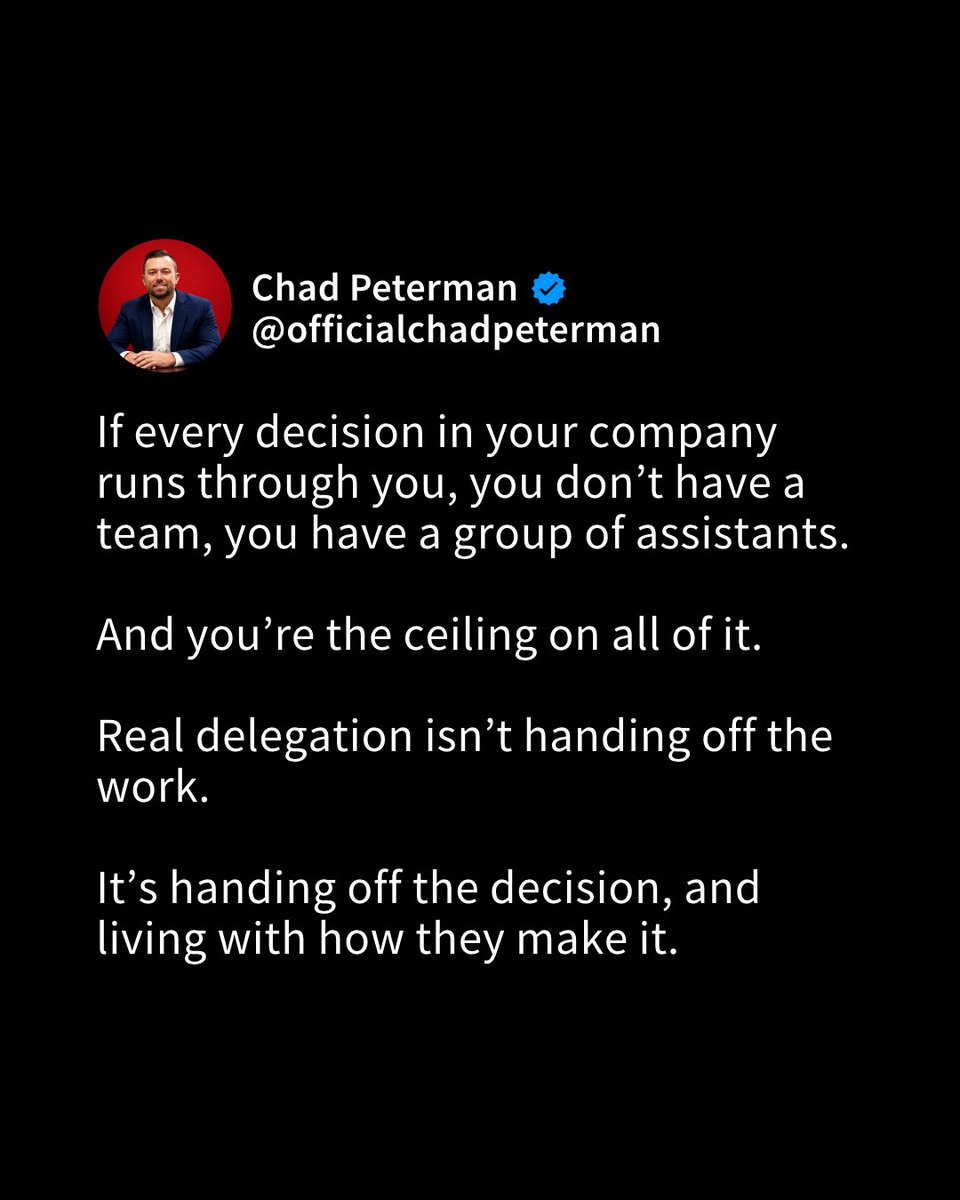
If everything runs through you, your company can only move as fast as you can answer questions, and you’ve quietly capped the whole thing at your own capacity. The fix is uncomfortable. Real delegation isn’t handing someone the work and keeping the call. It’s handing them the decision and living with the fact that they’ll make it differently than you would. That’s not losing control. That’s the only way the business ever outgrows you.
Doubling your revenue and taking home nothing isn’t a growth story. It’s a warning.
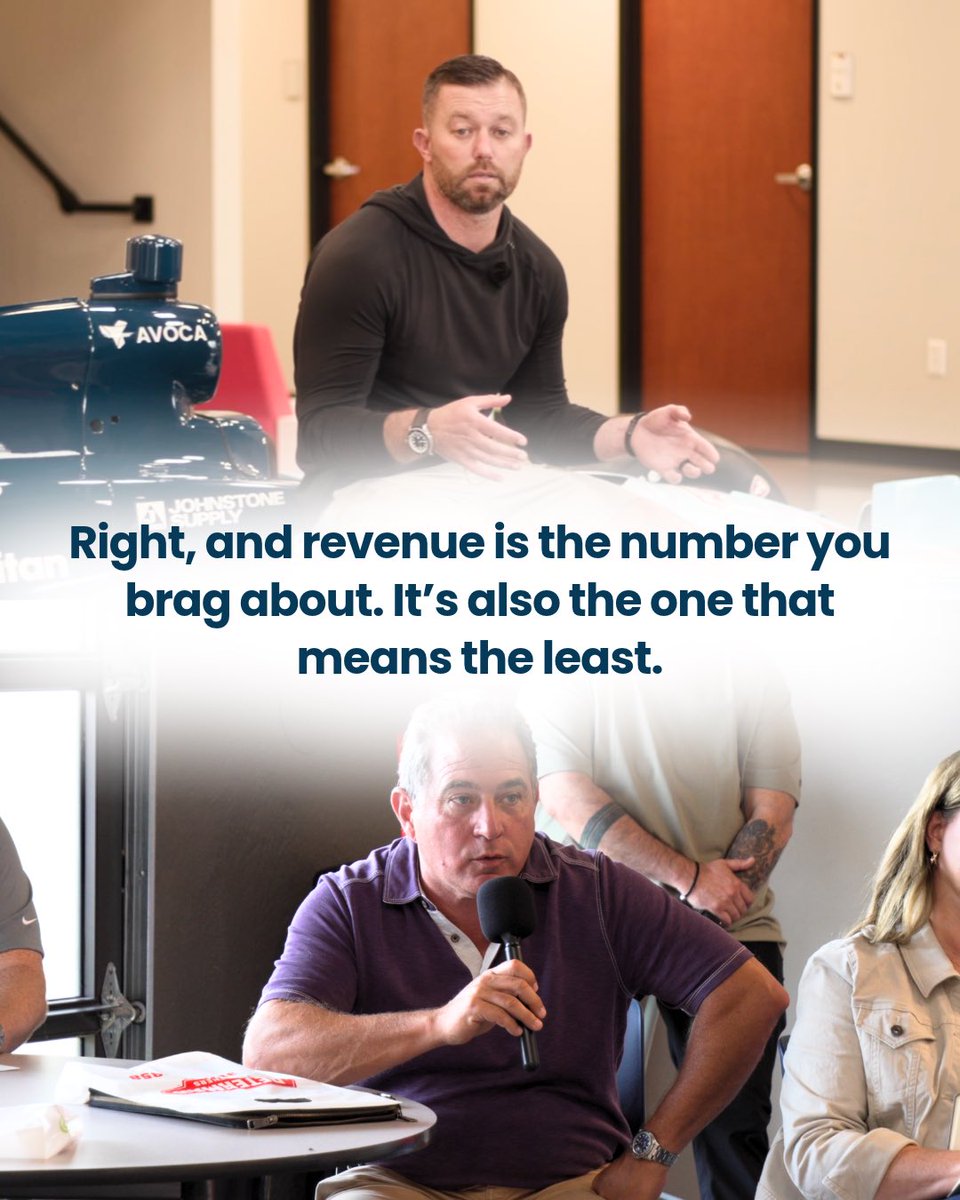
I talk to owners all the time who are the biggest they’ve ever been and somehow broke. Here’s what’s actually happening: growth hid a leak. When the top line climbs, everything feels healthy, so nobody checks the percentages underneath. Then you look up and your labor’s past 23% and your margin quietly bled out. Revenue is the number you brag about at the conference. It’s also the one that means the least. Fix the 50/35/15 first, then grow. A bigger broken business is just a more expensive version of the same problem.
Culture isn’t built in a mission statement. It’s built in the moments you choose to say something or stay quiet.
Every time you let something slide to avoid the awkward conversation, you move the standard down, and your whole team feels it. People aren’t watching what you preach in the morning meeting. They’re watching what you actually allow. The behavior you walk past becomes the behavior you accept, and the behavior you accept becomes your company. Your tolerance is your standard, whether you meant it to be or not.
“I can’t find good people” is the most common excuse in business, and it’s almost always pointing in the wrong direction.
The employees aren’t the problem. The leadership is. You attract the talent you deserve, and you keep the talent you develop, and both of those are your job, not theirs. When someone you hired stops performing, the easy move is to blame them. The hard move, the one that actually grows a company, is to ask what you could have done better. Is it them or is it us? Be honest. It’s usually us.
The first time I paid myself a real salary, I felt guilty.
A lot of owners skip the salary, take what’s left, and feel noble about it.
But if your company only works because you underpay yourself, it doesn’t work.
Here’s the test: if you sold tomorrow, the buyer would have to hire someone to run it at market rate. That salary is a real cost of the business, whether you take it or not.
So put it on the P&L.
Same for everyone running the company. Spouse, family, partners. Market rate, not the discount they’re working for today.
Yes, there are tax considerations but don't let them distort the picture.
Once everyone is paid what the role is actually worth, the profit that’s left is your real profit.
That’s the only version of the number worth trusting.