Dhurandhar & The Paradox That Is Punjab
(On a land of extremes—of saints and soldiers, poets and addicts & heroes and deserters.)
Birha birha aakhiye, birha tu sultan
Jis tan birha na upje, so tan jaan masaan.
Let us speak of separation—separation, you are king.
A body that does not know separation: know it as a graveyard.
— Baba Farid, Guru Granth Sahib, Shabad 1378
Punjab was never meant to be a place of quiet balance. Its poets sensed this long before its politics gave it form. They wrote of birha (separation) as a condition rather than an emotion, a permanent state of being rather than a passing feeling. It’s a land where longing is not accidental but inherited, where memory endures by reshaping itself, returning in new forms across generations. Punjab, in that sense, is not merely geography but a temperament. And like all temperaments forged in extremes, it produces both devotion and destruction—often from the same soil, often in the same generation, and occasionally in the same man. It is here that Dhurandhar proves decisive. The film does not merely depict Punjab from outside; it decodes it from within, offering a narrative lens through which its paradoxes become fully visible.
THE PATTERNS: Four Faces of the Paradox
The Soldier and the Traitor
Consider two young men from Pathankot who grew up under the same sky, in the same pind, shaped by the same circumstances. One comes from a family of Indian Army soldiers and leaves home to join the military. In his absence, injustice descends on his family—a land dispute, a corrupt politician, and helpless suffering at the hands of “the system.” He returns, avenges his family through means deemed criminal, and is sentenced to death. He is then saved from the gallows by intelligence officials who saw in his fury—honsla, eendhan, and badla—usable instruments. He is given a second life under a false name, deployed into Pakistan’s underworld, and spends years as a ghost, serving India without India knowing his name. He returns home at the end, not to a celebration or a reunion but to stand outside his childhood gate and watch his mother close it without seeing him. He turns and walks away, belonging nowhere. [1]
The other young man, his childhood friend and brother-in-law, takes a different path. The same soil, the same circumstances, and the same wounds. He drifts into drugs, into smuggling, into the company of Pakistan-based terrorist networks. He resurfaces years later not in a homecoming but in an enemy’s lair: morally dissolved, a pawn to forces that would destroy the very Punjab he was born in. He dies violently. [2]
These are the fictional characters of Jaskirat Singh Rangi and Gurbaaz “Pinda” Singh from Aditya Dhar’s Dhurandhar duology (2025-26), but their emotional and sociological logic is quite real. While Jaskirat is a composite character, Pinda is based on Harwinder Singh Sandhu, alias Rinda, a real Punjabi gangster linked to Pakistan-based terror networks, who was reported dead from a drug overdose in 2022. In this context, Dhurandhar presents itself as the most concentrated cinematic statement about Punjab’s paradox in recent Indian popular culture. Two men from the same Punjab. One becomes an asset of the republic; the other becomes its enemy. Neither finds his way home. And the film’s final scene, Arijit Singh’s closing song Phir Se playing softly as Jaskirat stands at a gate that closes on him, watching a family that has moved on without him, is not a triumphant ending. It is an elegy. The hero has given everything, and there is nothing left to return to. [3] In that image, Punjab speaks.
Loyalty and Rebellion in the Same Body
The deepest expression of this paradox, however, is not cinematic. It is historical, and it has a name: Major General Shabeg Singh. He was a decorated soldier of the Indian Army (Param Vishisht Seva Medal & Ati Vishisht Seva Medal) and had served in the wars of 1947, 1965 & 1962; led counter-insurgency operations in Nagaland; and trained the Mukti Bahini during the Bangladesh Liberation War. [4] The Indian state decorated him for it. However, in 1976, Shabeg Singh was court-martialed on charges of financial irregularities, stripped of his rank on the eve of his retirement, and denied the pension and military honors. [5]
When Jarnail Singh Bhindranwale and his followers fortified themselves inside the Golden Temple complex in 1984, it was Major General Shabeg Singh who organized the defense. The irony is almost too stark to absorb: the man who trained guerrilla fighters of the Mukti Bahini against Pakistan in 1971 applied precisely the same skills, the same tactical logic, and the same understanding of asymmetric resistance against the Indian Army in 1984. The fortifications he designed inside the Akal Takht were so well constructed that they surprised the military commanders who eventually had to breach them. He died during the operation, inside the complex he had spent months defending, his body found among the ruins of the shrine he had helped militarize. [6]
That a man with such a career would eventually take up arms against the Indian state is not an anomaly to be explained away but an expression of the same fracture. It is the story of a Punjab that produces extraordinary loyalty and then watches that loyalty curdle into something it cannot control.
Click the link in the next tweet to read the full review 👇
बस इतनी ही थी कहानी चुनावी मेरी..
एक कुर्सी थी जो बगल मे पड़ी थी, एक कुछ विधायक थे जो अभी भी इस उम्मीद मे थे कि शायद ये पार्टी जीत जाए..
एक गृहमंत्री था, जो पागल था.. एक और भाजपा समर्थकों की भीड़ थी जिसने अपना सब कुछ हार दिया था मुझपे..
मेरी ED थी, ज्ञानेश था, सीबीआई की ताकत थी ,
और ये एक हमारा शरीर था जो लड़ने की इच्छा छोड चुका था.
ये मेरा सीना जिसमे अभी भी चुनावी आग बाकी थी..
हम लड़ सकते थे, पर किसके लिये? हम विधायक खरीद सकते थे, पर किसके लिये?
मेरा प्यार कुर्सी, चेन्नई कि गलियां, डबल इंजन की सरकार, सब मुझसे छूट रहा था.
मेरे सीने कि ये चुनावी आग या तो मुझे जितवा सकती थी या मुझसे राष्ट्रपति शासन लगवा सकती थी.
पर साला अब लड़े कौन? कौन फिरसे मेहनत करे उम्मीदवार उतारने को.. उम्मीदवार हरवाने को..
अबे कोई तो आवाज दे के रोक लो!
ये जो कुर्सी मुर्दा सी आखे लिये पड़ी है बगल मे,
आज भी हां बोल दे तो मोदी जी की कसम वापस आ जाएं।
पर नही, अब साला मूड नही.
तमिलनाडु से आंखे मुंद लेने में ही सुख है, विपक्ष में बैठने जाने में ही भलाई है.
पर उठेंगे किसी दिन.. उसी कावेरी किनारे कमल खिलाने को...उन्हीं डीएमके विधायकों को तोड़ लाने को, किसी कुर्सी के इश्क मे फिर से पड जाने को..!
संविधान (131वां संशोधन) विधेयक 2026 पर मतदान:
पक्ष मेंः 298
विरोध मेंः 230
संविधान के अनुच्छेद 368 के उपबन्धों के अनुसार सभा के कुल सदस्य संख्या के बहुमत द्वारा और सभा में उपस्थित और मत देने वाले सदस्यों के कम से कम दो तिहाई बहुमत द्वारा पारित नहीं हुआ.
#NariShakti #LokSabha
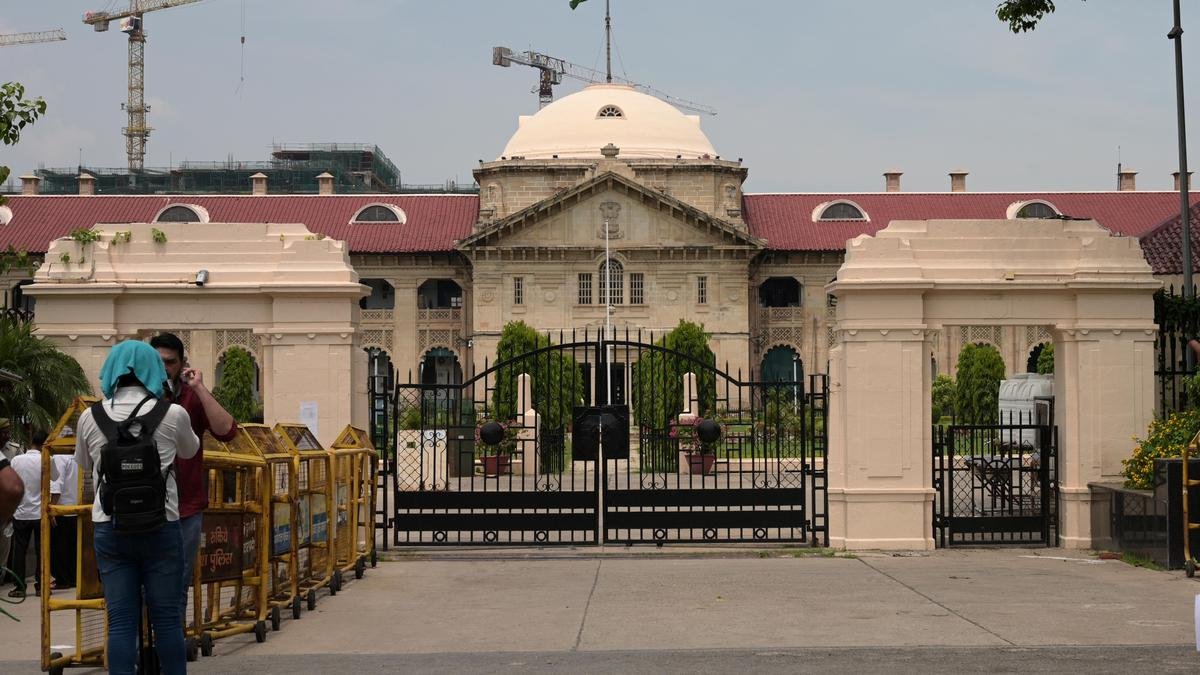
Two judgments with contrasting approaches delivered by different Benches of the Allahabad High Court in a span of one month offer some food for thought. In both cases, the court was navigating an uneasy terrain where the fundamental right to life and liberty enshrined in Article 21 of the Indian Constitution meets marital obligation and societal norms, reports @khabrimishra
https://t.co/4qGQvDvkib
India reaffirms committement to enriching biodiversity 🌳🐘🐊
India submits 1st National Report on Implementation of Nagoya Protocol on access and benefit sharing to Convention on Biological Diversity.
The report covers the period from 1 November 2017 to 31 December 2025 and highlights India’s updated National Biodiversity Strategy and Action Plan.
🔗https://t.co/jhU8Nj8C5X
A milestone in Indian taxonomy!
In a remarkable development, Zoological Survey of India has announced the discovery of two new species of Lichen moths.
The discovery of Caulocera Hollowayi and Asura Buxa are vital contribution to the documentation of India’s moth biodiversity. Research into evolutionarily significant and lesser-known groups like Lepidoptera is essential for understanding ecosystem functioning and air pollution indicator species of Indian Himalaya. This success underscores the necessity of sustained taxonomic efforts in biodiversity hotspots like the Himalayas.
I congratulate all the lepidopterists who have worked for the discovery.
@ZoologicalI
https://t.co/R5Lt2tJ3PJ


![PrateekUvacha's tweet photo. Dhurandhar & The Paradox That Is Punjab
(On a land of extremes—of saints and soldiers, poets and addicts & heroes and deserters.)
Birha birha aakhiye, birha tu sultan
Jis tan birha na upje, so tan jaan masaan.
Let us speak of separation—separation, you are king.
A body that does not know separation: know it as a graveyard.
— Baba Farid, Guru Granth Sahib, Shabad 1378
Punjab was never meant to be a place of quiet balance. Its poets sensed this long before its politics gave it form. They wrote of birha (separation) as a condition rather than an emotion, a permanent state of being rather than a passing feeling. It’s a land where longing is not accidental but inherited, where memory endures by reshaping itself, returning in new forms across generations. Punjab, in that sense, is not merely geography but a temperament. And like all temperaments forged in extremes, it produces both devotion and destruction—often from the same soil, often in the same generation, and occasionally in the same man. It is here that Dhurandhar proves decisive. The film does not merely depict Punjab from outside; it decodes it from within, offering a narrative lens through which its paradoxes become fully visible.
THE PATTERNS: Four Faces of the Paradox
The Soldier and the Traitor
Consider two young men from Pathankot who grew up under the same sky, in the same pind, shaped by the same circumstances. One comes from a family of Indian Army soldiers and leaves home to join the military. In his absence, injustice descends on his family—a land dispute, a corrupt politician, and helpless suffering at the hands of “the system.” He returns, avenges his family through means deemed criminal, and is sentenced to death. He is then saved from the gallows by intelligence officials who saw in his fury—honsla, eendhan, and badla—usable instruments. He is given a second life under a false name, deployed into Pakistan’s underworld, and spends years as a ghost, serving India without India knowing his name. He returns home at the end, not to a celebration or a reunion but to stand outside his childhood gate and watch his mother close it without seeing him. He turns and walks away, belonging nowhere. [1]
The other young man, his childhood friend and brother-in-law, takes a different path. The same soil, the same circumstances, and the same wounds. He drifts into drugs, into smuggling, into the company of Pakistan-based terrorist networks. He resurfaces years later not in a homecoming but in an enemy’s lair: morally dissolved, a pawn to forces that would destroy the very Punjab he was born in. He dies violently. [2]
These are the fictional characters of Jaskirat Singh Rangi and Gurbaaz “Pinda” Singh from Aditya Dhar’s Dhurandhar duology (2025-26), but their emotional and sociological logic is quite real. While Jaskirat is a composite character, Pinda is based on Harwinder Singh Sandhu, alias Rinda, a real Punjabi gangster linked to Pakistan-based terror networks, who was reported dead from a drug overdose in 2022. In this context, Dhurandhar presents itself as the most concentrated cinematic statement about Punjab’s paradox in recent Indian popular culture. Two men from the same Punjab. One becomes an asset of the republic; the other becomes its enemy. Neither finds his way home. And the film’s final scene, Arijit Singh’s closing song Phir Se playing softly as Jaskirat stands at a gate that closes on him, watching a family that has moved on without him, is not a triumphant ending. It is an elegy. The hero has given everything, and there is nothing left to return to. [3] In that image, Punjab speaks.
Loyalty and Rebellion in the Same Body
The deepest expression of this paradox, however, is not cinematic. It is historical, and it has a name: Major General Shabeg Singh. He was a decorated soldier of the Indian Army (Param Vishisht Seva Medal & Ati Vishisht Seva Medal) and had served in the wars of 1947, 1965 & 1962; led counter-insurgency operations in Nagaland; and trained the Mukti Bahini during the Bangladesh Liberation War. [4] The Indian state decorated him for it. However, in 1976, Shabeg Singh was court-martialed on charges of financial irregularities, stripped of his rank on the eve of his retirement, and denied the pension and military honors. [5]
When Jarnail Singh Bhindranwale and his followers fortified themselves inside the Golden Temple complex in 1984, it was Major General Shabeg Singh who organized the defense. The irony is almost too stark to absorb: the man who trained guerrilla fighters of the Mukti Bahini against Pakistan in 1971 applied precisely the same skills, the same tactical logic, and the same understanding of asymmetric resistance against the Indian Army in 1984. The fortifications he designed inside the Akal Takht were so well constructed that they surprised the military commanders who eventually had to breach them. He died during the operation, inside the complex he had spent months defending, his body found among the ruins of the shrine he had helped militarize. [6]
That a man with such a career would eventually take up arms against the Indian state is not an anomaly to be explained away but an expression of the same fracture. It is the story of a Punjab that produces extraordinary loyalty and then watches that loyalty curdle into something it cannot control.
Click the link in the next tweet to read the full review 👇](https://pbs.twimg.com/media/HIhWfVSa0AAB3Fe.jpg)