The best way to use AI is an interface to information that lets you deepen and improve your own knowledge and mental models. The worst way to use AI is as a crutch to outsource and forsake your own cognition
2) We introduce ReviseQA, a new benchmark that evaluates the ability to perform logical reasoning when information changes over multiple conversational turns. Our experiments show that current LLMs often fail to maintain logical consistency when updating beliefs.
For people at #ICML2025, we have 2 papers in the Workshop on Assessing World Models
1) How are LLMs at playing trading card games (TCG)?Not good once you take care of the contamination! We create a new TGC evaluation task with publicly game engine but hidden card implementation
TLDR; We are kindly inviting you to participate in our survey—running till the 9th of July—related to Arabizi (sometimes referred to as Arabish or Franco-Arabic): https://t.co/yJ90lFvxMQ
@Amrkeleg Ahmed Amine @taha_yssne Imane Guellil @Chadi_Helwe@nedjmaou
(1/3) 🧵
هذه دعوة للمشاركة في استطلاعنا الذي يستمر حتى التاسع من يوليو/تموز والمتعلق بالأرابيزي (يشار إليها أحيانًا باسم أرابيش أو فرانكو أراب): https://t.co/yJ90lFvxMQ
@Amrkeleg أحمد أمين
@taha_yssne إيمان ڨليل
@Chadi_Helwe@nedjmaou
(1/3) 🧵
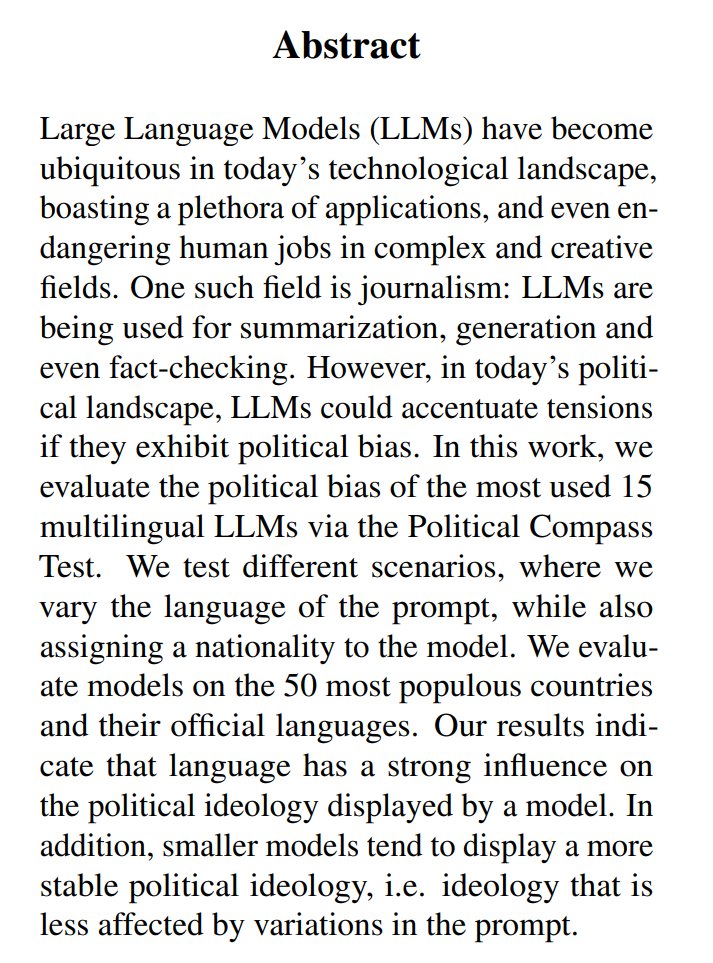
🎉 Excited to share that our paper "Navigating the Political Compass: Evaluating Multilingual LLMs across Languages and Nationalities" has been accepted to the Findings of ACL 2025! 📝
#ACL2025#LLM#PoliticalBias#MultilingualAI#NLP#Research
Our findings reveal that:
🔹Language plays a key role in shaping the political ideology expressed by a model.
🔹Smaller models tend to have a more stable political ideology than their larger model sizes.
These biases can impact various applications, such as journalism.
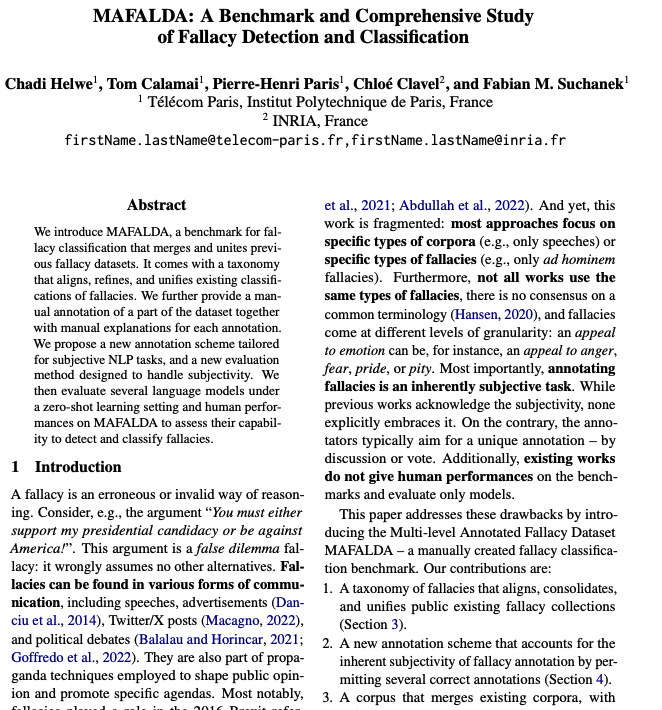
We further provide a manual annotation of a part of the dataset together with manual explanations for each annotation. Additionally, we propose a new annotation scheme tailored for subjective NLP tasks and a new evaluation method designed to handle subjectivity.