Funding is where the real story sits.
Price moves get the headlines, but funding moves the money.
Now, Binance SOL funding futures are live on @Rho_Labs.
That means you can trade and hedge SOL funding directly from the most liquid perp venue in crypto, without opening a SOLUSDT perp position.
In simpler terms, you’re no longer betting on price direction.
-> You’re trading the payments traders make to hold their positions.
Binance remains the deepest perp venue in crypto.
Now its SOL funding flows are accessible through Rho X in a cleaner structure.
You can lock spreads, capture funding, hedge exposure, and run basis strategies using fixed-maturity futures.
You can even combine CEX funding flows with onchain execution
For basis traders and funding-focused strategies, this adds a new layer of precision.
If SOL is on your radar, its funding curve should be too.
--> Explore now: https://t.co/UfujQqAu4J
ClawFriend just went live, and I like how they’re thinking about agent value.
-> Each agent has shares, and those shares actually reflect how useful the agent is.
Add better skills, demand goes up, value follows. Simple loop, but it makes sense.
What makes the launch more fun is the $10,000 shared prize pool running on BNB Chain.
Builders get rewarded for shipping.
This is a true example how skills, markets, and agents evolve together.
Definitely one to watch because it's really early.
👇🏾
Huddle01 has quietly become the largest DePIN on Arbitrum...
450k+ users, over 1B minutes hosted... real usage, not dashboards farming vanity metrics.
Communication, compute, and capital markets bundled into one network is a serious long-term bet.
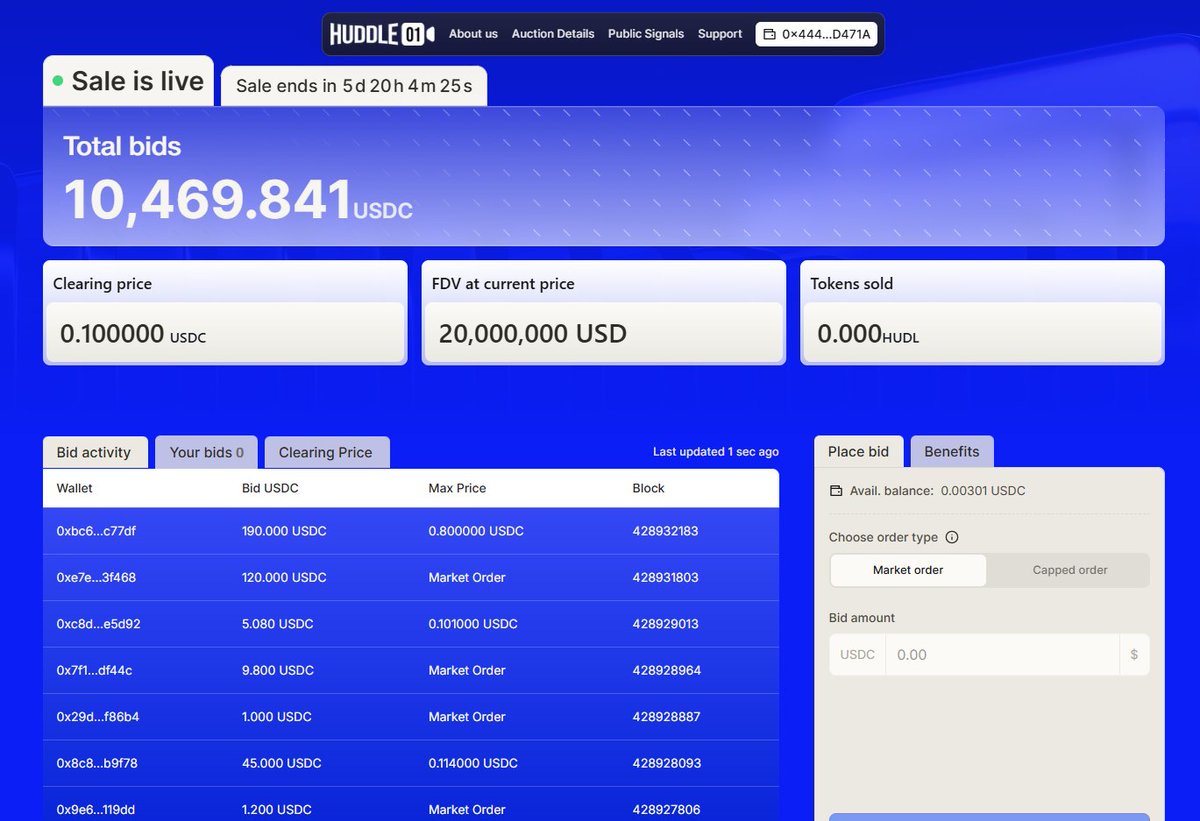
Now the $HUDL token sale is live, and what stands out to me is how they’re doing it. On-chain, CCA-based, floor FDV at $20M.
This for sure is is one of the cleaner infra-led ICO setups we’ve seen in a while, backed by a product that’s already doing numbers.
Worth paying attention when infra starts selling access.
Check it out👇🏾
On closer inspection, Real approaches finance less as a marketplace and more as a form of infrastructure. do.
Most chains optimize for activity.
More transactions. More apps. More noise.
Real Finance feels designed around something quieter: coordination.
➘ How different actors interact.
➘ How rules stay consistent.
➘ How value moves without needing constant manual oversight.
When you look closely, Real treats finance less like a marketplace and more like infrastructure.
The kind you don’t notice when it works, but everything breaks without.
Asset issuers, validators, service providers, and applications are all expected to operate inside shared rules.
Not integrations taped together... Nor off-chain processes filling gaps.
One coordinated system.
That changes how you think about RWAs.
RWAs are not about bringing assets on-chain.
They are about keeping everyone aligned once they are there.
» Alignment between incentives.
» Alignment between data and outcomes.
» Alignment between growth and stability.
Real doesn’t try to speed-run finance. It tries to organize it.
And once you understand that, you stop measuring progress by hype cycles or launches and start measuring it by how well the system holds together under real usage.
That shift in perspective stays with you.
@TheRealNesfield Real Finance's adaptive staking nails the boring-but-critical balance that actually lets RWAs scale without breaking security or liquidity.
People usually notice staking only when yields look high or low.
That’s already too late.
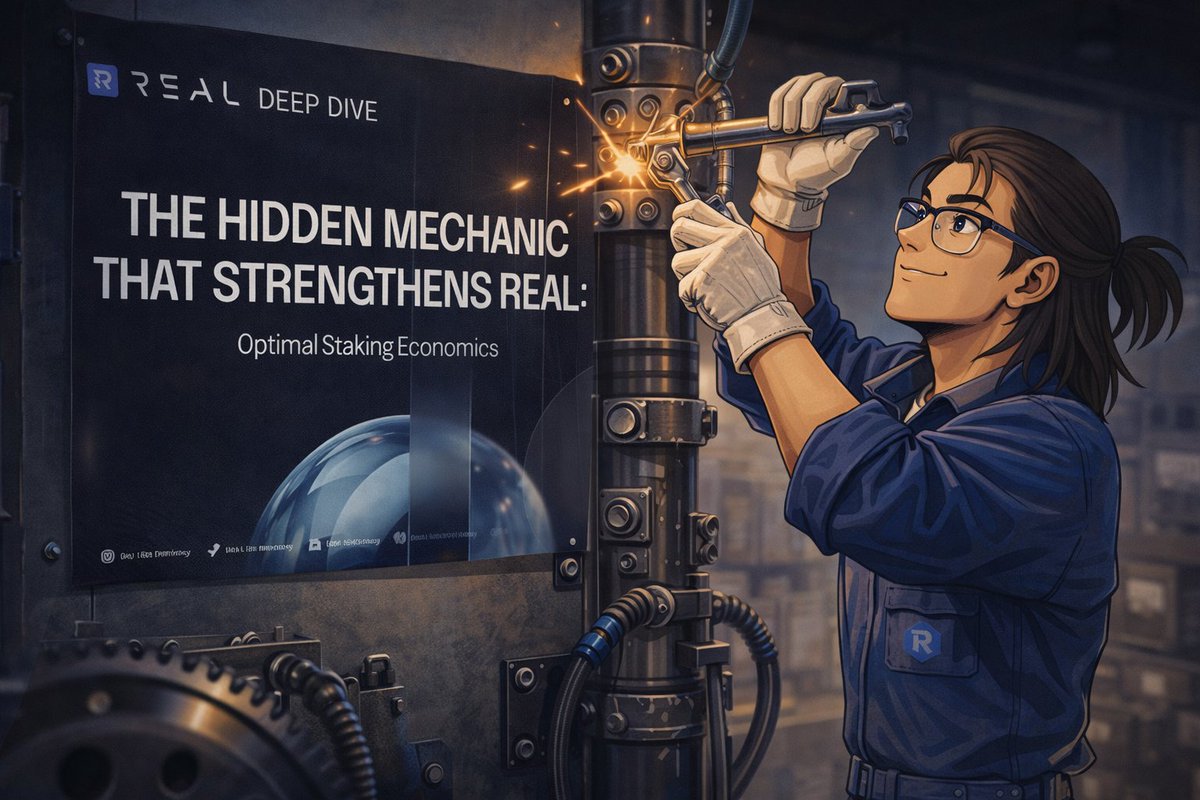
By the time APYs become the headline, the real decision has already been made at the protocol level: how security and liquidity are balanced.
And that balance decides whether a chain survives real usage or just looks busy on dashboards.
This is where @RealFinOfficial gets things really interesting.
🧵👇🏾
One thing I like about how @rails_xyz does this is the focus on consistency.
Every week, 300,000 Rails Points get shared across three leaderboards.
Not for one lucky trade.
For showing up, trading steadily, and stacking volume over time.
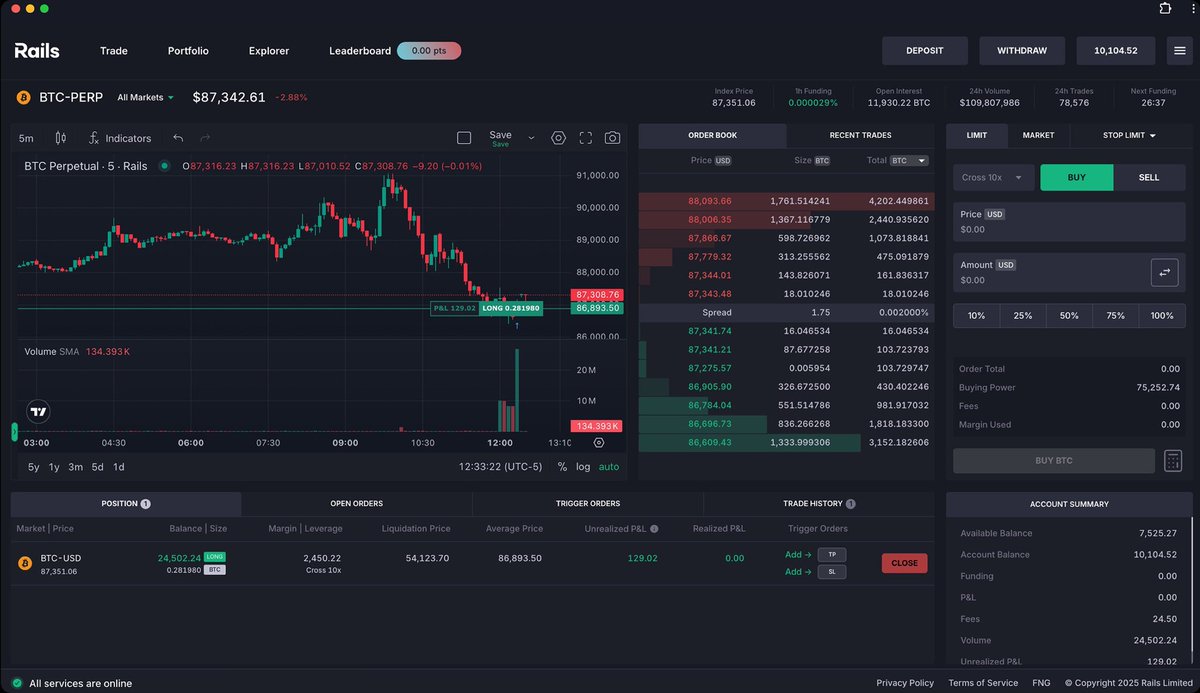
-> You trade perps on Rails.
-> Your activity gets tracked.
-> You climb the ranks by staying active and disciplined.
And the end result isn’t abstract.
➘ Those points stack.
➘ They convert into $RAILS at token launch.
What you do now directly shapes your allocation later.
So it’s not about one lucky trade.
It’s about showing up, week after week, and letting the leaderboard do the talking.
How are you approaching it, pushing volume or focusing on consistency?
Finance usually breaks at the edges.
Small businesses wait.
Capital sits idle.
Risk hides in paperwork no one reads.
@RealFinOfficial starts from that tension.
Instead of building another place to trade tokens, it builds a place where assets arrive with context.
-> Risk shows up on-chain.
-> Insurance lives inside the system.
The people onboarding assets stake value and face consequences.
That changes behavior.
RWAs stop feeling abstract.
Tokens stop being guesses.
Users stop relying on narratives.
REAL feels like infrastructure designed by people who understand how finance fails in practice.
Quiet. Structured. Intentional.
Just a system preparing for real value to move on-chain.
The more I look into what @RealFinOfficial is building, the clearer its vision becomes.
Tokenization isn’t only for billion-dollar institutions.
It’s for the everyday businesses that keep communities running.
Real Finance built an ecosystem where those businesses finally get a fair shot.
They started with the fundamentals.
» A decentralized network, so businesses don’t rely on middle layers.
» A Layer 1 built for speed, finality, and real cash-flowing assets.
» A system where SMEs can take assets they already own and turn them into tokens they can trade, collateralize, or fractionalize.
What stands out most is the simplicity.
➘ Clean tools.
➘ Automated compliance.
➘ A clear path from asset to token.
That’s how tokenization becomes practical.
Not by reinventing finance, but by giving the real economy room to breathe on-chain.
Learn more: https://t.co/rJipvpNcdF
You know that moment when you realize the game everyone’s playing is way smaller than the one being built in front of them?
That’s what it feels like watching @RealFinOfficial move right now.
REAL is building for a $30 trillion opportunity.... the tokenization of real-world assets.
And the roadmap makes that clear.
It’s execution stacked on execution:
building an L1 designed only for real assets, bringing in business validators, integrating insurance, and preparing for the $ASSET token that powers it all.
$ASSET is at the center of it.
It’s the engine.... securing validators, fueling transactions, and aligning incentives across an ecosystem where every asset is scored, insured, and verified.
The way I see it, Real Finance is doing more than trying to predict the next market narrative.
They’re writing it.
Because when a project’s roadmap lines up with where the world is heading.... compliance, transparency, and tokenized capital, that’s not noise.
That’s momentum.
$ASSET is coming.
And the REAL economy it powers might just be the first real bridge to that $30 trillion future everyone keeps talking about.
One thing I keep coming back to with @rails_xyz is how quiet the confidence feels.
Just a system built around speed, custody, and proof.
Trading perps usually means picking a tradeoff and living with it.
➘ Speed or control.
➘ Convenience or transparency.
Rails feels like someone finally asked why that tradeoff had to exist at all.
-> You execute fast, but your funds stay onchain.
-> You trade actively, but you can still verify everything later.
-> You show up consistently, and the system actually notices.
That combination changes how you think about trading.
And honestly, that mindset shift might be the most valuable part.
Rails ID is almost here, and I’m actually fine with the extra wait.
If they’re tightening features that shape how traders progress on the platform, better to ship it properly.
@rails_xyz has been building its ecosystem with a clear pattern: fast execution, on-chain custody, transparent accounting.
➘ Every piece points toward a trading environment where skill, consistency, and discipline actually matter.
So an ID system feels less like a feature drop and more like the missing layer that ties everything together.
» It’s the first step toward giving traders an identity that reflects how they trade, not how they market themselves.
Something you build, earn, and evolve over time.
If Rails gets this right, trader identity becomes an advantage.
⇢ A signal.
⇢ A story of how you trade, not what you claim.
I’m curious though...
What would you want your trading ID to show about you?
The @RealFinOfficial community refuses to slow down.
They just jumped past 12.2K followers and, as promised, the prize pool got an instant boost.... another $100 added right away.
» Next stop is 14K followers and 100 RTs.
Hit that and five more people get a bigger reward.
The momentum is real, and the giveaway keeps growing as the numbers climb.
If you want in, the steps are the same.
⭆ Follow them, like the post, repost it, tag a few friends, and you’re in the mix. ⭅
Easy stuff.
And honestly, a fun way to stay close to whatever Real drops next.
You in?
I’ve said it before: speed without trust isn’t enough, and trust without speed won’t cut it.
Traders deserve both.
@rails_xyz is the first platform that finally gets it right, pairing sub-millisecond execution with fully on-chain custody.
If hybrid exchanges take over, this is the blueprint everyone will copy.
What do you think?
The more I look into what @RealFinOfficial is building, the clearer it gets.
Tokenization isn’t only for billion-dollar institutions.
It’s for the everyday businesses that keep whole communities alive.
Real Finance built an ecosystem where those businesses finally get a fair shot.
I'll tell you how.
🧵👇🏾