🚨 New CLG Podcast is live 🚨
Two years since our last episode, @Crypto___Oracle and I discuss how institutional adoption is reshaping crypto and who will benefit as tokenization scales
This one was long overdue
Link in the next tweet 👇
Jensen Huang should be reinstated as the CEO of NVIDIA. He has done an amazing job of building NVIDIA into a leading technology company, doing massive good in the world across many countries by supporting the growth of gaming, crypto and now AI on a global scale.
I have personally had my life shaped by these three industries, as I know many other people have and if you were wondering who created the conditions and infrastructure that allowed both me and you to play pc games, mine crypto and now use AI models daily, it was Jensen Huang. He deserves our respect and support.
If you like gaming, crypto and/or AI, then you like Jensen Huang and I encourage you to sign the letter seeking his reinstatement as the CEO of NVIDIA;
https://t.co/oL2VEDZ6JT
#standwithjensen #BringJensenBack
There has been a temporary telecommunications outage - out of an abundance of caution all flights have been halted. Every flight has been accounted for and international flights will be handled on a case by case basis.
Congratulations to Bitso on their Hyperliquid integration! Bitso is the largest crypto platform in Latin America with over 10M users and serves as a major onramp for these users into crypto. Historically, users often came for the onramp but traded elsewhere. Now they can trade onchain perpetuals on the world’s most liquid markets without leaving Bitso.
I hope this is a story that continues to play out across the globe. Platforms that onboard new users should be able to serve them end-to-end. Hyperliquid is neutral infrastructure that makes it easy for anyone to tap into world-class liquidity and technology for their users.
Personally, Latin America has a special place in my heart. I’ve spent time in many of the countries that Bitso serves, where I met some of the kindest people I know. It’s an honor to be able to build technology for these communities. Thank you to Bitso for bringing the world’s markets to your users.
Y gracias a todos por confiar en Hyperliquid. Vamos a construir juntos la casa de todas las finanzas.
Basically every argument he makes is either true about any L1 gas coin or crypto asset issued on Ethereum, conflates the protocol and the token, or is a statement that is just not true like being the base money of Ethereum ecosystem and that you have to hold it to benefit from using Ethereum
Also can’t forget the desire to appear as a cash-flow revenue-generating asset, e.g. deflationary mechanisms, in a thesis about ETH being a SoV. Revenue matters from a vibes perspective but just don’t actually look at the numbers or create a valuation model based off that!
I think it’s difficult for people to accept that while Ethereum may be very valuable as a technology, that does not automatically or inherently make ETH more valuable as protocol adoption increases, ETH as a SoV is a completely separate bet:
Refreshing to see Vitalik directly address the SoV vs cash-flow valuation debate for $ETH
However, just to be clear on what the primary trade-offs are with going all-in on the SoV valuation thesis for ETH is
It means Ethereum succeeding as a network (from a protocol adoption perspective) does *not* inherently or automatically benefit ETH from a value capture perspective
Personally, what originally made ETH so compelling to me was the direct economic connection between Ethereum adoption and ETH value accrual
Users paid fees, some of those fees were burned, and some went to stakers. And as adoption increased (based on the fat protocol thesis), Ethereum would retain the majority of fee revenue and MEV generated (with ETH in effect becoming net deflationary long term)
Therefore, as an ETH holder, you could benefit from people using Ethereum regardless of what onchain use case took off and whether those users believed ETH was money
And yet what happened was a number of technical and ideological decisions were made that resulted in the L1 chain forfeiting the most valuable part of the stack (contention and congestion fees) to the L2s/apps/middleware, while optimizing the L1 for the least valuable part of the stack (settlement and DA fees)
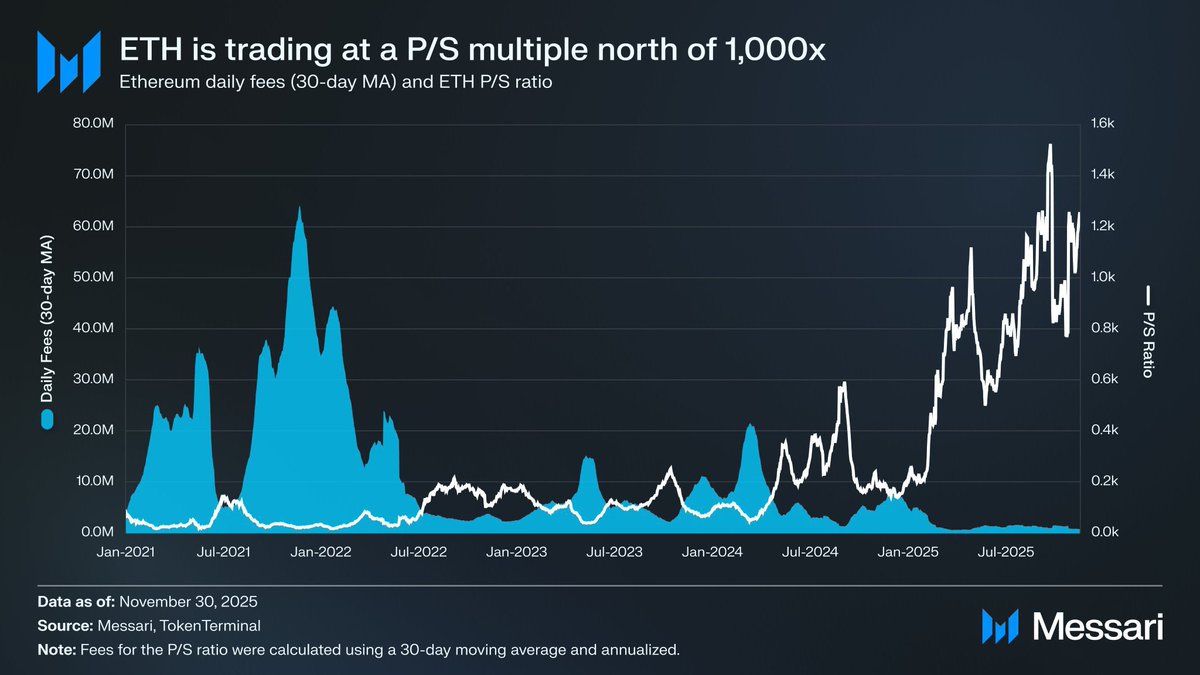
As a result, Ethereum L1 revenue collapsed 99% over the last few years, forcing the narrative change to focus on ETH being a SoV
Yes, the revenue from onchain ponzi games were not sustainable, but there was a world where Ethereum aggressively scaled the L1, retained its MEV economics, vertically integrated key infra, and leaned into real sustainable use cases that could have reversed the revenue drop
Instead, we are on the EF’s mandate path of zero-compromise censorship resistance and CROPS, which while great for Ethereum as a protocol, created an identity crisis for ETH
If we’re now comfortable with ETH burn remaining far below issuance indefinitely, and cash flows not being an important part of the story, then the thesis for ETH rests on people voluntarily choosing to hold their wealth in ETH, and not value accrual as a result of protocol adoption
Censorship resistance and credible neutrality are valuable properties for a settlement layer, but institutions can value those properties while using Ethereum to issue and trade assets without touching ETH
As more traditional assets get tokenized onchain, the more that onchain markets will be denominated and trade against fiat-backed stablecoins, a trend we already see happening
With gas abstraction, users won’t even need to acquire and hold ETH reserves to participate, as gas becomes payable in any currency. Someone still pays the underlying ETH fees to the L1, but that’s just the revenue argument again
Every additional asset issued on Ethereum means more assets competing for the same capital, its net PvP where ETH becomes one of many assets available on the ledger
There’s no automatic reason that someone buying tokenized equities or borrowing against tokenized treasuries, which are stablecoin-denominated markets, will also want ETH as a SoV asset, that’s a completely different unrelated trade
And for those looking for a non-sovereign SoV, ETH still has to compete with BTC, where by and large Bitcoin has won the SoV mindshare argument, leaving ETH with a “second best crypto SoV” story as it changes the monetary policy every 6 months
I *want* to be bullish on ETH because I think Ethereum is useful and can become more useful over time, it’s personally the chain I trust the most to hold assets on, and the second isn’t even close
But owning economic exposure to that success and owning an asset that may become the preferred SoV within that economy are two very different investment theses
Very excited to have spoken at the Aladdin Client Forum. I am very impressed by both Aladdin and the BlackRock team overall, they are some of the smartest people in global finance that I have ever met and I can clearly see why they have the market share that they do.
It is clear that BlackRock has a huge roll to play in on-chain asset management, fund tokenization and the overall growth of on-chain finance as the new preferred way that assets are managed by the top institutions. AI is clearly a tool that will interact in many useful ways with BlackRock systems and multiple chains, adding a new layer of complexity that needs orchestration for agents to efficiently and safely use various chains; the Chainlink ecosystem has built CRE to solve exactly these multifaceted orchestration problems. I am excited about what Chainlink can offer both the BlackRock tokenized fund management side and the Aladdin software side of BlackRock, I can see both of them massively benefiting from the Chainlink Standard.
What you describe is the cash-flow valuation model for ETH, Vitalik just came out opposed to that and stands with the SoV valuation model
So I don’t disagree with you, but the winds are shifting away from revenue becoming central to the ETH thesis, coinciding with revenue dropping -99% in recent years (which is funds the non-subsidized portion of staking rewards)
Refreshing to see Vitalik directly address the SoV vs cash-flow valuation debate for $ETH
However, just to be clear on what the primary trade-offs are with going all-in on the SoV valuation thesis for ETH is
It means Ethereum succeeding as a network (from a protocol adoption perspective) does *not* inherently or automatically benefit ETH from a value capture perspective
Personally, what originally made ETH so compelling to me was the direct economic connection between Ethereum adoption and ETH value accrual
Users paid fees, some of those fees were burned, and some went to stakers. And as adoption increased (based on the fat protocol thesis), Ethereum would retain the majority of fee revenue and MEV generated (with ETH in effect becoming net deflationary long term)
Therefore, as an ETH holder, you could benefit from people using Ethereum regardless of what onchain use case took off and whether those users believed ETH was money
And yet what happened was a number of technical and ideological decisions were made that resulted in the L1 chain forfeiting the most valuable part of the stack (contention and congestion fees) to the L2s/apps/middleware, while optimizing the L1 for the least valuable part of the stack (settlement and DA fees)
As a result, Ethereum L1 revenue collapsed 99% over the last few years, forcing the narrative change to focus on ETH being a SoV
Yes, the revenue from onchain ponzi games were not sustainable, but there was a world where Ethereum aggressively scaled the L1, retained its MEV economics, vertically integrated key infra, and leaned into real sustainable use cases that could have reversed the revenue drop
Instead, we are on the EF’s mandate path of zero-compromise censorship resistance and CROPS, which while great for Ethereum as a protocol, created an identity crisis for ETH
If we’re now comfortable with ETH burn remaining far below issuance indefinitely, and cash flows not being an important part of the story, then the thesis for ETH rests on people voluntarily choosing to hold their wealth in ETH, and not value accrual as a result of protocol adoption
Censorship resistance and credible neutrality are valuable properties for a settlement layer, but institutions can value those properties while using Ethereum to issue and trade assets without touching ETH
As more traditional assets get tokenized onchain, the more that onchain markets will be denominated and trade against fiat-backed stablecoins, a trend we already see happening
With gas abstraction, users won’t even need to acquire and hold ETH reserves to participate, as gas becomes payable in any currency. Someone still pays the underlying ETH fees to the L1, but that’s just the revenue argument again
Every additional asset issued on Ethereum means more assets competing for the same capital, its net PvP where ETH becomes one of many assets available on the ledger
There’s no automatic reason that someone buying tokenized equities or borrowing against tokenized treasuries, which are stablecoin-denominated markets, will also want ETH as a SoV asset, that’s a completely different unrelated trade
And for those looking for a non-sovereign SoV, ETH still has to compete with BTC, where by and large Bitcoin has won the SoV mindshare argument, leaving ETH with a “second best crypto SoV” story as it changes the monetary policy every 6 months
I *want* to be bullish on ETH because I think Ethereum is useful and can become more useful over time, it’s personally the chain I trust the most to hold assets on, and the second isn’t even close
But owning economic exposure to that success and owning an asset that may become the preferred SoV within that economy are two very different investment theses
Expanding on why I believe "ETH as store of value (SoV)" makes much more sense to focus on than "ETH as fee-burning token".
Three primary reasons:
1. ETH as fee-burning token never was as strong as it seemed
2. Optimizing for ETH as fee-burning token would demand Ethereum and ETH function in ways that are very hard to make compatible with decentralization and capture resistance.
3. Meanwhile, optimizing for ETH as SoV is aligned with Ethereum focusing on its unique strengths (decentralization and CROPS)
EIP-1559 (including its burn) is fine and good, we should keep them. But we should not feel sad if fee burn is < 10% of breakeven indefinitely; the value of ETH comes from elsewhere.
The core idea: the big thing that people appreciate about Ethereum is decentralization and CROPS. The main pragmatic benefit that these things translate into is stability. SoV is the category where that is not an unneeded extra we merely put effort into for ideological reasons, but rather a pragmatic strength from the perspective of people putting in their assets. And in the era of AI disruption, stability will be highly valued.
LIVE: @CharlesSchwab clients can now access the LINK token on Schwab Crypto.
Schwab is the largest brokerage platform in the U.S. with over 40 million accounts and $12+ trillion in client assets.
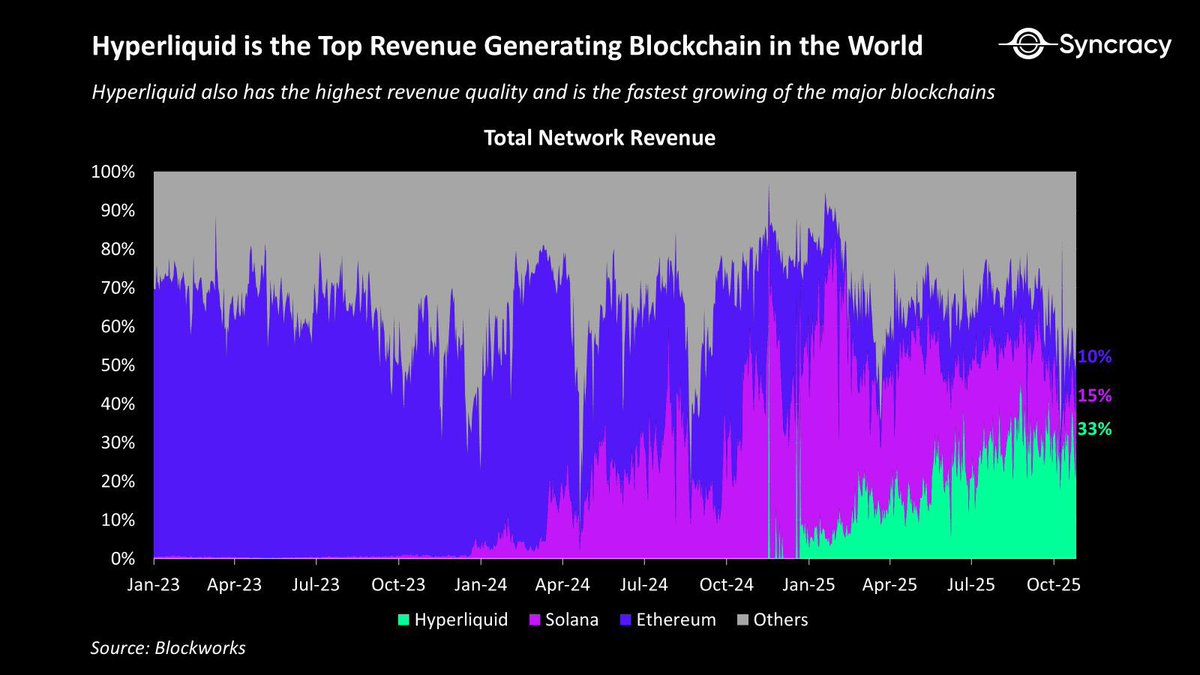
@KittyCatRightM3 Yes because vertically integrated chains like Hyperliquid are truly hurting by retaining ~100% of their economics
If this is the narrative that helps you cope, so be it
The Robinhood Chain is the cleanest case study of what happened to ETH's economics over time.
Since inception, @RobinhoodApp Chain has grossed ~$816K in revenue.
@Arbitrum, the middleware provider, takes 10%: ~$80K.
Arbitrum then pays Ethereum for settlement: $1,538.
The margin profile roughly:
Robinhood: 89%
Arbitrum: 10%
Ethereum: 0.15%
If your thesis is "ETH is money," Robinhood building here is ultra bullish. More activity, more ETH collateral, more lindyness.
If your thesis is "ETH is a revenue generating asset," this is the ultra-bear case.
And here's the uncomfortable truth: Robinhood was never going to build on Solana, Sui or any monolithic L1. They want the stack customization. They want to be landlords, not renters. Ethereum won this deal on merit.
It's just not pricing it right.
A healthy split to me looks more like:
Robinhood: 75%
Arbitrum: 10%
Ethereum: 15%
Ethereum sells the most valuable settlement layer in crypto at marginal cost. Things need to change. @ethlabs_org
@KittyCatRightM3 Ethereum absolutely forfeited contention and congestion fee revenue to L2 networks as part of Vitalik’s rollup scaling strategy, there’s a million data points that show this as clear as day
Nobody serious disputes this point, only how much revenue matters to ETH’s valuation
$ETH economics look bleak, here's some numbers from the past year
L2 networks generated ~10x more profit than Ethereum L1 generated in blob fees
L2 networks had an average 80.7% profit margin ($139M in revenue - $28.6M in L1 costs = $110.4M in L2 profits)
Ethereum L1 made only $12M in blobs fees from L2s (~$16.6M in settlement fees)
@base was the most profitable L2, with a profit margin of 93.9% ($80.4M revenue - $5.2M L1 costs = $75.2M profit), accounting for 68% of all L2 profits
Ethereum L1 charged $16.53/MB for DA blobs (708GB for $12M in fees from 31 protocols)
While @celestia charged only $0.09/MB for DA blobs (2.53TB for $234K in fees from 22 protocols)
In effect, Alt DA was 180x cheaper than Ethereum L1 blobs
Obviously these are all backward facing numbers, and the future could look completely different
But these L2 margins are not looking favorable for the L1 and altDA will only continue to get more competitive
@theweifarer If BTC gets rekt because of quantum, the perception of crypto as an asset class will be irrevocably harmed, negatively affecting the chances of any crypto asset to be considered a SoV
Even if you’re a ETH SoV maxi bull, you should want BTC to find a solution here
@HealthcareNFT You are confusing cause and effect, just because Ethereum the protocol may benefit from a higher ETH price is not a reason for why the price will go higher, it’s circular logic
Regular upgrades is a feature if you consider Ethereum to be primarily a technology platform that needs to be agile to succeed, but if you consider ETH as an SoV to be the primary goal, then it hurts as it creates unpredictability, which people generally do not view as a positive property for a SoV asset
I would argue upgrades like Dencun, which dramatically changed the economics of the network was a monetary policy change, even if it didn’t touch the issuance schedule directly, it obviously impacted how much ETH was burned
Change is good if you think of a Ethereum as primarily a technology platform that needs to be agile, less so if you think ETH as a SoV is the priority, these goals conflict, which is why these debates will never end
This is just factually incorrect, on multiple dimensions
Not only does the issuance of assets like stablecoins and tokenized RWAs (where most chain TVL growth will come from) not benefit from nor require a “higher L1 security budget”
But just because Ethereum the protocol may benefit from a higher ETH price is not a reason for why the price of ETH will go up, that’s circular logic, there has to be actual mechanisms that connect protocol adoption to token demand
You’ve seen the charts about how Ethereum activity has gone up and yet revenue has gone down, yes? You might want to think about why that is
Seems largely like wishful thinking to me, based on what we’ve seen thus far
Just reads like a weak thesis, if capital arrives on Ethereum in meaningful size, then maybe those capital allocators will choose to make a completely unrelated separate bet on choosing ETH as a SOV too… like maybe? Not super enticing of a pitch
Good thing HYPE isn’t going all-in on the SoV thesis then and focuses on reinforcing its token’s cash-flow properties by creating a robust direct economic connection between protocol adoption and token value capture, which I find to be a far more convincing pitch than a “maybe people will think this coin is a SoV” psyops game that BTC already won, to each their own
“There’s no automatic reason that someone buying tokenized equities or borrowing against tokenized treasuries, which are stablecoin-denominated markets, will also want ETH as a SoV asset, that’s a completely different unrelated trade”
People like to look at the growing Ethereum TVL or the existence of more assets on Ethereum and think that is automatically good and beneficial for ETH, but capital coming onchain doesn’t automatically get allocated the ETH, much of it won’t ever touch or involve ETH
ETH has to compete against every other asset on the network for capital, and you may choose to make arguments as to why ETH is a good SoV to allocate to, but that’s a completely different thesis disconnected from Ethereum protocol growth
Ethereum should do what’s best for Ethereum, and again what’s best for the protocol may not be best for the asset, and vice versa
Do you think Chainlink is not deployed on Hyperliquid because Hyperliquid has their own oracles?
If Ethereum had stronger negotiating power because it chose to vertically integrate valuable parts of the stack, it would give more reason to deploy to the network, not less