I'm Boris and I created Claude Code. Lots of people have asked how I use Claude Code, so I wanted to show off my setup a bit.
My setup might be surprisingly vanilla! Claude Code works great out of the box, so I personally don't customize it much. There is no one correct way to use Claude Code: we intentionally build it in a way that you can use it, customize it, and hack it however you like. Each person on the Claude Code team uses it very differently.
So, here goes.
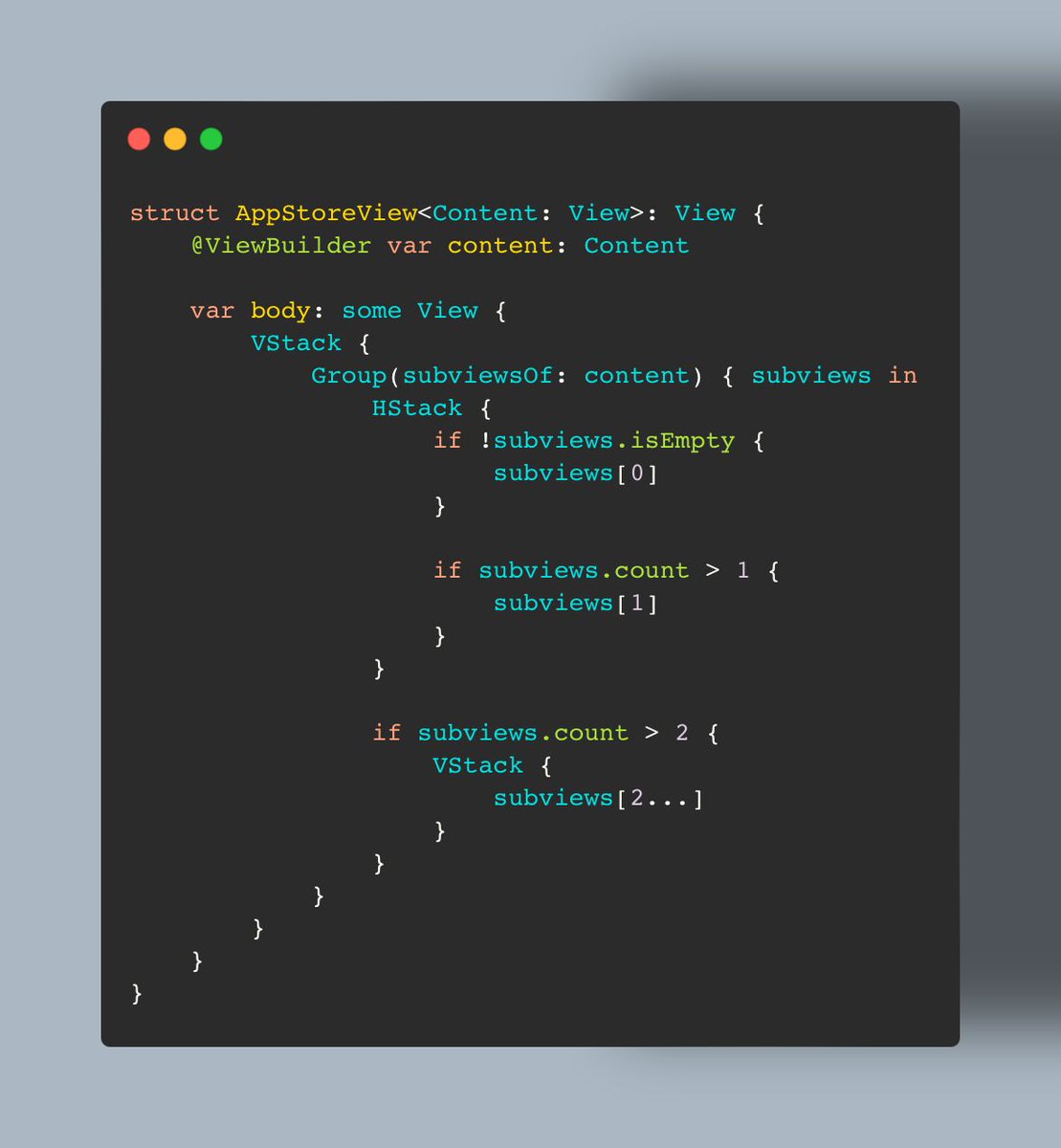
SwiftUI introduced the new overloads for Group and ForEach views, allowing us to create custom containers like List or TabView.
https://t.co/czEPzGzQe3
I just learned that you can use dismiss to pop to root with NavigationSplitView/NavigationStack. This is super convenient 🤯.
It is working for iOS 18 with NavigationSplitView
and earlier iOS versions with NavigationStack.
WWDC 24 is over, and I decided to start writing posts about new features. Apple continues filling gaps this year by introducing more granular control over the scroll position. This week, we will learn how to manipulate and read the scroll offset.
https://t.co/oE449VAVlj
Identity in SwiftUI is very important. Whenever you want to properly animate any change on the screen, you should provide your views with the correct identity. It can be data identifiers or structural identities, but it must be consistent.
https://t.co/0JFgPY8zec
The Swift language constructs `self`, `Self`, and `Self.self` can be confusing, even for experienced developers.
You can read more on these constructs in my blog post: https://t.co/g3CBSDUuMy
🔹 self: refers to the instance of the type within its own instance methods
🔹 Self: refers to the type that conforms to a protocol, allowing for polymorphic behavior
🔹 Self.self: is used to refer to the metatype of the type, essentially the type of the type itself
Scenes in SwiftUI are essential for managing our app's UI and behavior. Defining custom scenes is a powerful feature that allows for modular, maintainable code, simplifying complex interfaces. Check out my new blog post to learn how:
https://t.co/TN85k5j2Yp
Almost all of my apps provide notifications that not only launch the app but also navigate to different parts of the app. Today, I want to share how I build deep links for local notifications in my apps.
https://t.co/nmkz5p9FwR
Learn about Test-driven development & bug fixes
https://t.co/vfrlxoJ59I
🧪 TDD explained
🐛 Solve bugs with more confidence
✨ Codebase quality improvements
#swiftlang#iosdev
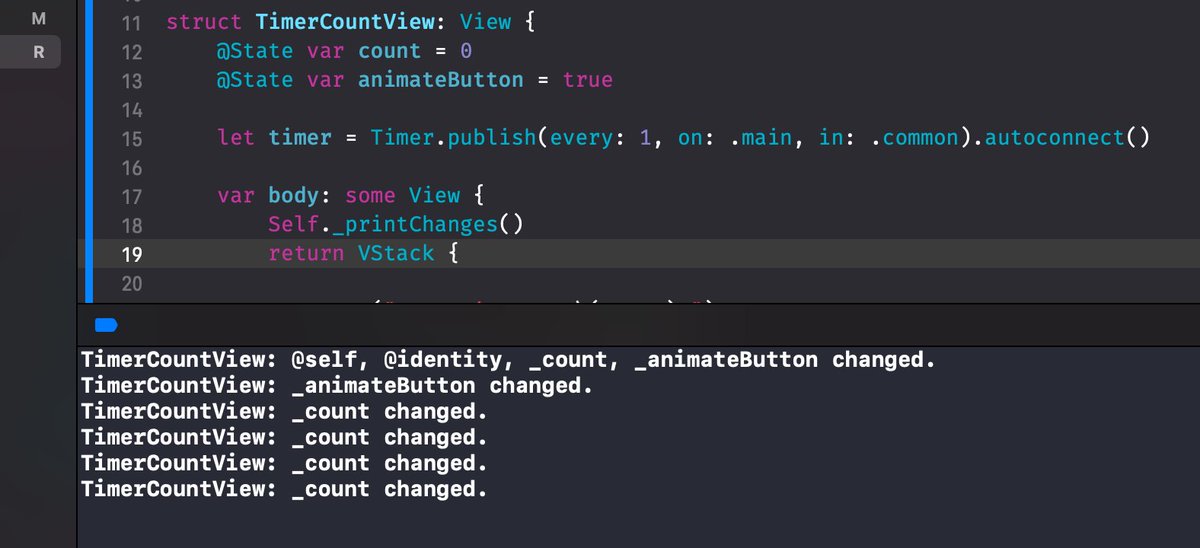
Unexpected SwiftUI redraws can be frustrating and hard to debug. Using a private API method called _printChanges() allows you to find out the root cause.
https://t.co/mlteALTCO3
#swiftlang#iosdev
Actors are a great solution to synchronising access to shared mutable state. The isolated keyword sometimes allows us to write less code when working with multiple actors.
https://t.co/RbrapkvAcT
#swiftlang#iosdev
Dependency Injection is a great way to abstract away third party dependencies. In this article, @jordanmorgan10 discusses another, more lightweight way to achieve similar results: https://t.co/1nS81pSgX8
Learn all about User Defaults
https://t.co/QrtfVv6Kg3
💾 Supported data types
👨👩👧👦 Sharing data across devices, apps, or extensions
✨ A unique tool to improve your workflow
#swiftlang#iosdev
5 newsletters you must subscribe as iOS developer :
📄 Swift Anytime Weekly→ https://t.co/8Ow8nsGr99
📄 iOS Code Review→ https://t.co/nK2R4CuiiD
📄 Awesome iOS→ https://t.co/m5bZG7lXvV
📄 iOS Dev Weekly→ https://t.co/gDEvRYfJp8
📄 This Week in Swift→ https://t.co/9USWikbLSh
Learn all about value and type parameter packs
https://t.co/UCAA7VyK83
🚀 Reduce method overloads
✨ Write generic solutions
💪🏼 No more 10-view limit in SwiftUI
#swiftlang#iosdev