Trump claimed a secret U.S. operation helped 200+ commercial ships transit the Strait of Hormuz.
Now a June 5 INTERTANKO advisory reviewed by gCaptain describes a U.S.-coordinated nighttime route along the Omani coast involving ships operating with AIS off, navigational lights extinguished, and limited radar use.
The advisory not only corroborates with Trump's claims, but also offers the clearest description yet of how limited shipping has continued through Hormuz during the conflict.
Full story: https://t.co/hPi7cIuemI
Last night, I made a simple request on X. I asked if anybody visiting Arlington National Cemetery for Memorial Day would stop by Alan’s grave and leave a photo for our family.
What happened next honestly caught me off guard.
By this afternoon, dozens of Americans from all walks of life had made the walk to Section 60 to visit SSG Alan W. Shaw. Veterans. Families. Complete strangers. People who had never met Alan, but chose to honor him anyway.
For one day on social media, people put aside the constant noise and negativity and came together for something bigger than themselves. My notifications filled with photos, kind messages, prayers, and stories from people honoring not just Alan, but so many of our fallen heroes.
I don’t think people fully understand what moments like this mean to Gold Star families. The fear is never just losing them. It’s losing them slowly over time as the world moves on and fewer people remember their name.
But today showed me that Alan will never be forgotten.
After years of watching social media reward some of the worst parts of humanity, today gave me a reminder that the good is still out there too.
Thank you to every single person who stopped by to visit Alan today, said his name, shared his story, or took a moment to honor the fallen.
This right here is the America Alan knew and loved enough to fight and die for.
And today, y’all showed us all that it’s still here and it’s still worth fighting for. 🇺🇸
Crazy milestone today!
Letter From Editor: 10 Years And 11,000 Articles Later
TWZ was launched 10 years ago today and we are still here and growing thanks to all of you.
https://t.co/eXYa3C0F1t
@johnkonrad His speech delivered during the ceremony was well done as well, not even considering the short notice 🤣 Had people chuckling and applauding multiple times.
Because we get asked a lot.
The Technological Republic, in brief.
1. Silicon Valley owes a moral debt to the country that made its rise possible. The engineering elite of Silicon Valley has an affirmative obligation to participate in the defense of the nation.
2. We must rebel against the tyranny of the apps. Is the iPhone our greatest creative if not crowning achievement as a civilization? The object has changed our lives, but it may also now be limiting and constraining our sense of the possible.
3. Free email is not enough. The decadence of a culture or civilization, and indeed its ruling class, will be forgiven only if that culture is capable of delivering economic growth and security for the public.
4. The limits of soft power, of soaring rhetoric alone, have been exposed. The ability of free and democratic societies to prevail requires something more than moral appeal. It requires hard power, and hard power in this century will be built on software.
5. The question is not whether A.I. weapons will be built; it is who will build them and for what purpose. Our adversaries will not pause to indulge in theatrical debates about the merits of developing technologies with critical military and national security applications. They will proceed.
6. National service should be a universal duty. We should, as a society, seriously consider moving away from an all-volunteer force and only fight the next war if everyone shares in the risk and the cost.
7. If a U.S. Marine asks for a better rifle, we should build it; and the same goes for software. We should as a country be capable of continuing a debate about the appropriateness of military action abroad while remaining unflinching in our commitment to those we have asked to step into harm’s way.
8. Public servants need not be our priests. Any business that compensated its employees in the way that the federal government compensates public servants would struggle to survive.
9. We should show far more grace towards those who have subjected themselves to public life. The eradication of any space for forgiveness—a jettisoning of any tolerance for the complexities and contradictions of the human psyche—may leave us with a cast of characters at the helm we will grow to regret.
10. The psychologization of modern politics is leading us astray. Those who look to the political arena to nourish their soul and sense of self, who rely too heavily on their internal life finding expression in people they may never meet, will be left disappointed.
11. Our society has grown too eager to hasten, and is often gleeful at, the demise of its enemies. The vanquishing of an opponent is a moment to pause, not rejoice.
12. The atomic age is ending. One age of deterrence, the atomic age, is ending, and a new era of deterrence built on A.I. is set to begin.
13. No other country in the history of the world has advanced progressive values more than this one. The United States is far from perfect. But it is easy to forget how much more opportunity exists in this country for those who are not hereditary elites than in any other nation on the planet.
14. American power has made possible an extraordinarily long peace. Too many have forgotten or perhaps take for granted that nearly a century of some version of peace has prevailed in the world without a great power military conflict. At least three generations — billions of people and their children and now grandchildren — have never known a world war.
15. The postwar neutering of Germany and Japan must be undone. The defanging of Germany was an overcorrection for which Europe is now paying a heavy price. A similar and highly theatrical commitment to Japanese pacifism will, if maintained, also threaten to shift the balance of power in Asia.
16. We should applaud those who attempt to build where the market has failed to act. The culture almost snickers at Musk’s interest in grand narrative, as if billionaires ought to simply stay in their lane of enriching themselves . . . . Any curiosity or genuine interest in the value of what he has created is essentially dismissed, or perhaps lurks from beneath a thinly veiled scorn.
17. Silicon Valley must play a role in addressing violent crime. Many politicians across the United States have essentially shrugged when it comes to violent crime, abandoning any serious efforts to address the problem or take on any risk with their constituencies or donors in coming up with solutions and experiments in what should be a desperate bid to save lives.
18. The ruthless exposure of the private lives of public figures drives far too much talent away from government service. The public arena—and the shallow and petty assaults against those who dare to do something other than enrich themselves—has become so unforgiving that the republic is left with a significant roster of ineffectual, empty vessels whose ambition one would forgive if there were any genuine belief structure lurking within.
19. The caution in public life that we unwittingly encourage is corrosive. Those who say nothing wrong often say nothing much at all.
20. The pervasive intolerance of religious belief in certain circles must be resisted. The elite’s intolerance of religious belief is perhaps one of the most telling signs that its political project constitutes a less open intellectual movement than many within it would claim.
21. Some cultures have produced vital advances; others remain dysfunctional and regressive. All cultures are now equal. Criticism and value judgments are forbidden. Yet this new dogma glosses over the fact that certain cultures and indeed subcultures . . . have produced wonders. Others have proven middling, and worse, regressive and harmful.
22. We must resist the shallow temptation of a vacant and hollow pluralism. We, in America and more broadly the West, have for the past half century resisted defining national cultures in the name of inclusivity. But inclusion into what?
Excerpts from the #1 New York Times Bestseller The Technological Republic: Hard Power, Soft Belief, and the Future of the West, by Alexander C. Karp & Nicholas W. Zamiska
https://t.co/8igjazz1On
Navy Calls It Quits On Attack Submarine USS Boise’s Never Ending Overhaul
The USS Boise has been stuck in limbo for more than a third of its career, and was still years and billions of dollars away from returning to service.
https://t.co/IDzrEUtPfX
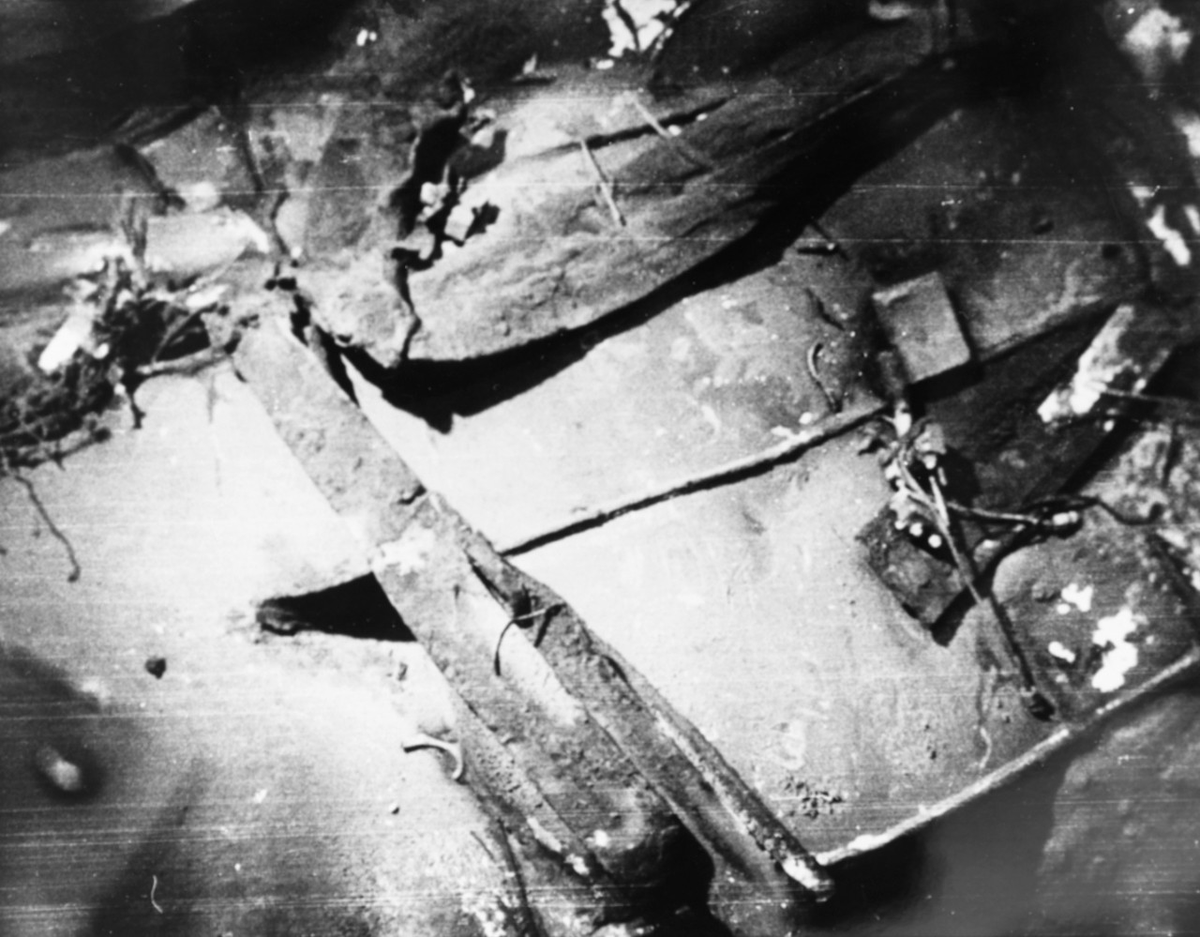
Thresher's loss hit the nation hard, the submarine community even more so. A stark reminder that any time you go to sea on a submarine, no matter how small or simple the evolution seems, you are operating in one of the most dangerous environments on earth. Inside a machine made by man, in defiance of all laws of nature, and the sea constantly wants to kill you for it.
📸 image of Thresher approximately 220 miles east of Cape Cod at 8,400 ft, captured by bathyscaphe Trieste
🫡 𝘰𝘯 𝘦𝘵𝘦𝘳𝘯𝘢𝘭 𝘱𝘢𝘵𝘳𝘰𝘭
@johnkonrad Bruh, you know comparing the JFK to a commercial cargo ship is not apples to apples. Current build spans are obviously unacceptable but this is a stretch of a comparison
@SenAdamSchiff BC and MC to register seems pretty basic to me… I don’t understand this argument at all. Who are these people that can’t keep track of their most important records
@PattyMurray This makes no sense. How is commiting fraud a probability? It is a decision, not something that “happens” to a person by chance….. baffling stuff
Great news that @DOTMARAD has released its first Survey of U.S. Shipbuilding and Repair Facilities since 2004–something we pushed hard for MARAD to do as part of the Maritime Statecraft strategy. Key enabler for institutional investment into US shipyards.
https://t.co/aA9IAhrzQI
@johnkonrad@NAVSEA If it doesn’t include a way to address preservation requirements always getting the short end of the stick when up against the clock it’s not a comprehensive plan. “It’s just paint” becomes “why does this shit look like trash” a couple years later
What’s the most important choke point for American interests overseas and why is it the Luzon Strait?
This is a map of the world’s choke points. It’s THE most important map Navy admirals have for global security.
If it was up to me this would be posted in every hallway in the Pentagon.
Problem: all these maps rank choke points of international importance… usually ranked by volume of trade. That’s not the same thing as America’s vital interests.
We saw it in real time when the world’s most important choke point the Suez Canal was closed by Houthi terrorists. The inflation and disruption hit Europe far harder than the United States.
I can’t find a map that ranks the most important choke points for our nation.
If we made one, I’d list the top five like this:
1.Florida Strait
2.Panama Canal
3.Bering Strait
4.GIUK Gap (Greenland–Iceland–UK)
5.Strait of Magellan
And to prove how little previous Administrations care about this
The Florida Strait (the primary route for all ship and barge traffic from the Mississippi River) is directly adjacent to a hostile Communist nation.
We turned over our military headquarters on the Panama canal to marxists NGOs… and China’s building a bridge which can blockade it.
They did practically nothing to fortify the Bering Strait.
The Greenland-UK gap they let Denmark exploit with zero investment in naval security.
And they were happy to see Argentina circle the drain before Javier Milei.
But the most stunning failure of the last 100 years was the complete abandonment of our most important overseas Choke Point on the map.
Nobody even knows the bloodiest battle in American history, more 🇺🇸 casualties than any Civil War battle, the Battle of Manilla (Filipinos were naturalized Americans at the time, if not citizens), was fought to secure it.
The entire Pacific War pivoted around this strait, that’s how important it is.
Yet I would be surprised if one in 100,000 Americans could even point out the Luzon Strait on a map.
The good news? This Administration understands Choke Points and we have a new Federal Maritime Commissioner - @thelauradibella - who will be prioritizing their importance.
Now we just need our Admirals to do a better job educating the rest of government and the public on this.
We have reconstructed the 127 days that elapsed between final assembly of N704AL and the January 5 accident aboard Alaska Flight 1282. TAC has confirmed many of the details in the purported whistleblower account, as well as added considerable new facts. https://t.co/6AXcIp5oue