CEO @ Eligere Sovereign (Macro/market neutral) I love literature (Celine, Tolstoy, Mishima, Wolfe) art (Gerome, Motte) and classical music (Shostakovich).
Éminence Grise by Jean-Léon Gérôme (1873) The mechanics of shadow power are distilled into a single painting. The central figure, François Leclerc du Tremblay, a Capuchin friar, was Cardinal Richelieu’s most trusted advisor. The scene embodies a masterclass in understated dominance, the quiet man in the shadows. Head buried in a book, indifferent to the spectacle around him, nobles bow before him during a chilling descent of the Palais-Royal staircase. Looming in the background is the Red Eminence’s coat of arms, a reminder of whose will the Grey Eminence represents: the power behind the red-robed throne. This painting is one of my favorites (a print is hanging in my office) and illustrates the lethal nature of quietude: a man who avoids the spotlight, never raises his voice, yet possesses the lethal power to end a career with a whisper.
@market_sleuth Why consider going long Google/Microsoft if this is similar to the Dotcom era? Are you swinging a potential rally in the midst of an overall down trend?
“The market makes people rich or poor, determines who shall run the big plants and who shall scrub the floors, fixes how many people shall work in the copper mines and how many in the symphony orchestras. None of these decisions is made once and for all; they are revocable every day. The selective process never stops. It goes on adjusting the social apparatus of production to the changes in demand and supply. It reviews again and again its previous decisions and forces everybody to submit to a new examination of his case. There is no security and no such thing as a right to preserve any position acquired in the past. Nobody is exempt from the law of the market, the consumers’ sovereignty.”-Ludwig von Mises, Human Action
During hyperinflation, there are a number of arbitrage opportunities. Taking on a loan, selling the local currency to buy foreign currency, then later on selling a portion of the foreign currency to buy back the local currency (further depreciated) to pay off the debt, as mentioned below, is one possibility.
”A currency speculator who borrowed from the Reichsbank on January 1, 1923, enough paper marks (about 1,980 million) to buy 100,000 dollars, and on April 1 sold enough dollars (about 80,000) to repay the bank, and who again borrowed the equivalent of 100,000 dollars and continued thus until the end of May, could have made the equivalent of a quarter of a million dollars at the expense of the acceptors of pure marks. His problem then, of course, was in what form to keep his profits: if they were in marks, they would evaporate before his eyes.”-Adam Fergusson, When Money Dies
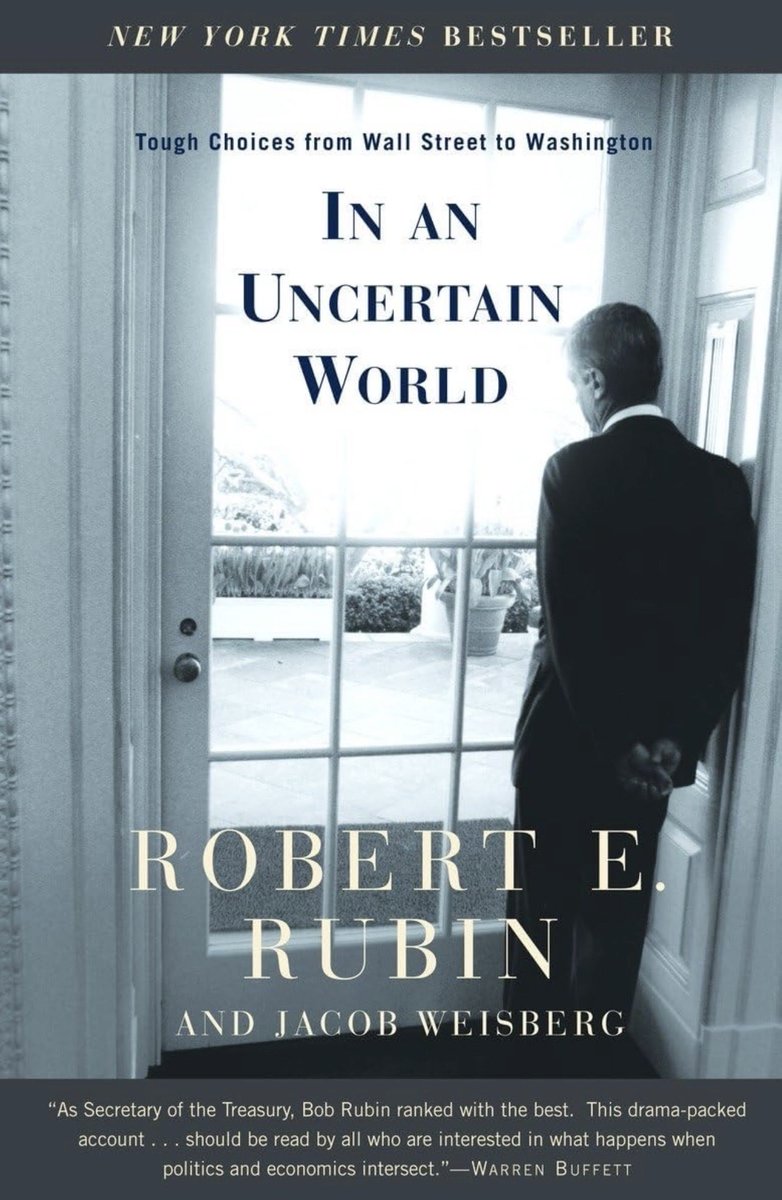
“The master at the art was Alan Greenspan. Alan would doff his cap in the direction of a question, even if, on occasion, it was somewhat off the mark. ‘That's an interesting observation you make, Senator, about the earth being flat,’ he'd say. ‘If I might, let me rephrase the question.’ Alan would then ask himself a completely different question and answer it with such complexity and finely calibrated nuance that the questioner faced a choice between nodding intelligently and acknowledging his own confusion. I must say that testifying next to the chairman, I was sometimes completely baffled myself. Alan would then ask the House member or senator, ‘Does that respond to your question?’ And the interrogator would invariably say, ‘Yes, it does.'”-Robert Rubin, In An Uncertain World
💀
”Luiz Inácio Lula da Silva (known as Lula, a left-of-center political leader who became president in 2002) is giving a speech to a youth rally. In the front, he notices a large group of well-heeled young Brazilians. With every promise he makes to tax the rich, they explode in applause and cheers. After the speech, he approaches them to ask why these obviously rich young people are so supportive of his ideas. One of them responds: ‘Because my parents tell me that if you are elected, we will be moving to Paris.’”-Calomiris & Haber, Fragile By Design
One of the fascinating parts of this book was the author’s inclusion of newspaper clippings from each bear market he analyzed, so the reader could get a sense of sentiment at the time. His book on the Asia Financial Crisis of the 90’s is great as well.
“On every occasion, the rebound in copper prices preceded or coincided with the rebound in the equity market. This rule held even in 1982, when, to some investors, higher copper and commodity prices may have presaged the rebound of inflation and tighter monetary policy. So, if stabilisation of commodity prices is a good indicator of the end of the bear market in equities, stabilisation of the copper price may be the best indicator a general stabilisation in commodities is imminent.”-Russell Napier, Anatomy of the Bear
If you really think about it, this has application to the financial markets.
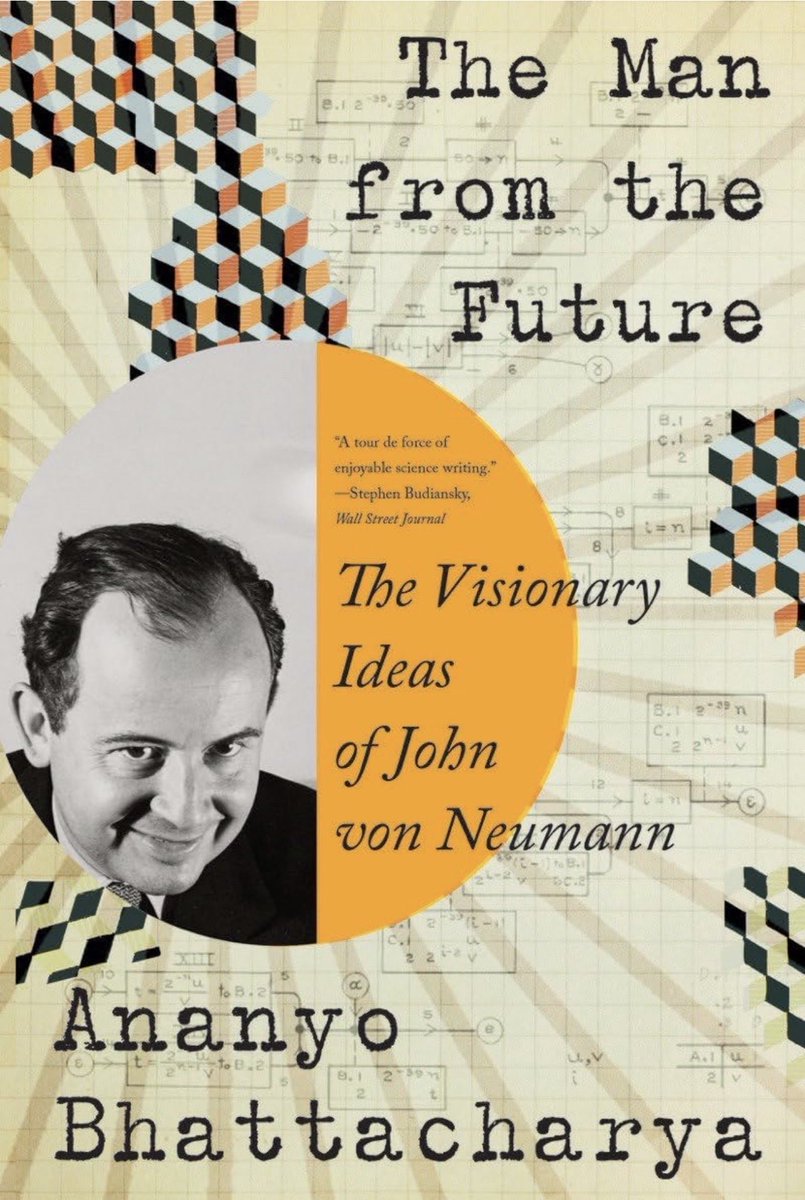
“According to quantum theory, a particle can be in a superposition of infinitely many states. In the case of a free electron, for example, the particle is anywhere and everywhere and its wave function is a superposition of states representing all these possibilities. Now imagine that we 'catch' an electron on a phosphor screen. When an electron collides with the screen, the phosphor coating emits a shower of photons, and we see a flash, telling us the approximate position of the electron. The electron is now in one state with a single corresponding (eigen)value for its position. At no point does an observer see the electron's wave function splayed improperly across all space. The electron is either in a superposition of states that are inaccessible to an observer - or, after observation, localized at a point.
As if embarrassed by its own naked quantumness, the particle appears to have donned classical clothes the moment it is observed…But when we try to find out something about a particle, like its position or momentum, the wave function pops like a bubble and the particle adopts, at random, a state out of all the available possibilities. This process is discontinuous and cannot be reversed: once the particle has 'selected' a particular state, Schrödinger's equation no longer holds, and the other states are lost as possibilities. Now known as 'wave function collapse, this process is unlike anything in classical physics.”-Ananyo Bhattacharya, The Man from the Future
One of the problems, albeit amusing, with X is the number of snake oil salesmen. Another great excerpt from Scott Fearon’s book.
“This misplaced faith in Wall Street whizzes is a symptom of a much larger and more destructive problem in the investment world: the cult of the guru. Investors of all types-from fund managers to day traders to mom-and-pop savers hoping to boost their 401(k) accounts—are constantly looking for a market messiah, someone who's figured out—once and for all-the magical formula for how to beat the Street. It is an understandable but self-defeating desire, because the people who actually possess these kinds of insights almost never share them. Think about it. Why would someone who has discovered an edge destroy its profitability by telling the world about it? And yet a never ending cavalcade of self-promoters is able to convince people that they have an easy path to market riches.”-Scott Fearon, Dead Companies Walking
Even the algos believe in astrology! Agents in the book’s context are bots or algos.
“‘And we noticed that every time the price hit 34, the agents would buy. We could graph that. It seemed anomalous behavior. We thought it was a bug in the model. But then after thinking hard about it for an hour or so, we realized that there was no mistake! The agents had discovered a primitive form of technical analysis.
That is, they had come to the belief that if the price went up enough, then it would continue to go up. So buy. But, of course, that belief became a self-fulfilling prophecy: if enough agents tried to buy at price 34, that would cause the price to go up.’
Furthermore, he says, exactly the inverse happened as the price fell to 25, the agents tried to sell, thereby creating a self-fulfilling prophecy for falling prices. Bubbles and crashes!”-M. Mitchell Waldrop, Complexity, The Emerging Science at the Edge of Order and Chaos
Why does this sound familiar?
“The way stock indexes are calculated feeds investors' excessive optimism by masking how common failure is in the business world. Just about all of them are weighted by market capitalization. That means they’re not based purely on the average performance of the companies listed in them. The size of those companies is also a major factor. The larger a company's market capitalization, the bigger effect its stock has on the index's value. The S&P 500, the NASDAQ, all the Russell indexes, they're all weighted this way, and most investors have no clue how this distorts their view of the corporate world.
Here's what I mean: a single company with a massive market cap and a rapidly rising stock price often drives an entire index higher even as dozens or hundreds of smaller companies in that same index drop or disappear altogether. From 2005 to 2012, Apple's stock shot up from $40 a share to 5700. As it approached its peak, Apple made up more than a fifth of the NASDAQ 100 and almost 12 percent of the entire index. For significant periods of time its growth was responsible for much of the index's gains.
That kind of outsized weighting conceals the plain fact that more stocks in that index went down rather than up over the course of Apple's incredible rally.”-Scott Fearon, Dead Companies Walking
Great book on The Prediction Company. Press your advantage…
“If you have a winning system, the worst thing you can do is be timid about playing it. Eudaemonic Enterprises failed to make them rich, not because they didn't succeed in beating roulette, but because they were afraid to trust themselves, Instead of playing their edge, they hung back. They kept collecting more data and running more tests, when they should have gone for broke.”-Thomas Bass, The Predictors
I came across this in Lawrence Durrell’s Mountolive, quoted by Leila to Mountolive:
"There is a destiny now possible to us—the highest ever set before a nation to be accepted or refused. We are still un-degenerate in race; a race mingled of the best northern blood. We are not yet dissolute in temper, but still have the firmness to govern, and the grace to obey. We have been taught a religion of pure mercy which we must now finally betray or learn to defend by fulfilling. And we are rich in an inheritance of honour, bequeathed to us through a thousand years of noble history, which it should be our daily thirst to increase with splendid avarice, so that Englishman, if it be a sin to covet honour, should be the most offending souls alive. Or will you, youths of England, make your country again a royal throne of kings, a sceptred isle, for all the world a source of light, a centre of peace; mistress of learning and the arts; faithful guardian of great memories in the midst of irreverent and ephemeral visions; a faithful servant of time-tried principles, under temptation from fond experiments and licentious desires; and amidst the cruel and clamorous jealousies of the nations, worshipped in her strange valour, of goodwill towards men?"-John Ruskin, Imperial Duty
Napier on foreign currency flowing in, causing an appreciation of the local currency, which is pegged to the foreign currency, and this relationship’s affect on credit. Food for thought when countries are asking for USD swap lines. Hint, hint, wink, wink.
“When a country running such a policy runs an external surplus, its central bank intervenes to prevent an exchange rate appreciation. That intervention adds to their stock of foreign currency, known as foreign currency reserves.
What is crucial to understand is that those purchases of foreign currency are financed not with existing domestic currency, but with money the central bank creates for the transaction. By choosing to manage its exchange rate, the central bank is allowing the supply of money in the country to adjust depending upon the condition of its external accounts.
An external surplus that puts upward pressure on the exchange rate forces the central bank to create money, but a deficit forces them to destroy money.
The central bank does not assess what is the correct amount of money for domestic economic conditions, but adjusts the supply of money to whatever level is necessary to keep the exchange rate at the targeted rate. This can result in there being excessive amounts of money in the economy compared to its potential growth rate and it can also result in there being a contraction in the supply of money below the potential growth rate.”-Russell Napier, The Asian Financial Crisis 1995-98
Curious how the study ends in 2000 when the Dotcom Bubble happened…
“There have been some interesting studies on the reason to be invested across various asset classes. One looked at the S&P 500 index from 1992 to 2000 and found if you were long the whole time, you made 16 percent average annual returns. But, if you were flat on the 10 best trading days, you gave away 5 percent annually and only earned 11 percent average annual returns. That's a huge difference, and it would be so easy to miss 10 days over nine years.”-Jim Leitner, in Steven Drobny’s Inside the House of Money
Excerpt from Money and Power by William Cohan. Birnbaum at Goldman Sachs wanted to test John Paulson’s conviction behind his trade to short the housing market leading into the 2008 Financial Crisis. John Paulson would later make $15 billion shorting the housing market by the end of 2007.
“Goldman needed to make sure Paulson was legit-could satisfy the men in the basement office before deciding to do serious business with him.
At the meeting, Birnbaum decided to judge Paulson's suitability by asking probing questions of Paulson and his team about how much conviction they had about this bet. There was an element of Kabuki theater to the meeting, what with all the alpha-male head fakes. "Part of it was just testing his thesis as to whether or not he knew what he was doing," Birnbaum said, "and part of this was, frankly, the guy was doing big trades and as a market maker you need to figure out how big is this guy gonna be?
And he's not going to tell you to your face how big he's gonna be. He's not gonna tell you, 'Oh yeah, I had three more trades to do and they're gonna be this big,' because then we might price the market a certain way. He's gonna try to hold his cards here"-holding his hand close to his chest—"and not reflect what the size of his program is. But as best I could, I was trying to ascertain what's the size of his program, what's the strength of his thesis? In doing this, we almost try to play devil's advocate and were just trying to understand his assumptions and poke holes in his assumptions and see how his answers stacked up." This was a bit of high-stakes psychological warfare. "You can always tell if you poke holes in someone's assumptions and you see a lot of self-doubt in them. If their assumptions don't hold up so well, you might have a better sense of what their program is going to look like. On the other hand, if you poke holes in their assumptions and they're coming back with vehement arguments, you get a different view of what their program is going to look like. A lot of it was just how strongly do these guys really feel when you test them? When you test their thesis that this is going to be the trade of the century... how well does their argument hold up?"
"If you want to keep selling, I'll keep buying," Birnbaum reportedly told Rosenberg, Paulson, and Pellegrini. "We have a few clients who will take the other side of your trades. And I'll join them." Not only was Birnbaum trying to discourage these guys from continuing to make the bearish bets, but he was also "trying to tell Paulson he was making a big mistake." Rosenberg, in particular, seemed rattled after the meeting with Birnbaum, according to Zuckerman, and walked into Paulson's office and asked the boss if they should tone things down. "Keep buying, Brad," Paulson reportedly told Rosenberg.”-William D. Cohan, Money and Power
Schumpeter on what bank lending actually is:
“This alters the analytic situation profoundly and makes it highly inadvisable to construe bank credit on the model of existing funds being withdrawn from previous uses by an entirely imaginary act of saving and then lent out by their owners. It is much more realistic to say that the banks 'create credit', that is, that they create deposits in their act of lending, than to say that they lend the deposits that have been entrusted to them. And the reason for insisting on this is that depositors should not be invested with the insignia of a role which they do not play. The theory to which economists clung so tenaciously makes them out to be savers when they neither save nor intend to do so; it attributes to them an influence on the 'supply of credit' which they do not have. The theory of
'credit creation' not only recognizes patent facts without obscuring them by artificial constructions; it also brings out the peculiar mechanism of saving and investment that is characteristic of fully fledged capitalist society and the true role of banks in capitalist evolution.”-Joseph Schumpeter, History of Economic Analysis
Soros’ Reflexivity reminds me of Eli Ayache’s ideas expressed in The Blank Swan, where he frames the market itself as the “medium of contingency,” where derivatives aren’t hedges against known risks but tools for engaging radical novelty. Trading becomes a kind of ontological intervention that actively generates the contingent reality rather than passively reflecting or forecasting it.
“…financial markets attempt to predict a future that is contingent on the decisions people make in the present. Instead of just passively reflecting reality, financial markets are actively creating the reality that they, in turn, reflect. There is a two-way connection between present decisions and future events, which I call reflexivity.”-George Soros, The Crisis of Global Capitalism
From Irimias’ speech in Satantango,
“And you, my friends, here you are, shambling along in the midst of this destruction, far away from all that is Life...your plans, one after the other, ending in failure, your dreams blindly shattering into pieces, yet all of you believing in some miracle which shall never come to pass, hoping for some redeemer who would lead you away from here...and yet you all know that there is nothing to believe in anymore, there is nothing to hope for anymore, because the years that have passed press down upon you with such weight, do they not, ladies and gentlemen, so that it now appears that that possibility-that you might have mastered that impotency —is lost forever; from one day to the next your throats have grown ever more constricted, so that by now you can hardly even bear to take a breath…but what has fate done to you, my unfortunate friends…Why waste time on small material details? Why not talk, instead, of the failure of imagination, of the narrowing of perspective, of the ragged clothes you stand in? Should we not be discussing your utter inability to do anything at all…why don't you gather your courage in both hands and do something about it?! This low, cowardly, shallow way of thinking can have serious consequences, friends, if you don't mind me saying so! Your helplessness is culpable, your cowardice culpable, culpable, ladies and gentlemen! Because —and mark this well! —it is not only other people one can ruin, but one-self!...And that is a graver fault, my friends, and indeed, if you think about it carefully, you will see that every sin we commit against ourselves is an act of self-humiliation.”-Laszlo Krasznahorkai, Satantango