PhD student at VU Amsterdam. Visiting University of Birmingham with Erasmus Traineeship Grant. Interested in children's multimodal language development.
Fantastic talk where Neil makes a strong case for a multimodal model of language including speech, text, gesture, emojis, writing, images. Exciting to see the language sciences are moving away from speech-centric view of language. Great discussion w/@ozyurek_a A must watch!
Give me a shout if you’d be interested in doing a PhD with me and join our vibrant department. Topics include sign language learning by deaf children or hearing adults, language learning in hearing kids and overall multimodal communication.
Ditto! Important message suggesting that our view of language shapes our theories of language evolution. Only a multimodal view accounts for sign languages, speech, gesture, pictorial, etc. Great talk! #protolang7
How do hearing non-signers access the meaning of signs never seen before? Are they blank slates or can they rely on pre-existing knowledge? I am honoured to discuss these questions on Sept 15, 14:00 BST at @abralin_oficial with @kschonstrom (discussant)
https://t.co/i8W9cYT2IA
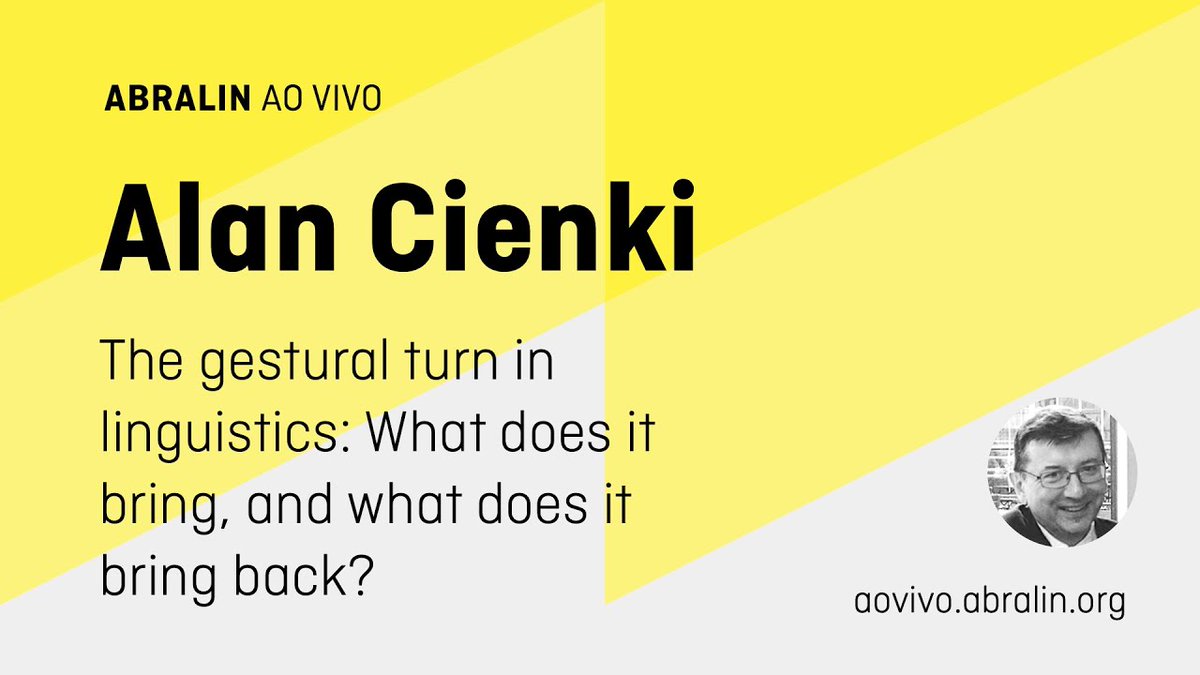
What new questions of language use do we confront with the turn to digital video data and concomitant methods of movement analysis? New Abralin lecture with Alan Cienki. #gesture#language#cognition#grammar
📅 14 Jul 5pm UTC @ https://t.co/1jnfN4cHLp
@zhousiming2011@DingemanseMark I don't know much about this domain, but the insights from this paper might be of interest to you -- Huh? What? A first survey in twenty-one languages.
While previous studies found the perceptual advantages of mimetic words(ideophones/onomatopoeia), our study showed that MWs also provide advantages in production. Join me at 13:00 BST/14:00 CET at #BELP2021 and see how Chinese children develop language with the help of MWs.
What is the role of mimetic words & iconic gestures when learning to talk about causal events? @Chancy_Niu will discuss her work on how Chinese speaking children (4-7 years old) use iconicity to talk about cause & result @Eng_Lang_UoB (April 23, 13:00 BST). #BELP2021
What is the role of mimetic words & iconic gestures when learning to talk about causal events? @Chancy_Niu will discuss her work on how Chinese speaking children (4-7 years old) use iconicity to talk about cause & result @Eng_Lang_UoB (April 23, 13:00 BST). #BELP2021
Our collaborators in Cologne are recruiting deaf participants for our study on #iconicity in German Sign Language #DGS and British Sign Language #BSL Please spread the word!
4-7 year old children make use of relationships across meanings in word learning. New results by Sammy Floyd and @adelegoldberg1 show that learning polysemy is easier than learning homonymy, but children on Autism spectrum do not show this polysemy advantage. #UKCLC2020 plenary
Excited to "see" so many brilliant minds at the fascinating @UKCLC_2020. I look forward to presenting my findings on causal event expressions by Chinese children ( the presentation is friendly to non-native speakers of Chinese😉). Join me at 3pm in Room 5 on Wednesday.
@CaroRowland presents really cool findings that young infants pay close attention to causal events from a very early age (9 months). Infants can recognise causal events but it takes them time to encode them in their language #ukclc2020