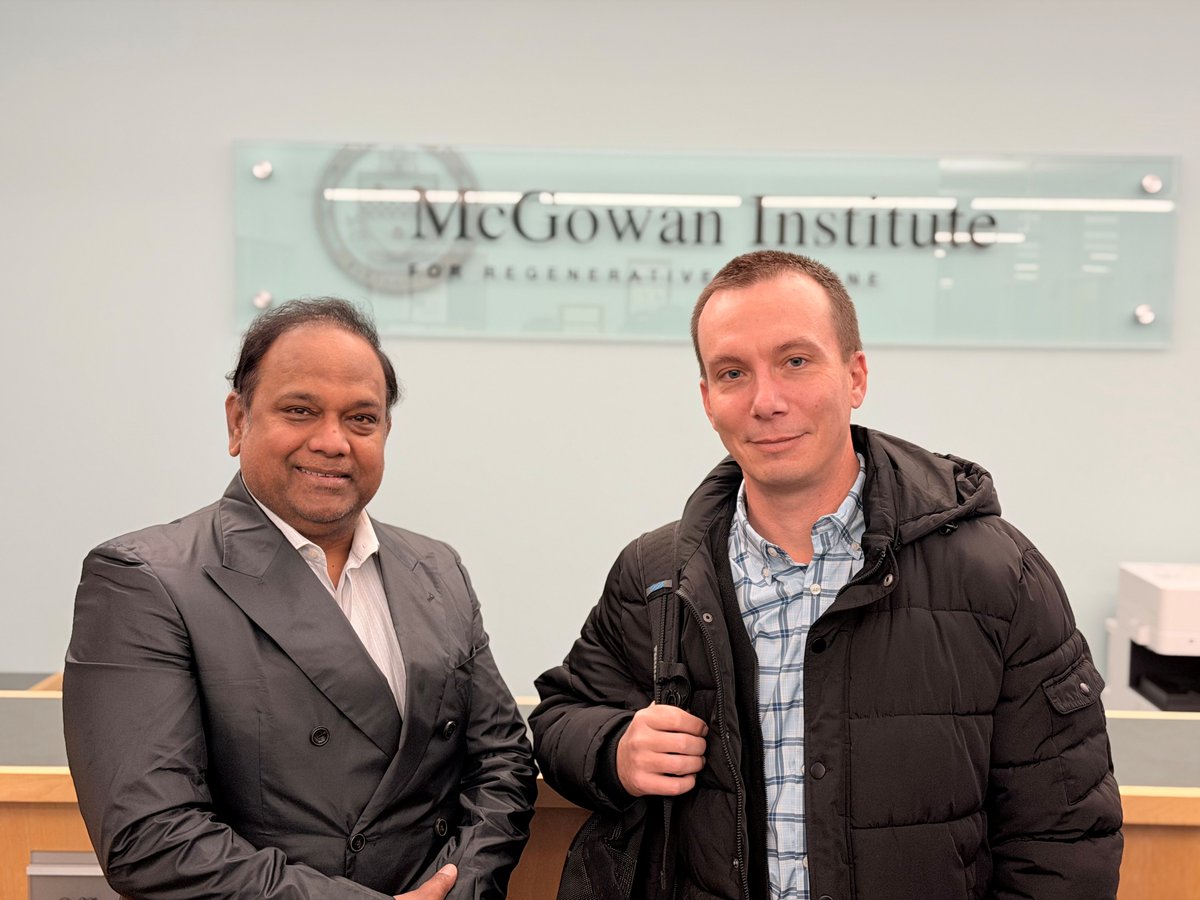
A privilege to spend time today with Professor Toni Atala, Director of the Wake Forest Institute for Regenerative Medicine, during the Regenerative Medicine Public Day in Winston-Salem. An event dedicated to advancing innovation and public engagement in regenerative medicine.
Check out my latest article: Your Brain Just Got a Direct Wireless Connection: The Neural Interface Revolution Has Begun! https://t.co/ehTKC5lFXQ via @LinkedIn
This gift of chocolates arrived from colleagues in Ukraine — sent from a nation at war.
Дякую for the sweetness, and for your resilience. Your courage and commitment to science inspire us all.
Solidarity across borders. 🇺🇦
Access to Commercial Space Stations: Had a fantastic conversation with Jonathan Volk, CEO of Starlab, about the future of Commercial Destinations in Low Earth Orbit (CLD) and why the next decade of medical breakthroughs will be driven by space.
In our own research on @SpaceX CRS‑16 RRRM‑1, we found that exposure to space can trigger genomic plasticity — activating pro‑angiogenic and stress‑resilience pathways that remain dormant on Earth.
As CLDs like #Starlab come online, researchers will have routine access to microgravity platforms — enabling discoveries in regenerative medicine, aging biology, immunology, and tissue repair that are impossible to replicate on Earth.
Space isn’t just a frontier for exploration.
It’s becoming a frontier for human health.
#Space #Biotech #Healthcare #ISS #CLD #Microgravity #Starlab
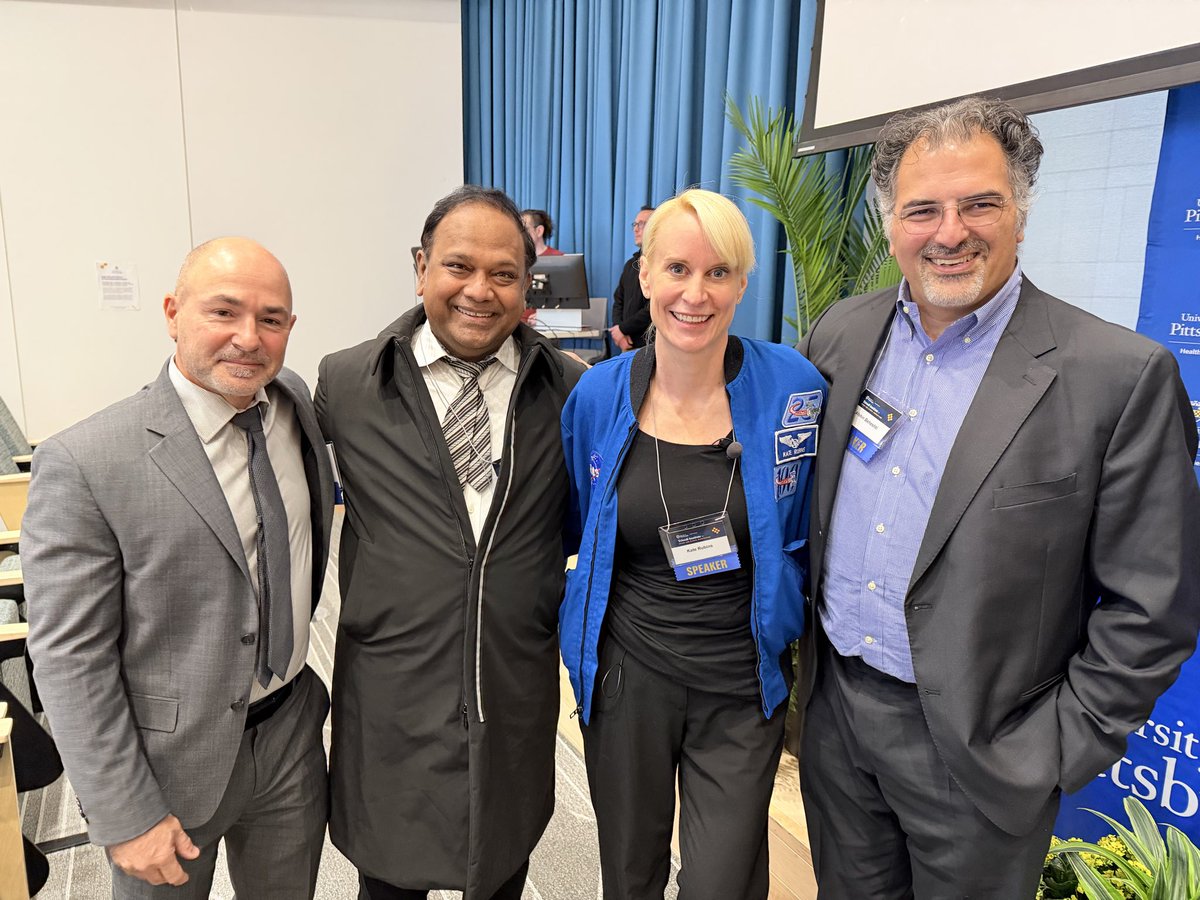
Launching of Trivedi Institute of Space and Global Biomedicine! left, Dr Kate Rubins NASA astronaut now at Pitt Director of Trivedi! Next, Dr Afshin Beheshti ex-NASA now director of the space program at McGowan. Right, Dr Sylvain Costes, ex-chief data scientist, NASA now at Pitt!
Tissue Reprogramming: Rewriting Medicine?
Imagine your body as a massive, bustling factory where trillions of tiny workers—your cells—each have a super-specific job: peripheral nerves giving us sensation, pancreas generating insulin like pros, or skin cells scrambling to seal a wound. But when injury, disease, or aging strikes, these workers falter, leading to neuropathy, diabetes, or stubborn chronic wounds. What if we could instantly retrain the survivors right on the spot to heroically take over? That's the game-changing power of in vivo tissue reprogramming—rewiring cells' identities inside your body, no lab needed!
https://t.co/NVA3SRSKvr
This isn't sci-fi; it's cutting-edge science. Enter Tissue NanoTransfection (TNT), a breakthrough our team pioneered, first unveiled in Nature Nanotechnology in 2017 and now supported by 20+ high-impact publications. Picture a tiny silicon chip—like a high-tech sticker—placed on your skin for seconds. Zap! Safe electric pulses open nano-channels, delivering DNA or RNA to reprogram cells. Skin cells transform into blood vessels for faster healing or neurons to combat neuropathies. It's like upgrading your body's software to unlock hidden healing superpowers!
How? Here is one example. Cells follow an "epigenome"—DNA's instruction manual. TNT tweaks it with precision. In the skin, a sub-family of fibroblasts naturally rewind and adapt; TNT supercharges this with targeted signals, turning these cells to express vascular properties. Vasculogenic fibroblasts appear and help bring blood supply to starving tissue.
The potential? Animal studies are stunning. Human ex vivo studies are promising. Field-ready, no immune suppressants—just your body's natural defenses at work. Risks like unintended changes exist, so safety testing in humans is key.
TNT zaps cells to self-heal, backed by over a decade of research. Human trials are on the horizon—imagine fixing tissues like app updates!
What do you think—could this revolutionize regenerative medicine? Share your thoughts below! hashtag#RegenerativeMedicine hashtag#Nanotechnology hashtag#WoundHealing hashtag#Innovation hashtag#HealthTech