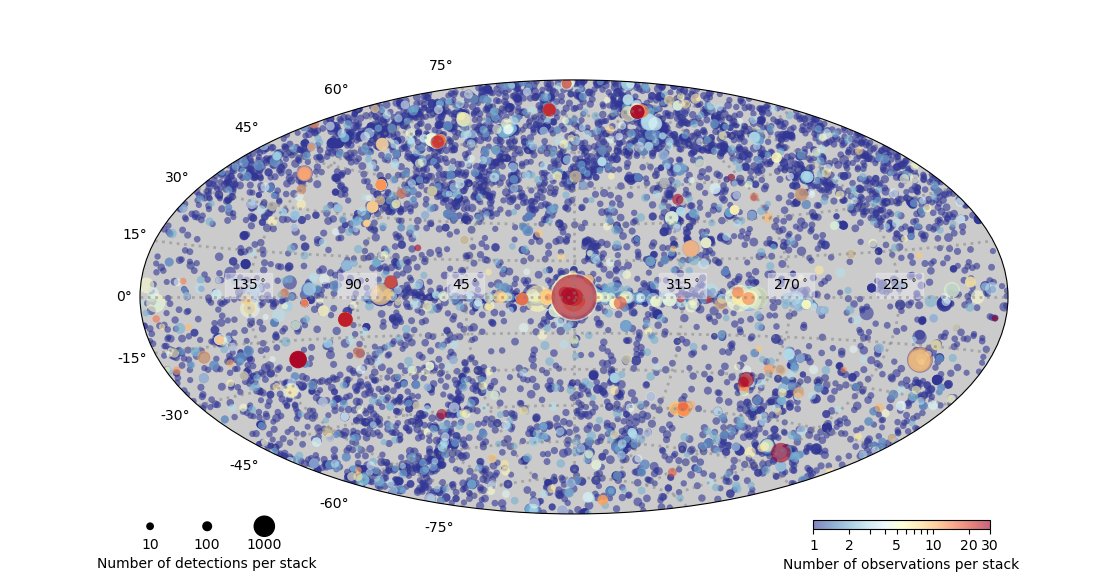
Friends. The Chandra Source Catalog version 2.1 has been released! This is a very rich and exciting dataset for astronomical discovery, and for data-driven exploration, regardless of whether you are an X-ray astronomer or not. Enjoy it! https://t.co/ZFOkTdiLdP
You never know what your neighbors might be up to. Irregular dwarf galaxy IC1613 has been a member of the Local Group since time immemorial, and here Chandra and VLA observations (see bibcode 2022AJ....163...66S) reveal it has a "complex bubble region."
Sounds like fun.
Some false positives aren't false: Chandra+24 (bibcode 2024ApJ...963L...4C), presents Chandra ACIS observations of SN 2023ixf in M101 on day 13 and 86 since the explosion. PI Poonam Chandra, et al. say the SN ejecta is consistent with a massive red supergiant progenitor. Spectra:
When part of one's job is classifying Chandra papers with respect to data usage, one has to be wary of "false positive" matches to "Chandra" -- like "Chandrasekhar" --which don't necessarily accompany usage of data from the Chandra X-ray Observatory!
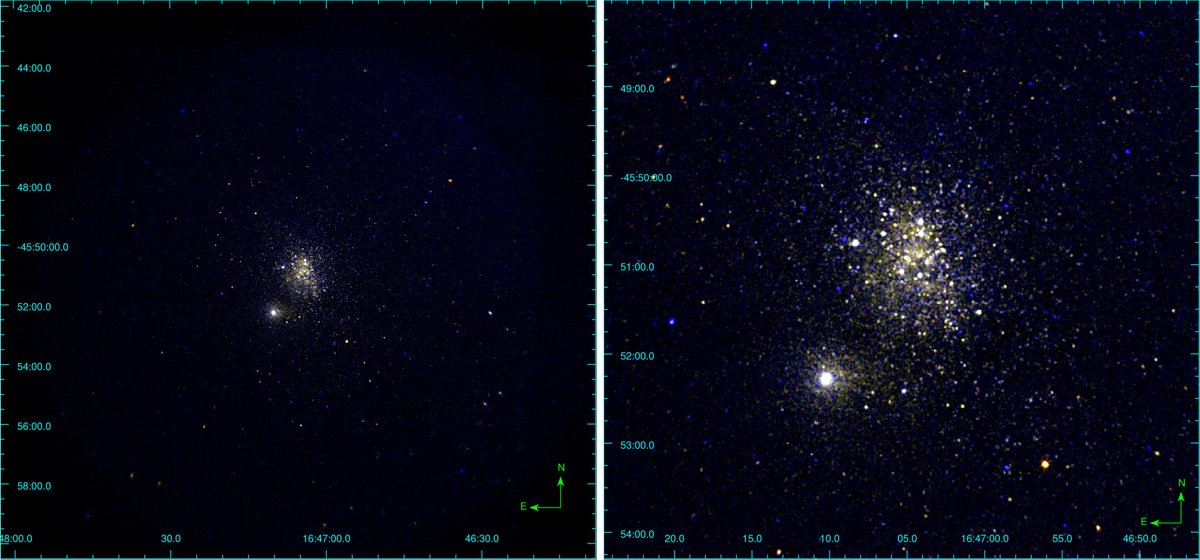
This work presents a catalog of X-ray sources in Westerlund 1. The attached images show the entire ACIS-I field, and a detail of the same. Oh, and they called the catalog EWOCS-I. This made my day.
Maybe it's just that my stubbornly-immature self can't resist something classified as a "super star cluster" but Westerlund 1 has always been one of my favorite objects. Therefore I found it hard to resist highlighting Guarcello+24 (bibcode: 2024A&A...682A..49G).
Like an ever-growing number of papers, this work uses a CDC DOI, https://t.co/hlSXuiAHfr, from the Chandra Data Archive to concisely reference their Chandra data usage. Find out more about requesting your own CDC DOI here: https://t.co/vNciiu9A5f.
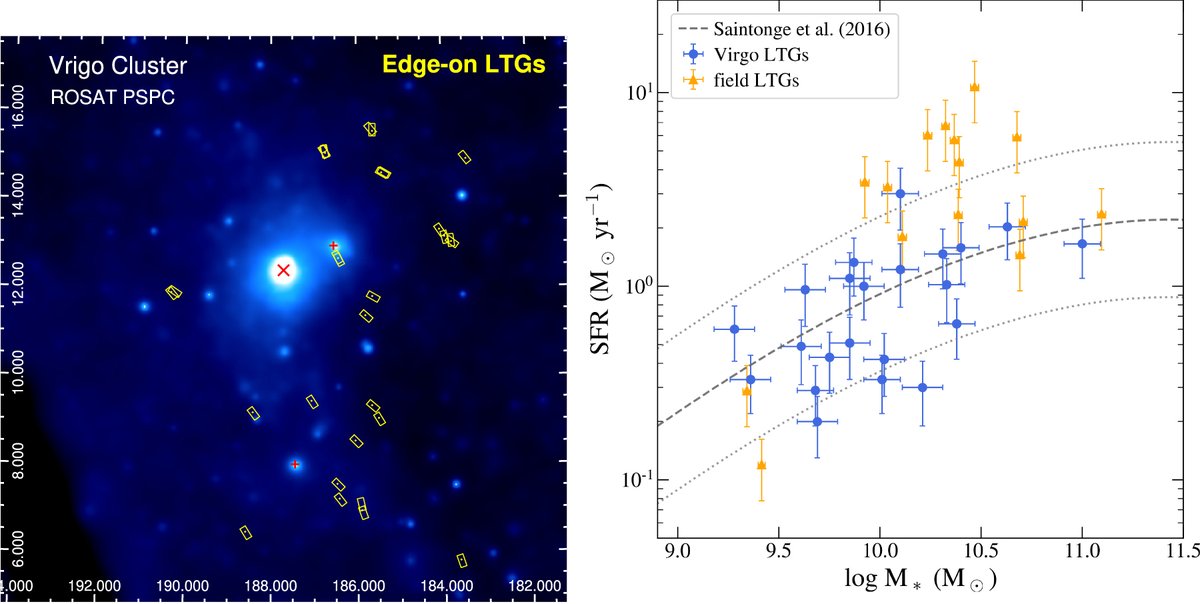
Hou+24 use archival Chandra observations -- 30, count 'em, 30 -- to study the spatial distribution of 21 edge-on LTGs in the Virgo Cluster. The results, and the fetching images below, can be found in bibcode 2024ApJ...961..249H.
In 2024ApJ...961...26R, Rangelov+24 report on Chandra observations of 13 Fermi LAT sources from the 4th Fermi LAT 14 year Catalog, or 4FGL. Two of the sources (4FGL J2041.1+4736 and 4FGL J1358.3-6026) are extended. Here are images of them.
They estimate column densities for S I, S II, S III, S V, S VI and S VII ionic species as well as upper limits for the dust component. The attached graphic shows best fitting column densities for cold (S I), warm (S II + S III), hot (S XIV + S XV + S XVI), and dust ISM phases.
In their paper "Sulphur X-ray absorption in the local ISM," (bibcode 2024MNRAS.527.1648G) @efraingatuzz et al analyse Chandra HETG spectra of 36 LMXBs along different lines of sight.
Among other useful things, @ChandraArchive CDC DOIs allow us to create cool data viz showing
how @chandraxray observations (red), collections (blue) and publications (green) are linked to each
other. We look forward to these networks growing more complex and interconnected!
Our article in the recently published @chandraxray Newsletter issue 34 describes how DOIs can be used to greatly facilitate the citation of Chandra data in your papers! Have a look, won't you? https://t.co/iB9OytckeY
I for one cannot resist that subtitle, so I'll definitely be reading this paper. You'll likely get more out of it than I will, but I will do my best, as my scientific wings are VERY boxy. :^)
Professional scientific writing does not often foreground matters of style; however, in my role as the Chandra Data Archive's sometime "word czar," my interest is often piqued by intriguing combinations of words ...
Consider Macacek+23 (2023ApJ...958...93M): "A Chandra Study of the NGC 7618/UGC 12491 Major Group Merger at Apogee: Multiple Cold Fronts, Boxy Wings, Filaments, and Arc-shaped Slingshot Tails."
Chandra ACIS-S ObsID 4799 was part of a proposal to to observe a sample of 28 AGNs from KISS (KPNO International Spectroscopic Survey) to assess their X-ray emission characteristics and establish the local AGN X-ray luminosity function. Here is a picture of KISS F1610-1418.
Chandra Obsid 3764 is an HRC-I observation of mu Leporis, called an example of a 'chemically peculiar late-B' star. The data were taken in late 2003 and have been published only once (bibcode: 2004ApJ...612L..65B). The authors traced the magnetic field to a companion.
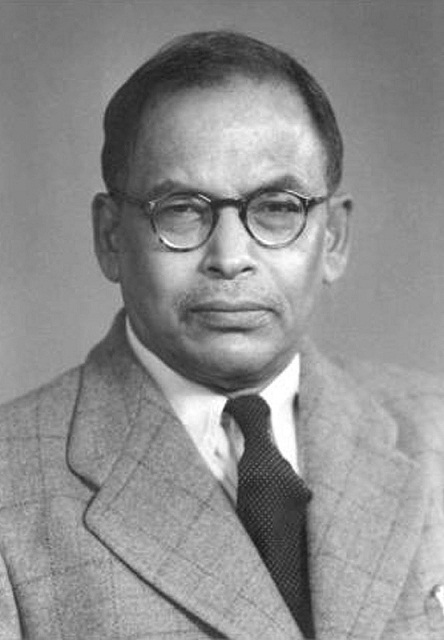
Today is the 130th anniversary of the birthday of astrophysicist Megndad Saha, whose eponymous ionisation equation aided immeasurably in the spectral classification of stars.