BREAKING: VISA, MASTERCARD and JPMORGAN CHASE have been caught up in a massive RANSOMWARE ATTACK, and hackers are now claiming they've released stolen customer data!
A hacking group known as “n0n” reportedly gave the companies just 48 hours to negotiate before threatening to dump the information online.
And now it appears they've followed through.
Here's what to know:
- JPMorgan says hackers accessed some customer information through outside vendors.
- Visa says a third-party provider was compromised, but insists its payment network and card numbers weren't breached.
- Mastercard says some customer information was exposed through a specific program, but its payment systems weren't compromised.
Cybersecurity researchers have reportedly connected this hacking group to the use of AI tools in developing malicious software. That doesn't mean AI was necessarily used in these particular attacks, but it raises some serious questions.
AI is getting more powerful by the day. It's becoming easier to write code, automate tasks and build tools that once required teams of highly trained programmers.
Imagine what happens when criminals start using those same capabilities on a massive scale.
What happens when hackers go after smaller banks, hospitals, schools or local governments that don't have nearly the same resources?
I really don't think we're taking the potential cybersecurity dangers of AI seriously enough.
And I'm worried we're going to learn that lesson the hard way.
I’m alarmed that Anthropic is barreling ahead with its IPO today despite a series of outages in critically important systems.
Wall Street shouldn’t be cashing in on a company that could turn out to be a ticking time bomb or a Trojan horse for hackers and foreign adversaries. Going public cements a broken business model and rewards its reckless pace.
After a 48-hour countdown set for various companies to pay up the ransom passed, the ransomware gang n0n has dumped the stolen data of JPMorgan Chase, the world's largest bank by market capitalization as of 2026, on the dark web. https://t.co/ANGh3VSeaO
Elon Musk is now producing propaganda for Russia. He just accused Zelensky of "lying" about Starshield and his remarks are already being amplified by a pro-Russia propaganda network including accounts like RT and Putin ally/Kremlin propagandist Kirill Dmitriev.
A cyberattack carried out with artificial intelligence targeted the European Union in October, an official in Brussels said on Thursday, and some of the bloc's digital tools remain offline. https://t.co/6iQZo8OQNb
Another January 6th? I know the warning signs, and some of them are back. I helped write the report on Christian Nationalism and the insurrection. Here's what I'm watching. 🧵
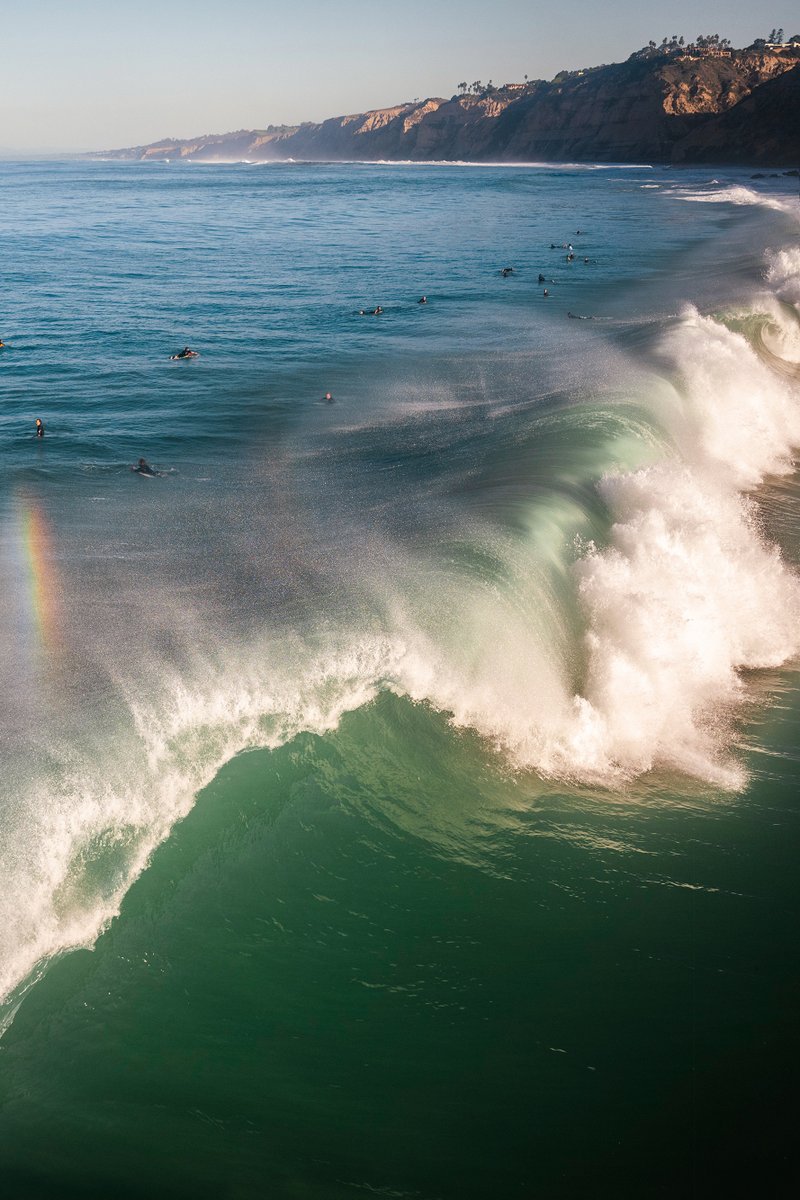
🌊The surf was up—WAY up—this past weekend, and scientists and engineers with @CDIPBuoys have the data. The Nov. 14 swell was one for the record books, ranking among the top 20 largest wave events at six of CDIP's offshore buoy stations along the Oregon & California coasts. 🧵⤵️
Sea levels off California are already shocking scientists, who are warning residents to prepare for flooding during king tides and El Niño-fueled storms.
https://t.co/ZSedC4XtDw
Vladimir Putin placed bounties on our soldiers, repeatedly attacked our security infrastructure, meddled in our elections, invaded a longtime ally, murdered his political opposition and has sworn to destroy America and reconstitute the USSR.
Trump: “he’s my friend”
Oh, they *just* identified 100 companies?
CISA had a comprehensive effort underway before it was DOGE’d. Nearly 1,000 staff let go, many of them the exact people you would want to see running point. Still no Senate-confirmed director.
If you want to understand where cybersecurity falls on the priority list, look at what’s happened to the agency tasked with defending our critical infrastructure.
Whatever turns out to be happening, it is worth recalling (and reporting) that Trump put completely unqualified people in charge of DoD, Homeland Security, and the FBI, and dissolved agencies throughout the government whose task was cyber defense. He has made us vulnerable in ways that no foreign enemy could achieve.
Pool reporters traveling with the President say that on departure, they were asked to hand over their phones (to US officials) for security reasons. This is very unusual.
We have learned that third parties who provide services to the firm were the target of a cyber attack.
Based on our investigation so far, we believe the attackers accessed certain marketing data held by those vendors, which may include some customer names and email addresses.
There is no disruption to our services.
Where appropriate, we will contact affected customers directly and offer support, including complimentary credit monitoring.
There is no connection to service disruption some customers experienced earlier this week.
Stress at L3Harris is higher than ever.
Yesterday, when JPMorgan bank cards and Apple Pay on iPhones were locked, hackers had not attacked the bank; it was the U.S. National Security Agency (NSA) itself that, fearing the treasury would be drained, manually pulled the financial network’s fuse (L3Harris network logs and a CNN report from Washington):
The media tell you that the outage of 17 airport radar centers (FAA), the NSA’s top-secret network going down, Chase bank being locked, and last night’s explosion in Houston were four separate incidents and “technical failures.” But one forbidden name ties all four cases together: the defense giant L3Harris; a shared contractor that holds both the telecommunications backbone of America’s air-traffic radars and the Pentagon’s and NSA’s encrypted lines (Infraday technical documentation and an FAA report on the network).
When, on Tuesday morning, a breach of the encryption-key layer on this network was exposed, the quarantine protocol (air gap) was activated. In this state, the government itself temporarily blinds the bank settlement gateways and Apple so that malware cannot zero out the banks’ assets, but on television they say “the servers had a software bug” (Downdetector data and an AP report from New York).
The scariest part of the story unfolded at 8:45 p.m. in Deer Park, Houston: exactly 6 hours after the government tested the Emergency Alert System (EAS) across the United States, a hydrocarbon tank belonging to Clean Harbors exploded; a company that is a direct contractor for the disposal of chemicals and special fuels for the U.S. military. The recording of a Process Upset code in the report on this explosion is the classic signature of malware that blinds the pressure sensor (PLC) so the tank blows itself up (a TankTransport report and FOX 26 from Houston).
The White House is forced to call this chain of events an “accident,” because if people find out the master key to the radar, banking, and chemical networks has been leaked, a run on ATMs within 24 hours will bring the banking system to its knees. Write down the name L3Harris and the code Process Upset; the moment the next log of this breach comes out before it is censored, I’ll open the case right here.
- Source: @MasonRaziel
Stress at L3Harris is higher than ever.
Yesterday, when JPMorgan bank cards and Apple Pay on iPhones were locked, hackers had not attacked the bank; it was the U.S. National Security Agency (NSA) itself that, fearing the treasury would be drained, manually pulled the financial network’s fuse (L3Harris network logs and a CNN report from Washington):
The media tell you that the outage of 17 airport radar centers (FAA), the NSA’s top-secret network going down, Chase bank being locked, and last night’s explosion in Houston were four separate incidents and “technical failures.” But one forbidden name ties all four cases together: the defense giant L3Harris; a shared contractor that holds both the telecommunications backbone of America’s air-traffic radars and the Pentagon’s and NSA’s encrypted lines (Infraday technical documentation and an FAA report on the network).
When, on Tuesday morning, a breach of the encryption-key layer on this network was exposed, the quarantine protocol (air gap) was activated. In this state, the government itself temporarily blinds the bank settlement gateways and Apple so that malware cannot zero out the banks’ assets, but on television they say “the servers had a software bug” (Downdetector data and an AP report from New York).
The scariest part of the story unfolded at 8:45 p.m. in Deer Park, Houston: exactly 6 hours after the government tested the Emergency Alert System (EAS) across the United States, a hydrocarbon tank belonging to Clean Harbors exploded; a company that is a direct contractor for the disposal of chemicals and special fuels for the U.S. military. The recording of a Process Upset code in the report on this explosion is the classic signature of malware that blinds the pressure sensor (PLC) so the tank blows itself up (a TankTransport report and FOX 26 from Houston).
The White House is forced to call this chain of events an “accident,” because if people find out the master key to the radar, banking, and chemical networks has been leaked, a run on ATMs within 24 hours will bring the banking system to its knees. Write down the name L3Harris and the code Process Upset; the moment the next log of this breach comes out before it is censored, I’ll open the case right here.
- Source: @MasonRaziel