US inflation is diverging from the Fed’s target:
US CPI Inflation has surged +30.2% since January 2020, to an all-time high.
This translates into an annualized inflation rate of +4.0% over this period.
Meanwhile, under a steady 2% annual inflation target, cumulative CPI growth would have been just +14.3%.
In other words, actual cumulative inflation is +15.9 percentage points above the target path, more than double the implied increase.
This comes as CPI has remained above 2% for 67 consecutive months.
The gap began widening again in March, as inflation has now remained above 3% for 7 consecutive months.
Asset owners are the only winners.
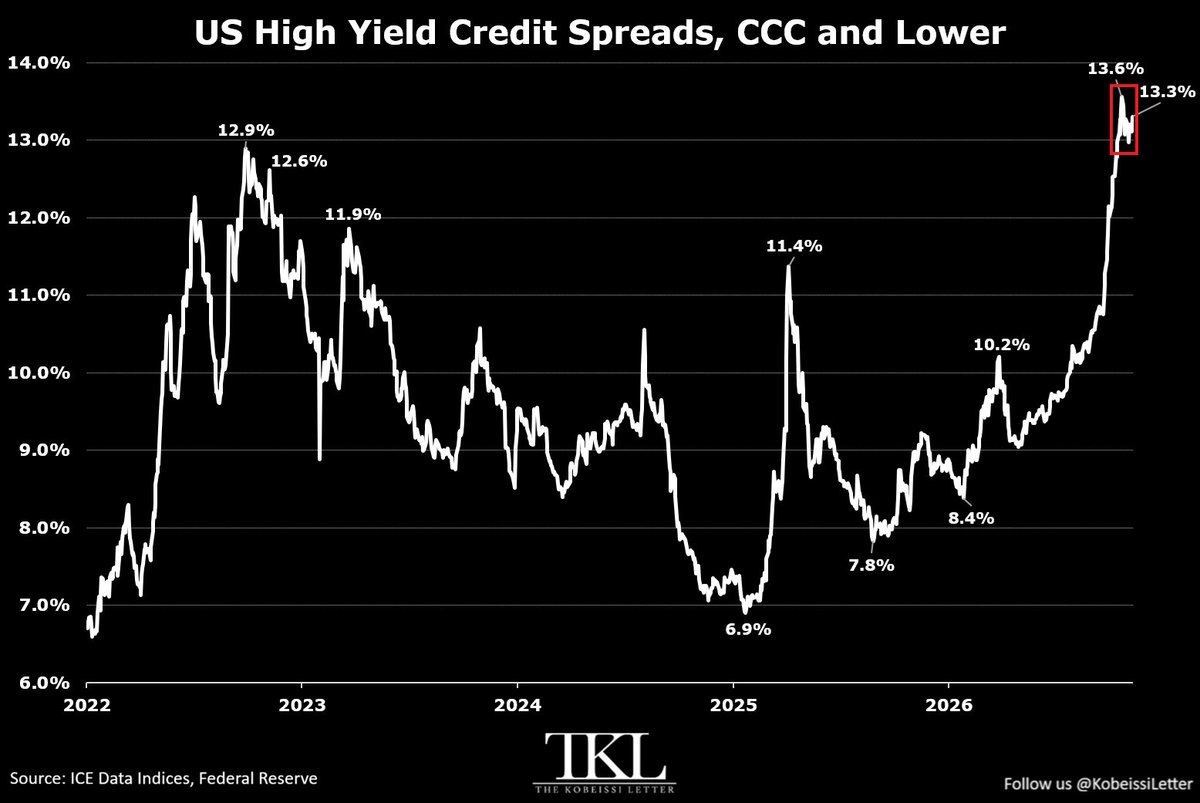
US credit stress is intensifying among the weakest-quality borrowers:
Spreads on CCC-rated and lower US corporate bonds are up to 13.3%, near the highest since the 2020 pandemic.
Since January 2026, this figure has surged +490 basis points.
As a result, these spreads have now surpassed the 2022 bear market peak of 12.9%.
For perspective, during the 2020 February-March surge, this metric peaked at 18.8%.
Meanwhile, the spread differential between CCC- and BBB-rated corporate debt has widened to ~1,200 basis points, its widest level in at least 5 years.
This means investors are demanding ~12 percentage points more in compensation to hold the lowest-rated debt rather than first-notch investment-grade corporate bonds.
Cracks are spreading quickly through the lowest-quality credit.