I'm not a developer. But I use AI every day.
And the more I lean on it, the harder it gets to track what I actually know.
Claude Code replies the same way whether you have a PhD in the subject or zero knowledge in it. Same depth. Same jargon. Same assumptions.
So I'm constantly telling it "I already know this," or losing the thread when it goes over my head. I waste cycles either way.
So I made a file. Just a markdown file. I called it EXPERTISE.md.
A map of myself. What I'm fluent in. What I'm working in. What I'm only aware of. What I've never touched.
Then I added one line to CLAUDE.md so Claude Code reads EXPERTISE.md at the start of every session. Now every reply is shaped to where I actually am.
To keep it honest, I built a small skill: /update-expertise. It scans recent chats and proposes updates. Like: "You sounded lost on X today. Drop it from working knowledge to just being aware in Expertise.md?" I approve or reject.
The point: we progress together, instead of me repeating myself every conversation.
Did it transform how AI talks to me overnight? No. It takes time. AI needs time to learn what I actually know. I need time to keep expanding the map as I learn more.
But writing it changed something else. I had to get honest about what I'm pretending to know versus what I actually know.
That's the part nobody talks about with AI. We get answers fast. We feel productive. We move on. And we lose the friction that used to tell us "you don't actually know this yet."
A file like this gives that friction back.
It's not just for me. It's for the AI too. The faster we know each other, the faster we progress together.
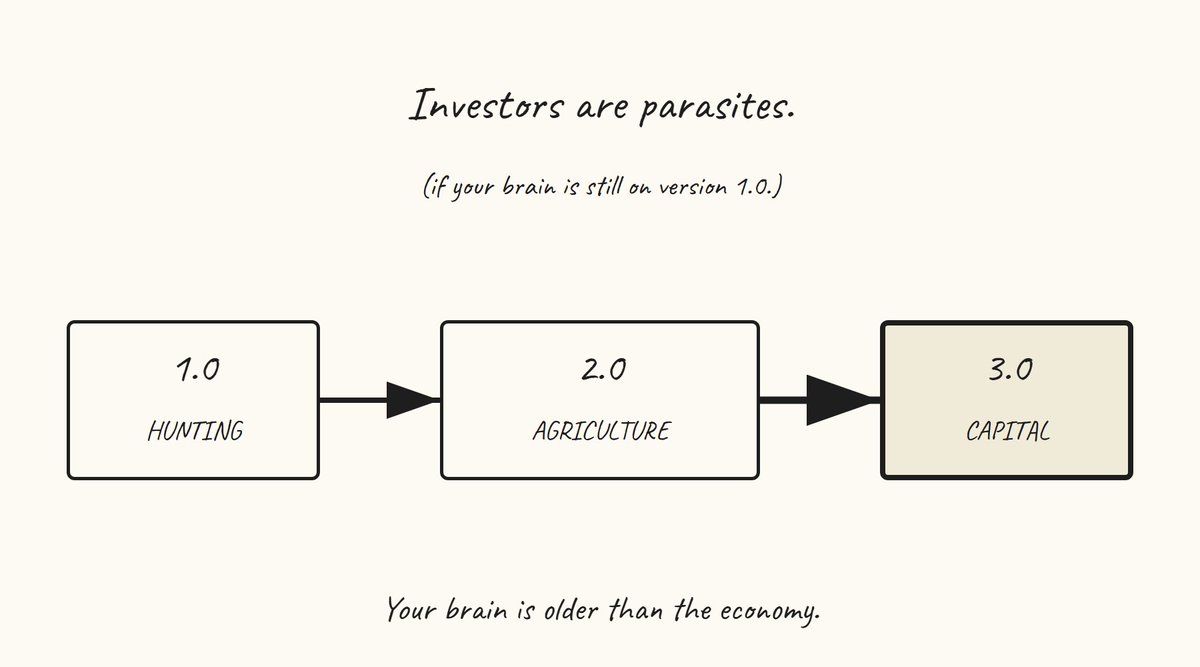
Almost everything around you, the laptop, the medicine, the EV in your driveway, exists because someone else's savings flowed somewhere they didn't have to flow.
That's not extraction. That's how 3.0 economies generate the wealth 1.0 brains assume must've been stolen.
"Investors are parasites."
That sentence makes sense in a hunter-gatherer economy.
It breaks in a capital economy.
The instinct never updated.
Li Lu (李录), who runs Charlie Munger's family office at Himalaya Capital, laid this out cleanly. Threading it because it's the sharpest mental model I've heard for it in a while.
"An excellent value investor is an indispensable partner for an excellent enterprise."
一个优秀的价值投资人是一个优秀企业不可或缺的伙伴
The investor isn't extracting value from the company.
The investor is the reason the company survived long enough to create any.
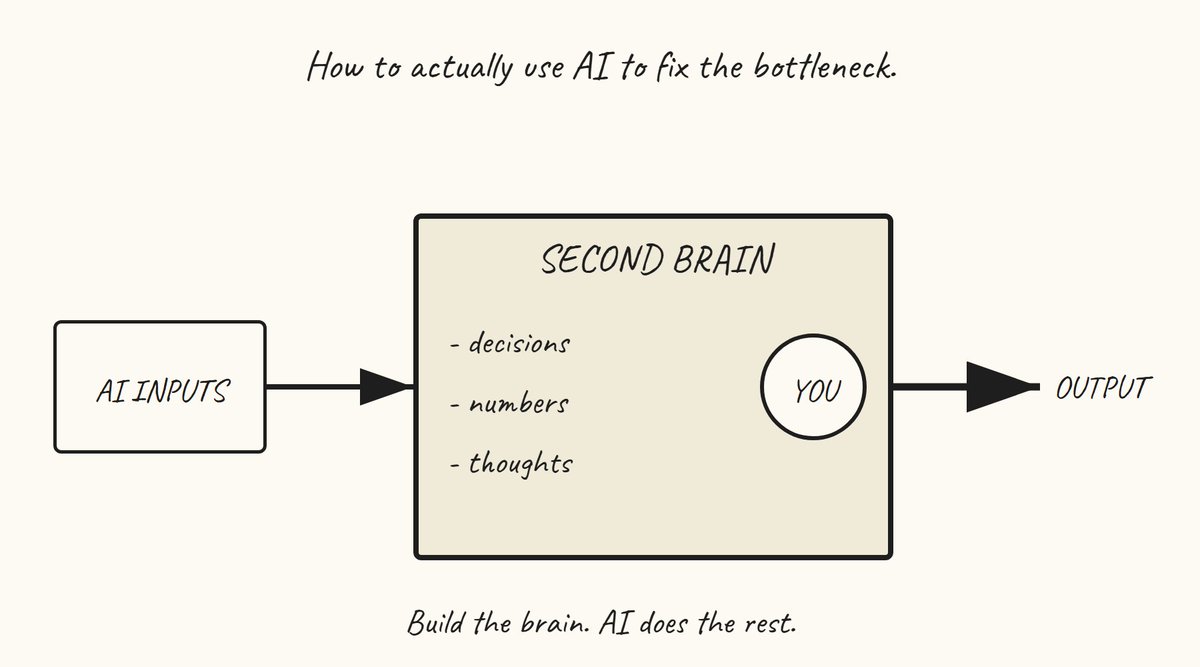
Everyone says AI removes bottlenecks.
It doesn't. It moves the bottleneck. Into your skull.
How much you can hold and connect is the new ceiling.
❌You re-debate decisions you've already made.
❌You forget the numbers from last week's filing.
❌You learn a tool, then 3 days later can't reconstruct how it connected to the others.
The unlock isn't more AI. It's a second brain.
✔️Aligned to you.
✔️Paired with AI.
✔️To hold the numbers you read.
✔️To capture thoughts as they happen.
✔️Not to decide for you, but to remember what you decided and why.
That's the layer that lets AI actually amplify you.
Without it, AI is just faster typing.
Yesterday Claude Code recorded my demo.
Today it edited my entire YouTube Short.
I record the audio. Claude does the rest.
✔️Opens the terminal.
✔️Types the prompt.
✔️Records the screen.
✔️Cuts silences.
✔️Adds zooms.
✔️Burns captions.
5 minutes later, here's the file.
AI makes building trivial. Knowing what to build is still the hard part.
I've spent more time this week figuring out what to build than actually building it.
Yesterday I posted a demo of an IBKR portfolio tool I built with Claude Code.
Today's flex: I didn't record that demo. Claude Code did.
One prompt. It opened PowerShell on my recording monitor, ran the script, captured the screen, annotated the interesting frames, exported the mp4.
No OBS. No video editor. No "let me set up the scene first."
The thing people miss about Claude Code is it's not a coding assistant. It's an agent with hands. It can drive your actual computer - apps, terminals, files, recordings - the same way you would.
The tool I built was what I want. The fact that the demo recorded itself is the bonus story.
Want weekly(ish) field notes from building AI-leveraged systems? The tools I tried, the systems I shipped or killed, and the ideas worth borrowing. Subscribe: https://t.co/dr8dZF4kCG
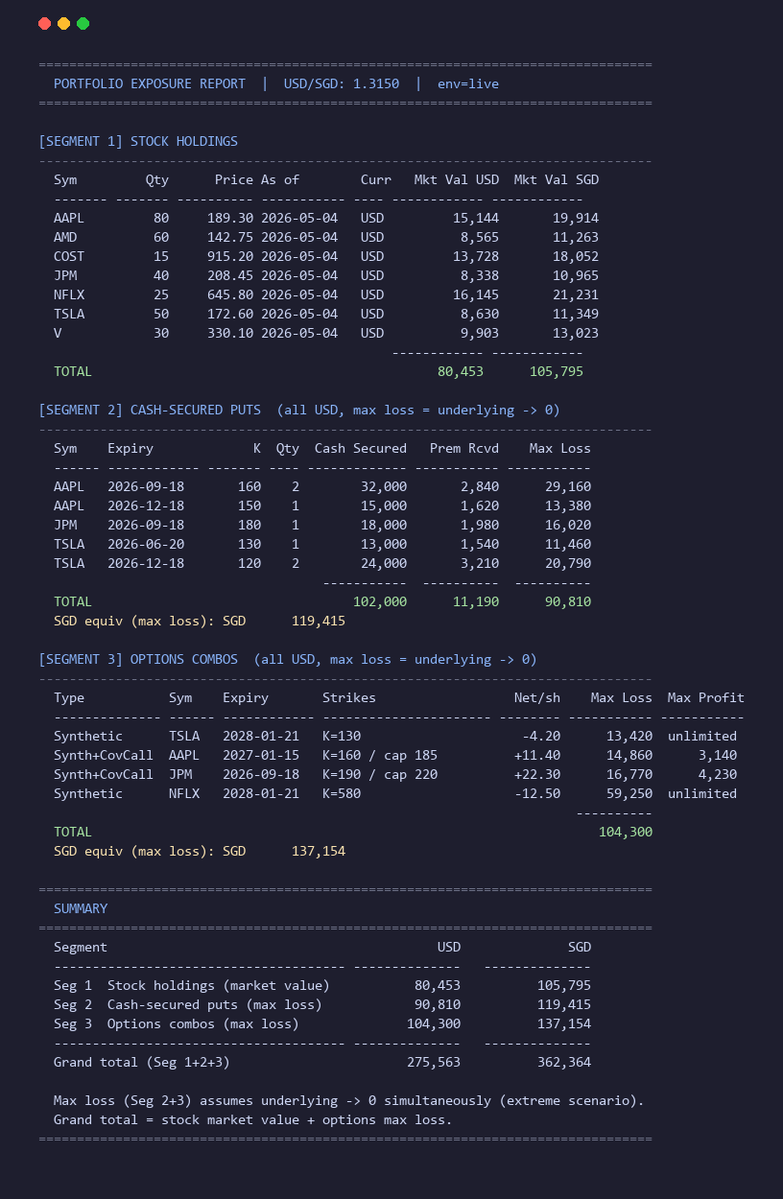
I run a portfolio with real leverage - synthetic options + LEAPs short puts. Which means my actual exposure is way more than just my stock positions.
IBKR gives you no single view of what that looks like. So I built one.
One terminal command that pulls live from TWS and breaks it all down - stocks at market value, cash secured in puts, options combos with max loss. Grand total in USD + SGD.
Here it is running.
Built with Claude Code. Took about 15 mins.
Built a terminal command today that tells me exactly how exposed I am - in one second.
Running a portfolio of stocks + options is messy. IBKR doesn't give you one clean view of:
- How much cash is actually tied up in cash-secured puts
- What your max loss looks like across all positions
- Whether you're overextended or have room to add
Before: clicking around 3 different IBKR screens, mentally adding it all up.
Now: one command. Stocks at market value, puts with cash secured and max loss, options combos broken out - all in USD and SGD.
Took Claude Code 15 mins to build. The bar for "tools I can build for my exact workflow" just keeps dropping.
April 2025: $GOOGL was "the AI loser," down 30%. I added.
This year, AMZN dropped to $200 and people called the AI trade dead. I added.
MSFT in the $400s when OpenAI worries flared. I added.
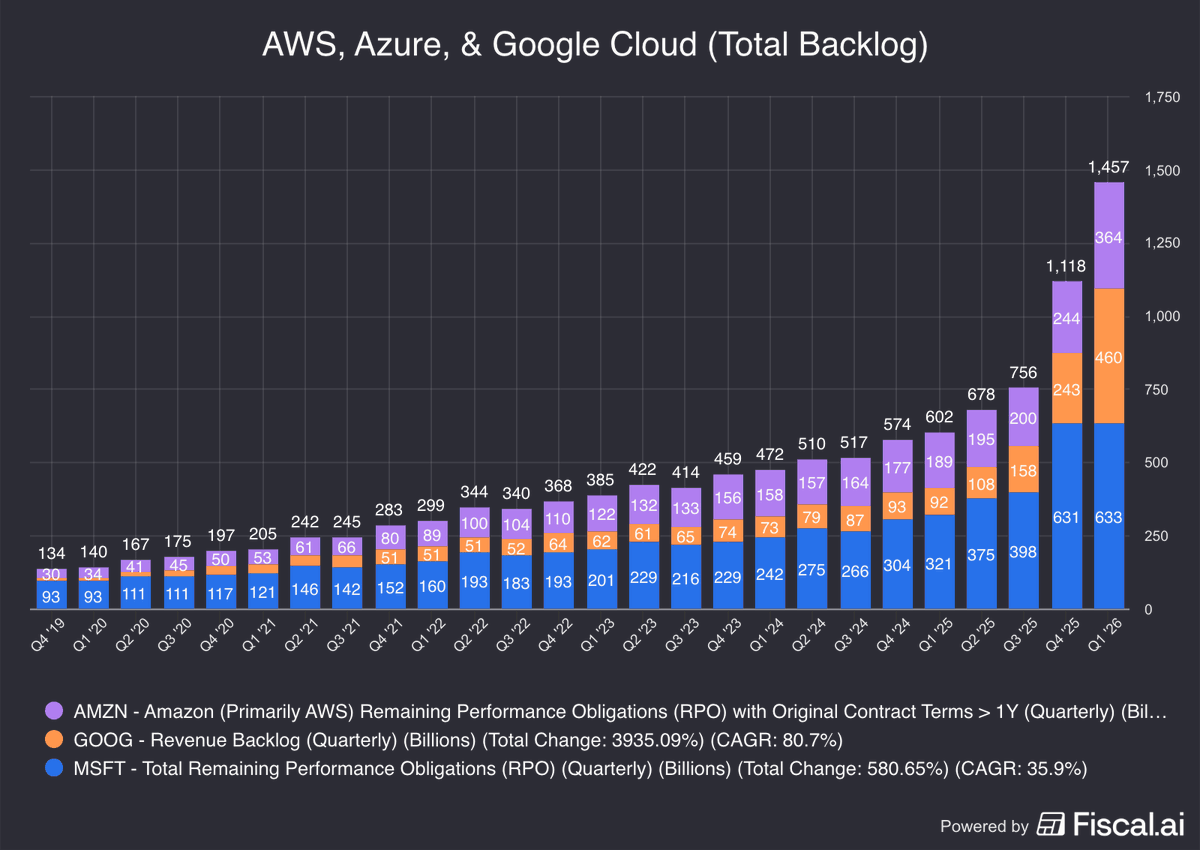
3 of my biggest positions. What the bears keep missing about hyperscalers:
6/ The framing I keep coming back to:
The AI capex debate is the wrong question. $1.5T of non-cancellable contracts already settles "is the demand real."
The real question is who owns the rails.
There are 3 answers. I own all 3.