Today we’re launching Ornn Depreciation Curves, modeling GPU hardware values from A100 to GB300 using real transaction data.
As new generations of GPUs enter the market, the future value of existing hardware becomes increasingly uncertain.
Depreciation Curves provides a foundation for estimating GPU residual values, helping lenders and fleet operators better quantify the risks underlying financing and investment decisions.
Explore the curves → https://t.co/oxQ9uR98Bq
Agreed, broadband is a cautionary tale
Though bandwidth trading didn't fail because of technological deflation - they failed because they weren't able to bring physical market participants into their standardized trading market
Cash-settled compute futures avoid much of the delivery complexity
Our main job is to demonstrate effective hedges for providers and buyers, and build liquidity around that commercial demand
1/ People in AI still seem to think GPUs can’t support a liquid futures market because most large, long-term compute contracts are bespoke.
This fundamentally misunderstands how commodities markets work. Plenty of mature commodities trade through customized physical contracts alongside standardized futures.
The key is having a benchmark that captures enough of the underlying price exposure to make hedging useful.
A quick thread on this…
@ShanuMathew93 Completely agree
Trump’s rate payer protection pledge, @AnthropicAI public benefit fund, @amppublic’s fund have already pushed hard in this direction
Gotta stay grounded on this type of stuff
4/ This is all pretty familiar territory for power traders. In my conversations, they’ve been by far the quickest to grasp the dynamics of compute markets (by far)
This makes sense given power routinely involves managing bespoke exposures against standardized futures, while pricing and trading the remaining locational, shape, and tenor risks
I suspect there are some sharp power folks out there who will a whole lot of money in compute over the next few years, while the rest of the industry catches up
3/ This is where standardized benchmarks become useful.
Our compute indices aggregate executed on-demand rental prices by GPU model, across providers and configurations. ICE’s H100 and B200 futures settle in cash against monthly averages of those indices.
A cloud provider with 70% of its fleet under bespoke five-year reservations and 30% sold on demand could:
- Short futures to hedge on-demand revenue
- Go long to hedge future capacity purchases
- Trade calendar spreads as reservations expire
- Trade H100/B200 spreads to manage relative price exposure
None requires standardizing its physical contracts
@mikejulian GPUs are commodities but the long term contracts structured around them aren’t
This is the biggest misunderstanding in compute markets right now
Bespoke physical contracts and standardized financial markets can coexist!
People tend to assume that the more GPUs you rent, the cheaper each GPU gets, but that's not really how the market works
Prices often bottom out around 32–64 GPUs, then rise as larger, interconnected clusters become harder to find and more expensive to operate.
At a certain size (~2,000 GPUs+), network designs even require an additional layer of switches, which can create massive incremental cost
Cluster size deserves a lot more attention in compute pricing negotiations
AI makes for strange political bedfellows. Bernie Sanders, AOC, and parts of the MAGA right suddenly aligned on a key issue (halting DC construction), meanwhile Trump and much of the tech-friendly establishment looking to accelerate development (& lots of in between, Ezra Klein / abundance folks for example). It makes for very weird candidate profiles and polling dynamics heading into the midterms
@BWConnector@OrnnExchange Agreed. Futures maturities will ultimately extend to 3-5 years as the market develops. The priority initially is concentrating liquidity in shorter-dated contracts before extending further out the curve
Given the current state of AI financing, I wanted to make a simple live tracker for the state of the AI money machine.
Check it out at https://t.co/PH3ut5VrEp. If I missed anything there's a submission form per-company, feel free to contribute, will be updating this live!
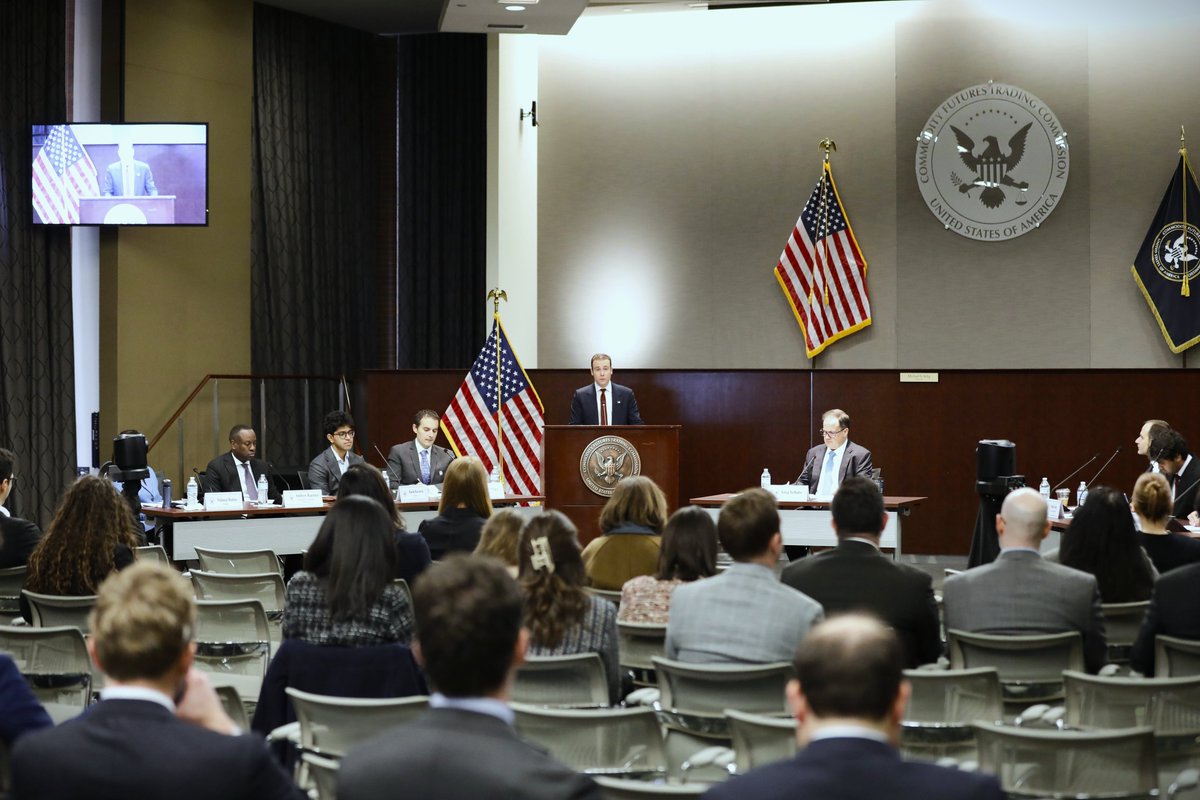
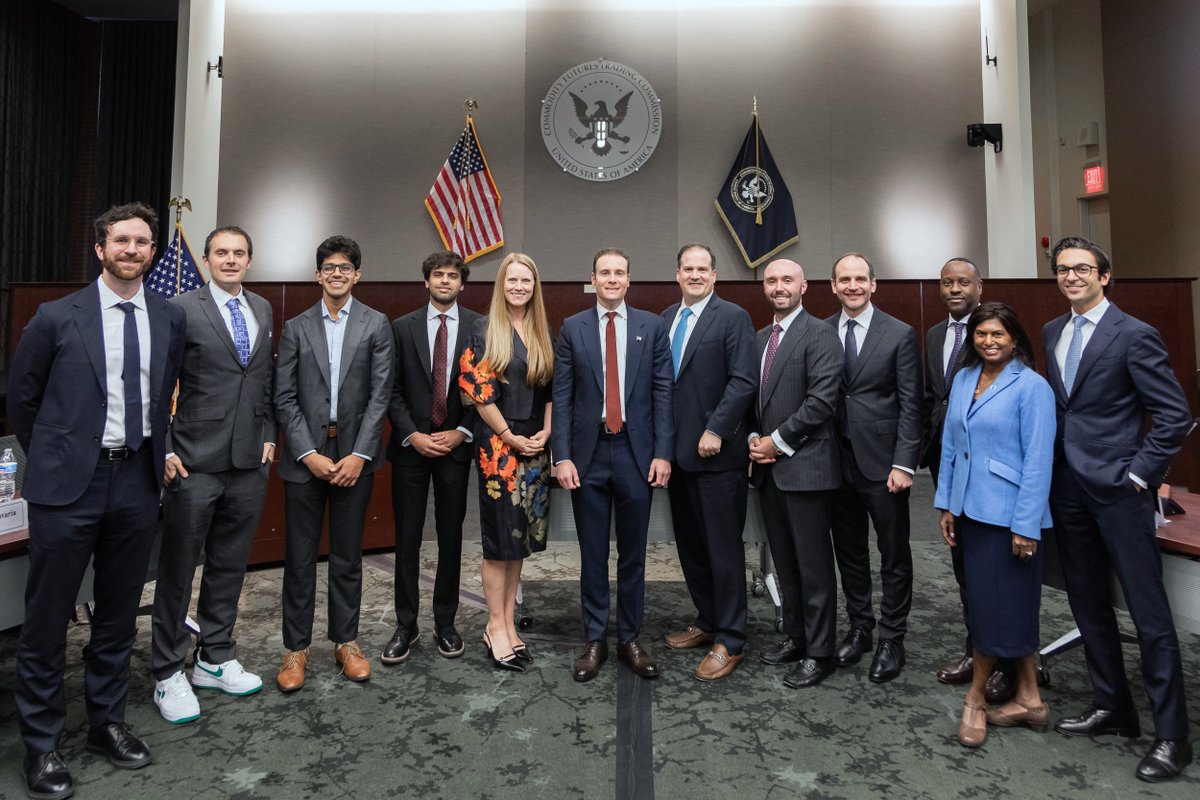
Yesterday, the @CFTC held its inaugural Frontier Forum on super intelligence where attendees discussed the growing role SI has to play in our derivatives markets and the future of agentic trading.
Thank you to all the panelists, moderators, and guests who contributed to this insightful and productive event.
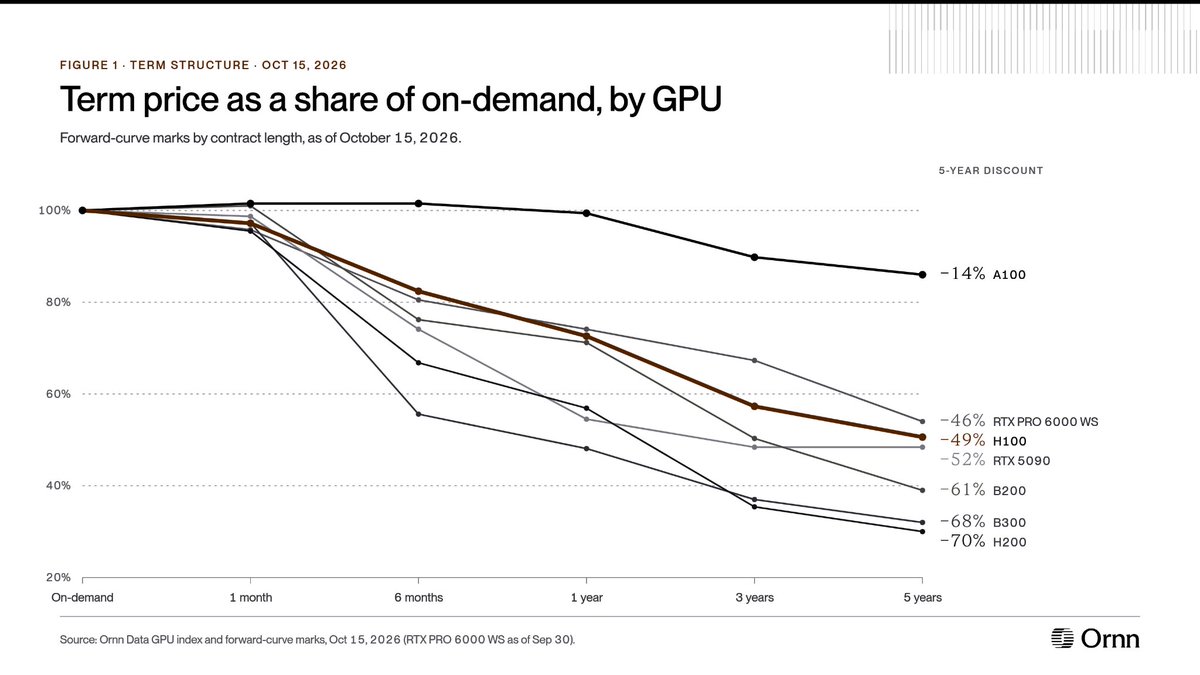
@OrnnExchange To be clear, compute is definitely not in contango. Long term rentals are still sold at a significant discount to on-demand, as our data shows
@OrnnExchange Neoclouds effectively pay for clusters twice - first in principal and interest, then in massive discounts on 5-year take-or-pay contracts.
Our research covering 850 days of H100 prices shows how much upside neoclouds could be capturing by selling on-demand: