New Podcast 🎙️
In this episode of #InterpretingIndia, @CharukeshiB speaks with @Shimona_, associate researcher at @UNIDIR, on how artificial intelligence is reshaping warfare. They discuss the risks of bias and miscalculation, the governance challenges of lethal autonomous weapons, and why ethics and gender must be central to future disarmament efforts.
Tune in: https://t.co/xwAhdnIPnp
With marine resources shrinking in the South China Sea, the risk of Chinese IUU fishing extending into the Indian Ocean becomes a more pressing eventuality—one that India must prepare for.
Read more in the article by @drajaykumar_ias & @CharukeshiB: https://t.co/LKXODbTE4o
🔔New Article!
@drajaykumar_ias and @CharukeshiB examine the scale and impact of Chinese IUU fishing operations globally and identifies the nature of the challenge posed by IUU fishing in the Indian Ocean Region (IOR).
The piece also investigates why existing maritime law and international frameworks have struggled to address this growing threat.
Read the full article: https://t.co/FzvZVPkViw
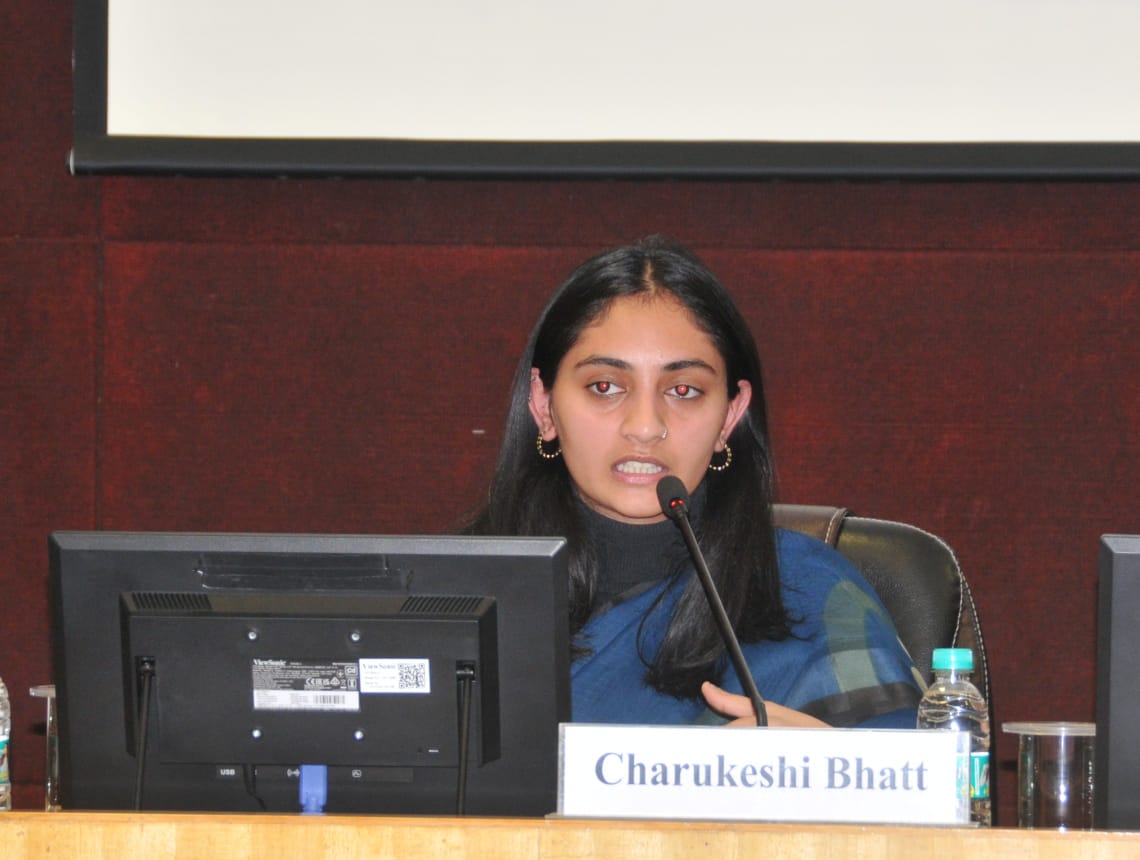
@CharukeshiB, research assistant at @CarnegieIndia, participated in the seminar on India's Approach to AI in the Military Domain and Emerging Technologies in Lethal Autonomous Weapon Systems, jointly hosted by @MEAIndia & @DefenceMinIndia from Jan 28-30 at @IDSAIndia.
Why does India continue to support the GGE process despite the emergence of parallel efforts?
In this article, Tejas Bhardwaj and @CharukeshiB address this question. Read here to find out: https://t.co/TgKipqp2IZ
How are countries worldwide addressing the ethical and legal challenges of Lethal Autonomous Weapons Systems (#LAWS)?
Find out more from an Indian perspective in this article by Tejas Bhardwaj and @CharukeshiB. Read more: https://t.co/TgKipqp2IZ
Considering recent debates on #LAWS at UN #GGE, read Tejas Bhardwaj and @CharukeshiB's commentary on India’s normative stance on #LAWS at multilateral forums. https://t.co/3OoAMl3Acg