The U.S. War for Independence: A Costly Affair
The Monetary Cost:
• United States: Military operations ran up a tab of about $101 million. But since taxing was a no-go, the Continental Congress decided to print $242 million in “Continental” paper money. Spoiler alert: this led to hyperinflation, and suddenly, that cash was about as useful as a chocolate teapot.
• Great Britain: They spent around £250 million—because who doesn’t love a little national debt?
• France & Spain: France threw in a whopping 1.3 billion livres, while Spain decided that military spending was the way to go, racking up over 700 million reales. Talk about breaking the bank!
The Human Cost (Deaths)
• American Colonies: About 25,000 military deaths. This includes 6,800 brave souls lost in battle and up to 18,000 who succumbed to disease, malnutrition, or just bad luck aboard British prison ships.
• Great Britain: Approximately 43,600 military deaths, with about 8,500 in action and many more who met their end thanks to disease.
• Native Americans: Hundreds lost their lives, many hoping to protect their lands by siding with the British.
• An estimated 2,112 French citizens (soldiers and sailors) died serving, including combat operations, ship losses at sea, and fatal illnesses contracted.
So, next time you celebrate your freedom, remember it wasn’t cheap, and it certainly wasn’t easy
#DidYouKnow #truestory #historyfacts #ChasingHistory #4thofJuly
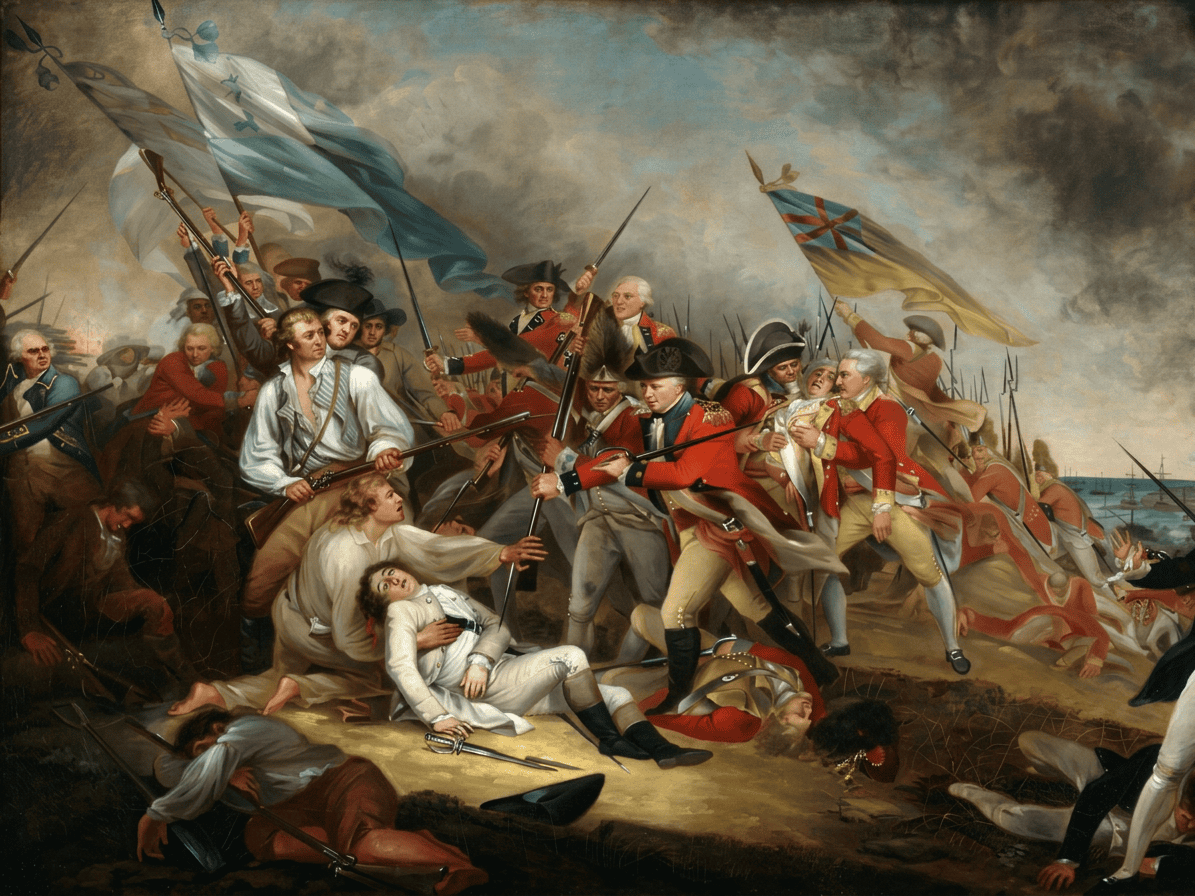
Picture: Painted by John Trumbull in 1786, General Joseph Warren is depicted in the foreground. In the center-right midground, Major John Pitcairn is depicted dying in the arms of his son. Peter Salem, who is credited with mortally wounding Pitcairn, is in the right foreground of the frame. Museum of Fine Arts, Boston
On 3 July, England finally returned the Stone of Destiny to Scotland! This historic moment connects to the audacious Christmas Day heist of 1950, where a group of students turned theft into a bold act of political protest. Here’s how the saga unfolded:
The Plot: The operation was led by Ian Hamilton, a 25-year-old law student passionate about Scottish home rule. He recruited fellow students Gavin Vernon, Alan Stuart, and Kay Matheson to help reclaim Scotland’s ultimate national treasure.
Break-In: On Christmas morning, they broke into Westminster Abbey through Poet’s Corner. In their eagerness, they dropped the 152 kg sandstone block, causing it to snap along a historic crack. Oops!
Close Call: As Hamilton stashed the smaller piece in the car, a policeman approached. Thinking quickly, he and Kay pretended to be a couple in a romantic moment. Their “no room at the inn” story charmed the officer, who let them off the hook.
The Escape: They managed to smuggle the fragments across the border, evading massive police roadblocks. A Scottish stonemason, Robert “Bertie” Gray, secretly repaired the Stone, preserving tiny chips for nationalists as secret heirlooms.
The Aftermath: The heist made headlines worldwide and temporarily closed the Anglo-Scottish border. Four months later, the students returned the Stone, leaving it draped in a Scottish flag at Arbroath Abbey, a site tied to Scottish independence.
The British government opted not to prosecute, fearing the students would become martyrs. Gavin later joked he “never had to buy a beer again” at the university bar.
So, here’s to bold acts of history and national pride!
#DidYouKnow #truestory #history #ChasingHistory #scotland #england
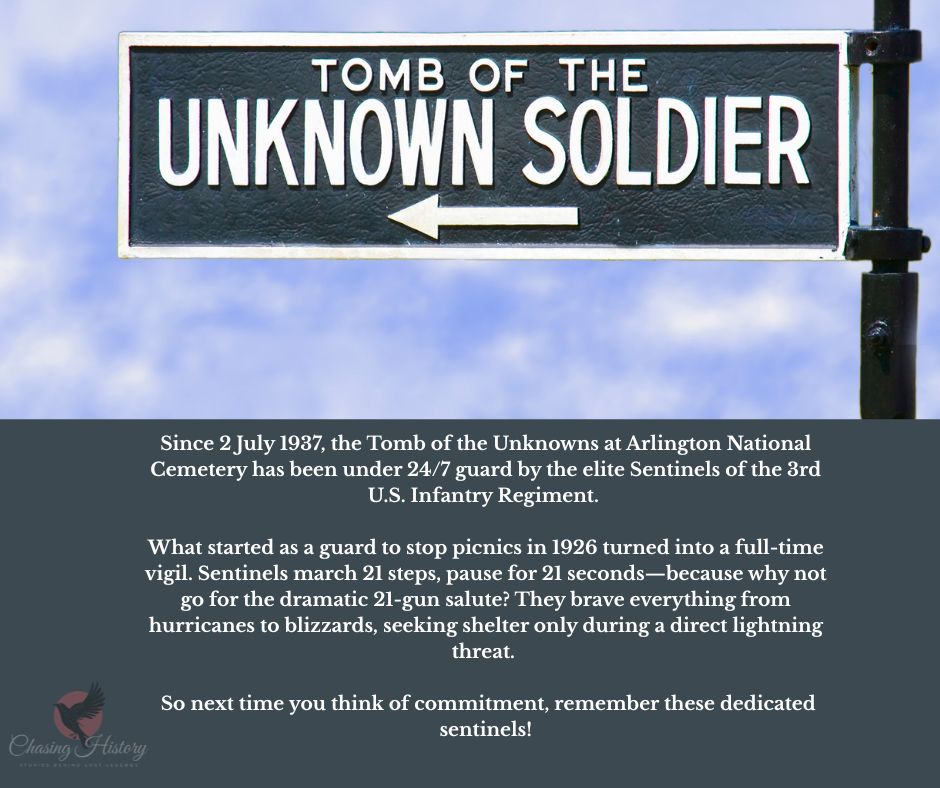
The Tomb of the Unknowns at Arlington National Cemetery has been under 24/7 guard since midnight on 2 July 1937. This round-the-clock vigil is upheld by the elite Sentinels of the 3rd U.S. Infantry Regiment (The Old Guard). Here’s why this tradition is both remarkable and demanding:
Origins: It all started in 1926 with a military guard meant to stop tourists from using the monument as a picnic spot. Fast forward to a full-time watch to ensure a permanent mark of respect.
The Ritual: Sentinels march 21 steps across a black mat, then pause to face the Tomb for 21 seconds. Why 21? It represents the 21-gun salute, the highest military honor.
Rain or Shine: These guards don’t take a break for hurricanes, blizzards, or even government shutdowns. They seek shelter only in extreme conditions (such as a direct lightning threat), returning as soon as it’s safe.
The Sentinels: Being a Tomb Guard is one of the toughest and most prestigious roles in the military. Training is intense—guards memorize extensive cemetery history and spend up to 8 hours perfecting their heavy wool uniforms to ensure they’re utterly spotless.
So, the next time you think about commitment, remember these sentinels standing watch, rain or shine, honoring those who served.
#history #ChasingHistory #truestory #DidYouKnow #tomboftheunknownsoldier
Ever wondered where sunglasses came from? Well, they were invented in China during the 12th century (roughly 960–1279 AD). Early models sported flat lenses made of smoky quartz. They were called Ai Tai, which translates to “dark clouds covering the sun”—a fitting name for a fashion statement that doubled as a judicial tool.
Here’s the scoop:
Courtroom Confidentiality: Judges wore these stylish smoky panes to keep their emotions under wraps. Witnesses couldn’t tell if they were bored, confused, or just pondering their next meal.
Status Symbol: These shades weren’t just for sun protection; they were luxury items. Cutting and polishing quartz was so tough that it sometimes cost as much as a horse.
Glare Relief: According to the Song Dynasty scholar Joseph Needham, they also helped shield their eyes from sun glare.
Frame Evolution: Originally, they just sat against the face or were tied on with whatever was handy. It wasn’t until later that they got all fancy in wooden or bone frames.
So next time you slip on your shades, remember you’re channeling 12th-century Chinese judges.
#chasinghistory #truestory #DidYouKnow #history #sunglasses
The crew of the Soviet Soyuz 11 mission—cosmonauts Georgy Dobrovolsky, Vladislav Volkov, and Viktor Patsayev—holds the somber distinction of being the only humans to die in space. On 30 June 1971, recovery teams opened their capsule in Kazakhstan to find all three men dead, victims of sudden depressurization during re-entry.
The Mission and Breakthrough:
Before the tragedy, Soyuz 11 was celebrated as a triumph of the Soviet space program. Launched on 6 June 1971, the crew successfully docked Salyut 1, the world’s first space station, and spent 23 days conducting various experiments, breaking the human spaceflight endurance record in the process.
The Tragedy During Re-entry:
On 29 June 1971, the crew undocked from Salyut 1 to return to Earth. Everything seemed normal until about 29 minutes before touchdown. At 168 kilometers up, explosive bolts designed to separate modules fired, causing a pressure-equalization valve to snap open. With the sudden loss of atmosphere, the crew was rapidly exposed to the vacuum of space. They weren’t wearing pressure suits due to space constraints, and they lost consciousness within seconds. Viktor Patsayev even tried to close the valve, but it was too late.
Why They Are the “Only” People to Die in Space:
The title of the “only people to die in space” hinges on the Kármán line, the recognized boundary of space at about 100 kilometers (62 miles) above Earth. Other tragedies, like the Challenger and Columbia disasters, occurred within Earth’s atmosphere, not in the void of space.
Lasting Impact:
The Soyuz 11 disaster catalyzed significant changes in human spaceflight safety. In response, Soviet engineers overhauled the Soyuz spacecraft’s safety systems, mandating that cosmonauts wear pressurized spacesuits during launch, docking, and re-entry to ensure that such a tragedy would not happen again.
#DidYouKnow #chasinghistory #history #truestory #SpaceExploration
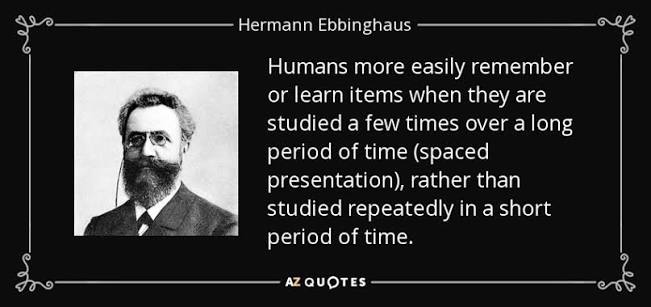
Hermann Ebbinghaus decided to take memory to the lab—using himself as a human guinea pig to memorize “nonsense syllables” like DAX and BOK. Because who needs meaningful words when you’re trying to discover the secrets of the mind?
His research led to some groundbreaking findings, including:
The Forgetting Curve: Turns out, we forget things faster than we forget to turn off our coffee makers. Over half of what we learn disappears within an hour!
The Spacing Effect: Ebbinghaus discovered that spacing your study sessions is way better than cramming. Who knew procrastination could have a scientific backing?
The Learning Curve: Learning is like a roller coaster—exciting at first, then it levels off. Kind of like that enthusiasm you have for New Year’s resolutions by February.
Savings Method: He found that even if you forget something, it doesn’t vanish completely. It’s like that last piece of pizza in the fridge—you know it’s there, but you might need a little extra motivation to reach for it.
Ebbinghaus summed it all up in his 1885 book, Memory: A Contribution to Experimental Psychology
#chasinghistory #truestory #DidYouKnow #history #memory
Hermann Ebbinghaus decided to take memory to the lab—using himself as a human guinea pig to memorize “nonsense syllables” like DAX and BOK. Because who needs meaningful words when you’re trying to discover the secrets of the mind?
His research led to some groundbreaking findings, including:
The Forgetting Curve: Turns out, we forget things faster than we forget to turn off our coffee makers. Over half of what we learn disappears within an hour!
The Spacing Effect: Ebbinghaus discovered that spacing your study sessions is way better than cramming. Who knew procrastination could have a scientific backing?
The Learning Curve: Learning is like a roller coaster—exciting at first, then it levels off. Kind of like that enthusiasm you have for New Year’s resolutions by February.
Savings Method: He found that even if you forget something, it doesn’t vanish completely. It’s like that last piece of pizza in the fridge—you know it’s there, but you might need a little extra motivation to reach for it.
Ebbinghaus summed it all up in his 1885 book, Memory: A Contribution to Experimental Psychology, proving that memory isn’t just a mystery; it’s also a great excuse for forgetting your anniversary. Cheers to science!
On this day in history, the U.S. had a bit of a busy day. Not only did Florida, Alabama, Louisiana, Georgia, North Carolina, and South Carolina finally start accepting their “Welcome Back” letters after the Civil War, but President Andrew Johnson also decided it was the perfect time to sign a law establishing an eight-hour workday for government workers.
So, here’s to a day of monumental decisions—because what’s more American than a long-awaited reunion and the promise of not working yourself to the bone? Who knew that rejoining the country and getting a decent lunch break could happen on the same day?
So, here’s to a day of monumental decisions—because what’s more American than a long-awaited reunion and the promise of not working yourself to the bone?
#truestory #history #chasinghistory #DidYouKnow #AmericanHistory
On June 24, 1947, pilot and businessman Kenneth Arnold was flying near Mount Rainier, Washington, in search of a downed Marine C-46 transport plane when he encountered something extraordinary. He reported seeing a chain of nine blindingly bright, crescent-shaped objects moving in an echelon formation.
Encounter Details
Description: Arnold noted that the objects had a convex rear and lacked a discernible tail, estimating their width at about 45 to 50 feet.
Speed: He observed these objects covering the distance from Mount Rainier to Mount Adams—approximately 50 miles—in just 1 minute and 42 seconds. This translates to an astonishing speed of around 1,200 to 1,700 mph, nearly three times faster than any manned aircraft at that time.
Motion: Arnold described their flight as erratic, flipping and weaving through the sky. He famously likened their movement to “a saucer if you skipped it across the water,” which is how the term "flying saucer" was coined by the media.
Arnold's account garnered widespread media attention, igniting public fascination and triggering a wave of similar sightings across the country. His report is credited with officially launching the modern UFO phenomenon in the United States, paving the way for the infamous events at Roswell, New Mexico, just weeks later.
This encounter not only changed how we view the skies but also left an indelible mark on popular culture and the ongoing discussion of unidentified flying objects.
#DidYouKnow #truestory #history #chasinghistory #ufo #mountrainer
Photo 1: Kenneth Arnold, shown in 1966 with a drawing of a flying saucer, reportedly spent “many long hours of fruitless flying with a camera, trying and failing to find anything like his saucers again.” (AP)
In 1949, twelve pioneering women shattered barriers by graduating from Harvard Medical School (HMS).
Their journey to acceptance wasn’t a walk in the park; they faced a challenging landscape filled with unique hurdles. Here’s a glimpse into their groundbreaking experience:
Wartime Necessity: Harvard admitted its first female medical students in 1945, a decision largely driven by the acute shortage of male applicants and physicians during World War II.
The "Trial" Period: These women were admitted on a 10-year trial basis to see if they could keep up with their male counterparts. Out of 75 female applicants, only 12 were chosen to represent their gender.
Academic Success: They defied expectations—none flunked out, and two graduated cum laude, joining 14 of their male peers in academic excellence.
Everyday Campus Challenges: The campus was ill-equipped for women. The trailblazers faced obstacles like a complete lack of women’s restrooms and were barred from living in male dorms, forcing them to seek off-campus housing.
Notable Classmates: Among this remarkable group were Doris B. Bennett, Martha K. Caires, Shirley M. Gallup, and Edith L. Stone, many of whom went on to have distinguished careers in medicine.
These women not only paved the way for future generations but also left an indelible mark on the field of medicine. Their legacy continues to inspire today!
#chasinghistory #truestory #DidYouKnow #Harvard #womenhistory
Photo 1: First class of women accepted to Harvard Medical School, 1945.Front row: Ladislas Dolores Wojcik; Doris Ruth Rubin; Ellen Ann Schwartz; Martha Joan Kern Caires; and Marjorie Jane Kirk. Second row: JoAnn Tanner; Shirley Marilyn Gallup; Edith Louise Stone; Marcia Laura Gordon; Dora Benedict; Raquel Eidelman; and Idolene Hegeman
In 1884, Ulysses S. Grant found himself in a bit of a pickle—dying of throat cancer and completely broke. Turns out, a swindler had made off with his fortune.
Desperate to leave something for his wife, Grant reluctantly agreed to write his Civil War memoirs, eyeing a pitiful 10% royalty. Enter Mark Twain, who took one look at that deal and called it a robbery. He swooped in and offered Grant a much sweeter 70% through his own publishing company.
With death nipping at his heels, Grant hustled to finish the book, wrapping it up just days before his passing in July 1885.
What did he leave behind? One of the greatest memoirs ever written. The royalties netted his widow nearly half a million dollars—about $16 million today—and the book has been in print ever since.
#truestory #DidYouKnow #chasinghistory #civilwar #AmericanHistory
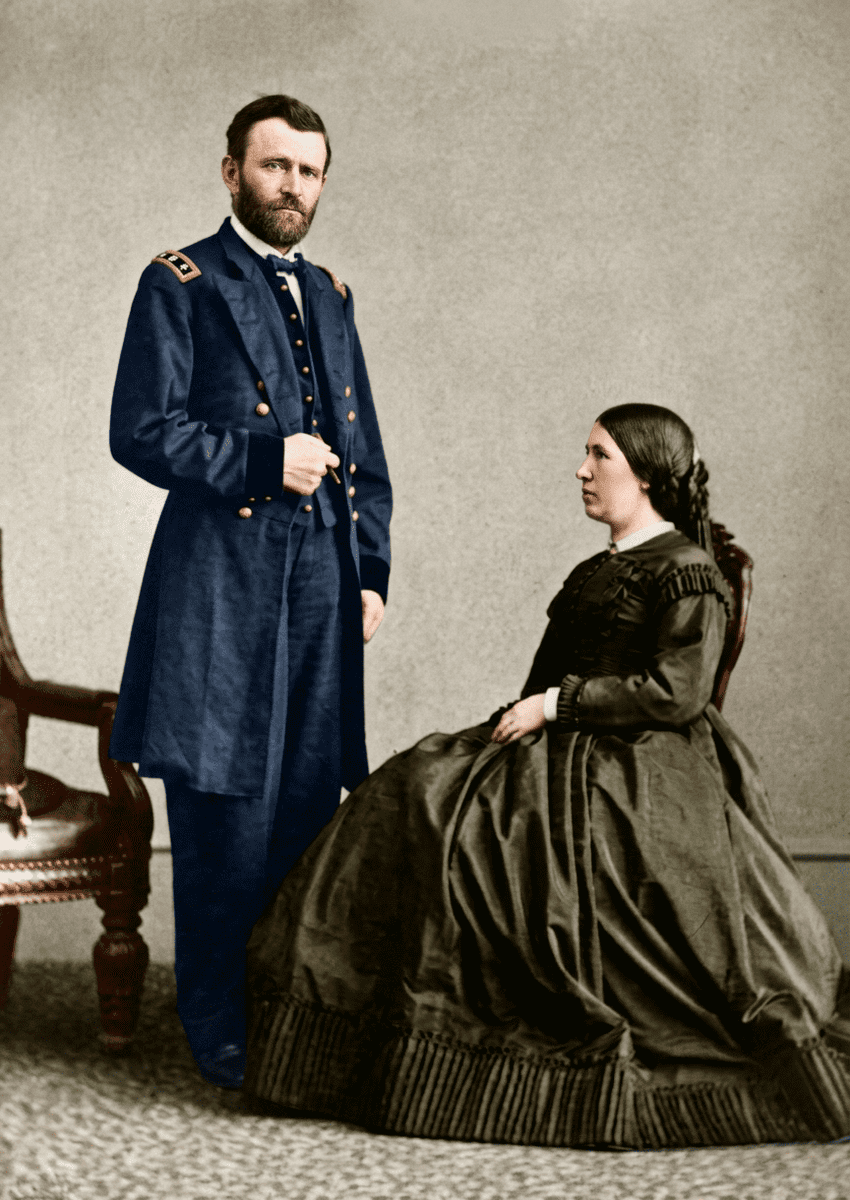
Picture 1: Ulysses and Julia Grant circa 1864 or 1865 - Library of Congress
Today we remember Juneteenth, 19 June 1865, when enslaved African Americans in Galveston, Texas, learned they were free—over two years after the Emancipation Proclamation.
Yes, I hear you: some might argue that the ‘official’ end of slavery should be marked on 6 December, when the 13th Amendment was ratified. Others might point out that New Jersey took its sweet time, waiting until 1866 to get on board. And let’s not forget Mississippi, which officially wrapped things up in 2013.
But let’s not get bogged down by dates; it’s the idea that counts. Globally, we acknowledge the end of this dark chapter:
• Canada celebrates Emancipation Day on 1 August, marking the 1834 abolition of slavery across the British Empire.
• The Caribbean, including Jamaica and Antigua, celebrates 1 August with vibrant parades and cultural festivities.
• France’s abolition day is 10 May, but overseas territories celebrate separately—Martinique on 22 May and Guadeloupe on 27 May.
Let’s not forget that many of the United States’ official holidays aren’t celebrated on their actual historical dates, thanks to the Uniform Monday Holiday Act.
•Washington’s Birthday (Presidents’ Day): Celebrated on the third Monday in February, giving a day off without actually honoring George Washington’s real birthday (22 February).
•Memorial Day: Instead of remembering fallen soldiers on 30 May, we now gather for barbecues on the last Monday in May.
•Labor Day: Traditionally celebrated on a fixed date, it’s now stuck on the first Monday in September, which is about as specific as a vague weather forecast.
•Columbus Day (Indigenous Peoples’ Day): This one takes the prize for the most egregious date shuffle, falling on the second Monday in October rather than 12 October.
Not to mention, does anyone know for certain when Jesus was born or died? As we navigate these altered dates, let’s toast to historical flexibility and remember we’re celebrating freedom, family, and the pursuit of happiness.
Picture 1: A group of formerly enslaved people at a wharf during the American Civil War. Bettmann Archive/Getty Images
#chasinghistory #truestory #DidYouKnow #Juneteenth
We're sad to learn this morning of the death of the 'ancient Robin Hood tree.'
'The Major Oak is estimated to have lived in Sherwood Forest in Nottinghamshire for up to 1,200 years, and is considered one of Britain's biggest oak trees.' https://t.co/ymCgue7yhX
The War of 1812: Round Two.
So, the War of 1812 was basically the U.S. and Great Britain having a spat from 1812 to 1815. Why? Well, Britain was a bit too fond of interrupting American trade and “borrowing” our sailors. Think of it as an awkward dinner party gone wrong.
The Highlights:
Impressment: The British Royal Navy, short on sailors, decided to play a game of “Finders Keepers,” forcibly conscripting 6,000 to 9,000 Americans. They claimed they were just taking back their “lost” British deserters.
Trade Restrictions: Britain threw a tantrum with the Orders in Council, making it hard for Americans to trade with Napoleonic France—because who doesn’t love a good trade embargo?
Western Expansion: The U.S. thought the British were arming Indigenous tribes to resist expansion—something that no one wanted. Except maybe the original owners of the land.
Key Battles:
At Sea: The U.S. Navy surprised everyone by winning some early battles, like the USS Constitution sinking the HMS Guerriere. It was like David vs. Goliath, but with ships.
Canadian Border: The U.S. tried multiple times to invade Canada, but let’s just say it didn’t go as planned. They returned home with their tails between their legs, and we have been bickering ever since.
The East Coast: Meanwhile, the British were busy blockading ports and even burned Washington, D.C. in 1814.
Fun Fact- Francis Scott Key famously witnessed the American flag flying over Fort McHenry amid the “rockets’ red glare” and “bombs bursting in air.” And no, he wasn’t being poetic—those rockets were British Congreve missiles, resembling giant bottle rockets. Picture a spinning stick attached to a canister filled with gunpowder and shrapnel.
While they were more intimidating than accurate—think 1814’s version of “shock and awe”—the “bombs bursting in air” were 200-pound cannonballs designed to explode overhead. Despite firing around 1,500 bombs and rockets at Fort McHenry, the British managed to kill only four defenders.
Fast forward to late 1814, when both sides decided enough was enough and signed the Treaty of Ghent on 24 December. They returned to pre-war boundaries and largely ignored the initial grievances—because who needs resolution when you can just move on?
And there you have it: the War of 1812, a classic case of “let’s just pretend this never happened.”
#Warof1812 #ChasingHistory #truestory #DidYouKnow #AmericanHistory
Unearthing the Mysteries of the Great Sphinx! For millennia, the shifting sands of the desert cloaked the Great Sphinx, revealing only its weathered head to the world. But in the early 19th century, explorers uncovered its majestic full form—an awe-inspiring sight with extended paws and remnants of its vibrant original paint!
Did you know? The first major excavation was led by Captain Giovanni Battista Caviglia in 1817. When the sands were brushed away, the Sphinx emerged, looking strikingly similar to today—yet with fascinating differences:
The Missing Nose: By the time it was discovered, the Sphinx’s iconic limestone nose was already gone, a victim of intentional chisel work centuries earlier.
Regal Attire: Adorned with a nemes headdress, archaeologists also found remnants of a royal cobra resting on its forehead.
The Lost Beard: Fragments of the Sphinx’s braided divine beard were uncovered and are now preserved in museums such as the British Museum and the Egyptian Museum in Cairo.
Vibrant Colors: Traces of pigments revealed that this monumental statue was once a dazzling spectacle of red, yellow, blue, and more!
The Sphinx continues to captivate our imagination, a symbol of ancient artistry and mystery. What do you find most fascinating about this iconic monument?
#GreatSphinx #AncientEgypt #HistoryMysteries #chasinghistory #truestory
Picture 1: The Spinx circa 1880s, by Beniamino Facchinelli.
Picture 2: The Great Sphinx with the Kafra Pyramid behind, circa 1860.