Agreed. Even if AI ends up decoupling labor from human limits, it still depends on human customers and human-generated data to build successful business models on. And it is still bound by thermodynamic limits of the energy produced and utilized, even if in space.
Many companies have lost significant IPO value within a year, Meta among them. We'll see how well Anthropic holds up from here.
Agoda just rolled its AI assistant out to 21 markets. Its CEO says travel planning is fragmented, with people juggling apps, tabs, messages and spreadsheets.
The product: one conversation from idea to booking, across 6M+ properties plus flights, tours and attractions. It remembers your preferences, and a planner canvas keeps earlier decisions visible.
A few things to note:
- Under the hood it runs on OpenAI models, with Gemini and Google Maps data for restaurants and places. Agoda owns the inventory. The intelligence is rented
- Early beta data says users are more likely to book a “connected trip”: hotel, flights and tours together; the bundle is the business case
- Booking Holdings said on its Q3 call that Agoda assistant users convert at roughly 2x non-users
Everyone agrees planning is broken. Platforms are responding with a smarter assistant built on their own inventory.
But a planner that sells what it holds raises an obvious question: whose interests is it serving?
A trusted human who’s been there answers that differently. They’ve seen the place, so they know what the listing leaves out. Their reputation is the asset, so a bad recommendation costs them the next traveler. And you can ask them straight: would you do it again, and what would you skip?
That doesn’t make a creator incentive-free. It makes the incentive visible and accountable, which a ranking isn’t.
Agents can assemble the options. A person who’s been there is who you ask whether to book.
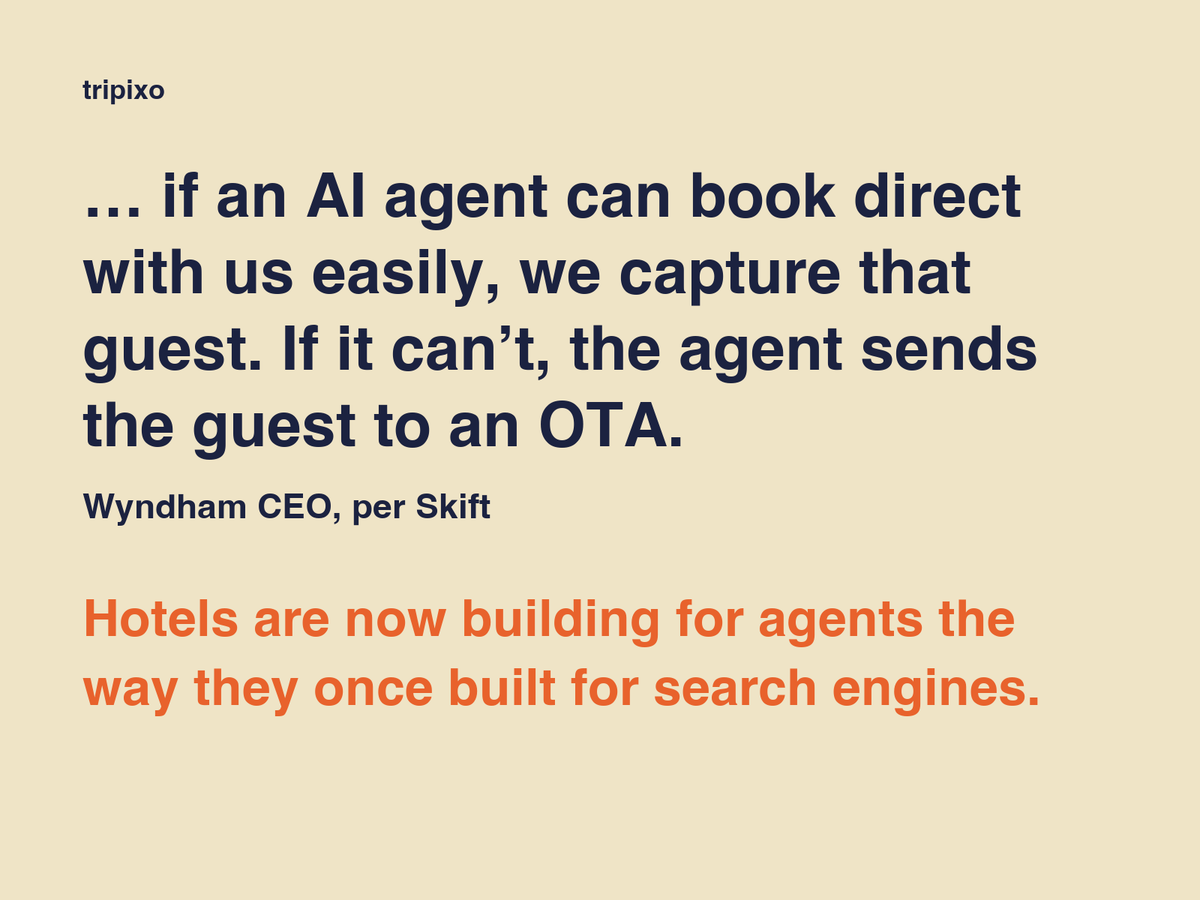
Wyndham’s CEO says if an AI agent can book direct easily, they capture the guest. If not, it goes to an OTA.
The real question is who the agent routes to. Whoever has the cleanest, most machine-readable path to a booking wins the transaction. Hotels are now building for agents the way they once built for search engines.
But the numbers are still very small:
- Booking Holdings says conversational agents account for under 1% of its room nights
- Tripadvisor says AI-referred traffic is under 1% of visits
So the volume is tiny and the stakes are huge. Everyone is positioning for a channel that doesn’t move the P&L yet. Why?
- Markets price trajectory. Booking and Expedia fell 4–7% when Google announced agentic booking, then Expedia jumped 12%+ when OpenAI scaled back checkout. Neither was about current volume
- This happened before with search. Tripadvisor expects an SEO headwind worth ~3 points of GBV through 2027. One gatekeeper’s routing change moved real money
- Adoption is outrunning traffic. 56% of US travelers used AI for a trip last year, up from 43%
- The slice is premium. AI-referred visitors convert ~5x the average (Viator)
- Defaults set now will stick. Hotels are wiring direct paths for agents before anyone knows which agents win
What is getting missed - an agent can compare rates and complete a checkout. It can’t tell you whether a hotel is right for your trip. Phocuswright found fewer than 1 in 4 European travelers mostly trust AI travel results. Expedia’s CEO says travelers plan with agents but still book with brands they trust.
Discovery is being commoditized. Trust isn’t.
The hotels that win direct bookings from agents will be the ones a trusted human already pointed the traveler toward.
A creator or advisor who has been to the place is the demand signal an agent cannot generate itself.
Direct booking path for the agent. Human judgment for the traveler. That is the stack.
On its Q3 call, Expedia said it has integrations with Meta’s Muse and Google’s AI products. CEO Ariane Gorin said the terms of those deals are still being worked out.
Takeaways for travel distribution:
- Discovery is moving to AI surfaces. Expedia calls answer-engine optimization one of its fastest-growing channels. Travelers increasingly start inside a chat or an AI answer, not a search box
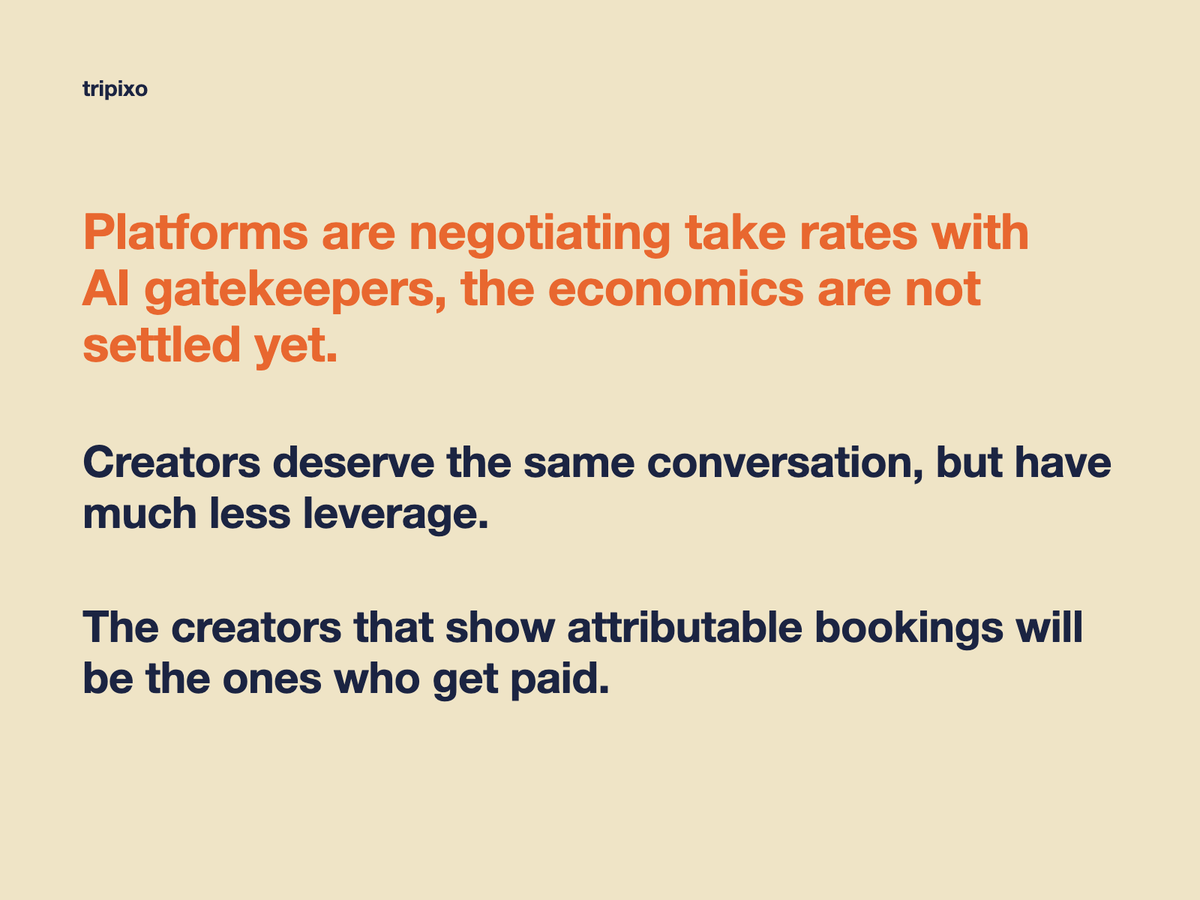
- The take rates are being negotiated right now. For years, Google and Meta sold traffic through ads and referral fees. As AI answers replace the click, they are deciding what to charge travel companies for placement inside those answers. A company with Expedia’s scale gets a seat at that table
- The party that creates the demand rarely gets paid for it. AI is strong at discovery while travelers still book with brands they trust. This also applies to creators. They inspire the trip, a platform captures the booking, and the value split gets negotiated without them.
If a company worth billions is still working out its terms with the AI layer, individual creators and smaller travel brands have far less leverage. The ones who can show attributable bookings will be the ones who get paid.
Booking Holdings has described its Connected Trip strategy as a single booking experience that covers accommodation, flights, rental cars, activities and dining, with AI to coordinate the components. The company’s chief executive has characterized AI as a net benefit to the business.
This model begins with inventory. The platform assembles flights, rooms and activities into a coherent set of options. The traveler must still decide which destination, which area, which dates and which activities suit them, and that decision precedes any booking.
@trip_ixo is designed around a different starting point: a conversation with a person. A traveler books a live one-to-one call with a travel creator who has direct knowledge of the destination. They discuss dates, budget, travel party and priorities. The call concludes with an itinerary that can be booked, and each resulting booking can be traced to the conversation that informed it.
The two models differ in sequence:
- Connected Trip: inventory first, with AI organizing the available options.
- Call followed by itinerary: advice first, with the booking following the decision.
The difference also affects measurement. An affiliate link in a video records a click. A planning call records a change in a traveler’s plan, together with the bookings that resulted from it. This gives creators and the destinations they feature a clearer record of the value of their advice.
The two approaches are not mutually exclusive. Large platforms are well suited to fulfilling bookings at scale. Individual advisors are well suited to helping a traveler choose what to book. The open question is which of the two the traveler consults first when making a decision about a trip that matters to them.
When you plan a trip you care about, do you prefer to start with an automated assistant or with a person who has been to the destination?
Platforms are starting to roll out AI itinerary generators that lean on their own review data instead of pure chatbot guesses. Tripadvisor just expanded one that builds day-by-day plans from real traveler feedback using OpenAI. Users enter a destination, companions, and interests for an editable itinerary focused on experiences, attractions, and dining. Plans can be saved or shared. It is in US beta.
This is where the big review databases pull ahead. Generic AI keeps inventing closed spots. Tools grounded in actual feedback stay closer to reality.
When platforms own more of the planning step, creators need more than top-spot lists. The ones that win will add personal context and local detail that aggregates miss, then make booking through affiliate links feel easy.
AI can sketch the plan fast, but people still book when a real person makes it feel right and the path is short.
@singhabhinav As you say, it's sad how Mr. Nitish Kumar, the true patron behing this institution, is forgotten... I remember him responding to jibes about Bihar's backwardness. This museum is proof of the state's immense cultural wealth.
Some tour and activity operators are seeing OTA bookings fall while their total sales keep growing.
PhocusWire reports several of them suspect AI is the reason. Travelers ask ChatGPT or Gemini what to do, then go straight to the operator instead of through a marketplace.
It fits the data. A Skift/McKinsey survey found the share of travelers using AI tools extensively to plan trips went from 13% to 30% in a year.
But the operators have new questions:
• Why do they rank where they do on the marketplace?
• How much does paid visibility shape who gets seen?
• Are new competing suppliers crowding them out?
The platforms say rankings reflect customer demand and experience quality. Operators say they cannot see enough to check.
That’s the real shift. When bookings come through a platform, you depend on a ranking you can’t inspect. When they come from AI, you depend on whether the AI can find and trust you.
The question for every part of travel is the same: who created the intent, and who gets paid for it?
The operators best placed are those who can see where bookings come from. Today many cannot.
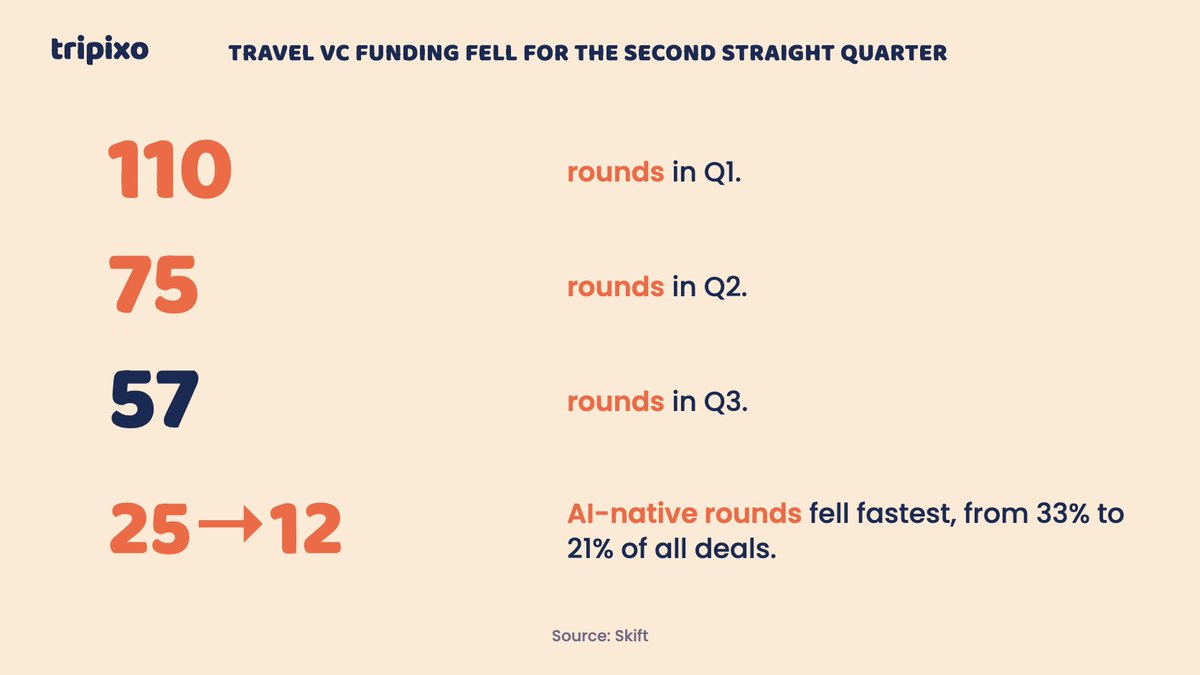
Travel VC funding fell for the second straight quarter, per Skift’s tracker.
Q1: 110 rounds
Q2: 75
Q3: 57
AI-native rounds fell fastest: 25 to 12, and from 33% to 21% of all deals.
Apart from one $1B Adani Airports round, funding is down 25% vs Q2 and 72% vs Q1.
Incumbents are buying AI talent rather than building it:
• Expedia bought Layla
• Navan bought BoomPop
• Engine bought Options Travel
• WeTravel bought Tourwriter
Booking is building its own with Vayo, with up to $100M planned.
The AI trip planner is becoming a feature that big platforms own, not a standalone category. If every planner calls the same models over the same inventory, the model isn’t the moat.
What’s hard to buy is trusted, specific, human recommendations from people who have actually been there. That’s the layer travel creators already own, and it’s the part AI planners still need.
The next winners probably won’t have the best model. They’ll have the best source material.
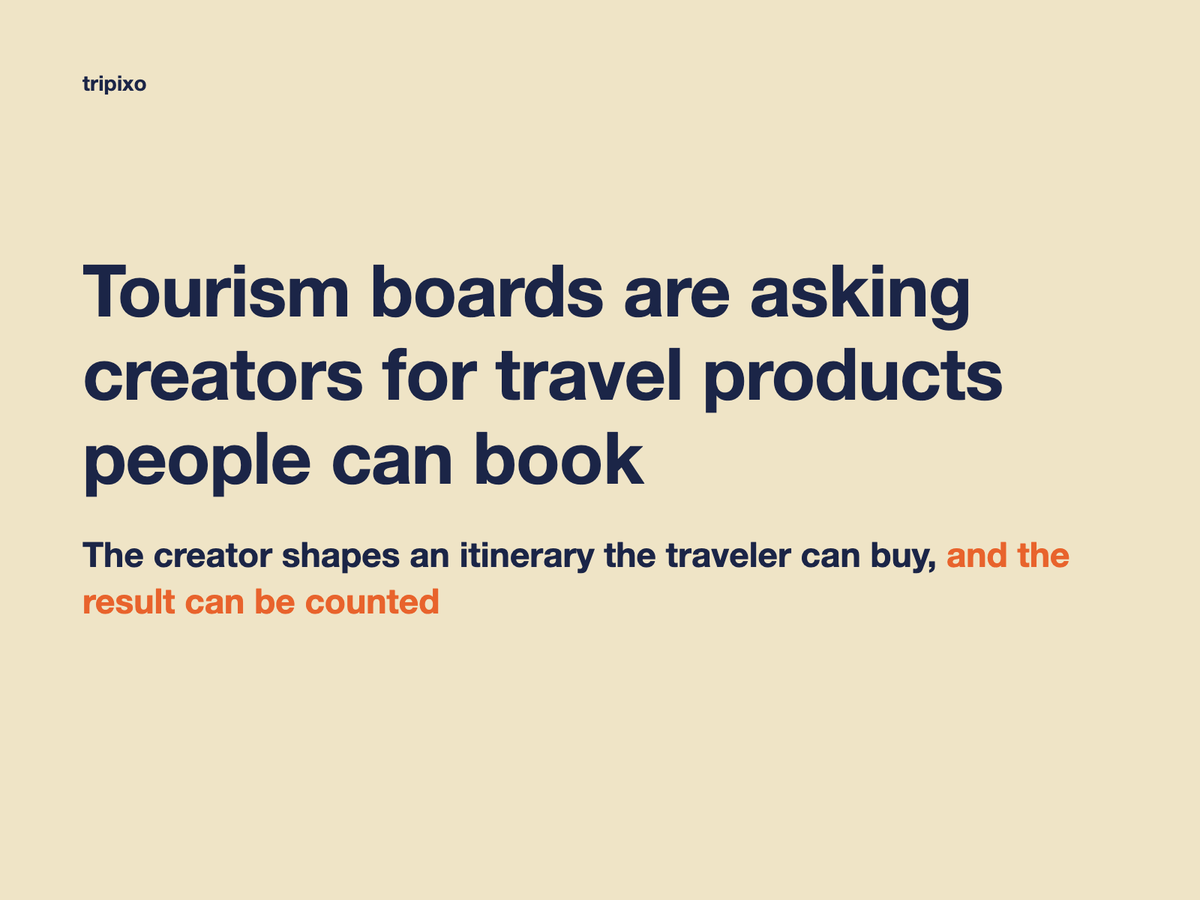
Tourism boards are starting to ask creators for products people can book, not just posts.
I LOVE NY and the agency BYRDLI have sent Australian creator Matt Lambley beyond the New York City skyline to build bookable New York State travel products.
That is a quiet but important shift in how creator work gets measured.
The old model paid for reach. A creator posts, views come in, and the hope is that some of it turns into trips. Creator budgets are hard to defend, because few destinations can say which posts led to bookings.
The new model starts from the booking. The creator shapes an itinerary, the traveler can buy it, and the result can be counted. Creators become product designers, not just promoters, destinations get proof of outcomes instead of just impressions. Travelers get plans built by someone who has actually been there.
This is exactly in line with the model we are building at @trip_ixo . A traveler books a live call with a creator who knows the place, and the call ends in a bookable itinerary that can be tracked from first intent to confirmed booking.
Reach opens the door. Bookable trust is what gets paid.
Many destinations are quietly rewriting the price of showing up.
In the past week alone, Mexico is debating a higher fee for non-resident visitors, Kyoto is working on tiered pricing, and the Swiss village of Kandersteg is weighing an entry fee for hikers at Lake Oeschinen. In the US, foreign visitors to the Grand Canyon now pay an extra $100 on top of the standard entry fee.
Different places, but the idea is the same: charge visitors differently from locals, charge for the most crowded spots.
The logic is clear. Popular places carry costs for cleanup, transport, trail upkeep and housing pressure, and residents have been the ones paying.
There are risks, however.
For one, costs become harder to predict. A trip budget now depends on fees that vary by nationality, season and site.
Second, fees get stacked. Entry charges, tourist taxes and local levies add up, and many travelers only find out at entry.
Third, demand moves rather than disappears. Businesses near the Grand Canyon are already reporting pain, and some are suing, though the fee is not the only factor.
For travelers, the sticker price on a booking site is no longer the real price of a trip. For destinations, the hard part is raising money without pushing away the people who spend the most locally.
The winners will be places that are clear about what the fee pays for, and travelers who plan around the true total cost, including less obvious spots nearby that offer similar views without the crowd.
Pricing is becoming a crowd dispersal tool. Transparency decides how these go down with visitors.
The EU is investigating Booking dot com over phishing scams and fraudulent listings.
This follows information requests the Commission sent in 2025 about fake accommodation listings and how platforms verify the businesses on them. Booking says it has cut phishing-related fake reservations sharply and will work with regulators.
The bigger story is that trust is becoming a regulated feature of travel marketplaces, not just a brand promise.
For twenty years, the pitch of the big travel platforms has been scale. More listings, more choice, lower prices. But scale also makes it cheap for bad actors to hide in the crowd.
Verification is expensive, and scale makes it harder.
A marketplace that grows by adding supply faster than it can vet supply is borrowing against its own reputation.
AI planners will not fix this on their own. An agent that books from the same pool of listings inherits the same problem, only faster and with less human oversight.
The strongest trust signal is still a real person who has actually been at the location and has something to lose if they get a recommendation wrong.
Marketplaces compete on inventory. The next layer competes on trust.
Are we at war, or has India’s digital defences been left wide open?
SBI is investigating after a dataset of roughly 3.75 lakh records appeared on the dark web. A group called Siriusim claims it has the data, including customer details, loan and account-opening documents, and 2,722 PDFs. SBI says its initial review found personal information in 3,897 records. The bank has not publicly explained where the larger dataset came from or whether the group’s full claim is genuine.
eMudhra’s certificate problem is even more serious than a routine data leak. A researcher found that eight intermediate certificate keys were so weak they could be recovered almost instantly. One was reportedly the number 4. Those keys could have been used to create fake HTTPS certificates and impersonate websites. Browser companies blocked them. eMudhra says the flaw came from a script error and says its Indian eSign services were unaffected. But the public still deserves a clear account of how such keys were created, approved and left trusted.
CERT-In says AI agents reached live systems at Indian organisations, read business records and accessed personal and confidential information. The affected organisations did not detect the access themselves. CERT-In has not named the organisations or the AI providers. It also warns that attackers are using open-source AI tools to move from initial access to impact in hours. Who was affected, what data was read, and what safeguards failed?
In Rajasthan, a leak-monitoring advisory reportedly warned officials after government email credentials appeared for sale on the dark web. Separately, a group has claimed it breached Rajasthan Police and exposed data including FIR details. The scale and authenticity of that database claim are not independently confirmed. The government must say what credentials or records were exposed, and whether the police systems were accessed.
There are more reports: GMDC is investigating a probable website-linked breach; @cars24india told police that 3,100 customer records were stolen; and Tata Electronics reported a cyber incident after documents linked to major customers appeared online. These cases need clear findings, not silence.
The pattern is alarming. The public is left to piece together claims, partial disclosures and threat reports while institutions say little. @GoI_MeitY@IndianCERT@TheOfficialSBI@PoliceRajasthan: publish the facts. What was accessed, how many people are affected, when were they told, and who is accountable?
Europe’s tourism dispersal goals are colliding with AI search.
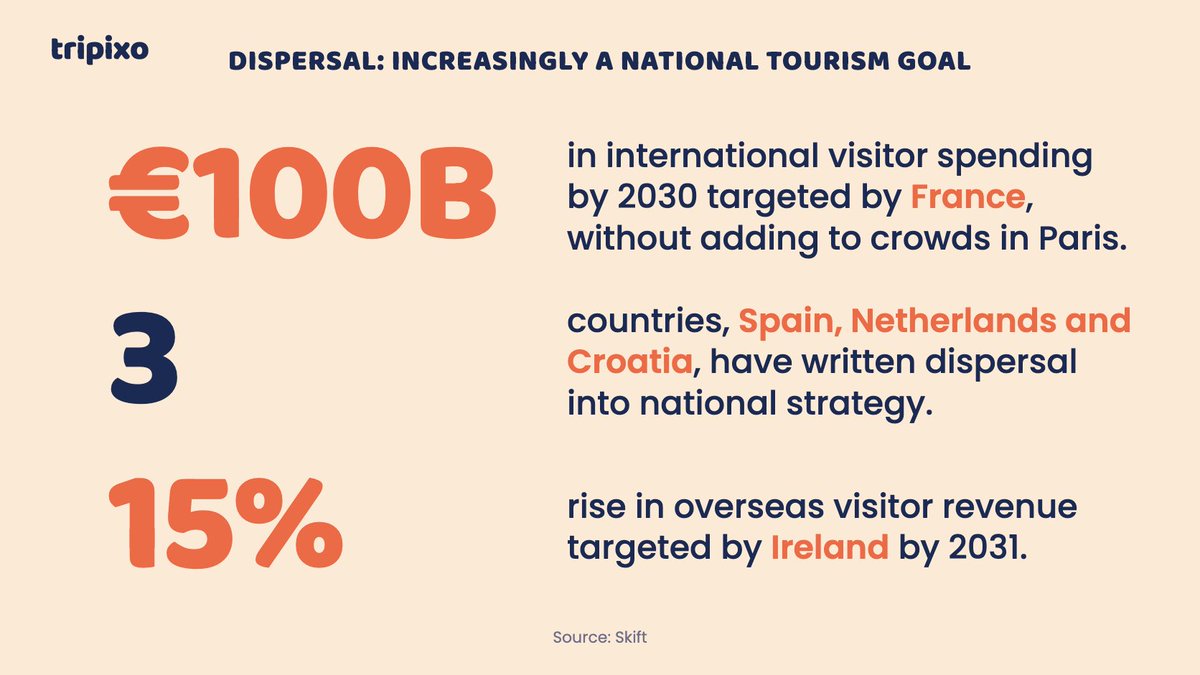
France is targeting €100B in international visitor spending by 2030 without adding to crowds in Paris. Spain, the Netherlands and Croatia have written dispersal into national strategy. Ireland is aiming for a 15% rise in overseas visitor revenue by 2031.
But the discovery layer gets in the way. Skift reports:
- Atout France says Google searches ending on its sites are down about 20%
- Only 19% of AI queries about Ireland this year were answered with information supplied by Tourism Ireland
- In 29% of persona and destination pairs tested, AI models rated a destination a strong fit for a traveler but never recommended it
Many DMOs are now rebuilding content for AI crawlers and tracking chatbot visibility.
Visibility, however, gets a destination named and being named is just the start. Dispersal needs a trusted voice to explain why a lesser-known place fits that traveler, and a way to measure whether it worked.
Local creators and experts know the smaller towns, the shoulder seasons and how to get there. Getting that knowledge in front of travelers while they plan, and turning it into a trip they can book, is what can ultimately move the needle for dispersal targets.
The destinations that close this gap will be the ones that can show not just visibility, but a shift in where visitors actually go.
New research suggests loyalty programs are losing their hold on travelers.
44% of US travelers book outside their preferred loyalty program when the price is better. 55% would follow an AI tool to a better deal. When asked what makes them trust an AI recommendation, loyalty membership ranked last.
A McKinsey and Skift study found half of 1,000 US travelers changed a confirmed stay after finding a better option. A booking is no longer a commitment. It is a placeholder until something cheaper shows up.
The economics make this harder for platforms. The same Expedia hotel inventory returns 1% to a free OneKey member and 10% in credits to an Uber One member. Platforms are investing heavily in loyalty incentives, yet travelers still decide on price.
For the industry, this raises a practical question. If a booking is no longer a commitment, and brand loyalty does not earn trust, what does?
One possibility is that trust moves toward people with firsthand knowledge. AI is well suited to finding the lowest price. Deciding which option fits a particular traveler, and when a deal is not actually a good deal is a problem which credible human advice may be better placed to solve.
This is the gap we are working on at @trip_ixo .
@singhabhinav A bogus regime change point has now come up. The protests have been about specific topics, but the heavy handed, emergency-like crackdown in response has completely metastasized the issue...
There are now well over 100 consumer AI trip planners.
Many of the names are well known. Mindtrip, TREK, Layla, Pilot, Stippl, TripBuddy, Google AI Mode, and dozens more all claim they can turn a prompt into a usable itinerary. Many offer free tiers. Most have maps, collaboration, calendar export, and some form of booking links.
The category is crowded. The product is largely commoditized.
Almost every one of them can generate a day-by-day plan. Very few can consistently do three things well:
- Stay accurate enough that a traveler doesn’t have to spend time fact-checking
- Handle real constraints (budget, mobility, group dynamics, taste) without generic output
- Get the traveler from the plan to a confirmed booking without friction
Surveys keep showing the same pattern: people will use AI for research and inspiration. Far fewer trust it with the final booking.
Bad recommendations still happen.
Verification time is real.
And the handoff from itinerary to paid booking is where most tools still lose the user.
This is why the pure AI planner layer is getting harder to differentiate on features alone.
The advantage is moving to whoever can add the human or creator layer on top of the machine, and then close the conversion.
Creators already have the trust and the taste that pure AI tools lack. The ones who win are not competing to be another chatbot. They are using AI for the first draft, then applying judgment, local knowledge, or audience fit, and making the path to booking short and trackable. Affiliate links, direct booking rails, or paid planning calls all become more valuable in this environment, not less.
Big platforms will keep shipping better AI planners. The tools will keep multiplying. The durable edge for independent creators is still the same: people will accept machine suggestions, but they will pay (or click through) for the version that feels like it actually understands them.
The crowded tool space is not a threat if your differentiation is the human filter and the conversion, not the itinerary generator itself.
Almost nobody books travel through AI yet. The platforms are building it anyway, and the booking is not the point. The intent data is the most valuable asset.
Booking Holdings says under 1% of room nights come from AI channels. Skift/McKinsey data shows AI use falls to about 6% at checkout. 51% of travelers distrust AI accuracy, per a survey cited by Skyscanner’s CEO.
Yet Google launched hotel booking in AI Mode with Booking dot com, Expedia, Hilton, Marriott, IHG and more. The hotel or OTA stays merchant of record and does the work of charging the card, confirming and supporting the guest.
Google passes along only name, payment, occupancy and property. The planning conversation stays with Google. That includes what the traveler wanted, what they compared and why they chose.
No verified commission structure exists yet for AI-executed bookings, and monetization is reportedly drifting toward in-chat ads.
So the trade looks like this. Suppliers keep the cost and the liability of the booking. The platform keeps the richest signal in travel, the reasoning behind the decision.
Volume will follow later. The advantage is being built now, one planning conversation at a time.
For creators and anyone who influences travel decisions, the lesson is the same. Whoever holds the intent data holds the leverage.
Creators hold this data every day, in DMs, comments and replies, and mostly give them away for free.