MCPs are everywhere. Before you build one, here's who shouldn't.
MCP stands for Model Context Protocol. It connects AI tools like Claude or ChatGPT to your product so the AI can pull data or take actions for the user. A door you build that lets AI agents walk in and work.
• Don't build one if your customers haven't asked for it. If you can't name three real things a user wants to do with AI inside your product, you're guessing.
• Don't build one before your product is stable. If your core workflows still break, an MCP adds another surface to maintain on top of an unfinished foundation.
• Don't build one if you can't explain who logs in. An MCP lets an AI agent act on behalf of a user. Fuzzy permissions mean you're handing an agent the keys without knowing what room it's in. Founders skip this because it feels like a developer problem. It's a trust problem.
• Don't build one to keep up with the AI conversation. "We support MCP" looks good on a landing page. It also commits your team to maintaining a feature with no clear use.
Who should build one: products where customers are already trying to plug AI tools into your service and hitting walls.
Quick test: can a new user reach value in under two minutes?
Most MVPs fail this check. The product works, but the path to the first win is buried under setup screens, tutorials, and "getting started" friction.
If a user has to configure settings, watch a demo, or read documentation before they experience value, your onboarding is misordered.
Value first. Setup after.
The fastest products don't explain themselves upfront. They guide users to one clear outcome, then let them configure from there.
Run this test on your product this week: open it as a new user and time how long it takes to complete one meaningful action. If it's over two minutes, your onboarding is teaching people to quit.
#MVP #UX
6 rules software has to follow if you're building for hospitals, banks, or the government:
Section 508 → U.S. rule that makes government websites work for people with disabilities
WCAG 2.1 AA → Rules that make websites easier to use for everyone
ADA → U.S. law that protects people with disabilities, online too
HIPAA → U.S. law that keeps your health info private
GDPR → European law that keeps your personal info safe
SOC 2 → Rules that prove a company keeps data secure
#GovTech #Accessibility
What do you mean your app is down? I have deadlines.
Check out my latest article: How Products Earn Loyalty When Things Break and 3 high-trust patterns you can implement today. https://t.co/MpXcTxesny
#CX#productmanagement#ProductDesign
@OmriBuilds Soul + a completely unhinged sales and product strategy never b4 seen. We also can't forget a damn good product that solves a real problem.
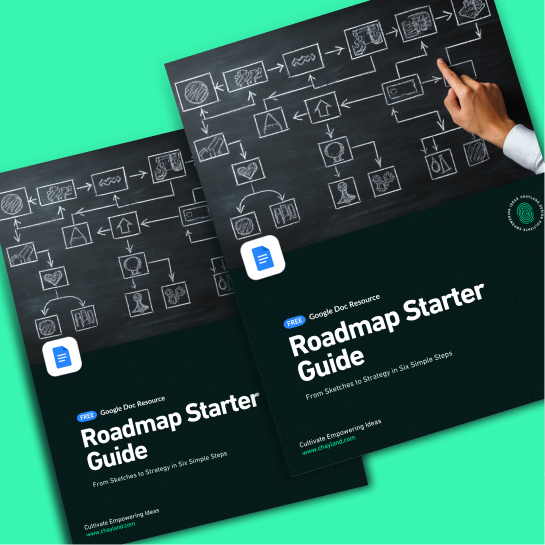
Free roadmap guide for founders and product teams.
https://t.co/NjHmtWnNIM
If you’re deciding what to build next and don���t want to waste time, budget, or momentum, this is for you.
The Roadmap Starter Guide walks founders, PMs, and early teams through a simple, practical process to turn ideas into clear priorities. You’ll move from loose sketches to an actionable roadmap that helps your team align, make decisions faster, and explain progress without over-planning.
If your product feels stuck in planning mode or caught between too many ideas, this guide helps you choose a direction and move forward with confidence.
#ProductRoadmap #StartupTools #ProductStrategy
Mid-week at LA Tech Week and a few themes are standing out:
1. Personalized AI is crossing the novelty threshold.
It’s becoming essential infrastructure; the core engine for operations, automation, and decision-making.
2. Voice and reasoning are the new UX.
Products are shifting beyond text prompts as real-time conversation and context become the next interface.
3. The AI gold rush is maturing into REAL products.
AI hype is out (FINALLY). Reports show most startups pitching now are AI-centric, and the shift is toward execution, retention, ROI over hype.
4. Transparency is becoming a competitive advantage, not just compliance.
Companies that build openly are earning trust faster than those chasing features.
We’re taking notes. 📝
#LATechWeek #Apps #Products #Founders #Investors #ProductDesigners #ProductManagers #ProductOwners #SaaS #DesignStrategy #LosAngelesTech #UXDesign #AI #AIProducts
It’s officially LA Tech Week, a celebration of innovation, founders, and the teams shaping the future of tech.
We’ll be exploring the week’s events across Los Angeles, connecting with creators, investors, and builders driving impact in SaaS, design, and digital product spaces.
If you’re attending, drop your events below — we’d love to connect and see what’s new in the LA tech scene.
#LATechWeek #ProductDesign #Startups #Innovation #SaaS #DesignStrategy #TechWeekLA #losangelas #apps #UI #UX #UIUX
I like working with startups or companies with no product structure in place because it's challenging.
You can’t hide behind process, it’s something that is created later.
Startups show you exactly how people think, how they lead, and how they problem-solve. That’s where the real work begins.
There’s no roadmap. No layered approvals. Just a team trying to figure it out in real time.
It’s chaotic, but it’s mentally engaging.
There’s always a new challenge, and I thrive in that kind of energy.
But I’ve also learned that constant motion isn’t sustainable.
People love to say, "There’s no such thing as work-life balance if you want to be the best." But what if knowing when to pause is part of being the best?
I’ve been training my intuition to tell me the difference between pushing forward and burning out.
I am still figuring it out, but this week I made space to rest and to be with people I love. That time away from the computer also reminds me why I do this.
How do you know when it’s time to press pause?
#presspause #startuplife #productdesign #leadership #worklifebalance