“Fungua kio, nitakupiga vibaya sana wewe. Utaona maajabu wewe, utaona maajabu.” How would it make you feel if a rogue officer approached you in that manner? Is that the police code of conduct? Is that how citizens are supposed to be treated?
Then the man is found just 10 metres from Masinga Dam after Kenyans made enough noise on social media. Did you read Denzel’s post-mortem results? They reportedly showed bruises all over his body and that he had been made to kneel down.
Now imagine what was running through Denzel’s mind at that moment being forced to kneel down, perhaps knowing that those could be his final moments. He wasn't a terrorist. He wasn't a thief. His crime was loving his country enough to express his dissent against a regime he disagreed with and to protest against it. Think about that as you continue supporting this regime. Think about the kind of country you are helping create.
Yesterday, I shared my findings on eCitizen.
Which is under siege.
There is no other way to put it.
Some people wanted a shorter version - which is shocking. (Never take an easier route when a tough one is available).
Here's the summary:
(1) No full government control — despite the August 2017 handover, the Government Digital Payments Unit still relies on the vendor for critical functions: a "single point of failure," and no independent way to verify how much was actually collected.
(2) Audit access denied — the National Treasury refused or could not facilitate application-, database- and network-level access, so security and privacy controls couldn't be verified, with no third-party assurance filling the gap.
(3) KSh36.5bn unsupported in one year — FY2023/24 reported collections of ~KSh100.84bn, but bank statements provided supported only ~KSh64.30bn.
(4) KSh2.575bn unmatched to invoices — settlement account receipts at 30 June 2024 that couldn't be tied to Pesaflow invoices; partial, erroneous and duplicate payments.
(5) KSh 127.85m left the paybill — four transactions on 25 January 2024 went from Paybill 222222 to private entities instead of sweeping to the KCB settlement account, with no approval documentation provided.
(6) An undisclosed account in the chain — ~KSh6.33bn entered Equity Bank eCitizen collection accounts from an account not approved by the Treasury, and its bank statement was never produced.
(7) Paying to use its own platform — KSh492.16m plus US$414,299.60 under the ICT Authority framework by 30 June 2024, of which ~KSh142.16m plus the dollar amount was for gateway services the Auditor-General called irregular and illegal, and recommended be stopped and recovered.
(8) Illegal convenience fees — the prescribed prorating mechanism was ignored in favour of a flat KSh50/US$1 per transaction: ~KSh1.808bn plus US$3.334m before January 2023, and a further ~KSh349.8m to June 2024.
(9) Settlement is still manual — collections are automated but MDA transfers are prepared and approved by hand, averaging an eight-day delay, even though the accounts needed to automate are already mapped.
(10) Unreliable service records — duplicated services, services without MDA names, missing linked bank accounts and unmapped account numbers, forcing manual entry from physical correspondence; some revenue couldn't be settled at all.
(11) No structured helpdesk — incidents couldn't be systematically tracked to resolution, risking service denial since payment happens throughout the service process.
(12) Unclear governance — operations spread across institutions and committees whose composition, tenure and terms of reference were "unavailable," with no oversight body mandated to coordinate them — the same document-unavailability pattern the World Bank encountered.
@Senate_KE@NAssemblyKE@FlavNasmbu@MoGAbdi@webmasters
I don't think many Kenyans have understood the weight of the figures David Maraga released yesterday.
According to the former Chief Justice @dkmaraga, 3,958 Kenyans have been killed by police since President William Ruto came to power, an average of roughly 990 deaths every year.
Now put that number next to the country's terrorism figures.
Available Kenyan terrorism data records roughly 343 terror-related deaths between 2022 and 2025.
That means the number of Kenyans Maraga says have been killed by police is more than 11 times the number of people killed in terror-related violence over the same four-year period. Think about that.
We have spent years being told to fear Al-Shabaab terrorism, and violent extremism as some of the greatest threats to our national security.
And rightly so.
But what does it say about the state of our country when the number of people reportedly killed by the police is an order of magnitude greater than those killed in terror-related attacks?
The police are supposed to protect citizens from violence.
They are supposed to be the institution standing between citizens and those who want to harm them.
The State gives them uniforms, guns, training, and extraordinary powers because we are supposed to trust them with our lives.
So when thousands of citizens are reportedly dying at the hands of the very institution tasked with protecting them, this is no longer simply a conversation about police brutality. It is a national security question.
Who is protecting Kenyans from those who are supposed to protect Kenyans?
And perhaps that is the figure we should all be struggling to comprehend: 3,958.
Not a statistic.
Not a political talking point.
3,958 human beings.
3,958 families.
3,958 stories.
3,958 people who did not go home.
And if a terrorist organization killed anything close to that number of Kenyans, we would quite rightly call it a national catastrophe.
So why should the identity of the person holding the gun change the seriousness with which we treat the death?
A terrorist killing a Kenyan is a threat to the State.
A police officer unlawfully killing a Kenyan is also a threat to the State.
The difference is that one is supposed to be our enemy. The other is supposed to be our protector.
"Doctors are being asked for up to KSh 800k in bribes by counties to secure jobs"Dr. Kemunto explains the systemic corruption rotting Kenya's healthcare system.
Precious Blood Riruta threatens my child!!!
Yesterday I returned my Form 4 daughter to Precious Blood Secondary School, Riruta. I have no school fees balance. I paid the Term 3 fees of KSh 15,744 via M-Pesa (Ref UHPL849W91) on 25 August 2026. Yet the school is demanding an extra KSh 30,000 for “Academic Support Classes / remedials.”
When I asked the Principal clear questions, she refused to answer. Instead she called my daughter and threatened her in front of me. The child broke down crying. She was told she will not be allowed into morning preps or evening “kesha” if the money is not paid.
I am a single mother of three school-going children. Cash is extremely tight. I speak for many parents in the same position.
Here are the questions that still have no answers:
What exactly is the KSh 30,000 “remedial / academic support” fee for? What lessons, which teachers, what materials, what measurable outcomes? Parents are entitled to a clear breakdown before any extra levy is imposed.
Earlier this year parents paid an extra KSh 10,000. What was that money used for? Was it also for “extra” support? Why is another large bill appearing now?
A class of ~50 students × KSh 30,000 = KSh 1.5 million per stream. With five streams that is approximately KSh 7.5 million. Who receives this money? How much reaches the teachers who are supposed to deliver the extra tuition? Where is the audited statement?
Why must the money go through a private Paybill and then to the class representative instead of the official school fees account and the bursar? Who owns and controls that Paybill? Legitimate school funds should be receipted through the school’s official accounts.
Capitation and normal school fees already exist. If the government support is insufficient, why is the shortfall being recovered through opaque extra levies that parents are not allowed to question?
Parents who raise legitimate questions risk their children being locked out of revision time. That is not education; that is coercion. What happens to the child whose parent is genuinely unable to pay or is on a bursary?
Boarding school is supposed to give students access to classrooms for supervised study after formal lessons. Denying a Form 4 student morning preps and evening revision because a parent questioned an unexplained fee is punitive and unsafe.
I left my daughter there yesterday under threat. Her mental safety now worries me more than any exam. I am prepared to withdraw her for her own protection if this is the atmosphere she must endure.
Relevant authorities, child-protection bodies, education officials, and advocates: this needs scrutiny. Opaque levies, threats against children, and silencing of parents have no place in a public secondary school.
Parents should never have to choose between their child’s safety and an unexplained bill. Transparency is not optional. Accountability is not optional.
#PreciousBloodRiruta #SchoolFeesAccountability #ProtectOurChildren
🚨 WAKE UP, KENYA.
We reveal that there this bill is coming for the dead… and maybe more.
The Kenya Blood, Cells, Tissue and Organs Bill is quietly advancing, and the clauses are chilling.
Clause 74 says that after just 6 months, cells, tissues and organs can be taken from an unclaimed body in a mortuary. Newspaper notices are supposed to warn families, but how many poor or rural families even see those papers?
Your relative dies, no one claims the body fast enough, and suddenly their organs are fair game. Could this also encourage abductions? And won't organs be already bad in 6months ??
Clause 35(2) appears to require blood donation to be free and voluntary… then adds “unless under innovative approaches.”
That vague line could create a loophole for paid blood and quiet commercial deals.
Clauses 70 and 106 go further: living, non-related people can donate organs, and donors can be paid for “loss of earnings,” “justifiable expenses” and “technical fees.”
Broad language like that raises serious questions about whether financial incentives could create opportunities for organ trading or pressure on desperate people.
Then add Clauses 90 and 92, officers can search premises without a warrant and seize medical records without consent, and the whole thing starts feeling less like healthcare and more like a system built for extraction.
When a law makes it easier to take organs from the dead and creates payment pathways for the living, a hard question has to be asked:
In a country where people can disappear or die unclaimed, how far could the risk go that some Kenyans end up becoming sources of organs?
This is not conspiracy talk. These are the actual clauses. I have attached them in this tweet replies
🚨 WAKE UP, KENYA!!
ISPs have warned of a threat massive surveillance
Ruto’s govt is continuing with its push for a new law that forces Safaricom, Zuku & every ISP to put an “internet meter” on YOUR connection
This could enable tracking every single site you visit, every second you’re online, and then handing that data straight to the state.
This isn’t about billing. This is about building a digital cage so they can watch activists, journalists, opposition leaders, and anyone who dares criticise them in real time.
One click against the government, and you’re already flagged.
They’re turning the internet into a spy tool while pretending it’s “consumer protection.”
We should speak up now before it’s too late…
The deleted footage of Albert Ojwang’s final moments at Central Police Station is not just about one blogger, one cell or one night. It is a mirror held up to a system that still believes torture can be hidden and truth can be edited out of existence.
Albert did not die from colliding with a wall. Five pathologists unanimously confirmed head trauma, neck compression and multiple soft‑tissue injuries consistent with assault, while IPOA dismissed any suggestion of suicide and flagged interference with CCTV systems. This is not an accident. It is a choreography of impunity.
When a police station becomes the most dangerous place for a citizen who dares to speak, Kenya’s constitutional promise is turned inside out. Central Police Station, which should be a symbol of order, becomes a crime scene. Each deleted frame, each missing second of footage, is an extra layer of violence against Albert’s family and against the public’s right to know.
Albert’s killing is not an isolated file in a court registry, it belongs in the same archive as Baby Pendo, protestors shot for rejecting bad policy, and citizens abducted for asking hard questions. Until custody deaths trigger institutional pain, dismissals, prosecutions, personal liability and reparations, officers will continue to treat the cell as a no‑rules zone.
Justice for Albert means more than convictions. It means designing a Republic where no officer can delete evidence faster than Kenyans can demand answers. The State bears a heightened duty of care over every person in custody.
We must continue to push for victim‑centred justice, radical transparency in policing, and a future where stepping into a police station is not a gamble with your life.
The scars of the 2007/08 post-election violence remain fresh. Kenya must not allow the growing culture of goonism to drag the nation back to that dark chapter. Ruto should ensure we never return there.
This happened to us. Millenials lazima mnajua a family that slept under a lorry in a chiefs camp for safety or a family who got on an overloaded matatu who stood the whole 5 hour journey. We cannot let these war lords and their militia take us back here. We simply cannot!
Morara Kebaso: I was reading this audit report, 1.8 million shillings spent on a pit latrine at Kenyoro SDA Primary. Which pit latrine will cost 1.8 million? A 5000 litres water tank, the MP is getting it for 500,000 shillings, kitu ya 35,000 kwa hardware. He said there is a problem of climate change in Kisii, the most forested place in Kenya. The guy is planting trees at a cost of 6 million. These are the MPs that must be replaced by people of values #JKLive
take a min and remember those mothers who were caught on camera sleeping on cold hospital floors with new borns . then look at the pic down below . what will prevent you from shooting a politician if you had one chance with a gun?
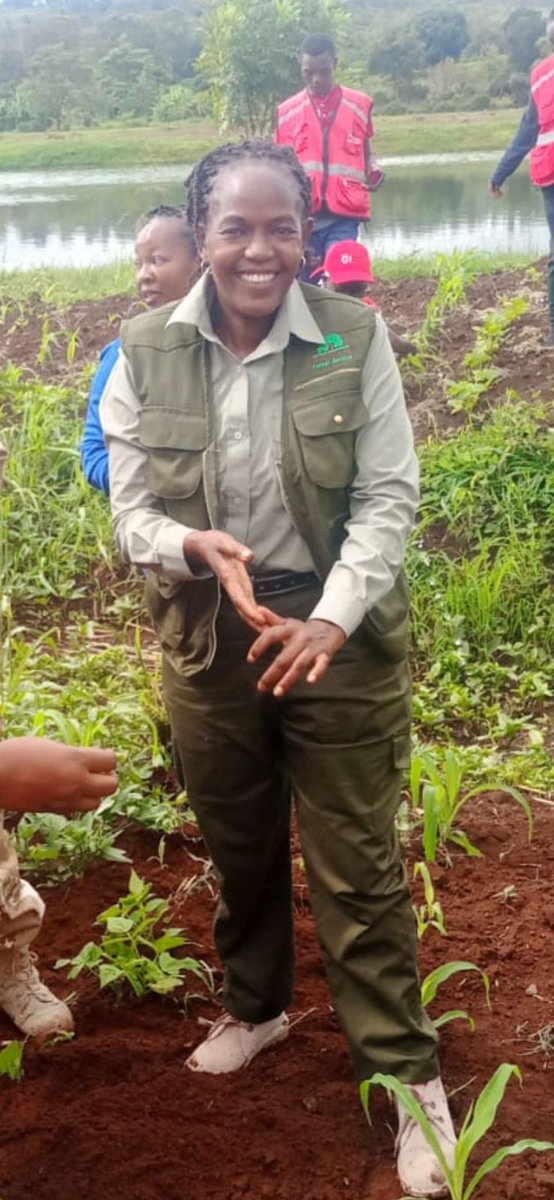
Every legal practitioner, every Forester, every active citizen, every Kenyan,
Must come out and speak for Esther Wairimu Keige.
Esther Wairimu was a 54 year old senior Legal Officer , Kenya Forest Service, stationed at Karura Forest
Esther was abducted three weeks ago and she has been found dead.
We cannot normalize abductions and murder in this country.
Enough is Enough!
If this post appears on your TL, reply with the hashtag #JusticeForEstherWairimu #EndAbductionsKe
🚨 There’s a SACCO bill in Parliament today, and most Kenyans don’t even know what’s coming.
Quietly... with almost no public attention…
A system is being introduced that will centralize SACCO money, and Govt will now have a massive say in it.
Think of it as a “Super SACCO” for all SACCOs.
It will:
- Hold funds from different SACCOs
- Manage liquidity
- Run payments
- Lend to SACCOs
- Invest your money
Sounds safe? Here’s the reality:
❗ SACCOs could lose some operational independence
❗ Oversight becomes much heavier (via Sacco Societies Regulatory Authority)
❗ Leaders must meet “fit & proper” approval
❗ Strict reporting & constant supervision
And yes, this could mean slower access to your money in some situations.
Now the part they won’t emphasize:
Your savings are only protected up to KSh 100,000
If a SACCO collapses?
Anything above that = your risk.
Even worse:
⚠️ Payouts are NOT immediate
⚠️ Must be approved & gazetted first
⚠️ You could wait while your money is locked
So ask yourself:
Why centralize SACCO money...
But limit protection for members?
This bill is being sold as “safety.”
But it also introduces control by the government, delays, and new risks for ordinary Kenyans.
This is how systems change,
slowly, quietly... then permanently
"This government has decided that, if it's going down, it's going to inflict maximum pain on Kenyans," a Kenyan woman claims, alleging that the government is trying to punish citizens for rejecting it.