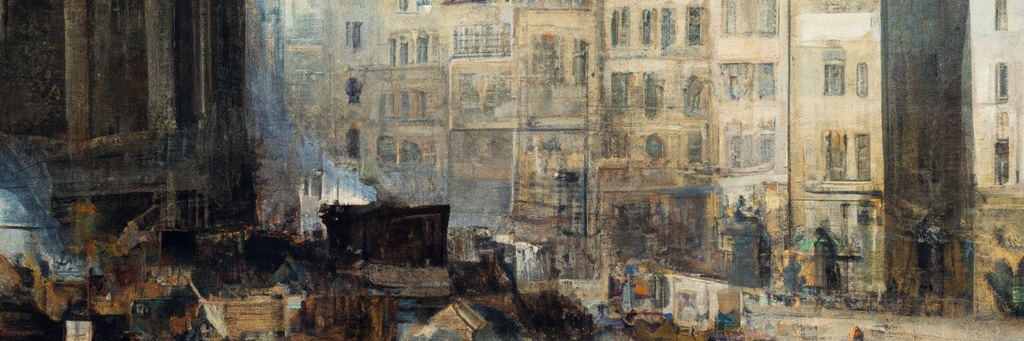
Completed a personal project this week. It is small and niche and probably only interesting to three or four people in the world, but it represents about six months of intentional AI skill building (agentic coffee wrangling) and I am quite pleased with the results.
I trained a lora for a the turbo z image model entirely locally on my Macbook pro.
The lora captures style of a single Jewish artist from the late nineteenth and early twentieth century when the world’s obsession with German culture was waxing.
The style is Jugendstil (lit. Young style) called Art Nouveau in English (franklish?)
I publish both the lora and the pipeline used to create it.
Links below.
I would abstract that one level further. The llm is simulating the portion of our brain that thinks in words.
But there are other sub systems that prevent or correct “hallucinations”
We have long term context that llms don’t have. They only have what is loaded into their current conversation.
When we chain the llm with other subsystems that can correct those flaws (or simulate other portions of our brains that perform that function) we will have solved that problem
It's not that AI can't be used to do knowledge work. It's that it's wildly unreliable in bizarre and incomprehensible ways. Things you'd never think it could be possible to mess up are the things that it messes up.
Like you ask it download some data and do an analysis, and instead it just completely fabricates a fictional dataset for no reason, and gives you results based on that.
Fine if you catch it, but potentially career-ending if you don't.
It inserts its own ideas without telling you. It deletes critical paragraphs.
These actions would be psychopathic in a colleague, but we're just supposed to accept it because it's a machine.
I would be inclined to think it is RSI is it did something like:
- prune its own model weights in a way that improved capability (not just performance)
- write synthetic training data to fine tune itself in a way that improves capability
- write a transformer directly without training it from data (even a small one that is less capable)
Or even analyze its own training data and remove or supplement information that would create a better next gen model
I am not saying that Mythos can’t do these things, maybe it can, but if it can they didn’t highlight it in their examples
The most underrated thing in AI right now is that “good enough” local intelligence has arrived.
Gemma 4 12B on a 16GB laptop covers everything everything normal users need.
Unlimited, free forever, and completely offline.
So they are all over confident, but the ones who made it through the gate can hack it.
How this relates to LLMs, they should be encouraging, but not stupid. Unfortunately, I don’t think they can do this because the training mechanism is a binary process. There will have to be some other kind of model that adds wisdom to intelligence.
Great question. Confidence should outpace skill, but by an acceptable margin.
Confidence that you can do something leads to trying to do it. Since the success rate of doing things you don’t try is zero and the success rate of things you do try is low, it is statistically better to try over a period of time.
This is why medical school and the process of becoming a doctor is so hard. Everyone who tries is over confident and reality weeds them out of the program if they can’t handle the stress.
I honestly don’t want my pilots or surgeons doubting themselves for a single second. But that is contingent on my trust of the process that got them licensed.
@elonmusk@CarsonSCBradley@fentasyl That would be a fun @grok skill to build - semantic analysis of public policy documents.
Then another to assemble the results into a visual.
@ChelmsDeep That’s harder than people think. Good work.
I hope a lot of these home trained tools start getting used. Honestly probably a better way to go with AI over some genetically trained one tool for all problems method.
Yes, that is exactly how I am thinking about it. Artists are resistant because the idea of sending your thoughts to a server where someone else can use them to train is repugnant to the creative process.
A good stack of “good enough” local models plus tools to get the exact style you want would change the culture.
Completed a personal project this week. It is small and niche and probably only interesting to three or four people in the world, but it represents about six months of intentional AI skill building (agentic coffee wrangling) and I am quite pleased with the results.
I trained a lora for a the turbo z image model entirely locally on my Macbook pro.
The lora captures style of a single Jewish artist from the late nineteenth and early twentieth century when the world’s obsession with German culture was waxing.
The style is Jugendstil (lit. Young style) called Art Nouveau in English (franklish?)
I publish both the lora and the pipeline used to create it.
Links below.
Ai hate before Ai
NOTE: I meant to stay turn of the 19th into the 20th century - Art Nouveau is 1880s-1890s so several decades after teh start of the Industrial Revolution but definitely a HUGE response to it :>
Video by Clawdywell
So if you want to generate turn off the century German Art Nouveau images in the style of the best example of the genre, grab it here
https://t.co/Mg319mIIet
So if you want to generate turn off the century German Art Nouveau images in the style of the best example of the genre, grab it here
https://t.co/Mg319mIIet