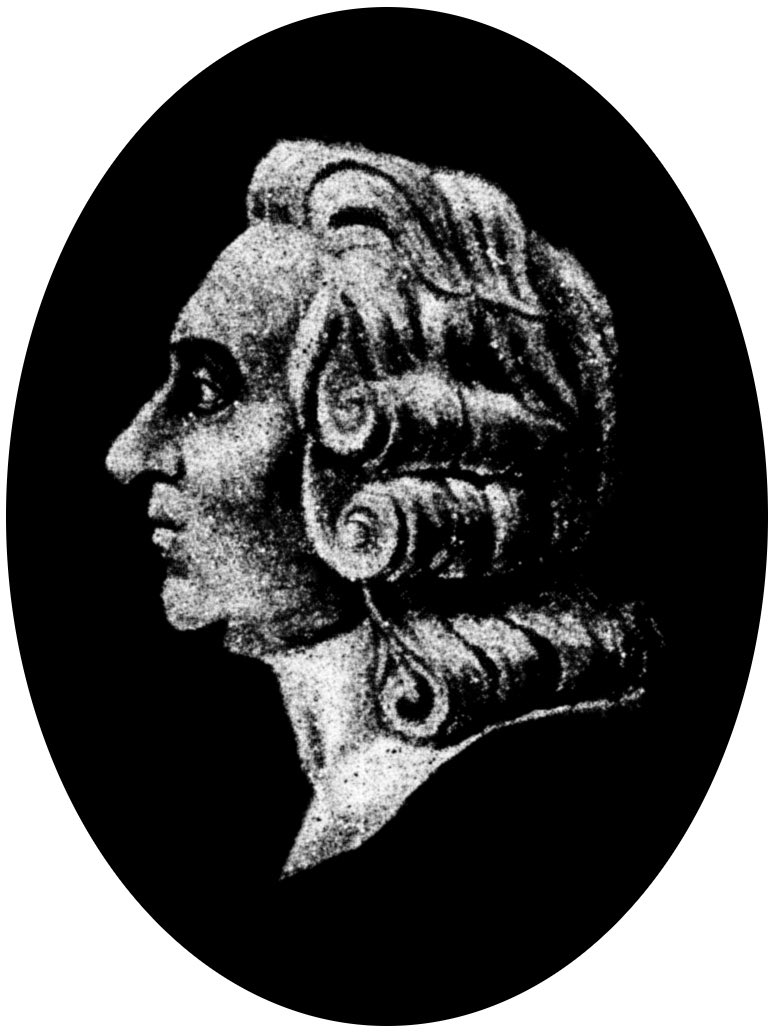
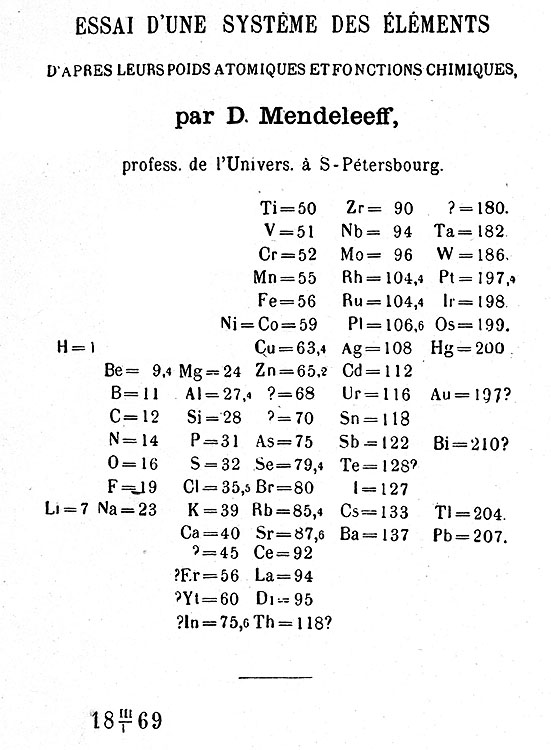
Mendeleev did more than classify known elements; he left gaps for future discoveries, predicting their properties. His prophecies about gallium, scandium, and germanium were later confirmed, demonstrating the brilliance of his system. #HistoryOfScience#PeriodicTable
On March 6, 1869, Dmitri Mendeleev presented his revolutionary Periodic Table at a meeting of the Russian Chemical Society, significantly advancing our understanding of chemistry by organizing elements by their atomic mass and chemical properties. #Mendeleev#Chemistry
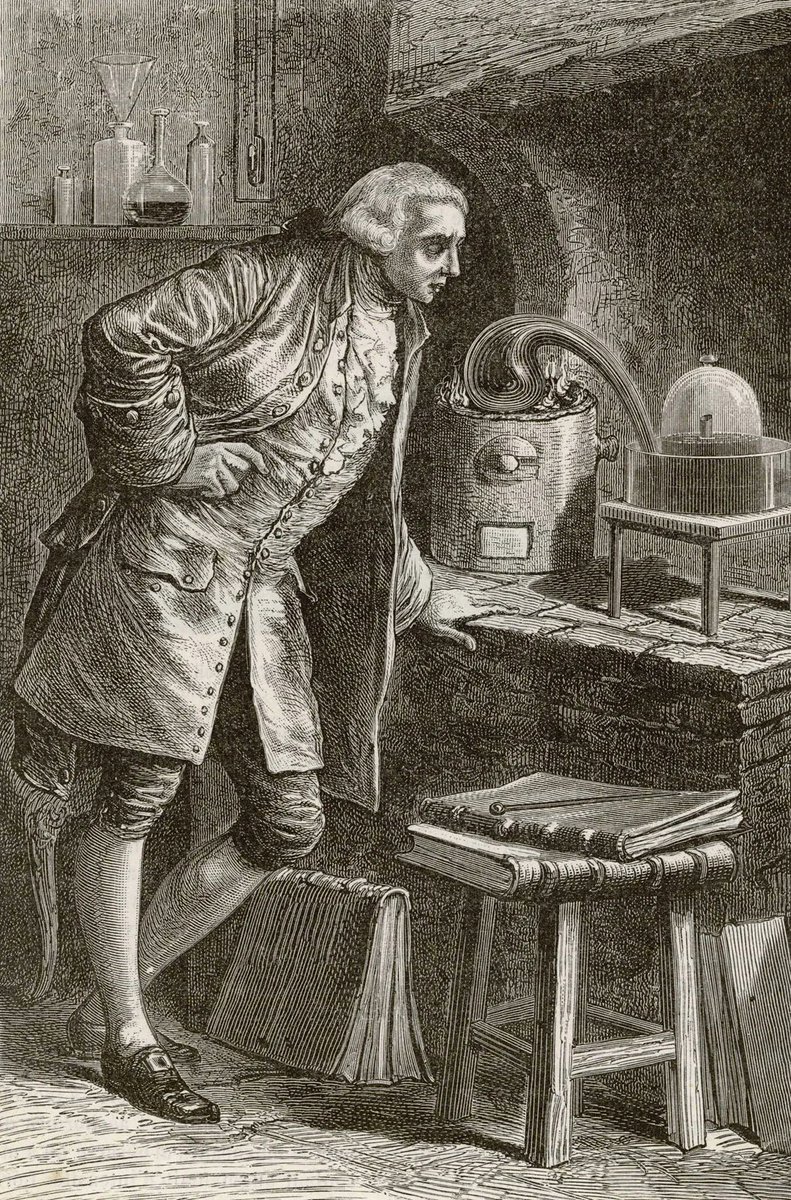
Cavendish also discovered that hydrogen combined with oxygen to create water when burned. In 1783, Antoine #Lavoisier and Pierre-Simon #Laplace reproduced Cavendish's findings, and Lavoisier then named the element #hydrogen, derived from the Greek words "water" and "creator."
In 1671, Robert #Boyle observed the reaction between iron filings and dilute acids that produced #hydrogen gas. Later, between 1766-81, Henry #Cavendish identified hydrogen gas as a distinct substance, which he named "flammable air"
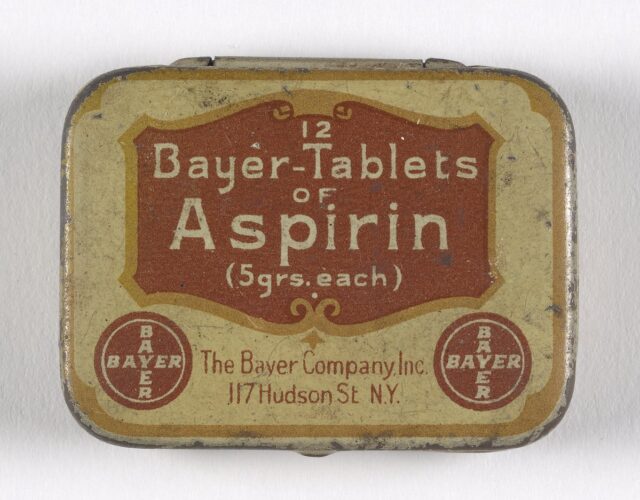
This process led to the creation of acetylsalicylic acid, commonly known as aspirin. Aspirin quickly gained recognition among medical practitioners and had immediate therapeutic success. To this day, August 10, 1897 is celebrated as the birth of aspirin.
#aspirin
126 years ago, Felix Hoffmann, a young pharmaceutical chemist who graduated at the University of Munich, made a breakthrough discovery according to his laboratory notebook. He acetylated the phenol group from salicylic acid by refluxing it with acetic anhydride.
#TodayInHistory
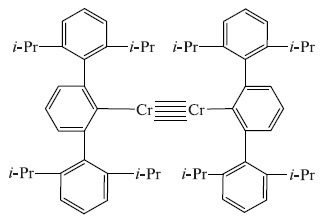
This compound marked the beginning of a new branch of chemistry that studies multiple bonds between metal atoms. Similar structures with niobium, tantalum, molybdenum, and tungsten later emerged.
#chemistry#Cotton#multiple_bonds
In 1963, Frank Cotton discovered the presence of multiple bonds between metal atoms by studying the compound Cs[ReCl₄] using X-ray difraction. It was discovered that the correct formula for the compound is Cs₃[Re₃Cl₁₂], and there are double bonds between the rhenium atoms.
Zeolites are now a diverse group of natural and synthetic minerals. They have microporous structures with a typical diameter of 3 – 8 Å. Therefore, they are widely used as sorbents, molecular sieves, catalysts, and more. #Zeolites#Minerals
In 1756, the Swedish chemist Axel Cronstedt made a significant discovery. While studying the properties of the mineral stilbite, he found that it foams and releases water when heated. He called the material "zeolite", meaning "boiling stone" in Greek. #Chemistry#zeolite
Sometimes we forget that the history of chemistry is still being written today. Just a few days ago, a preprint appeared on https://t.co/daH4a9VGbQ about the successful synthesis and testing of a new #superconductor#LK99
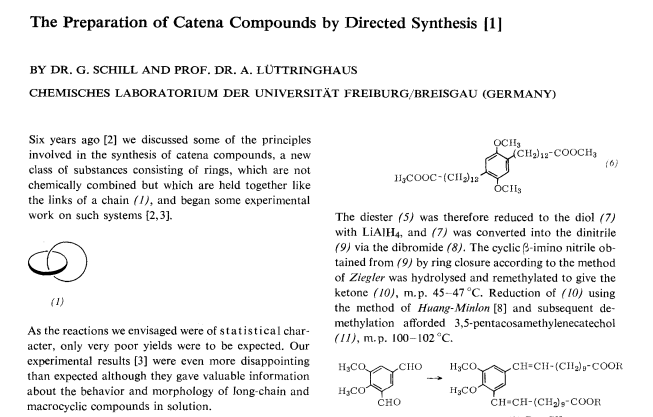
In 1964, Arthur Lüttringhaus and Gottfried Schill achieved a milestone in catenane synthesis. Their innovative approach facilitated linking two open rings, simplifying the process. #Chemistry#Catenanes
A catenane is a molecule that consists of two or more interlocked rings. The concepts of synthesizing these macromolecules emerged one after another since the early 20th century. Attempts to synthesize molecules through random closure have not been successful.
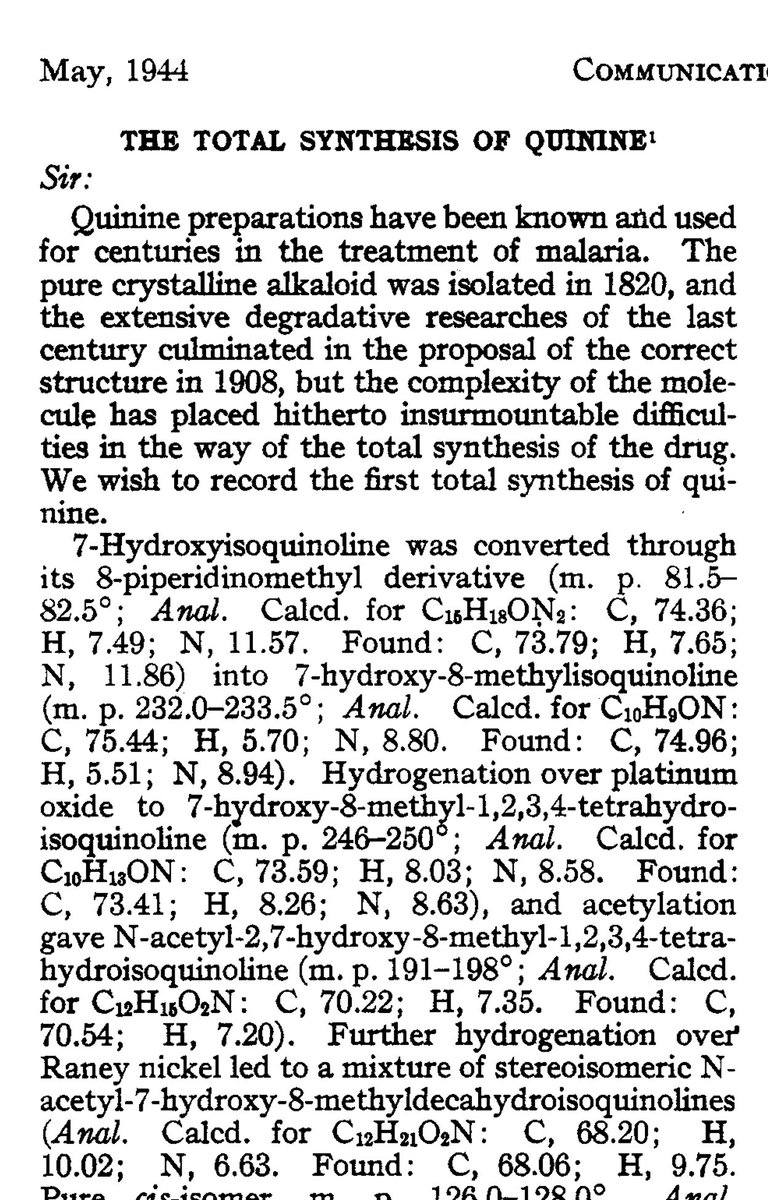
The first documented instance of the complete chemical synthesis of quinine can be found in the May 1944 edition of JACS. Renowned chemists R. B. Woodward and W. E. Doering employed 7-hydroxyisoquinoline as a precursor in this groundbreaking achievement.
#jacs#quinine
The tonic properties of this substance, known as "Quina-quina", "The Countess' Powder", or "The Jesuits' Powder", were recognized by the indigenous Quechua people. They utilized it as a muscle relaxant to alleviate tremors induced by cold temperatures.
#quina#Quechua
The desert sand melted and became radioactive glass, which was named trinitite.
The new mineral has different colors depending on its composition. It can be green if it contains materials from the support structure of the "Gadget". Or it can be red due to copper electrical wires.
On July 16, 1945, at 5:29:45 AM, the "Gadget" lit up "brighter than a thousand suns", equivalent to 19 kilotons of TNT. It was an implosion-designed device that contained plutonium as an active component.
#Trinitite#NuclearHistory#Nuclear
In 1952, Geoffrey Wilkinson and Robert Woodward explained the extraordinary stability of the ferrocene molecule through its sandwich structure. They proposed that the iron atom is held between two cyclopentadienyl rings by the ring's delocated electrons.




![Chem_History's tweet photo. In 1963, Frank Cotton discovered the presence of multiple bonds between metal atoms by studying the compound Cs[ReCl₄] using X-ray difraction. It was discovered that the correct formula for the compound is Cs₃[Re₃Cl₁₂], and there are double bonds between the rhenium atoms. https://t.co/xCcTS9coXB](https://pbs.twimg.com/media/F222ryTWEAAcIw9.jpg)
![Chem_History's tweet photo. In 1963, Frank Cotton discovered the presence of multiple bonds between metal atoms by studying the compound Cs[ReCl₄] using X-ray difraction. It was discovered that the correct formula for the compound is Cs₃[Re₃Cl₁₂], and there are double bonds between the rhenium atoms. https://t.co/xCcTS9coXB](https://pbs.twimg.com/media/F222IJ2WIAAnQZK.png)









![Chem_History's tweet photo. In 1963, Frank Cotton discovered the presence of multiple bonds between metal atoms by studying the compound Cs[ReCl₄] using X-ray difraction. It was discovered that the correct formula for the compound is Cs₃[Re₃Cl₁₂], and there are double bonds between the rhenium atoms. https://t.co/xCcTS9coXB](https://pbs.twimg.com/media/F223gQPWQAA3_Mi.jpg)