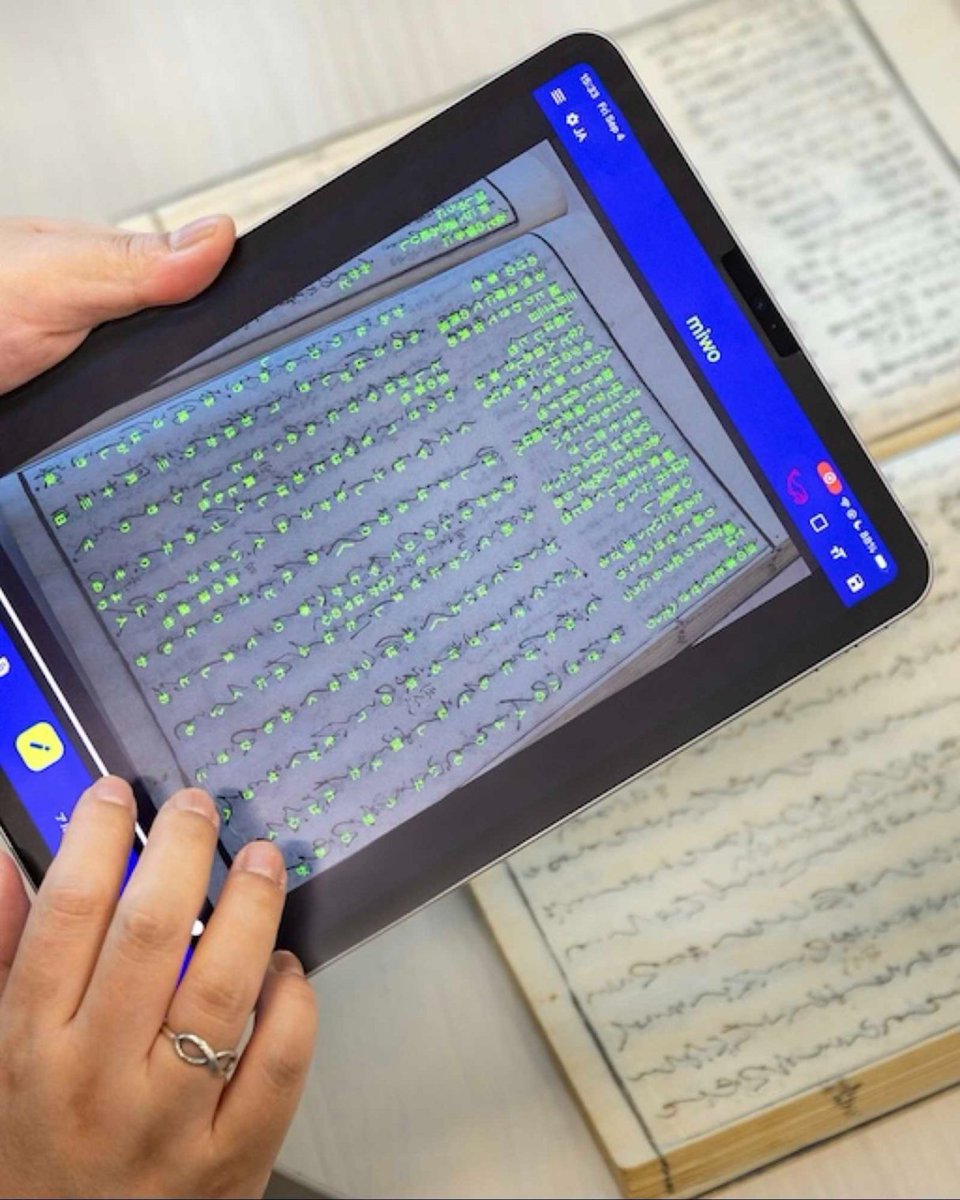
What if image recognition could unlock the classics? 📖 A Thai-born researcher captivated by Japanese literature built an AI app that makes Japan’s 1,000-year-old documents accessible to everyone, not just specialists. How? 🔍 Find out more👇
We identified a security incident affecting a modified Claude Code VS Code extension accessed through our Cursor IDE extension marketplace, impacting at most 5,000 users. This malicious version of the extension was not developed by Anthropic. It does not impact other extensions downloaded from the https://t.co/sJRGX5jLXW, Grok Bot, Grok or our other SpaceXSI products.
In response, we took down our extension marketplace this afternoon, worked with relevant providers to neutralize the malware, and have reinstated the marketplace after confirming there is no further risk.
If affected, please review instructions in this blog post to understand how to find the malicious package and establish a path to mitigate any potential impact. We are asking all customers update to Claude Code for VS Code version 2.1.314: https://t.co/ESqf7YEtHZ
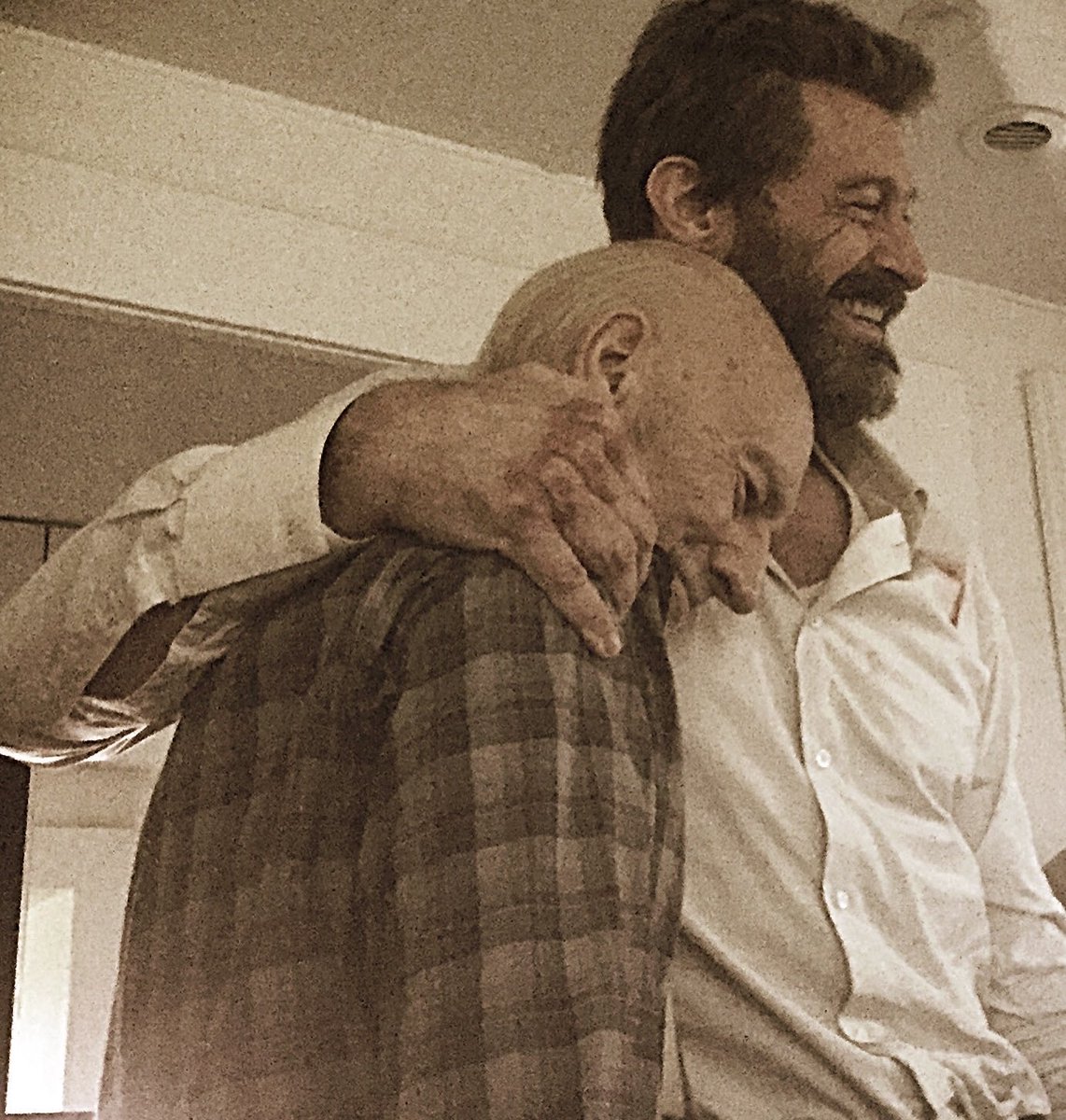
We lost one of the greats of stage and screen today. And, in my book, a tremendous friend and man. I learned so much from him. I will miss you, Patrick Stewart, all of my days. @mang0ld
So I recently badgered my cinematographer @steveyedlin into making my ideal iPhone still camera app. It shoots RAW, bypasses the iPhone's look processing and instead uses the same image processing we use on our movies. https://t.co/makZzhFd2Q
Finishing up my time in Thailand. Crazy few weeks of filming Extraction 3 but managed to fill the weekends with some fun non work adventures too! 🤙
📷 @evanpaterakis
If you've ever wondered why smart TVs are so cheap, this is why.
@log4j rooted his Samsung and found an always-on hot mic, automatic content recognition, geolocation, network mapping, ad targeting and user profiling, shared with Samsung's "400 partners".
A lot of it can be blocked in <15 min, wrote a basic guide below.
What your TV is doing
The main culprit is ACR (automatic content recognition). Your TV screenshots what's on screen, fingerprints it, and sends it home to build your ad profile. Samsung does it every 500ms, LG every 10ms [1].
What is insane: it happens on connected devices too.
Plug in your laptop, your console, your work machine, and your TV can fingerprint that via HDMI [1].
He also found that if your Samsung doesn't have a mic, it'll look for one from a connected soundbar or bluetooth device.
https://t.co/vNdTnIQ6KF
It's on by default, and you likely agreed to it on the setup screen you clicked through in 10 seconds.
Step 1: Turn off ACR
Samsung: Terms & Privacy → Viewing Information Services
LG: Live Plus
Vizio: Viewing Data
Roku: "Use info from TV inputs"
Sony/Google TV: Samba Interactive TV
Menus vary by model, but those are the names to look for. While you're in there, opt out of interest-based ads, reset your advertising ID, decline every optional privacy agreement, turn off voice recognition, and delete apps you never open.
Step 2: Give smart devices their own network
Put the TV, cameras, speakers and vacuum on your router's guest/IoT network. The logic is simple: these devices rarely get patched. If one gets compromised (getting drastically more frequent with AI), it shouldn't be able to see your other devices or home network.
Step 3: Block trackers for the whole house with DNS-level filtering
NextDNS (cloud-based) is easy and has a solid free plan. Pi-hole is a little bit more work if you prefer self hosting. For simplicity we'll focus on the former.
1. Sign up at https://t.co/IwhafVWVM8 (free tier is plenty)
2. Privacy tab: add a blocklist (OISD is a good bet) and turn on Native Tracking Protection for Samsung, LG, Roku, Amazon (see attached image)
3. Setup tab: copy your endpoint
4. Paste it into your router's DNS settings as DNS-over-HTTPS/TLS (or use the IPs + "Link IP" if your router only does plain DNS)
5. Bonus: block outbound port 53 except to your router. Some devices hardcode their own DNS to get around you
Then open the NextDNS logs and watch how often your TV phones home. It's eye-opening. If an app or update breaks, find the domain in the logs and allowlist it.
Why they do this
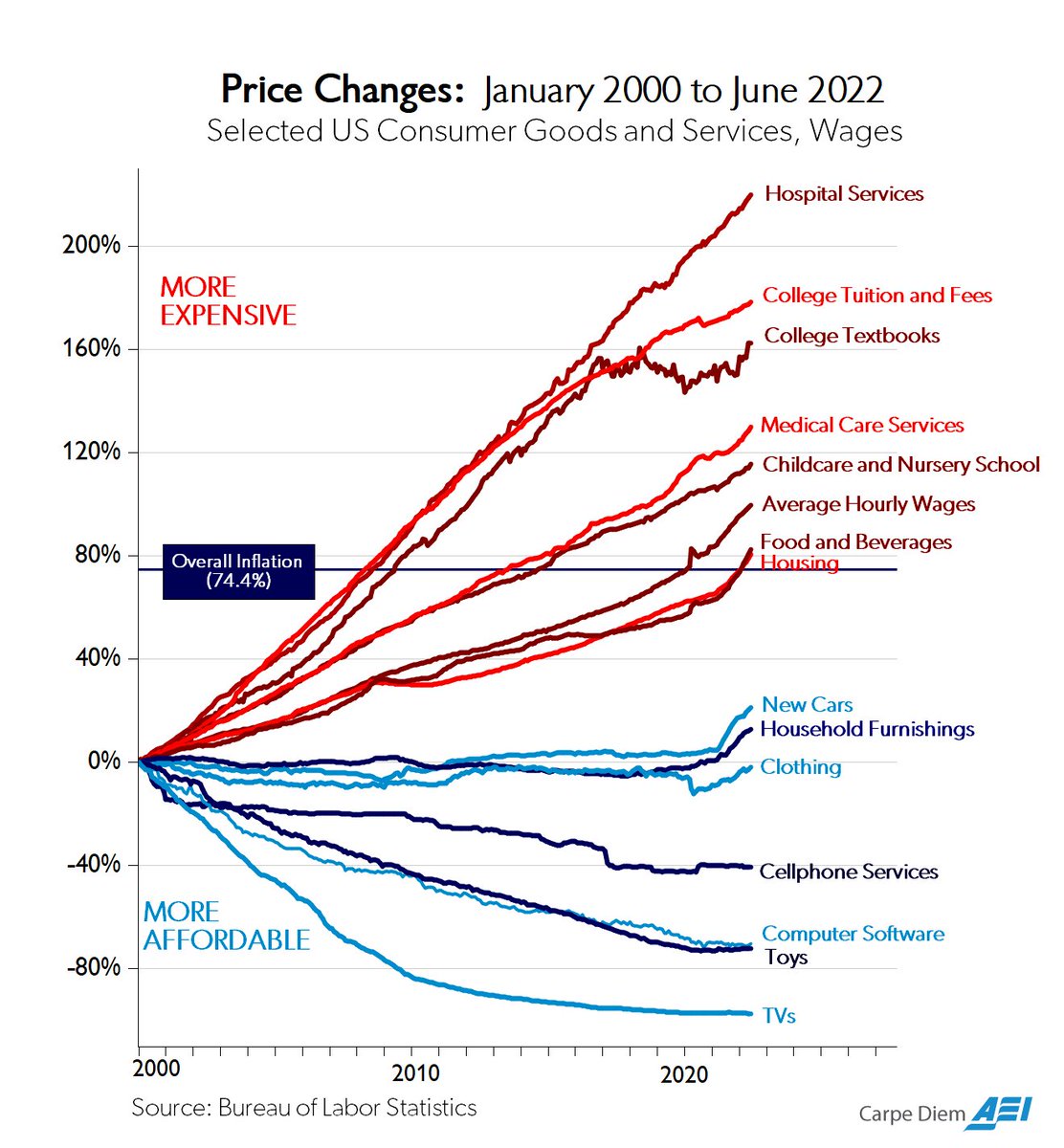
TV prices are down 97% since 2000 [2]. Most of that is better manufacturing and brutal competition. But once margins on the hardware hit zero, the cost moved to you.
In Q3 2024, Vizio lost $6.7M selling TVs and made $115.8M in gross profit from ads and viewing data [3]. They've said on earnings calls that they keep TV prices low to grow the audience they sell to advertisers. Walmart bought them in 2024.
This isn't a conspiracy theory either. Vizio paid $2.2M to the FTC in 2017 for tracking 11 million TVs without consent. Last December, Texas sued Samsung, LG, Sony, Hisense and TCL over ACR. Samsung and LG have since agreed to stop collecting that data without explicit consent [4].
TL;DR
1. ACR off
2. Ads + voice off
3. Smart devices on their own network
4. NextDNS filtering on the router
Sources:
[1] ACR study: https://t.co/S1IS8lXNbA
[2] Cost of US consumer goods: https://t.co/nclXELXcbd
[3] Vizio Q3 2024: https://t.co/CrVbwc9ZXk
[4] Texas v. Samsung: https://t.co/wFOUdeh1if
Calling it now: Chrome and Mozilla will remove eMudhra as a G1 root, nulling them as a CA.
On 20 Oct, eMudhra had 24 hours to give an explanation of what exactly happened with the mis-signed certificate. They did not; asked for more time; and now blame “investors/customers” 🤡
Say what you will about Windows (OS), but the NT kernel really is an engineering marvel that still puts Linux to shame in many ways.
The quickest way to describe it for a programmer, is NT was more like an object-oriented language, with a strong security model from day one, whereas Linux is very…not.
A lot of the “good” features in Linux feel bolted-on (SELinux, Capabilities, Namespaces) because…well they were. I love to imagine an alternate history where NT won.
IMO, Microsoft *should* have made an “Open NT” in the early 2000s; not fully GPL-style open, but one where a large org could say…swap out a memory allocator for their own. (they sorta did this with limited source access, but it was too restrictive)
You could imagine say…an early Amazon forking OpenNT to create an “AmazonNT” for EC2, where they have a modified scheduler, network stack, whatever. But, the security+compatibility contract keeps a stable baseline on the Microsoft side.
Controversial take, but if we enter this era where users are giving AI agents increasingly higher levels of access control; the Linux kernel is legitimately a poor fit. Think about it; answer the question “What exactly is this AI agent allowed to do?”
On Standard Linux, it’s disgustingly messy with lots of overlap.
Do you use UIDs? GIDs? ACLs? CGROUPs? Policies? SELinux? Filesystem modes? There’s not a singular coherent graph of capabilities you can point to. Too many ways you can escape an initially narrow scope.
NT, by comparison, can go the route of explicitly typed resources, and then you could have these really strong centralized audit trails when an agent goes haywire…etc.
I know I’m rambling, but the point is…if you were greenfielding an OS kernel from scratch, in 2026, with the intent of being forward-looking, it would *not* look like Linux. Frankly, it’d probably look a lot closer to NT, or even a BSD fork…