📖 Today’s Idiom · 才华横溢 (cái huá héng yì)
Overflowing with talent
✨ Meaning
Describes someone so gifted, especially in writing or the arts, that their talent seems to overflow.
🧩 Break it down:
才 (cái) · talent
华 (huá) · brilliance
横 (héng) · spread across
溢 (yì) · overflow
📜 History
An early recorded use appears in an 1846 letter by Zeng Guofan, praising his younger brother’s writing. The idiom pictures talent as something so abundant it spills over.
✏️ Example:
这位年轻导演才华横溢,拍出了很多优秀的作品。
This young director is exceptionally talented and has made many outstanding films.
#LearnChinese #ChineseIdioms #Hanzi
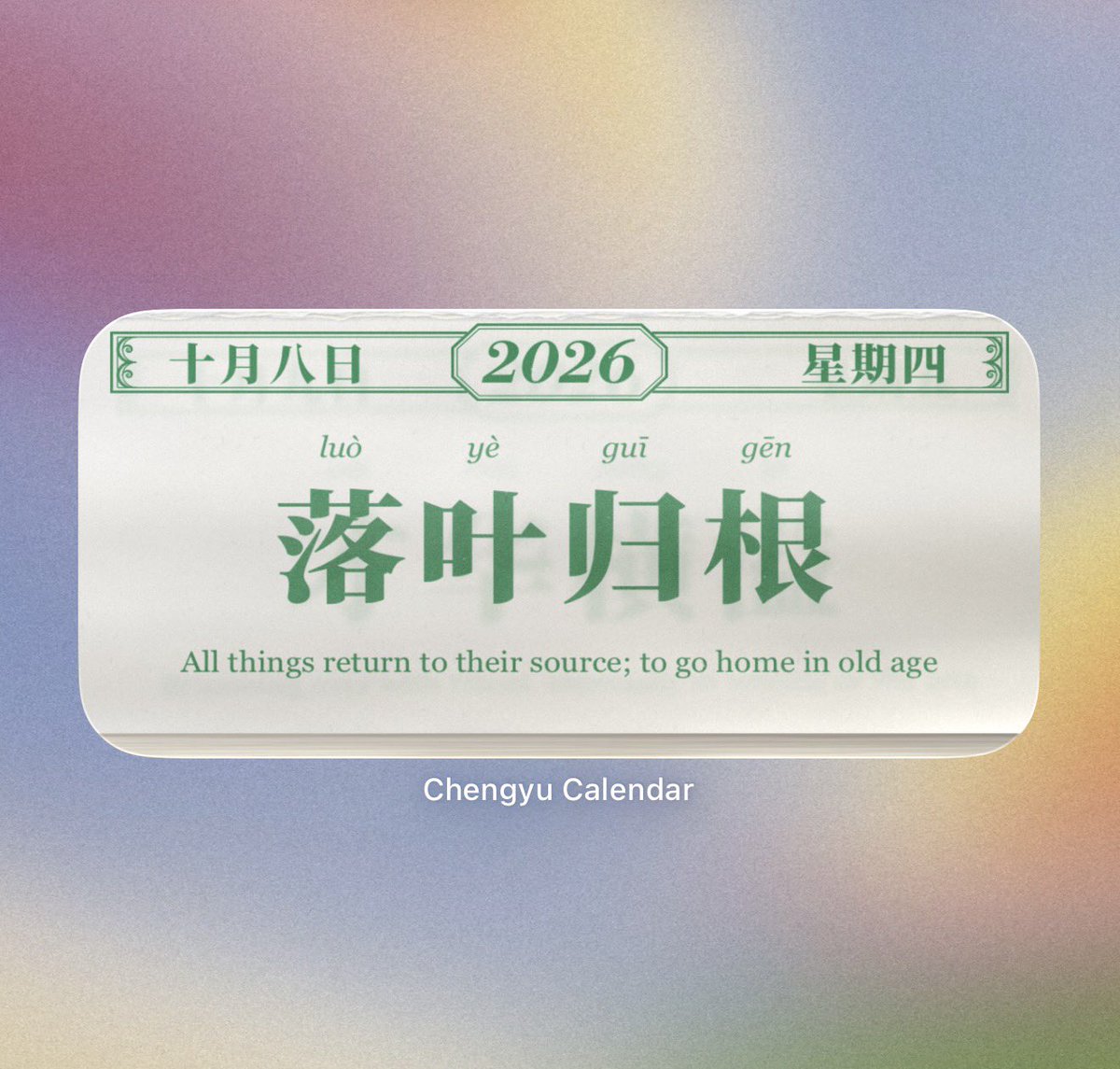
There’s a Chinese idiom that says:
“落叶归根”
(Luò yè guī gēn.)
“Fallen leaves return to their roots.”
Just as leaves fall back to the roots of their tree, people often feel drawn back to where they came from, especially as they grow older.
No matter how far life takes you, there’s something powerful about the idea of returning home.
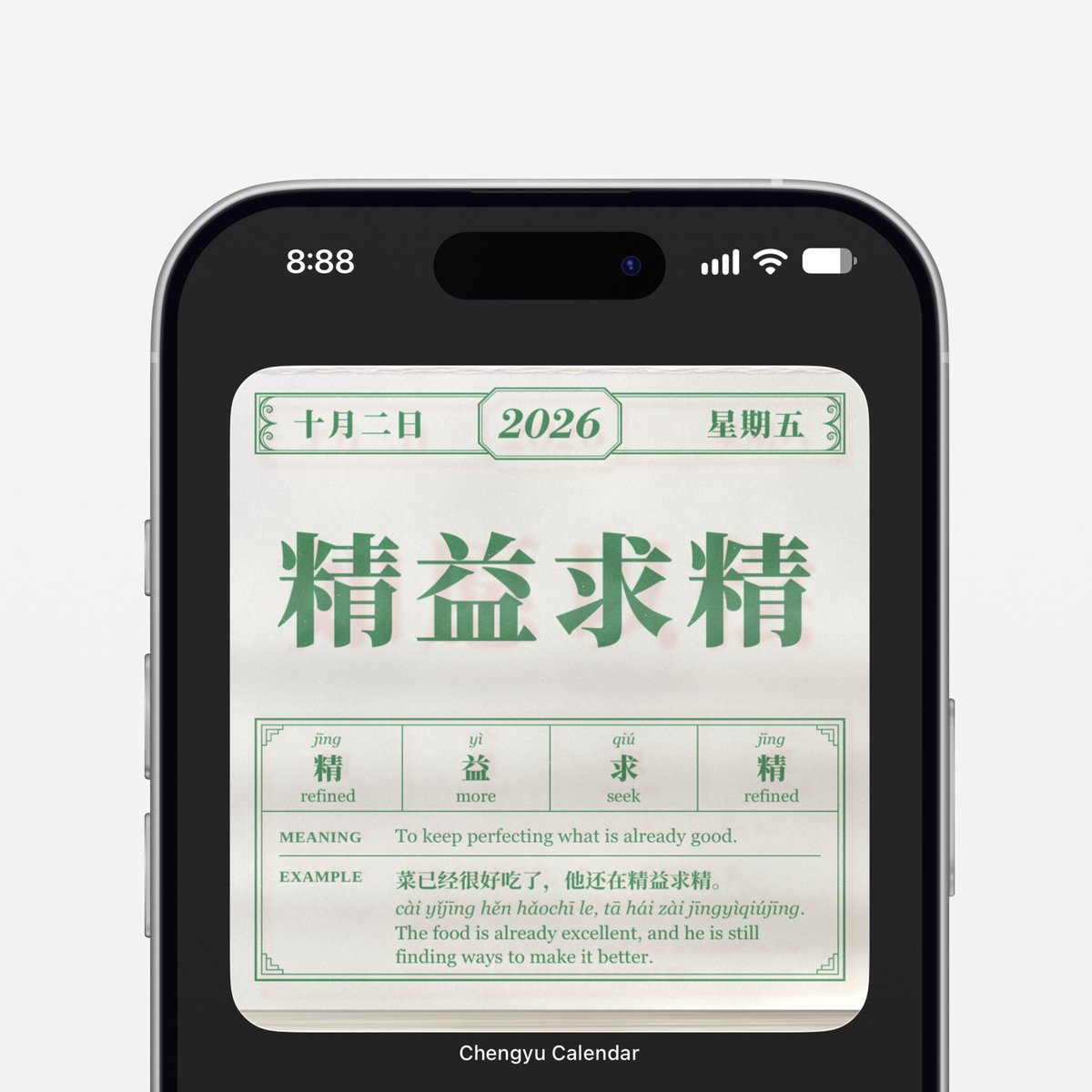
📖 Today’s Idiom · 精益求精 (jīng yì qiú jīng)
Keep making something good even better
精益求精 describes the desire to keep improving something that is already good, rather than settling for “good enough.”
🧩 Break it down:
精 (jīng) · refined / excellent
益 (yì) · even more
求 (qiú) · seek
精 (jīng) · refinement / excellence
✏️ Example:
菜已经很好吃了,他还在精益求精。
The food is already excellent, but he’s still finding ways to make it even better.
💡 Use it for someone who keeps refining their work, even after it has already reached a high standard.
#LearnChinese #ChineseIdioms #Hanzi
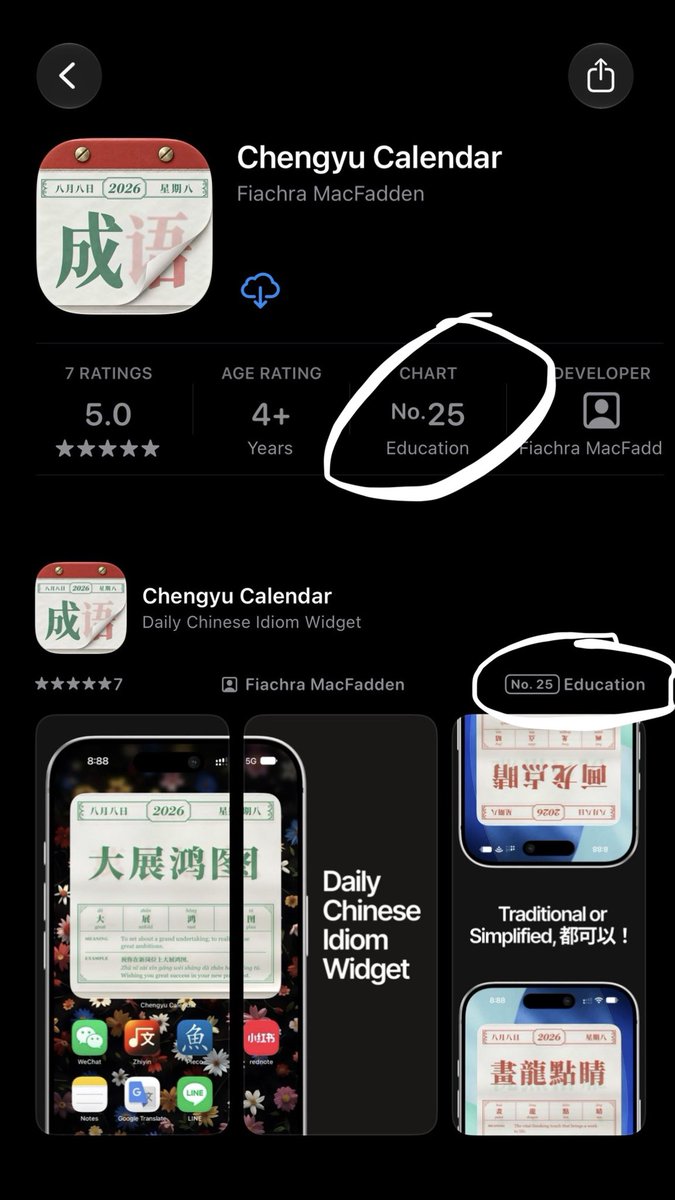
My new app, Chengyu Calendar, is now out on the App Store!
Heavily inspired by the beautiful Chinese daily tear-off calendar, I designed it to feel more like a physical object than a piece of software.
Every day, it teaches you a new Chinese idiom, with its meaning, history and examples of how it’s actually used.
I hope the Chengyu Calendar widget brings a little warmth and texture to your Home Screen, while helping you learn something new each day.
Many more updates coming soon!
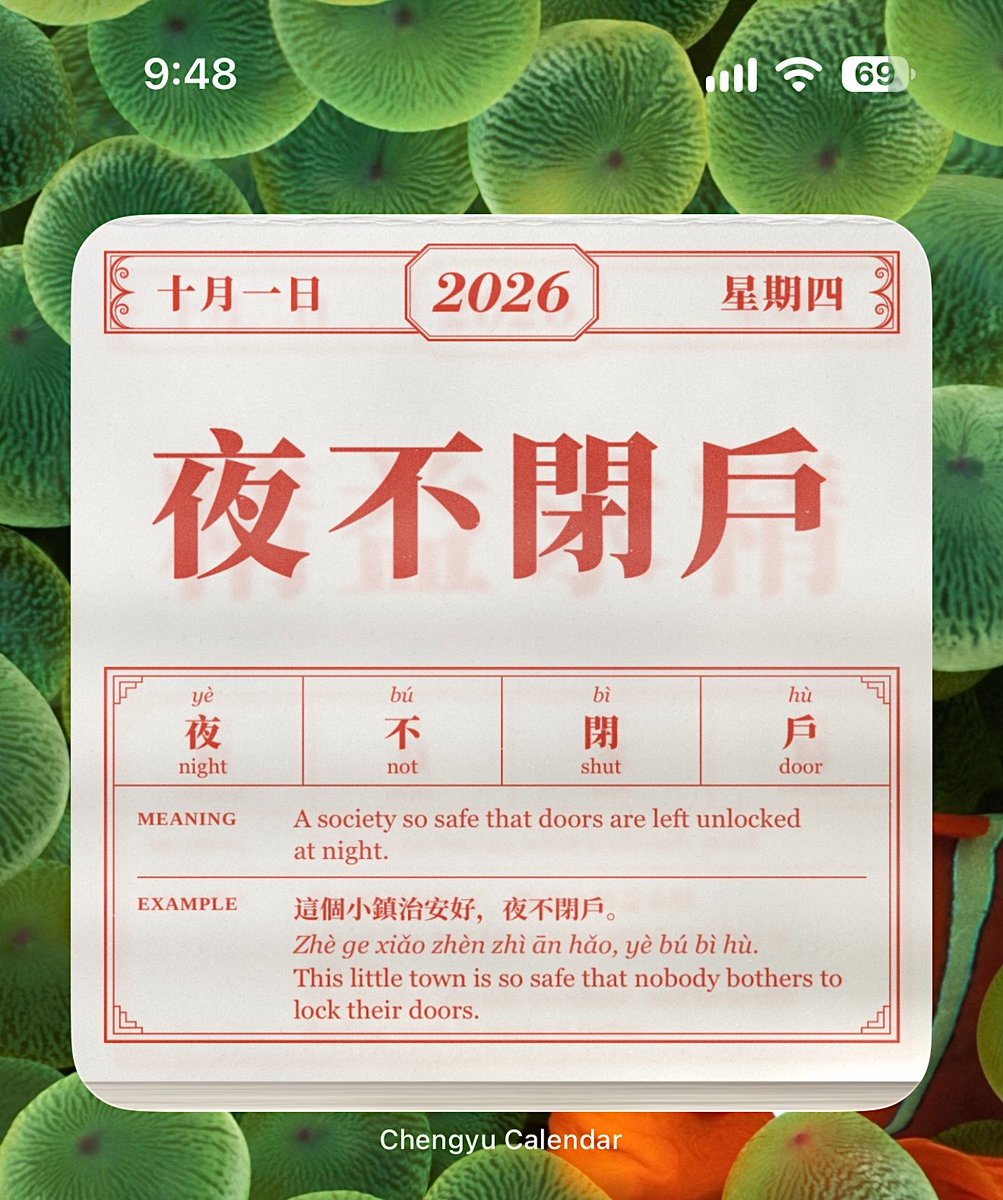
📖 Today’s Idiom · 夜不闭户 (yè bú bì hù) · safe enough to leave your doors unlocked
夜不闭户 describes a place with such good public order that people don’t worry about theft, even at night.
🧩 Break it down:
夜 (yè) · night
不 (bú) · not
闭 (bì) · close
户 (hù) · door / household
✏️ Example:
这里治安很好,几乎可以说是夜不闭户。
The area is so safe that people practically don’t need to lock their doors at night.
💡 A vivid way to describe an exceptionally safe and trusting community.
#LearnChinese #ChineseIdioms #Hanzi