People using the ELM database may find this new gget module by @NeuroLuebbert and @ChiHoangCaltech (`gget elm`) useful for command line (especially high-throughput) ELM querying: https://t.co/TRAwm3O84o
Developed in coordination and collaboration with ELM developer Manjeet Kumar.
Thanks to @ChiHoangCaltech and @AviMaayan, gget enrichr finally allows the specification of a background gene list! 🧬🧬🧬
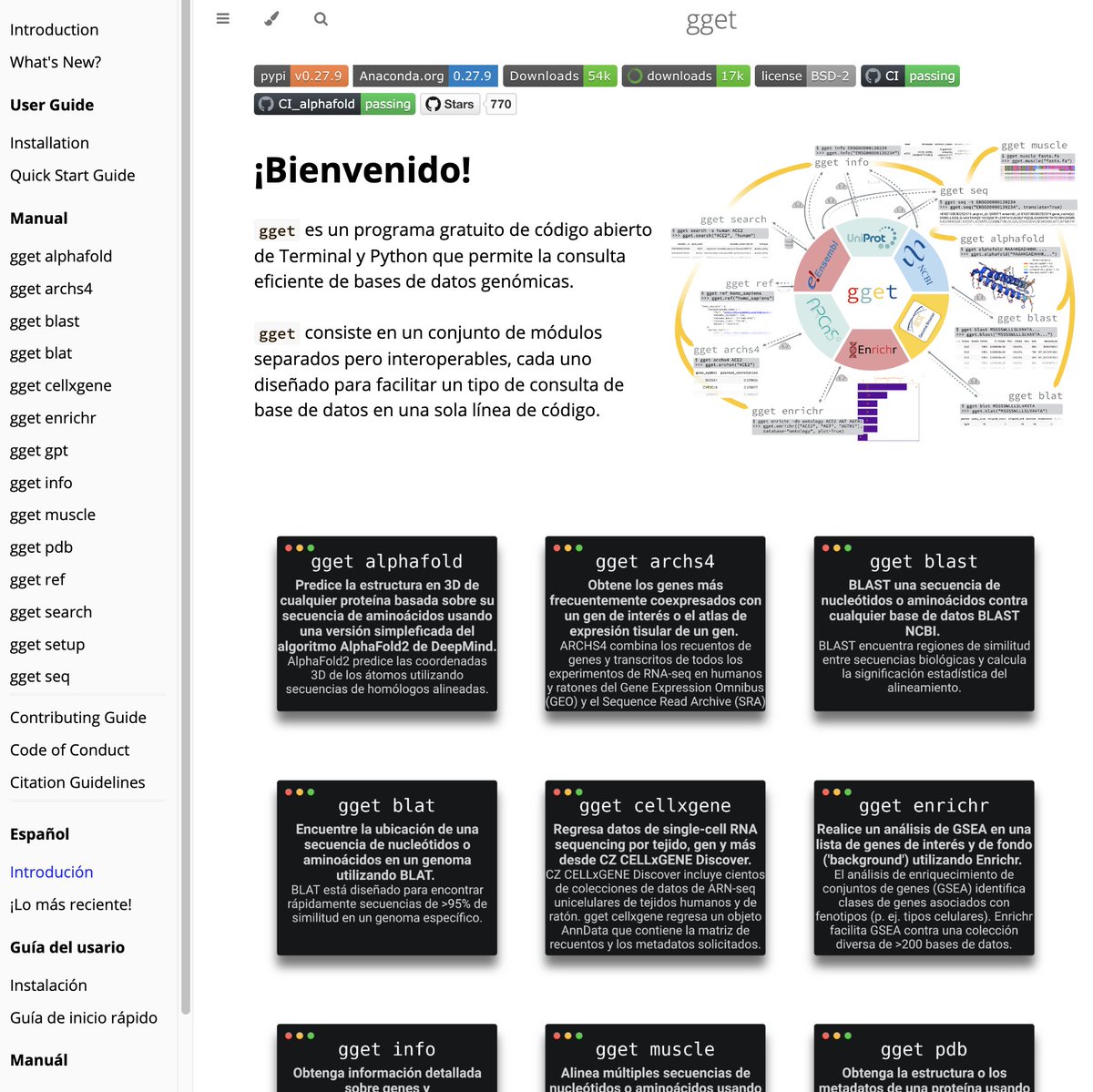
P.S. Check out our renewed website!
¡Ahora también en español!
https://t.co/FXuG3582e0
You can install the new version of gget using ‘pip install gget’ and play around with the code used to generate the figures in this thread here:
https://t.co/hXAKRzSSoE
Shoutout to @MaayanLab and @AviMaayan for doing an amazing job with Enrichr.
gget enrichr now supports enrichment analysis with a user-provided list of background genes!
Why should you care about background genes? A 🧵
https://t.co/RcZMeKKGMw
This makes sense, since our 5 genes are liver markers. However, in the context of 50 total genes tested, only 5 coming back positive does not seem like much. Indeed, when adding the correct background gene list, the enrichment results come back not significant:
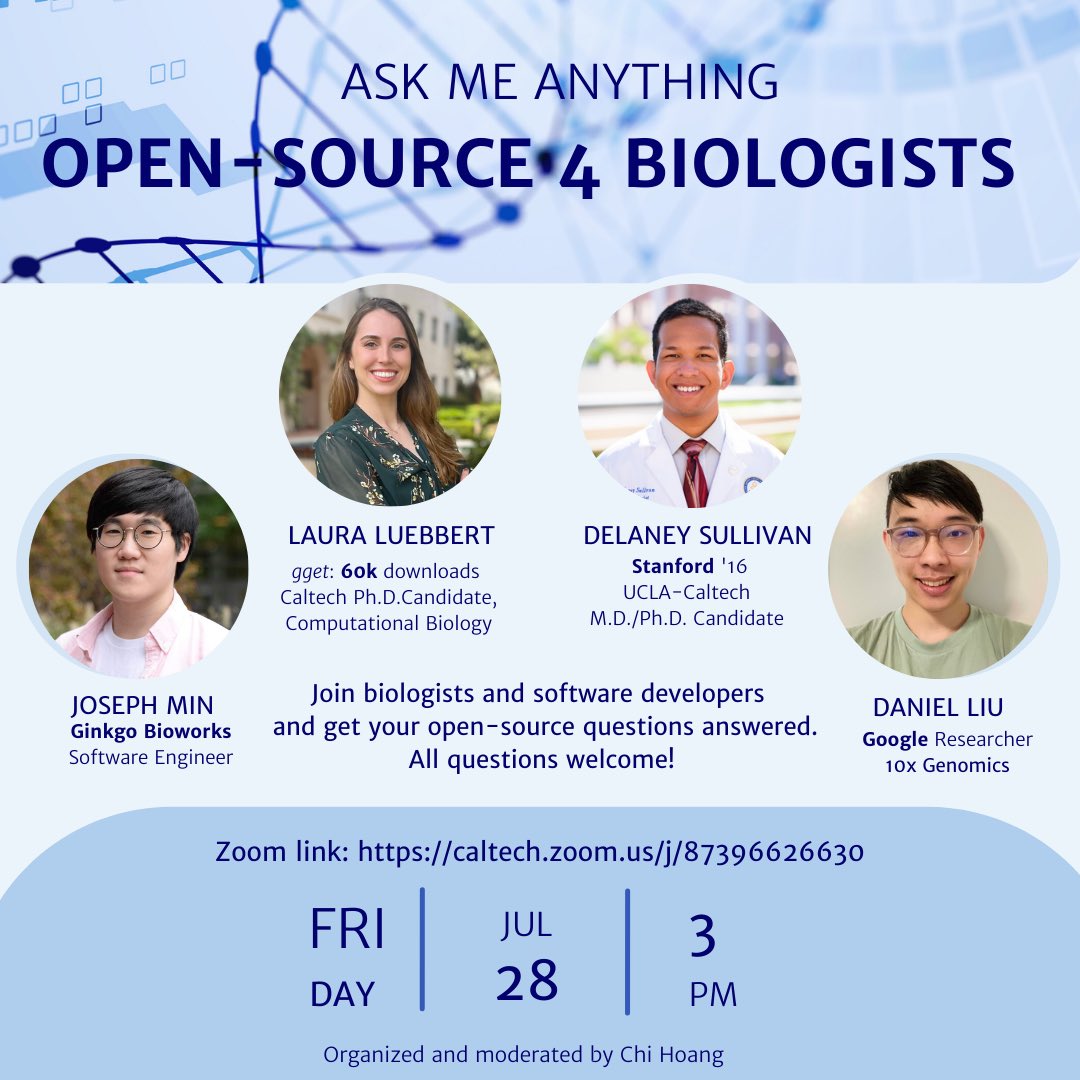
Happening today at 3 pm PDT!👩💻
Join us for a casual AMA with biologists and software engineers working on open-source bioinformatics software.
What makes a successful OS software?
Where does my domain knowledge come in handy?
How do I get started?
Link: https://t.co/JaIp2NQSBX
My amazing undergrad mentee @ChiHoangCaltech is organizing a panel to answer all of your questions around getting started with open-source software in biology. Please join us for a casual AMA:
Featuring the amazing @daniel_c0deb0t@DelaneyKSull and @lioscro