Singapore is going all in on AI adoption. Resources, training, money — every employee, no exceptions.
But here's the uncomfortable truth no one wants to say out loud: if you're not keeping up, you're being phased out.
The scary part isn't that AI is hard to learn. It's the opposite. Anyone can pick it up in a day or two. The barrier to entry is almost nothing.
Which means the gap isn't about access anymore. It's about willingness. Those who learn to prompt well, use AI daily, and keep pushing — their productivity goes through the roof. Those who resist, or just go through the motions — they fall behind. Fast.
Big organizations and governments know this. They just don't say it plainly because the optics are brutal.
But the math is simple: AI users will outproduce non-users. And in a world where headcount gets justified by output, that's not a performance review problem. That's an existential one.
Your job.
Your relevance.
Your sense of self-worth.
All on the line — not because AI replaced you, but because someone else chose to use it and you didn't.
🇸🇬 Singapore is going ALL IN on AI.
$27B committed,
#2 globally for AI adoption,
62.8% of the population already using gen AI.
Here's the full picture — policy, capital, infrastructure, and how they're getting every citizen ready. 🧵 [1/5]
I sometimes wish I was in my twenties again. I am 45 now.
The AI ecosystem right now — the development, the infrastructure, the building — it's electric. It reminds me of when I first fell in love with programming.
Twenty years ago I was deep in C, Basic, Java, VHDL. I even coded a robotic soccer with a team in Visual C++ and won a RoboCup competition in Seattle around 2000-2001. That was one of the most exciting things I'd ever done.
Then life happened. My career shifted into hardware. Code went dormant for over twenty years.
What brought me back wasn't discipline or a course. It was AI collapsing the barrier to entry. Suddenly I could build apps again — real ones, solving real problems for myself and everyday people. The thing I left behind at 25 is back in my hands.
It's exciting. And honestly, a little scary. Skills I spent a decade building can now be replicated in seconds.
But life changes. So must we.
Can I check if there is any preference treatment for $tsla shareholder given that spacex is going ipo?
What was your consideration then and what had transpired since then?
Thanks. @elonmusk
@TeslaGong@torybruno At least a few years before Starlink revenue is reasonably predictable. Going public sooner than that would be very painful. Will do my best to give long-term Tesla shareholders preference.
No one gets left behind.
SkillsFuture trains 606K citizens/year. From H2 2026, enrol in an AI course and get 6 months of free ChatGPT/Gemini access.
"Fluency comes from consistent use." — Manpower Minister Dr Tan See Leng [5/5]
🇸🇬 Singapore is going ALL IN on AI.
$27B committed,
#2 globally for AI adoption,
62.8% of the population already using gen AI.
Here's the full picture — policy, capital, infrastructure, and how they're getting every citizen ready. 🧵 [1/5]
AWS. Microsoft. Google DeepMind. OpenAI's first-ever lab outside the US. Nvidia + Singtel building AI data centres.
And now Anthropic is setting up a Singapore office too — hiring a Country Lead, Product Support, and finance roles.
Every frontier AI lab is here. 🇸🇬 [4/5]
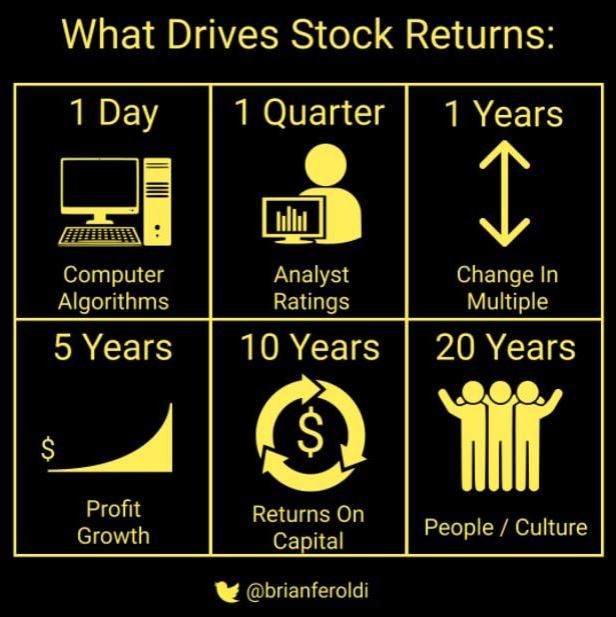
Brock Lesnar was "The Next Big Thing."
Wall Street has one too. Every quarter.
There's always a hot stock dominating headlines. The trick? Ignore the noise.
If it's everywhere in the media and you haven't invested yet — you're probably late. And buying at a high multiple.
Ask yourself two things before you pull the trigger: Is this FOMO? Or do the fundamentals actually support the price?
A great business can still be a terrible investment at the wrong price.
Invest with a decade-long lens. The "next big thing" rarely rewards the last one in.
Comparison of infrastructure buildup - Cloud vs AI.
Cloud built FCF as it spent.
AI destroys FCF to spend.
During 2013–2019, cloud capex rose 4× ($15B→$56B) but FCF expanded in parallel :AWS and Azure generated visible, margin-accretive revenue within 2–3 years. CX/Rev never exceeded 14%. The market could underwrite the returns in real time.
AI is the inverse.
The Big 4 are spending ~$700B in 2026: 15× cloud's peak, compressed into 3 years and FCF drops ~85% in the process.
Unlike cloud which created discrete, priceable compute services, AI monetisation is indirect: it enhances existing products with no clean unit economics to point to. Payback timeline is a 5–10yr debate, not a 2–3yr observable.
The supplier dynamic is also structurally different.
Cloud spend was fragmented across Cisco, EMC, Dell. AI spend flows 70–80% through a single GPU stack — NVDA. The toll collector is more concentrated and more profitable than anything the cloud era produced.
Tldr: Cloud was a capital cycle where you could see the returns being built. AI is a capital cycle where you have to trust they will be.
Trust, you shall undertake.
Risk, you shall bear.
Five camps.
1. Burning cash to build
AMZN, GOOG, META, MSFT are sacrificing FCF entirely.
GOOG's 23.1x ratio is the clearest explanation for that $80B equity raise. AMZN goes FCF-negative.
These companies have decided the infrastructure race comes before shareholder returns. For the next 2–3 years at least.
2. Sidestepping
AAPL (0.1x) is sitting on $157B cash and spending almost nothing. The bet: foundation model access via Google beats owning the stack. High financial optionality. Uncertain AI positioning.
3. Collecting the toll
NVDA (0.1x) generates $105B projected FCF on $7B capex. Every dollar the others spend flows through here. Best risk/reward on this table.
4. Stressed challenger
ORCL has no positive FCF to show a ratio against. $19B cash. $50B capex ahead. Most financially precarious name on the list.
5. Outsider
PLTR and CRWD sit cleanly outside the capex war — low spend, rising FCF, software beneficiaries of the buildout without funding it.
The AI capex arms race in one table, and it exposes three very different bets.
The spenders
(GOOG, MSFT, META, AMZN)
are doubling capex (+76–103% YoY) while growing revenue just 13–29%.
ORCL is the most aggressive.
Capex at 73.5% of revenue, up 138%, against 19% revenue growth. Same bet across all five: build the infrastructure now, figure out monetisation later.
The toll collector (NVDA)
The mirror image.
Revenue +65%, capex intensity just 3.2%. Every dollar the hyperscalers spend flows through NVDA's stack. Highest revenue growth, lowest capex intensity. The best seat at this table.
The capital-light compounders (PLTR, CRWD) are the quieter story.
PLTR growing revenue +71% at 1.7% capex intensity. CRWD +22% at 8.3%. Both are software beneficiaries of the AI buildout — neither is funding it.
AAPL is sitting it out.
Revenue +6%, capex intensity 4.1%, capex up 31%. Modest across every measure. Options kept open, AI positioning still unclear.
The number that stands out most: ORCL at 73.5% capex-to-revenue.
That's not an investment thesis. That's a leveraged infrastructure bet with no margin for error.
---
Of these 10 companies, only NVDA and PLTR are growing revenue fast while keeping capex intensity below 5%.
That combination doesn't show up often.
@Officiallyscene@DRTnky Yes. It is possible to save >30% of income provided salary is more than basic needs.
Actually, amount for basic needs is quite low. It is the wants that escalated the spend.
My son has 3 months to PSLE.
I'm walking a tightrope right now.
Too loose — he plays all day and regrets his results later.
Too tight — he burns out, shuts down, and I lose the bond we have.
Neither outcome is acceptable.
So I'm trying to find that delicate middle ground. Structured enough to keep him on track. Relaxed enough that he still trusts me.
It's not a parenting strategy. It's a daily negotiation.
Some days I get it right. Some days I don't.
But I'm paying more attention. And I think that's a difficult job — more complex than office tasks.
People complain to me all the time — "AI doesn't give me the answer I want."
Most of the time? It's not the AI.
It's the question or the prompt.
Vague prompt in, vague answer out. That's not a bug. That's just how it works.
I showed one of them how to ask better.
More specific.
More context.
Clearer intent.
Ta-da. Got exactly what he was looking for.
AI isn't a mind reader. Treat it like a brilliant colleague — the clearer your brief, the better the output.
I was hesitant to let my 12 and 14-year-old use AI for schoolwork.
Then my eldest came home frustrated. He'd spent hours on an assignment. His friend used AI to generate the artwork. His friend got the higher grade.
That changed my mind.
Not to let AI do everything. But to stop pretending it isn't part of the game now.
The goal: teach them to use it as a tool. Think faster, work smarter, get better results — and build the judgment to know where AI helps and where it doesn't.
That skill matters more than the assignment.
Times change. So do we.
How to stay strong mentally.
A calm mind is your greatest weapon.
Problems and pressure never stop coming. Neither do difficult people. The ones who handle it best aren't the ones who feel nothing — they're the ones who don't panic.
Calm isn't weakness. It's clarity.
And stop taking things personally.
Most of what people say or do has nothing to do with you. It comes from their own pain, jealousy, or insecurity.
Mentally strong people know this. They don't let every word shake them.
Your peace is yours to protect.
@unprofeshme@VivianBala@aiDotEngineer Thank you to you and your team for doing this.
I am a Singaporean and deeply inspired by Dr vivian's sharing. I started to build since then.





![Chicky_Think's tweet photo. 🇸🇬 Singapore is going ALL IN on AI.
$27B committed,
#2 globally for AI adoption,
62.8% of the population already using gen AI.
Here's the full picture — policy, capital, infrastructure, and how they're getting every citizen ready. 🧵 [1/5] https://t.co/oZWrsYwyqW](https://pbs.twimg.com/media/HJ8TGQbbcAAx9V0.jpg)


![Chicky_Think's tweet photo. No one gets left behind.
SkillsFuture trains 606K citizens/year. From H2 2026, enrol in an AI course and get 6 months of free ChatGPT/Gemini access.
"Fluency comes from consistent use." — Manpower Minister Dr Tan See Leng [5/5] https://t.co/xKeTgGvxQz](https://pbs.twimg.com/media/HJ8TIZKaAAA3BQr.jpg)
![Chicky_Think's tweet photo. AWS. Microsoft. Google DeepMind. OpenAI's first-ever lab outside the US. Nvidia + Singtel building AI data centres.
And now Anthropic is setting up a Singapore office too — hiring a Country Lead, Product Support, and finance roles.
Every frontier AI lab is here. 🇸🇬 [4/5] https://t.co/mqxNssi6eA](https://pbs.twimg.com/media/HJ8THz-bcAAR1PN.jpg)





