𝙃𝙤𝙬 𝙝𝙖𝙧𝙙 𝙘𝙖𝙣 𝙞𝙩 𝙗𝙚?
"This is important, I've got to go learn it and I've got to go do something about it and I better get to it as fast as I can, and how hard can it be?"
"I always had this feeling — how hard can it be — and truth be told, it is way harder than you think. But you don't want your mind to be there. You want your mind to be 'how hard can it be,' and let the suffering come to you a little bit at a time"
--Jensen Huang--
Software engineering. IT. Servers. How a CPU actually talks to a GPU. Data centres. Python. None of this was my lane.
I spent years deep in RF and electronics. That was the realm I knew cold. Everything outside it — I assumed it stayed outside, permanently, because that's how careers used to work. Pick a specialty, defend its borders.
With AI as a guide, I keep wandering past those borders. Not fluent yet. Just... standing where I used to have no business standing, asking questions I used to have no way of asking.
And the strange part — the more I learn, the more the not-knowing grows too. Every answer opens three doors I didn't know were there.
Forever learning, forever behind. But it's a good kind of behind.
The more I read about AI, the more I realize how much I don't understand.
Understanding one connector leads to MCP. MCP leads to Python. Python leads to writing my own MCP server. Server leads to client, then agents, then APIs and tools. It never ends.
AI has supercharged this process by handing me answers faster than I can internalize them.
Just after the internet build-up two decades ago, information went from scarcity to abundance.
Now, with AI, information goes from abundance to eli5. It just needs time to sink in.
Token cost right now is subsidized. Investors want payback on the capex — data centers, compute, talent. That subsidy doesn't last forever. Every business has the same survival instinct: profitability, or cash flow positive, eventually.
Look at the trajectory since ChatGPT launched. Early days, usage felt unlimited. Two, three years in, the caps showed up. Subscription gates, file upload limits, rolling-window rate limits. That's the subsidy tapering, not a coincidence.
Which means the opportunity to explore AI cheaply is shrinking, not growing. The best time to try it was yesterday. The second best time is now, while the cost is still being eaten by someone else's balance sheet.
Twenty, thirty dollars a month is nothing against what you learn from it. Once the subsidy ends, that cost gets passed to you — and by then you're not exploring, you're playing catch-up on someone else's timeline.
This isn't just chatbot speed. Agents are already chaining workflows end to end — receive a PO, generate the invoice, post it to the ledger, flag it for review. One human checking the output instead of five doing the work. That's not a productivity tool anymore, that's headcount math.
Get fluent while it's cheap. The gap between people who tried this early and people who wait for it to be "necessary" is going to be the whole game.
@JensenHuang :
"How hard can it be? ... it always turns out to be much much harder than than we expect. ...truth be told it is way harder than you think"...But he cautions that you do not want your mind to dwell on that difficulty.
Inspiring:
"How hard can it be?" This will be my motto to get (difficult) things done moving forward. Thanks Jensen.
https://t.co/RjmsKPHvue
The hardest part of keeping up with fast-changing technology isn't accumulating knowledge.
It's staying unafraid — willing to unlearn what worked before and pick up what's new.
In short, In tech, knowledge has a shelf life. What matters more is the courage to unlearn, keep learning and building.
I am not familiar with python and VS code environment, although I can vibe code to get usable outputs.
It is 08 August 2026 today. I will get myself up to speed by 31 August 2026.
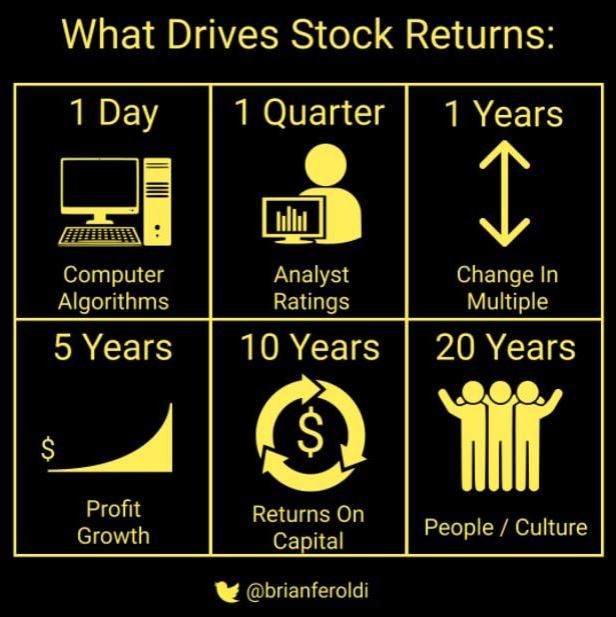
Volatility is not risk. A particular stock price can swing 10%, 20% or even 40% a day but what does it signify?
Nothing fundamental. Business typically doesn't fluctuate 20% a day.
It is the numerous interpretation of the perceived intrinsic value of a business that drive stock price in near term.
The individual perception is based on hype, emotions and mindset. I cannot control how other thinks and do, but i can control my thoughts and actions.
Play to own strengths, not compete head-on with the pros or someone with an edge.
Case-in-point: My $PLTR daily movement exceeds my annual 9-5 income these few days. But it means nothing significant — just celebrate the small wins because I held on with conviction for 5 years without selling.
Claude AI is probably my third brain now. My second brain is Cortex, running on the Pi at home. But Claude is starting to resemble what I actually think day to day.
Case in point: I had Claude reply to an email to upper management, cc'd to my boss. It came out formal, but in my own voice. My boss asked me afterward — did you write this, or did AI? He couldn't tell. He knows my English isn't polished, but the email didn't read like AI wrote it either. That's the win. Not speed. Fidelity.
Because once the tool starts sounding like you and not like AI, it starts stripping the jargon and the filler that AI normally adds, not the jargon and filler you'd normally write. Compounding from there is just a matter of reps.
Next frontier for me is MCP connectors. Google Calendar has been the interesting one — screenshot a conversation with a colleague or a friend, feed it in, ask Claude to add the event. No manual entry.
I'm still early on all this. And there's a school of thought that says try every AI, learn the pros and cons of each. I lean the other way. Master one first. Depth compounds — jack of all trades rarely ships the output. Once you're fluent in one, moving to another is fast. But fluency has to come first.
Asked Claude to explain agents from the ground up today. Got back a clean one-line definition and a plain-LLM-vs-agent breakdown.
Then I tried the part that actually matters: saying it back myself. [1/3]
Claude checked it point by point. All three held — including the bit about my own query bot being a pipeline, not an agent.
Writing the explanation is what tests it. That's the actual value of AI for learning. [3/3]
Asked Claude to explain agents from the ground up today. Got back a clean one-line definition and a plain-LLM-vs-agent breakdown.
Then I tried the part that actually matters: saying it back myself. [1/3]
Here's what I actually sent back to Claude, in my own words, rough edges included. Not a summary of the answer — my own attempt at rebuilding it. [2/3]
Wireless earpieces on primary school kids. I don't get it.
Direct sound that close to the eardrum, that's a hearing risk on its own. And for what? A phone or a speaker does the job just fine at that age. If it's a long commute alone, fine, a earpiece helps pass the time. That's the only case I'll allow.
Secondary school and up, different story. Real independence, real need to stay reachable, real long journeys. That's when it starts to make sense.
But younger than that, the bigger issue isn't the ears. It's the awareness. I've watched kids with both pieces in, noise cancelling on, completely checked out from their surroundings. Crossing roads like that. Not seeing cars, not hearing horns. That's not a hearing problem, that's a safety problem, and it affects the driver too, not just the kid.
Saw one today. Young boy, maybe primary three, phone out, earpiece in, standing still a hundred meters from the school gate watching a video instead of walking in. Nobody around. Nobody paying attention.
My two are fourteen and twelve. Never given them wireless earpieces, in the house or out. When my elder needs to call a classmate for schoolwork, he uses a wired pair so he doesn't disturb us. That's the only exception, and it's wired on purpose.
The line isn't about the gadget. It's about whether the kid still knows what's happening around him. Convenience for the parent shouldn't cost the kid his awareness of the road.






![Chicky_Think's tweet photo. Asked Claude to explain agents from the ground up today. Got back a clean one-line definition and a plain-LLM-vs-agent breakdown.
Then I tried the part that actually matters: saying it back myself. [1/3] https://t.co/oda6OfI9NE](https://pbs.twimg.com/media/HO_6_RMbEAAIbb8.jpg)
![Chicky_Think's tweet photo. Claude checked it point by point. All three held — including the bit about my own query bot being a pipeline, not an agent.
Writing the explanation is what tests it. That's the actual value of AI for learning. [3/3] https://t.co/N5YvxivWv0](https://pbs.twimg.com/media/HO_7AWubEAAZz4g.jpg)
![Chicky_Think's tweet photo. Here's what I actually sent back to Claude, in my own words, rough edges included. Not a summary of the answer — my own attempt at rebuilding it. [2/3] https://t.co/3Uo4iLIp7D](https://pbs.twimg.com/media/HO_6_13aIAAhA_s.jpg)





