Study yourself. Your Patterns. Habits. Compulsions. Trauma. Anxieties. Insecurities. Addictions. Once you see them, the unconscious becomes conscious. And the moment you know what they are and how they control you, you awaken. You become unstoppable.
Greek mythology always leaves me pondering - it stuns me with the vivid pictures, then allows me to pick lessons.
So is the story of Antaeus. He was born of Poseidon and Gaia. Poseidon ruled over the seas, Gaia was the earth herself - the mother of Uranus.
Long before he was defeated by Heracles, Antaeus was always rumoured to be invincible. Stories recorded that Antaeus would wait at the entrance of Libya and force passersby to wrestle him - he always crushed them, piling their skulls so he could build a temple to his father, Poseidon.
This is where it gets interesting - he was only invincible as long as he maintained contact with Mother Earth. When Heracles eventually crushed him, Heracles did so by suspending him in the air, away from Mother Earth, crushing him in a bear hug.
In reflection, a lot of people have not been truly tested by the realities of the world because they have insulation. Insulation in systems, in parents, in their backgrounds. Just like Antaeus, the illusion of their strength is in contact with Gaia.
On the day Heracles decides to test your resolve, all it takes is for you to fall once, and if there is anything I know, it is the fact that a man who is used to standing and has never fallen will not be able to stand on the day he falls.
An extension of this conversation goes to parents who shield their children entirely from life's realities. You cannot apologise for having leverage in life, especially if your parents paved your way - but it is important to consistently stress-test how much of life you really can handle.
In the absence of the strength that grounds you, how do you survive?
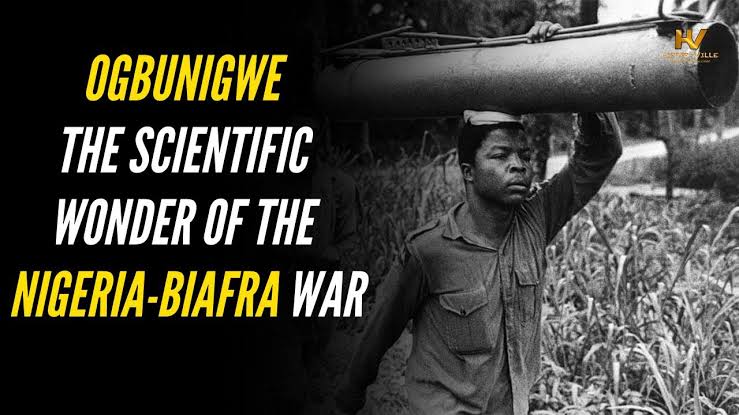
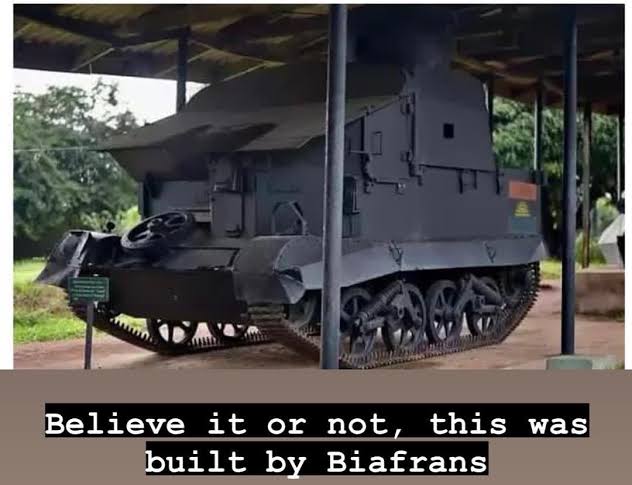
Today, we remember Dr. Felix Oragwu and other Igbo scientists and engineers who contributed to the development of Ogbunigwe, armored vehicles, the Uli airstrip, communication lines, and Ojukwu’s bunker. Their sacrifices, innovation, and bravery will always be remembered.
Today, we remember Dr. Felix Oragwu and other Igbo scientists and engineers who contributed to the development of Ogbunigwe, armored vehicles, the Uli airstrip, communication lines, and Ojukwu’s bunker. Their sacrifices, innovation, and bravery will always be remembered.
Grief is not a glitch. Loneliness is not a disorder. Exhaustion from an impossible life is not a chemical imbalance. Sometimes the most sane response to an insane situation is to fall apart.
Literature is humanity’s longest conversation with itself about what it means to be alive. It has been going on for thousands of years. You are not late, you are not unqualified, you are not too much or too little or too broken. Pull up a chair. This conversation was always about you.
The way men used to sit on porches in the evening doing nothing was not laziness, it was a liturgy. the earth turned and they watched it turn, and that was what souls needed. that quiet hour nobody can give back
There's a physicist at Stanford named Safi Bahcall who modeled this exact principle and the math is wild.
He calls it "phase transitions in human networks." When you're stationary, your probability of a lucky event is limited to your existing surface area: the people you already know, the places you already go, the ideas you've already been exposed to. Your opportunity window is fixed.
When you move, your collision rate with new nodes in a network increases nonlinearly. Double your movement (new conversations, new cities, new projects) and your probability of a serendipitous encounter doesn't double. It roughly quadruples. Because each new node connects you to their entire network, not just to them.
Richard Wiseman ran a 10-year study at the University of Hertfordshire tracking self-described "lucky" and "unlucky" people. The single biggest differentiator wasn't IQ, education, or family money. Lucky people scored significantly higher on one trait: openness to experience. They talked to strangers more, varied their routines more, and said yes to invitations at nearly twice the rate.
The "unlucky" group followed the same routes, ate at the same restaurants, and talked to the same 5 people. Their networks were closed loops. No new inputs, no new collisions.
Luck isn't random. Luck is surface area. And surface area is a function of movement.
The lobster emoji is doing more work than most people realize. Lobsters grow by shedding their shell when it gets too tight. The growth requires a period of total vulnerability. No protection, no armor, soft body exposed to the ocean.
That's the cost of movement nobody posts about. You have to be uncomfortable first. The new shell only hardens after you've already moved.
I have kids. I work in AI every day. And honestly? I have no idea what their careers will look like in 15 years. But I know what will carry them through.
First, and this might sound unromantic: make money and save it for them. We can debate educational philosophy all day, but the world is changing so fast that financial security might be the most practical gift we can give. Buy some gold bars. Seriously.
Second, nurture their imagination. AI rewards people with initiative and wild ideas. The kid who daydreams, who asks weird questions, who wants to try ten things at once? That kid will thrive. AI can execute. AI can be disciplined. What AI can't do is dream up something nobody's thought of before.
Third, build resilience. There are no more iron rice bowls (guaranteed lifetime jobs). Any stable, predictable job is exactly the kind of job AI will learn to replace. Our kids will likely switch directions many times in their lives. Learn something new, get replaced, pivot, repeat. It's more like being a hunter than a farmer. Schools don't teach this. Schools teach you to follow a linear path: high school, college, grad school, stable job. That linear path is becoming the most dangerous one.
Last, invest in their ability to connect with other humans. Not networking. Not schmoozing. Real emotional connection. Building trust, offering support, making people feel seen. As AI handles more of the rational, analytical work, the human ability to genuinely relate to other humans becomes more rare and more valuable.
I don't have all the answers. But I know that imagination, resilience, and genuine human warmth aren't going out of style anytime soon.
#AI #Parenting #Education #FutureOfWork