#AncientSiteSunday - Often referred to as the “Pompeii of Asia,” Gerasa (Jerash) is one of the remarkable classical cities of Ancient Jordan and the Near East. Located in a fertile valley in the hills of Gilead, approximately 48 km north of Amman (formerly Philadelphia), Gerasa is the best-preserved city of the Decapolis and serves as an excellent example of a prosperous Roman provincial town.
Gerasa has a continuous history of human occupation that stretches back over 6,500 years. It evolved from a village into a large town during the Hellenistic period and later became a Roman colony. Most of its ruins remained buried beneath the soil for centuries until they were uncovered in 1806.
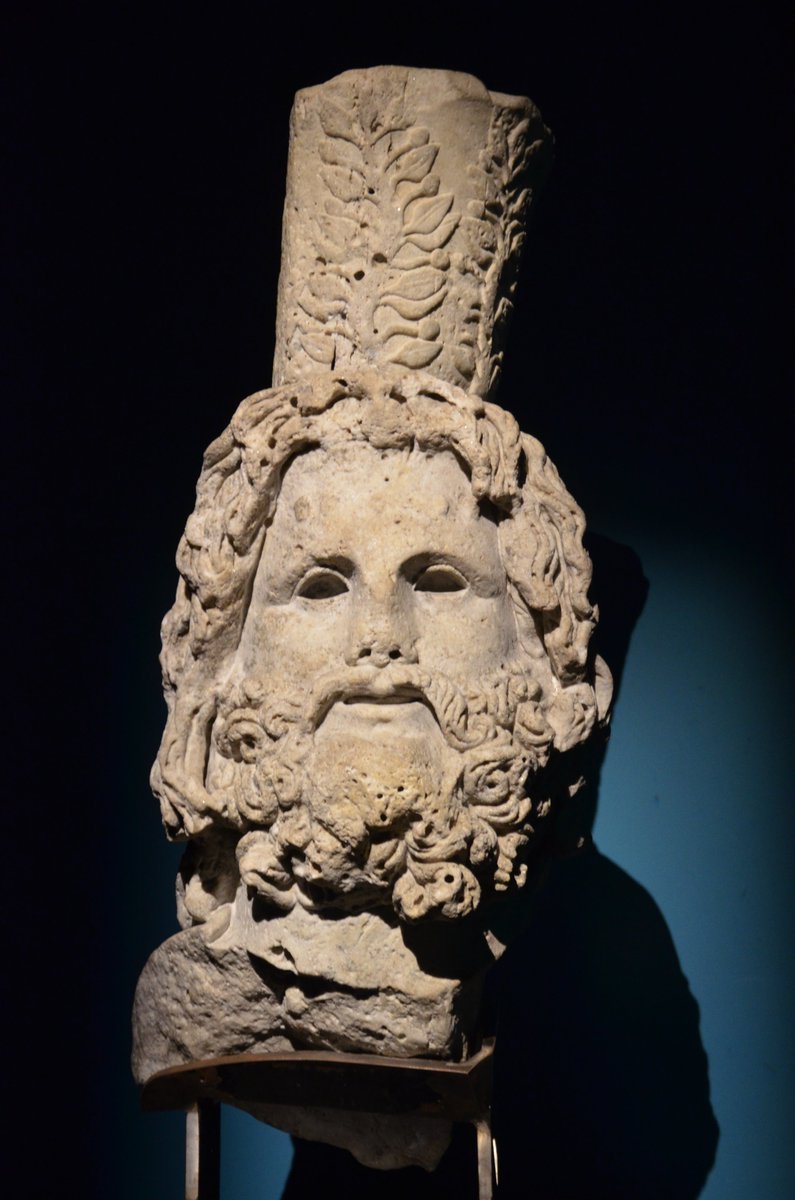
#MythologyMonday - Serapis was a syncretic Greco-Egyptian deity whose cult emerged in the early Ptolemaic period. The god combined aspects of the Egyptian gods Osiris and Apis (the sacred bull of Memphis) with features of Greek deities such as Zeus and Hades.
Designed in part to unite Greek populations living in Egypt, Serapis became especially prominent in Hellenistic centres like Alexandria, even as traditional Egyptian worship of Osiris-Apis continued. Under the Ptolemies, he took on political importance as a state god and protector of the dynasty, linking religious devotion with loyalty to the ruler. Temples (Serapea) dedicated to him spread across Egypt and beyond, often blending Greek and Egyptian architectural and religious traditions. Hadrian later showed appreciation for the cult by dedicating an Apis bull to Serapis, reflecting its continued relevance under Roman rule.
Serapis was also associated with healing, dreams, and oracles, and his worship expanded through both royal patronage and private devotion. Sanctuaries were sometimes founded after individuals reported divine visions or repeated dreams.
In Greek-style art, Serapis was depicted as a bearded man, often enthroned, resembling Zeus or Hades, and sometimes wearing a Kalathos (a basket symbolising abundance) on his head.
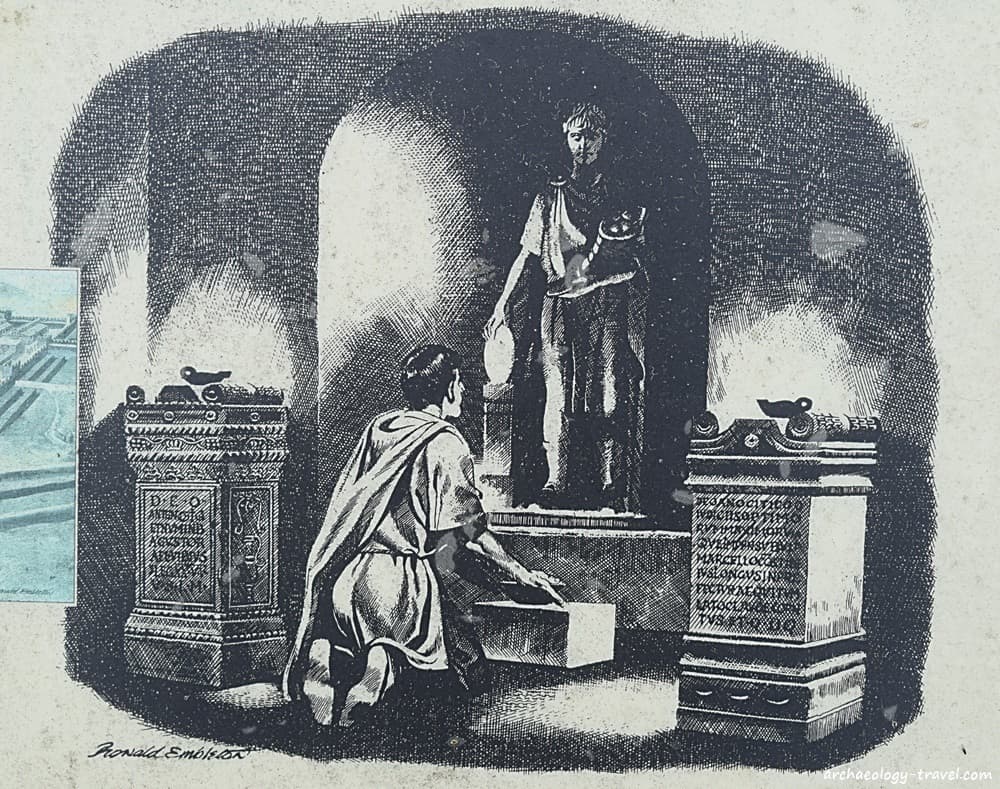
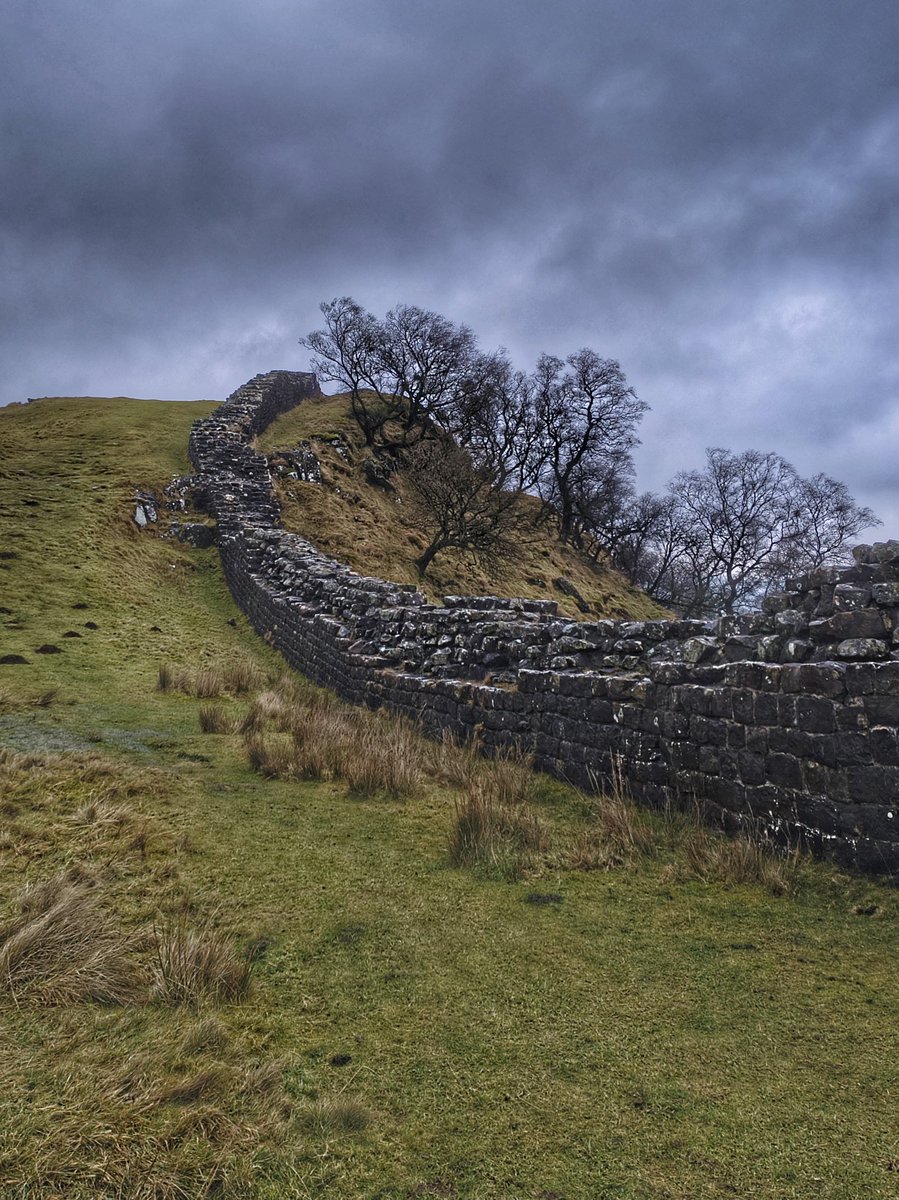
#RomanSiteSaturday - The Temple of Antenociticus, one of the most intriguing religious sites on Hadrian’s Wall. Built in the civilian settlement (vicus) outside the Roman fort of Condercum (Benwell) around AD 178–180, it was dedicated to Antenociticus, a local Celtic deity worshipped nowhere else in the Roman Empire.
The small stone temple had an apsidal end where a life-sized cult statue once stood. Excavations uncovered the god’s distinctive sandstone head, wearing a Celtic torc and sporting curling hair that resembles horns. The statue, along with several inscribed altars dedicated by Roman military officers, suggests that Antenociticus was revered by both native Britons and members of the Roman army.
#TheatreFriday - The Theatre of Thugga is one of the finest surviving Roman theatres in North Africa and a highlight of the UNESCO-listed archaeological site of Dougga in Tunisia. Completed around AD 168-169 during the reign of Marcus Aurelius, it was paid for by Publius Marcius Quadratus, a member of one of the wealthiest families of the city. Quite modest in size, it could seat 3,500 people on its 19 semicircular tiers cut into the hill slope.
That’s the #Carlisle dig complete until next time (we hope) thanks to all the visitors who came to see us today and @DiscoverCarlisl for recommending us.
Rare Anglo-Saxon Treasures Unearthed
In a remarkable discovery that has thrilled archaeologists and history enthusiasts alike, two metal detectorists have uncovered a pair of exquisite gold and garnet artifacts from the Anglo-Saxon period in southwestern England’s Wiltshire county. Dating back approximately 1,400 years to the 7th century AD, the finds include a stunning gold and garnet raven’s head and an intricately designed gold band or ring.
The discovery was made on January 8, 2025, during a metal detecting rally organized by the 9th Region Metal Detecting Group in West Wiltshire. Paul Gould, one of the detectorists, first spotted a flattened gold band inlaid with triangular garnets and studded with tiny gold beads, which he initially mistook for a simple metal object.
Shortly afterward, his detecting partner, Chris Phillips, unearthed the star of the show: a decorative raven’s head crafted from gold, featuring a striking garnet eye encircled by white enamel and intricate filigree work outlining the “feathers” with garnets set on a waffle-pattern foil backing.
The raven head, weighing around 60 grams as estimated, showcases the advanced metalworking techniques of the era, with tiny gold spheres adding to its detailed plumage.
These artifacts are believed to be part of elite jewelry or ceremonial objects, reflecting the high status of their original owners during the Anglo-Saxon period. Ravens held significant symbolic meaning in Germanic and Norse mythology, often associated with wisdom, warfare, darkness, and death, which adds a layer of cultural intrigue to the find.
The use of garnets, a popular gemstone in Anglo-Saxon jewelry from the 6th to 8th centuries, further ties these pieces to the artistic traditions of the time.
Phillips described the moment of discovery as overwhelming: “It’s unbelievable — I’m a bit emotional.” The finds have been declared treasure under the UK’s Treasure Act, and experts from the British Museum are evaluating them for potential acquisition, highlighting their national significance.
#metaldetecting #metaldetectinguk #metaldetectingfinds #detectorists
This discovery underscores the valuable role that amateur metal detectorists play in uncovering Britain’s rich archaeological heritage, often in collaboration with professional archaeologists. Similar finds, such as those from the Staffordshire Hoard, have previously revealed the opulence and artistry of Anglo-Saxon England. As analysis continues, these Wiltshire treasures promise to offer new insights into the social and cultural dynamics of 7th-century Britain.