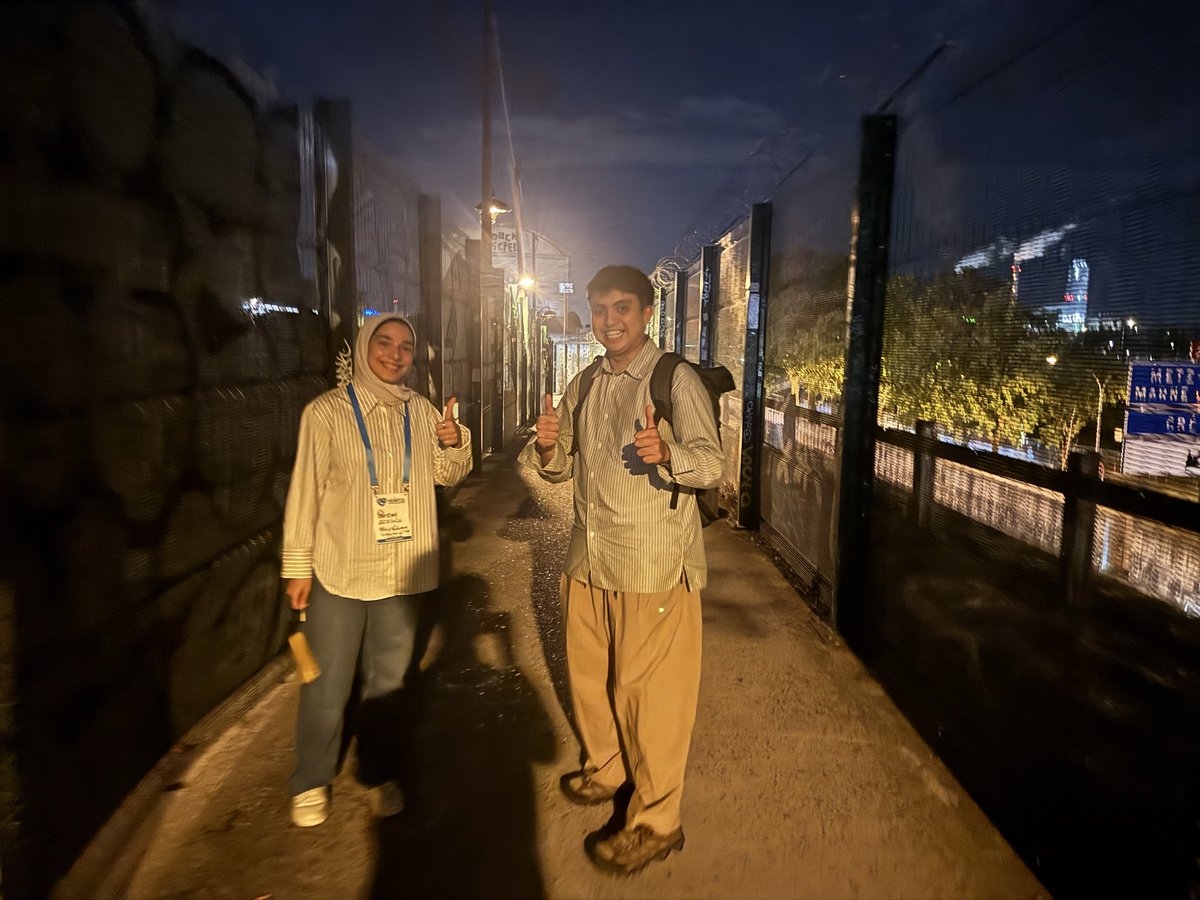
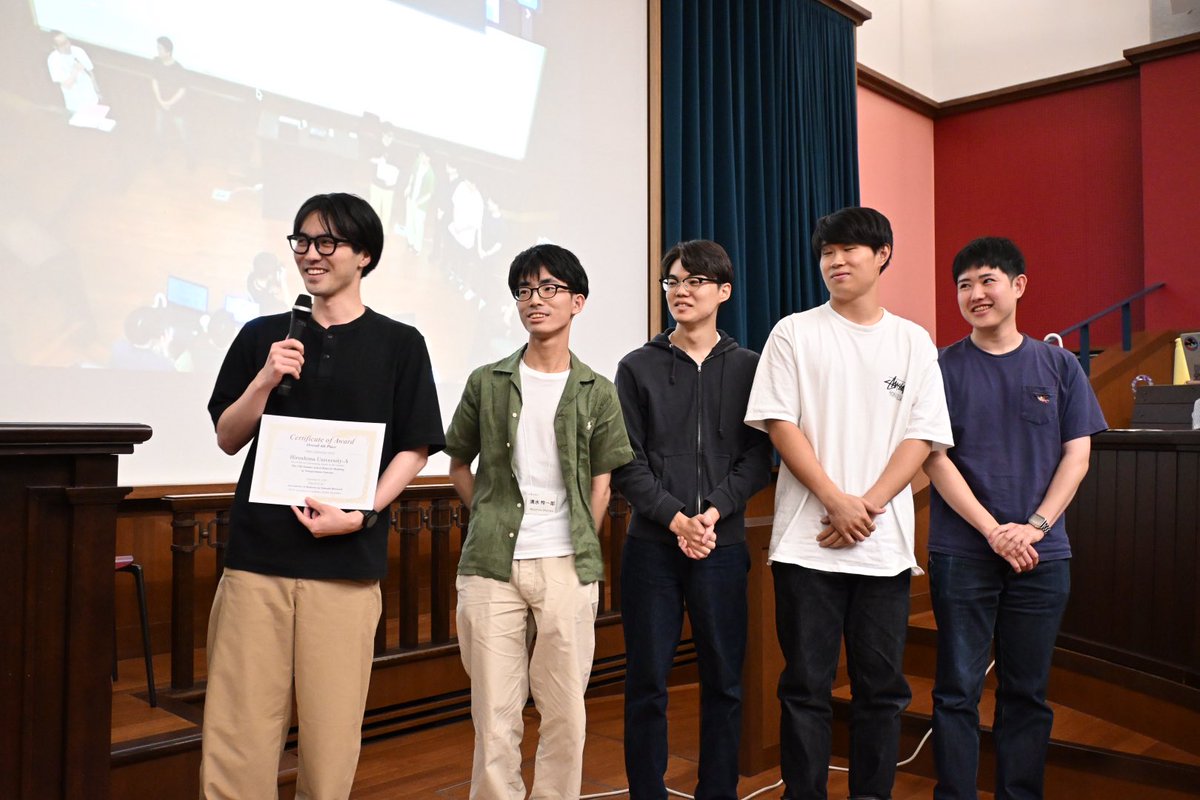
urban & transport planning, travel behavior analysis, integrating transport and machine learning models positive feedbacks in urban systems, disaster research
We had an invited talk:
- Guest speaker: Dr. Rojee Pradhananga (Tribhuvan Univ.)
- Title: Public Transportation in Kathmandu Valley: An Evaluation of Accessibility for Work, Education and Health Trips
Thank you so much for visiting Hiroshima and share your knowledge with us.
We held the 8th EASTS-Japan–JICA Joint Seminar on October 9, 2026.
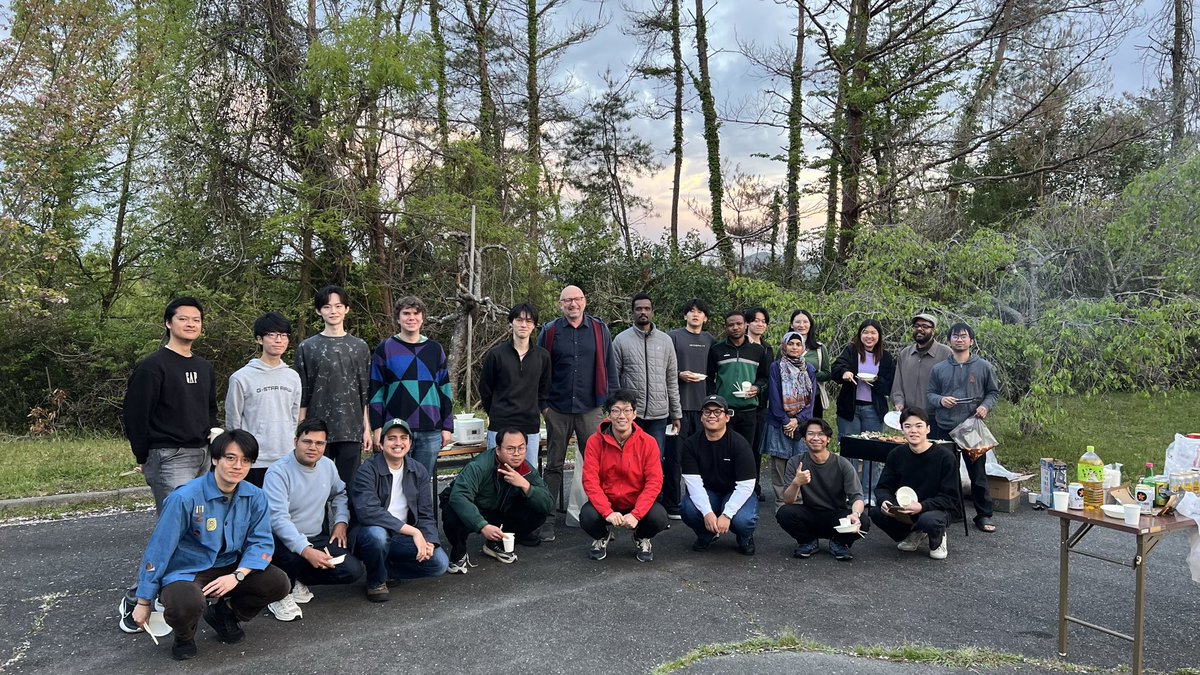
Thank you very much to all the speakers and participants for their valuable contributions. We hope this seminar will lead to further collaboration in the future!
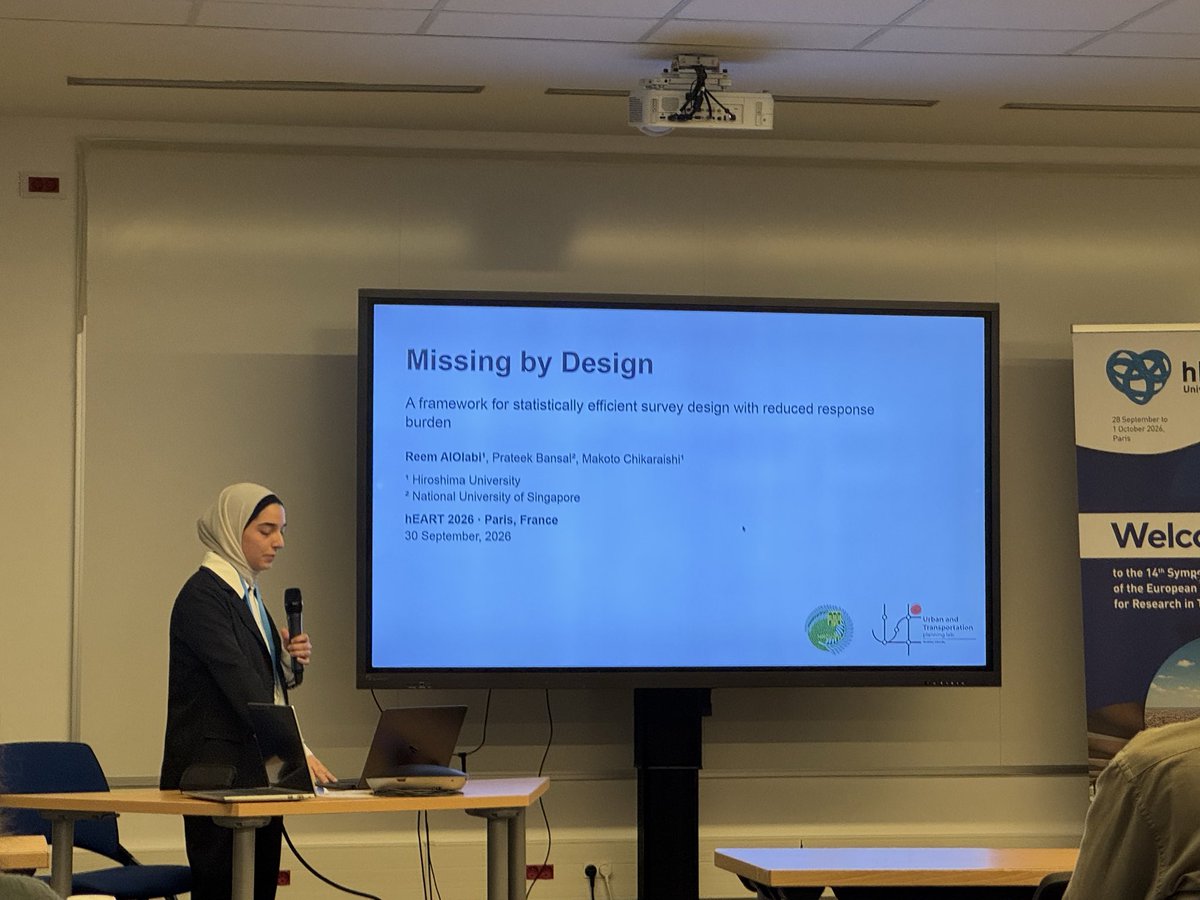
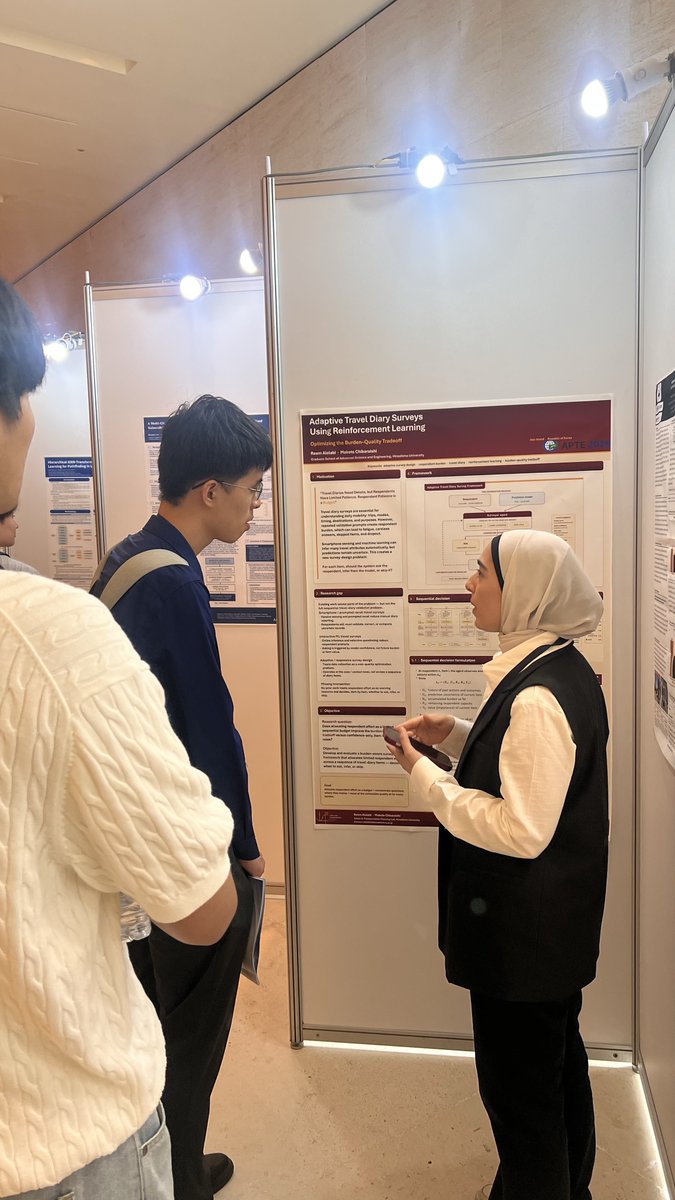
Reem presented our work on missing-by-design. We seek an optimal survey design that reduces uncertainty in model estimates while minimizing respondent burden.
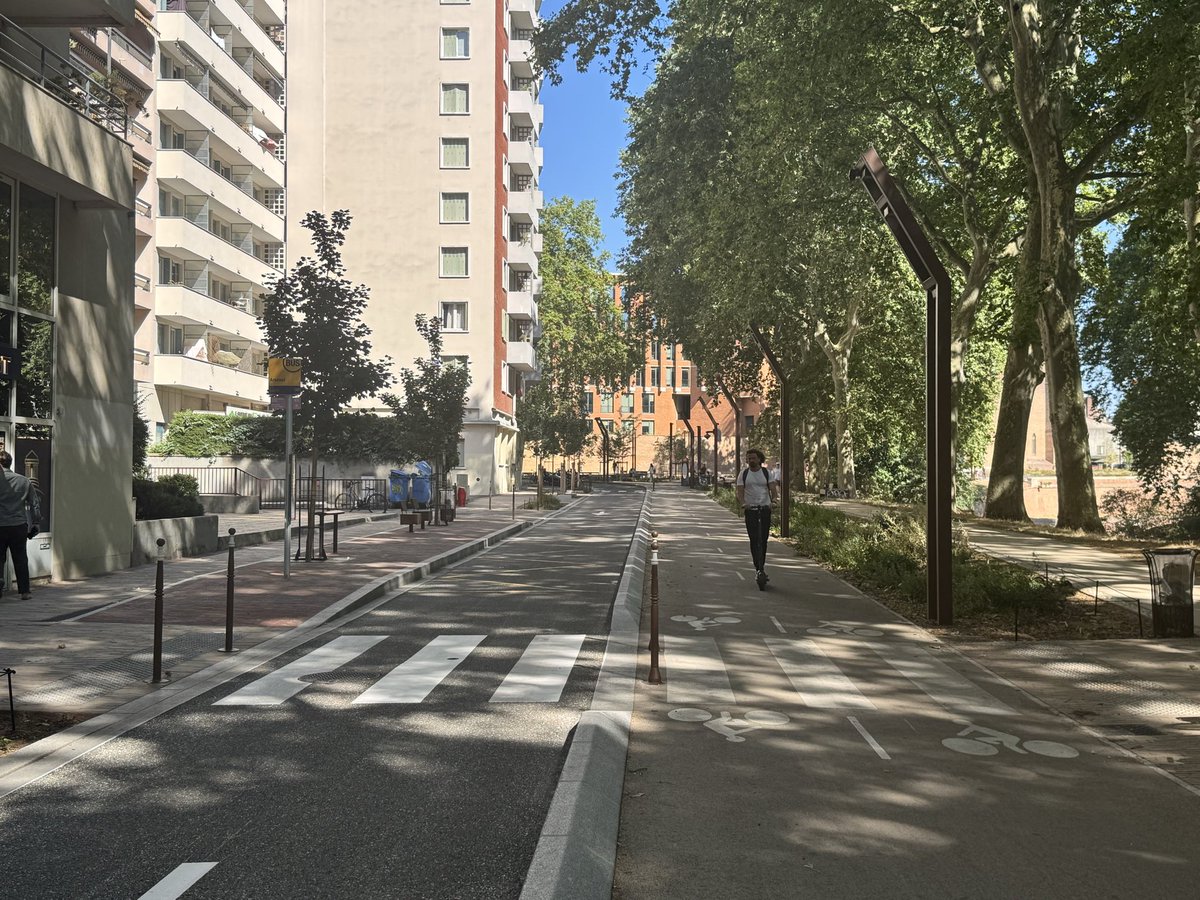
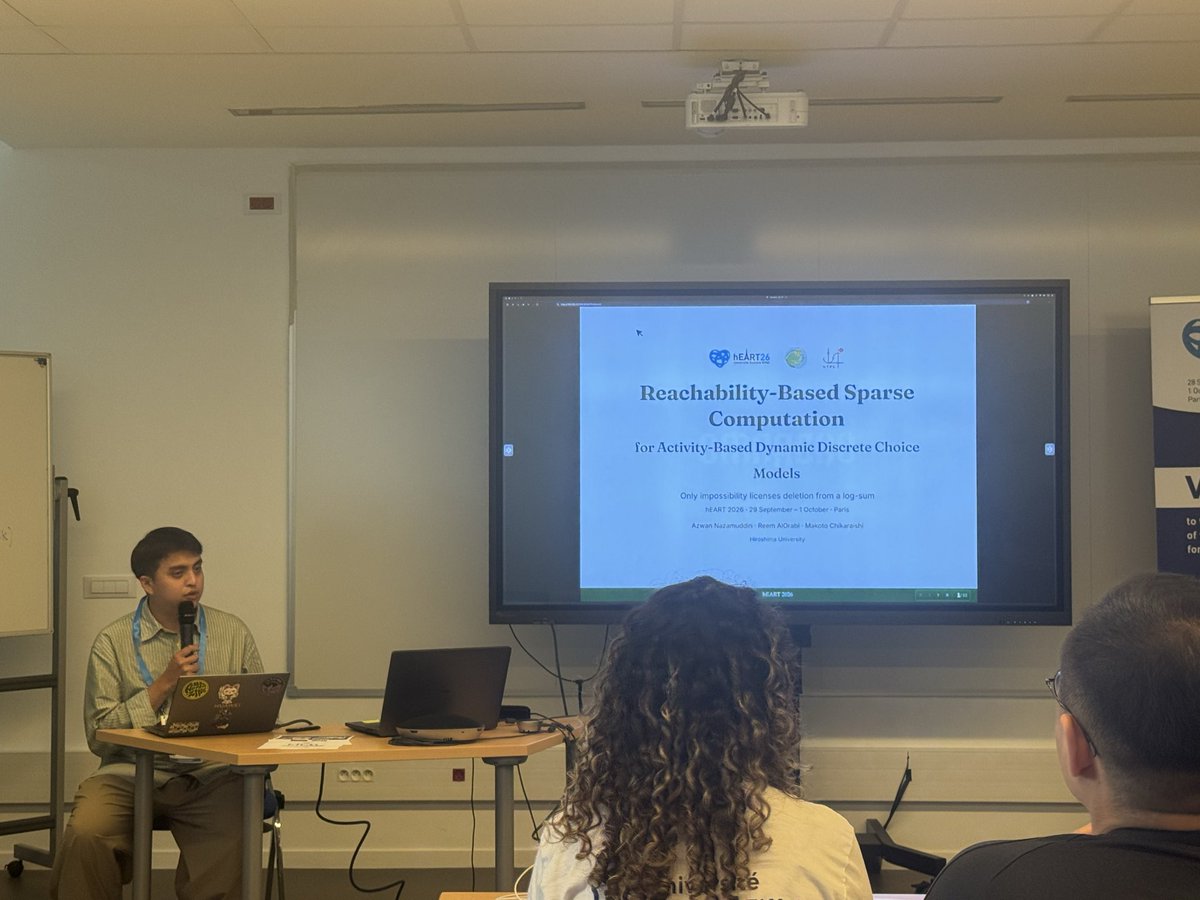
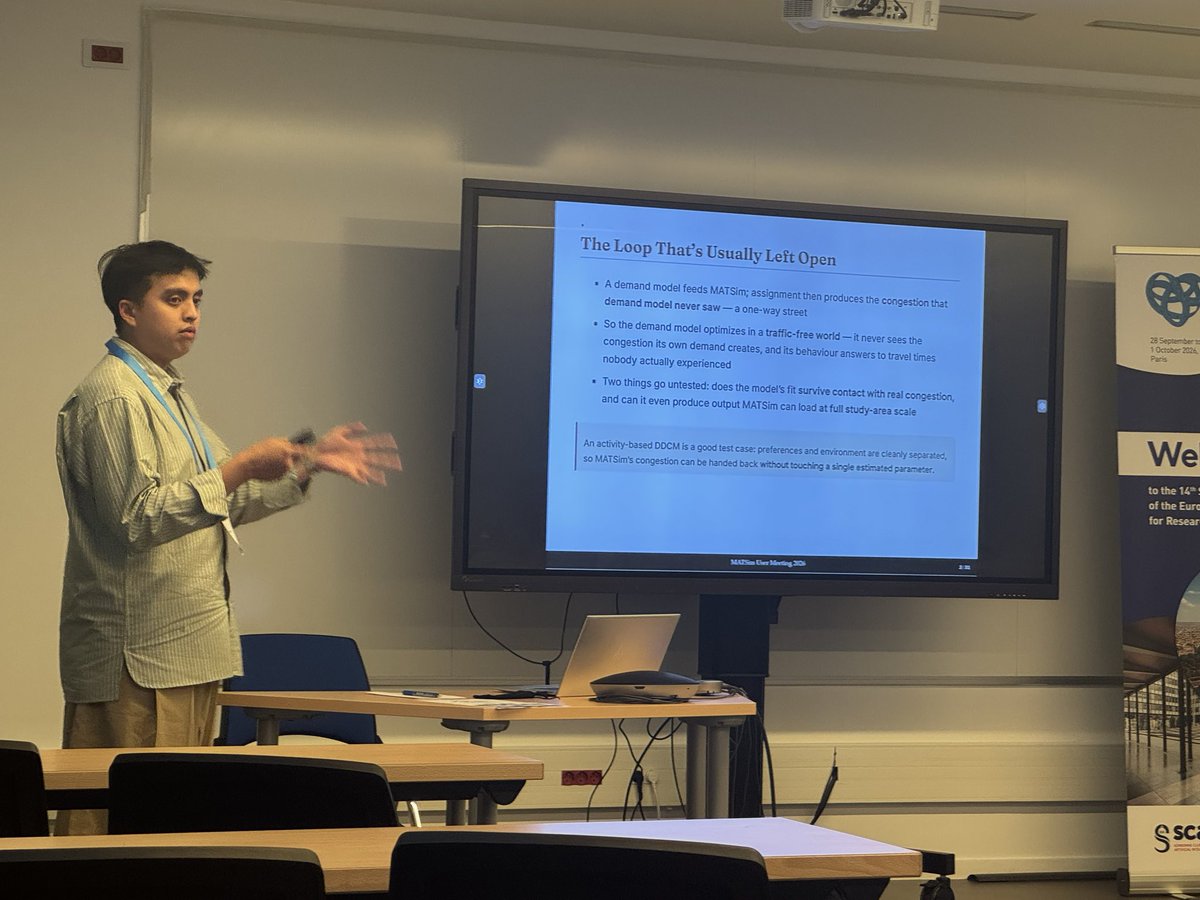
Azwan presented the work he did in his master thesis at hEART2026 held in Paris. Proposing efficient computational framework for activity-based DDCM, which is essential to properly embed heterogeneous constraints that each of us has
We presented two studies at ICMC: an efficient computational framework for an activity-based DDCM (Azwan, @peminumyakult), and a burden-aware adaptive travel survey (Reem, @ReemOlabi24043).
Four students in our lab (Reem @ReemOlabi24043, Azwan @peminumyakult , Hafi @hvyyan, and Habibie) presented their research outputs at APTE 2026 in Jeju, South Korea!
Our new paper on where and when ride-hailing drivers wait, and what it means for urban planning and driver policy in Indonesia. Working on this together with Bu @safiramaya and Chikaraishi Sensei @ChikaraLab . Thank you so much for your guidance always!
https://t.co/X271901bV4
Our new paper. Part of Blessy Xavier's PhD work.
We use 80 million trip records collected from AFC gates in Delhi Metro to develop a novel crowding index that identifies how different destination stations contribute to link-level crowding.
https://t.co/vjch1Wjllk
@ChikaraLab
NeurIPS 2025's top 50 paper contributors show China and the US neck-and-neck.
In the US, corporate labs—Google DeepMind, Meta, Microsoft—now rival top schools like Stanford, CMU, MIT, showing a major shift to industry-led AI research.
China’s leaders remain academic: Tsinghua, CAS, Peking, SJTU, HKUST. Singapore (NUS, NTU), Korea (KAIST), UAE (MBZUAI), and Canada (Mila) hold strong.
Europe trails, with only Oxford, EPFL, ETH Zurich, and TUM from the EU-27 making the list.
---
Source:
linkedin. com/posts/pierre-alexandre-balland-20b75b13_who-pushed-the-ai-frontier-at-neurips-2025-activity-7403119036496162817-vRPE
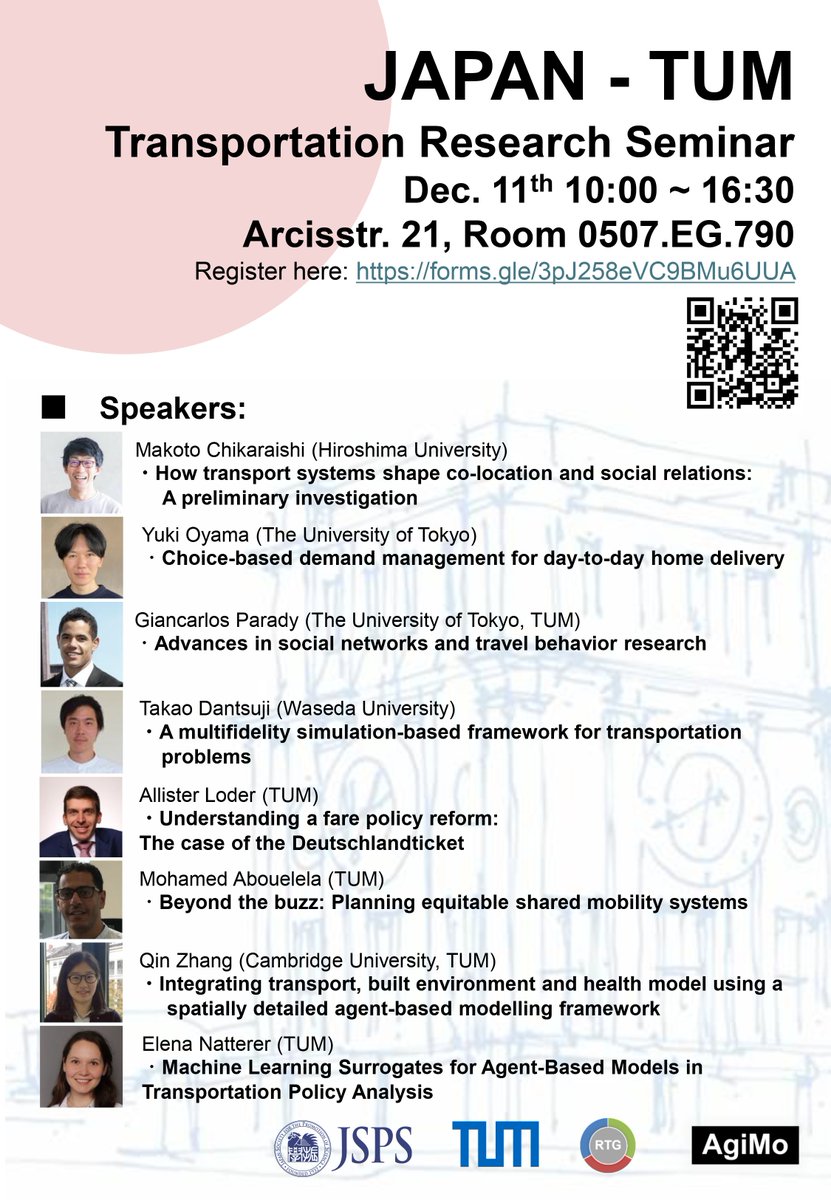
On Thursday December 11, we will be holding a Japan-TUM Transportation Research Seminar, so if you happen to be in Munich check it out (if not, it will also be available on Zoom). @ChikaraLab@actscape