Giveaway (free mint) on @RobinhoodApp 🎟️
I'm giving away 2 GTD & 8 FCFS!
How to enter:
- Like + Retweet this post
- Follow @brokeb00kies and @pandaanft
- Drop your EVM address
Ends in 6H hours 🎁
Good luck!
I’m scared friends.
I See people clown Bitget over the $351M incident like it’s just a “skill issue” or bitget came after Hyperliquid then and we should come after them now helooo are we missing the bigger picture here?.
The crazy part is that the attacker apparently didn’t need to steal Bitget’s private keys.
Bitget uses a tiered wallet system, with cold wallets separated from the hot and warm wallets used for operational liquidity. @bitget says the affected funds came from a limited number of hot wallets while its cold wallets remained untouched.
So how can hundreds of millions move without someone simply stealing a private key?
Because an exchange is not just a private key.
It’s an entire infrastructure stack:
>Hot and warm wallets.
>Withdrawal systems.
>Transaction construction.
>Approval policies.
>Multisigs.
>Backend services.
>Cloud infrastructure.
>Internal APIs.
>Signing infrastructure.
>Third-party security systems.
If one critical layer is compromised, an attacker may be able to make legitimate infrastructure perform an illegitimate action.
Think about it like this:
You don’t necessarily steal the bank vault key.
You compromise the system telling the bank which doors should open.
That’s why this isn’t just a Bitget problem per se, any malicious group with just the right use of ai can come after your stack which I just mentioned.
The same question applies to every CEX, custodian, bridge, stablecoin issuer, DeFi protocol, treasury and infrastructure provider:
What happens if one trusted component is compromised?
We have spent years in Crypto teaching people to protect private keys.
But the attack surface is much bigger than the key itself.
And this is where clowning another protocol or exchange because it got hacked becomes dangerous.
Today it’s Bitget.
Tomorrow it could be the exchange you use, the bridge you trust, the stablecoin you hold, the multisig securing a treasury or the infrastructure underneath a protocol you use every day.
Security failures don’t care about favorites
The biggest mistake you can make after watching $351M hack is thinking:
“Glad that’s their problem.”
It could be yours next.
Bitget’s investigation into the exact attack vector is still ongoing, so the technical root cause shouldn’t be treated as confirmed yet.
But the lesson is already clear:
Crypto custody isn’t just about protecting the keys.
It’s about protecting every system that can convince a legitimate wallet to move money. Be it a hot wallet or a cold wallet
I used to hate opening a leveraged position on-chain.
Wallet connected. Size set. Then the usual pain:
• Slippage eating the edge
• Funding flipping mid-trade
• Collateral locked in a vault I never fully trusted
• Feeling like I was borrowing the market instead of owning the trade
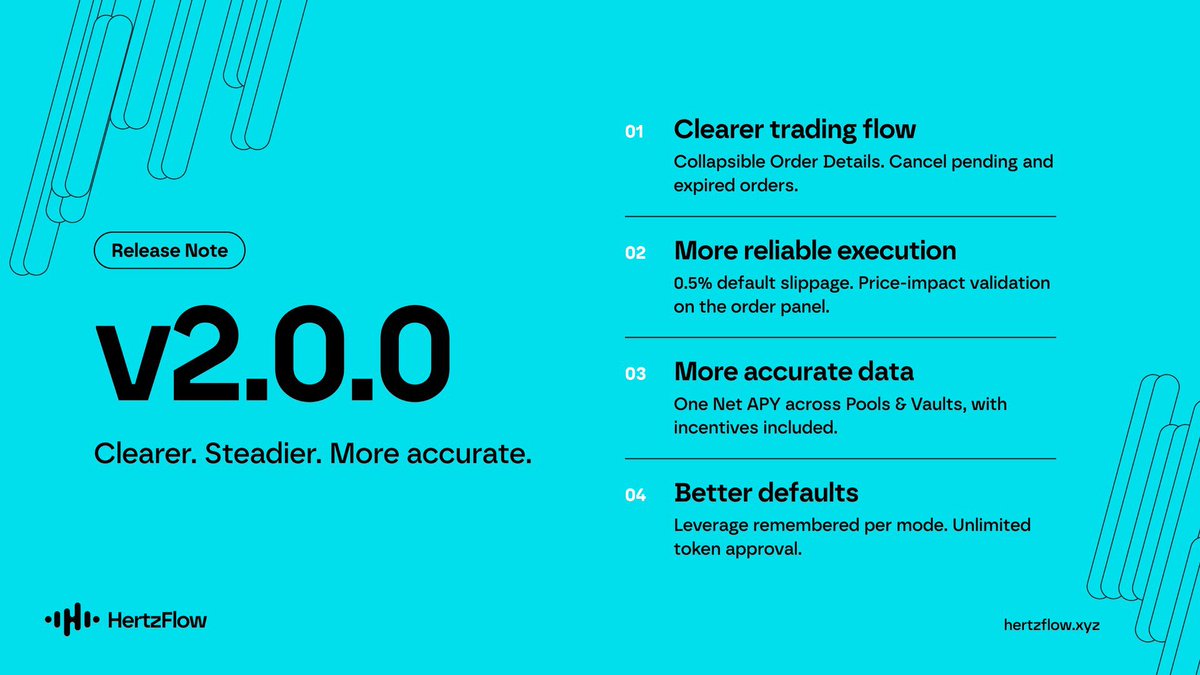
Then @Hertzflow_xyz MAINNET went live.
Same wallet. Same USDT. Completely different experience:
• Trade executes against deep pools no order book fight
• Multi-oracle prices, real-world assets, 24/7
• Hyper Lev: ZERO FEES, share only when you win
• Loss protection that actually returns capital
• Funds stay in MY control the entire time
I opened gold at 50x, flipped into FX, never left the terminal.
For the first time it didn’t feel like fighting the protocol.
It felt like the protocol was built for me to WIN.
Trade anything. Keep the keys. Let the flow do the rest.
Goto: https://t.co/55hBwEqmm9 take a trade come back and tell me what change you noticed in your position compared to where you used to trade.
#HertzFlow
What if your onchain yield was backed by something people actually use offline?
That’s the idea behind @DualMintRWA and $PLAY.
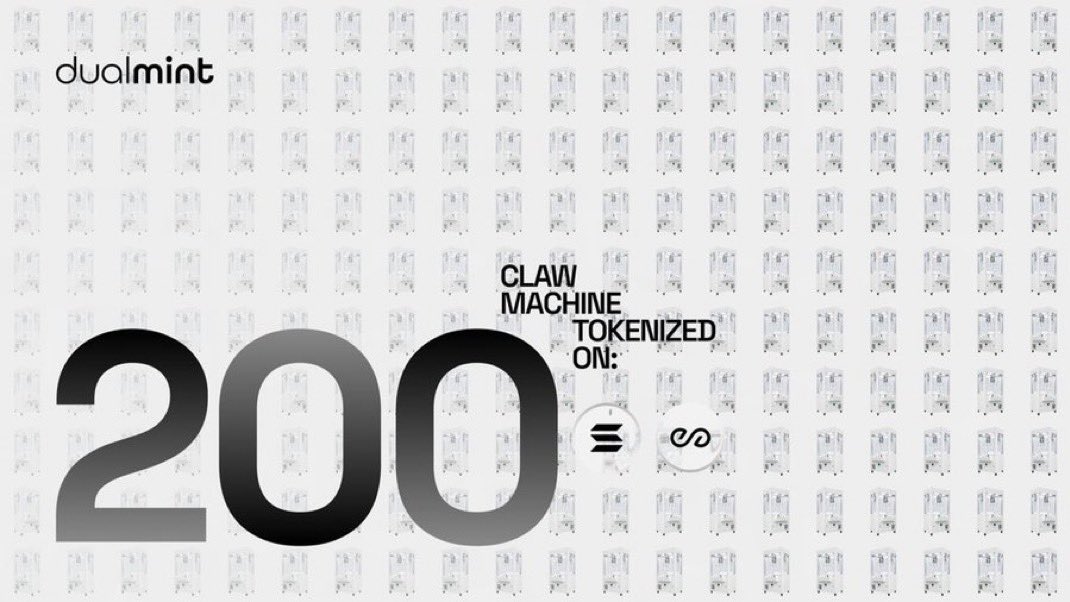
They’re turning a fleet of 200 claw machines into an income-producing asset. Each machine earns from real customers, creating a revenue stream that can then flow back into the investment structure.
No complicated story.
The machines generate income → that income supports the leases → investors receive scheduled distributions.
PLAY is currently targeting around 12–15% annual returns and is looking to raise $230K.
There’s also a physical layer behind the system. DualMint tracks things like machine uptime and usage, giving the onchain side a connection to what’s happening in the real world.
For me, the interesting part is the source of the yield.
It’s tied to actual machines being used, not just another crypto incentive loop.
PLAY pre-deposits are live at https://t.co/EUWEzGaPJ9
Giveaway (free mint) on @RobinhoodApp 🎟️
I'm giving away 10 GTD!
How to enter:
- Like + Retweet this post
- Follow @Rapperz_nft and @pandaanft
- Drop your EVM address
Ends in 24H hours 🎁
Good luck!