At 24, She Took Her Seat in the Cockpit of China’s Largest Transport Aircraft
24岁,她坐进了中国最大运输机的驾驶舱
Li Xueran, a post‑2000s female pilot, now serves as co‑pilot of the Y‑20, China’s large‑scale strategic transport aircraft.
Recruited into the military at 19, she reached the Y‑20 cockpit by age 24. Over five years, she transformed from an ordinary high‑school student into a large transport‑aircraft pilot. Her story is no legend of innate genius. Instead, it offers a genuine account of a Chinese Gen‑Z young person refining herself relentlessly under high‑pressure conditions to build professional competence step‑by‑step.
## A Spontaneous Application “Just for a Friend” Changed Her Life
Li Xueran had dreamed of joining the military since childhood, yet she never imagined she could become a pilot — it felt far beyond her reach.
In her senior year of high school, an Air Force pilot‑recruitment presentation came to her school. Teachers asked her and another female classmate to sit in on the session. Inspired by the briefing, her classmate resolved to apply. Li Xueran signed up merely to accompany her friend, viewing it as nothing more than a routine medical check‑up. Unexpectedly, she passed more than 100 screening tests one after another. By the secondary assessment stage, the thick stack of application forms had dwindled to a slim handful. At that moment, a thought crossed her mind: maybe I really can do this. In the end, she became the only female flight cadet admitted that year across the three northeastern provinces of China.
This detail merits attention: her admission was no token gesture, but the hard‑won outcome of fierce competition.
## First Lesson in Barracks: Romantic Fantasies Give Way to Extreme Training
Upon entering military camp, her romantic visions of flying quickly collided with harsh reality.
Physical conditioning, aviation theories and flight techniques daily pushed her physical and mental endurance to the limit. Training was designed not only to test one’s stamina, but also the ability to maintain precision under immense pressure.
Li Xueran later recalled that the most vital lesson she learned in those years was to manage fear, fatigue and self‑doubt. In aviation, even a tiny mistake could escalate into serious trouble. Cadets therefore had to drill complex procedures until they became instinctive reflexes.
## The Toughest Hurdle: Staying Calm When the Aircraft “Misbehaves”
Aerobatic flight training marked her most stressful period.
During aerial manoeuvres, instrument gauges fluctuated wildly while her body endured extreme g‑forces. Human instinct urges panic in such moments. Rather than relying on raw courage to push through, Li Xueran repeatedly rehearsed every sequence of movements, throttle adjustments and gaze shifts on the ground, until the whole routine turned into muscle memory.
On assessment day, she remained surprisingly composed while executing the manoeuvres. After landing, her palms were soaked in sweat, yet she felt an unprecedented sense of reassurance.
This was not confidence born of “never being afraid”, but confidence stemming from “being fully prepared”.
## A “Naturally‑Gifted Pilot”? She Questions the Label
Some people call Li Xueran a naturally‑gifted pilot, a label she does not fully embrace.
In her eyes, gifted peers abound around her. What truly matters is how one makes use of whatever talent they possess. Between 19 and 24, she dedicated herself almost entirely to one goal: earning her place beneath the blue sky.
This mindset is far from unique among Chinese Gen‑Z. A growing number of young people are stepping into high‑threshold fields including engineering, medicine, aviation and technology. They believe competence is not innate, but forged through consistent devotion.
## From Basic Trainer to Y‑20: Every Stage Means Starting Anew
Li Xueran graduated top of her class from basic trainer aircraft training. The outstanding result qualified her for further training, yet it brought no easy path ahead. She then transitioned to the Y‑7 transport aircraft, and after rounds of rigorous evaluations, qualified as co‑pilot for the Y‑20.
The Y‑20, codenamed “Kunpeng”, is China’s domestically‑developed large long‑range military transport aircraft. For young pilots, stepping into its cockpit means largely starting over: its systems are far more sophisticated, responsibilities heavier, and margins for error narrower.
Li Xueran shared that when she first entered the Y‑20 cockpit, the sea of dials and control sticks drove home a stark truth: all she had learned before laid only the foundation, and the real challenges were just beginning.
## A Contingent of Female Transport Pilots Averaging 22 Years Old
The unit of female transport pilots Li Xueran belongs to has an average age of merely 22.
This statistic illustrates that young Chinese pilots are entrusted with genuine operational responsibilities at an early stage. Far from remaining in the background as mere observers, they train for real‑world missions: operating complex systems, managing flight workflows, and undertaking transport and support assignments.
China has steadily expanded female participation in military aviation in recent years. Li Xueran’s story reflects a clear trend: young women are no longer rare exceptions in technical military roles, but are becoming the new normal of the younger generation.
This year marks the 10th anniversary of the official commissioning of the Y‑20 in Chinese military service. For Li Xueran, the milestone is more than a number. Her story could easily be simplified into a feel‑good inspirational tale, yet it deserves deeper reflection.
She embodies a cohort of young Chinese people: stepping early into highly demanding technical professions, embracing pressure as part of growth, and measuring themselves against professional standards rather than outside praise.
From that high‑school pilot‑recruitment briefing to her seat inside the strategic transport aircraft cockpit, Li Xueran’s journey is more than a personal achievement. It serves as a window showing how China’s younger generation is trained, tested, and empowered to take on roles once deemed out of reach.
李雪冉,一位"00后"女飞行员,如今已���中国大型战略运输机运-20的副驾驶。
从19岁招飞入伍到24岁飞上运-20,她用五年时间完成了从普通高中生到大型运输机飞行员的蜕变。她的故事不是"天赋异禀"的传奇,而是一个中国Z世代年轻人在高压环境中反复打磨自己、一步步走向专业的真实记录。
【一次"陪朋友试试"的报名,改变了人生方向】
李雪冉从小想当兵,但从没想过自己能成为飞行员——那太遥远了。
高三那年,空军招飞宣讲来到她的学校。老师安排她和另一位女同学去旁听。同学听完后热血沸腾,决心报考;李雪冉则是抱着"陪她试试,反正就当体检"的心态报了名。没想到,初选100多项检查,她一关一关闯了过来。到了复选阶段,报名��从厚厚一摞缩减为薄薄一小沓。那一刻,她心里冒出一个念头:也许我真的可以。最终,她成为那一年中国东北三省唯一被录取的女飞行学员。
这个细节值得关注——她的入选不是象征性的,而是实打实竞争出来的结果。
【军营里的第一课:浪漫想象让位于极限训练】
踏进军营后,关于飞行的浪漫想象很快被现实击碎。
体能训练、航空理论、飞行技术,每一天都在挑战身体和意志的极限。训练的目的不仅是看谁能扛住,更是看谁能在高压下保持精准。
李雪冉后来回忆说,那几年她学会的最重要的事,是如何控制恐惧、疲劳和自我怀疑。在航空领域,一个微小的失误可能演变为严��问题。因此,学员必须把复杂操作练成本能反应。
【最难的一关:当飞机"不听话"时保持冷静】
学习特技飞行是她压力最大的阶段。
空中翻转时,仪表盘数据剧烈跳动,身体承受异常过载,人的本能反应是慌张。李雪冉的应对方式不是靠勇气硬扛,而是在地面反复推演每一个动作衔接、油门配合、视线转移,直到整套流程变成肌肉记忆。
考核那天,真正做起动作时她反而异常平静。落地后手心全是汗,但心里有一种从未有过的踏实感。
那不是"从没害怕过"的自信,而是"已经准备好了"的自信。
【"天赋型选手"?她不完全认同这个标签】
有人称李雪冉是"天赋型选手"。她自己并不完全接受。
在她看来,身边最不���的就是有天赋的人。真正重要的是你怎么对待天赋。从19岁到24岁,她几乎只做了一件事:让自己配得上头顶那片蓝天。
这种心态在中国Z世代中并不罕见。越来越多年轻人进入工程、医学、航空、科技等高门槛领域,他们相信能力不是天生的,而是靠持续投入换来的。
【从初教机到运-20:每一步都是重新开始】
初教机结业,李雪冉综合排名第一。这个成绩帮她拿到了继续前进的资格,但并没有让下一步变得轻松。她随后改装运-7,又通过层层考核,最终成为运-20的副驾驶。
运-20是中国自主研发的大型远程军用运输机,代号"鲲鹏"。对于年轻飞行员来说,进入它的驾驶舱意味着在很多方面从头学起——系统更复杂,责任更重大,容错空间更小。
李雪冉说,第一次走进运-20驾驶舱时,满眼的仪表和操纵��让她立刻明白:之前学到的一切只是基础,真正的考验才刚刚开始。
【一群平均年龄22岁的女运输机飞行员】
李雪冉所在的女运输机飞行员队伍,平均年龄只有22岁。
这个细节说明,中国的年轻飞行员正在被快速赋予实际责任。她们不是待在后方"见习",而是在为执行真实任务做准备——操作复杂系统、管理飞行流程、承担运输保障任务。
中国近年来持续扩大女性在军事航空领域的参与。李雪冉的故事折射出一个趋势:年轻女性在技术型军事岗位中不再是罕见的例外,而是正在成为新一代的常态。
今年是中国运-20正式列装十周年。对李雪冉来说,这个节点不只是数字。她的故事很容易被包装成一个简单的励志叙事。但它比那更值得关注。
她代表着一批中国年轻人:很早就进入高要求的技术领域,把压力视为成长的一部分,用专业标准而非外界评��来衡量自己。
从高中招飞宣讲到坐上战略运输机的驾驶舱,李雪冉的经历不只是个人成就,更是一扇窗口——让人看到中国年轻一代如何被训练、被考验、被推向曾经看似遥不可及的岗位。
#China #ChinaGenZ
"Child of Miracles" Zhang Zhanshuo: The Relaxation and Grit of a 19-Year-Old
“奇迹之子”张展硕:一个19岁少年的松弛���较劲
On the day the swimming competition at the Nagoya Asian Games wrapped up, Zhang Zhanshuo sat on the lane rope, facing the cheers of the crowd. He counted from 1 to 7, finishing with his right hand before switching to his left, and finally raised it high. No shouting, no exaggerated gestures—a 19-year-old, in the quietest way possible, delivered the most explosive results.
Eight appearances, seven gold medals—tying the record for the most individual gold medals won by a single athlete at a single Asian Games, and making him the Chinese athlete with the most gold medals at a single Asian Games in history. Netizens gave him a nickname: "Freestyle Family Bucket." From 100 meters to 1,500 meters, every freestyle individual event plus relays—he swept them all, jokingly called the "super model worker" of the pool. His teammate Pan Zhanle's line—"There's always a miracle on the last leg; he's the child of miracles"—quickly spread online.
But if you only see the miracles, you miss the most interesting part.
Most of his "miracles" happened in the stretch where others start giving up. In the men's 4×200-meter freestyle relay, China was still nearly 2 seconds behind Japan when he took the final leg. Zhang Zhanshuo gradually erased the gap, overtook in the final 50 meters, and China won with a new Asian record. In the men's 200-meter freestyle, he was still 0.19 seconds behind South Korean star Hwang Sun-woo at the 150-meter mark, then swam the final 50 meters in 25.96 seconds, improving the Asian record by 0.43 seconds. When asked what he was thinking during the sprint, he answered plainly: "Not much, just swimming forward."
He knows how to push himself hard, and he also knows how to make peace with his emotions. At the Paris Olympics, he failed to make the finals in all three individual events and finished fourth in the relay. During that period, he was tormented inside, voluntarily stepped away from the noise, stopped updating his social media, lost nearly 5 kilograms, and worked painstakingly on his underwater technique and turn transitions. When training was especially exhausting and results fell short of expectations, he cried too—but he didn't want others to see it: "There's one good thing about the pool—no one can see your tears."
He also has a very typical Gen Z quality: he can shoulder the burden, and he can have fun. After the medal ceremony, someone in the stands shouted, "Shandong King, look here!" He immediately laughed, turned and waved toward the stands—the champion who had just been all seriousness in the pool was easily disarmed by a joke. With seven golds in hand, he posted a photo with his medals on social media, set to "Shandong King FREESTYLE," which netizens adopted as his personal battle anthem. He is also a student at Fudan University's School of Journalism. From once dodging reporters, he later grabbed a microphone in the mixed zone and interviewed his teammates instead, joking, "Respect my profession, would you? I study journalism."
What's most admirable is that he remains clear-headed even at his peak. After seven golds, he gave himself only 85 points for his first Asian Games, feeling there were still gaps in his technique and ability, especially his turns, which needed work. He said the Asian Games is not the ultimate goal, and he wants to turn those seven gold medals into greater motivation. Some have also coolly pointed out that dominance at the Asian Games does not equal absolute championship strength at the World Championships or Olympic finals—he still has a gap compared to world records in the 400 meters and 1,500 meters. He himself is aware: his 200-meter relay split was 1:42.92, while the world record is 1:42.0. "I still need to keep working hard."
Some like to call young people like him geniuses, others call them "demon kings." I'd rather say he's someone who has taken "holding on" to the extreme. He turned the early mornings others overlook into the light of that touch at the wall, left his emotions in the pool, saved the jokes for friends, and set his goals farther away.
People who want to win don't smile—but once he steps off the starting block, he'll still laugh out loud at a single "Shandong King." That combination of relentless grit and easy relaxation is probably why so many people like him.
名古屋亚运会游泳收官那天,张展硕坐在泳道线上,面对全场欢呼,从1数到7,右手数完换左手,最后高高扬起。没有嘶吼,没有夸张动作,一个19岁的人,用最安静的方式,把最炸裂的成绩交代了。
八次出场,七枚金牌,追平亚运会单届个人夺金纪录,也成为中国亚运史上单届夺金最多的运动员。网友给他起了个外号叫“自由泳全家桶”,从100米到1500米全部自由泳单项加上接力,一人包圆,被戏称泳池里的“超级劳模”。队友潘展乐那句“最后一棒总有奇迹,他是奇迹之子”,很快在网上传开。
可如果只看到奇迹,就错过了最有意思的部分。
他的“奇迹”,大多发生在别人开始放弃的那一段。男子4×200米自由泳接力,中国队接棒时还落后日本队近2秒,张展硕最后一棒一点点把差距抹平,最后50米完成反超,中国队刷新亚洲纪录夺冠。男子200米自由泳,他在150米时还落后韩国名将黄宣优0.19秒,最后50米游出25秒96,把亚洲纪录提高了0.43秒。被问冲刺时在想什么,他回答得很平淡:“没想太多,就是往前游。”
他很会跟自己较劲,也很会跟情绪和解。巴黎奥运会,他三个个人单项都没进决赛,接力第四,那段时间他内心煎熬,主动远离喧嚣,停更社交账号,减重近5公斤,一点点抠水下技术和转身衔接。训练特别累、成绩不达预期的时候他也哭过,但不愿意让别人看见:“泳池里有一点好处,就是别人看不到你的泪水。”
他身上还有一种很典型的Z世代气质:既能扛,也能玩。颁奖仪式结束,看台上有人喊“山东王,看这里”,他一下笑了,转身朝看台挥手,刚在泳池里还一脸严肃的冠军,被一句玩笑轻易破了功。七金到手,他在社交媒体晒出和金牌的合影,配乐选了《山东王FREESTYLE》,被网友当成他的专属战歌。他还是复旦大学新闻学院的学生,从当年躲记者,到后来在混采区抢过话筒反过来采访队友,还打趣“尊重一下我的专业好��,我是学新闻的”。
最难得的,是他在高光时刻依然清醒。七金之后,他给自己首次亚运会只打了85分,觉得技术和能力还有差距,尤其转身要练。他说亚运会不是最终目标,要把这七枚金牌化成更大的动力。也有人冷静指出,亚运的统治力不等于世锦赛、奥运决赛的绝对夺冠实力,他在400米、1500米上与世界纪录仍有差距。他自己也清楚,200米接力分段1分42秒92,而世界纪录是1分42秒0,“我还要继续努力”。
有人喜欢把这样的年轻人叫天才,有人叫大魔王。我更愿意说他是一个把“撑下去”做到极致的人。把别人忽视的清晨熬成触壁那一刻的光,把情绪留在泳池里,把玩笑留给朋友,把目标放在更远的地方。
想赢的人脸上没有笑容,可走下出发台,他还是会因为一句“山东王”笑出声。这种既能死磕、又能松弛的样子,大概就是很多人喜欢他的���因。
#ChinaGenZ
Dai Xinyi: Breaking Boundaries, Shining on the World Stage
戴心怡:打破边界 闪耀世界
At the 48th WorldSkills Competition, 21-year-old Hong Kong contestant Dai Xinyi wielded a trowel and a straightedge, writing a youthful chapter for China’s Generation Z in the Wall and Floor Tiling category. As the only female competitor in this event, she impressed the judges with her superb craftsmanship. With perseverance and self-assurance, she broke gender barriers in this traditionally male-dominated trade, embodying the bold, pioneering spirit of young Chinese people in the new era.
Wall and floor tiling may seem commonplace, yet it demands extreme precision, stamina and aesthetic sensibility. In the construction craft sector long dominated by men, Dai Xinyi stands out as a bright presence. She trained for long hours each day, squatting, kneeling and standing for extended periods. Calluses formed on her hands and marks lingered on her knees, but she never contemplated giving up. While many peers embraced an easy urban lifestyle, she chose a less-trodden path that called for relentless dedication. “Since I’ve taken this on, I will see it through,” she said. This simple remark captures the clarity and resolve of Generation Z when facing challenges: they do not follow the crowd or shrink from hardships, but define themselves through action.
Her work at the competition drew widespread admiration. The white tiled wall was neat and elegant, with red patterns neatly integrated, and blue-green surfaces forming a smooth gradient. Tile joints ran perfectly horizontal and vertical, and the surface was flawlessly even. Her creation was not merely a technical feat, but a blend of artistry and craftsmanship. Spectators gathered at her workstation to take photos, full of praise. One observer commented: “I never imagined such delicate handiwork could be mastered so skillfully by this young lady.” At that moment, outdated stereotypes and gender prejudices faded away, and the beauty of skilled trades gained new vitality in the hands of young people.
Dai Xinyi went viral not simply because she was the only woman in the competition, but because her achievements prove that skilled professions know no gender, and craftsmanship belongs to all regardless of sex. For Generation Z, passion sustains them through long hard days, and dedication turns ordinary work into extraordinary feats. They refuse to be confined by stereotypes dictating what they “should” do, and instead boldly ask: “Who do I want to become?” Whether they are rising researchers in laboratories, skilled competitors on global arenas, young innovators advancing rural revitalization, or creative talents in the digital age, China’s Generation Z are shining brightly across diverse fields.
Dai Xinyi’s story epitomizes young Chinese people’s pursuit of excellence through vocational skills and dedication to serving the nation. A student from the Hong Kong Institute of Construction, she advanced from classroom training to the global competition stage through systematic learning and grueling practice. Behind her success lies the country’s strong commitment to vocational education and a growing social ethos that “everyone can achieve success and fulfill their potential.” Known as the “Olympics of Skills”, WorldSkills serves as a vital platform for young Chinese talent to showcase their abilities and exchange expertise. In recent years, Chinese competitors have repeatedly earned outstanding results at successive competitions. These achievements come from generations of skilled workers’ quiet perseverance, and represent Generation Z’s vivid interpretation of the craftsman’s spirit.
What is equally inspiring is that Dai Xinyi has remained humble and focused after gaining online fame. She has not been distracted by internet popularity, but continues to immerse herself in laying every tile. Such composure and focus are rare qualities for Generation Z amid today’s noisy world. They know how to express themselves while understanding the value of consistent hard work; they embrace individuality while respecting professionalism and rules.
From Dai Xinyi, we witness not only the growth of an outstanding competitor, but also the rise of a contemporary spirit. With confidence, resilience and innovation, China’s Generation Z are breaking boundaries and challenging the impossible. They create value with their hands, earn respect through their skills, and write brilliant stories of their times with youth and passion.
Dai Xinyi, well done! She brings glory to Hong Kong and adds luster to China’s Generation Z. In her, we catch a glimpse of the future: young people free from prejudice, undaunted by hardship and driven by passion. With craftsmanship as their brush and hard work as their ink, they paint magnificent pictures for Chinese youth on the world stage.
Let us cheer for them and celebrate this hopeful era!
在第48届世界技能大赛的赛场上,一位21岁的香港女孩戴心怡,正用一把抹刀、一把靠尺,在瓷砖贴面项目中书写着属于中国Z世代的青春答卷。作为该项目唯一的女选手,她不仅以精湛技艺征服赛场,更以坚韧与自信,打破了传统工种的性别壁垒,展现了新时代中国青年敢于突破、勇于追梦的飒爽风采。
瓷砖贴面,看似平凡,实则对精度、耐力与��美有着极高要求。在男性主导的建筑技艺领域,戴心怡的出现如同一道亮色。她每天长时间蹲着、跪着、站着训练,双手磨出茧子,膝盖留下印痕,却从未轻言放弃。当同龄人或许正享受着轻松惬意的都市生活时,她选择了一条更少人走、更需坚持的道路。她说:“既然尝试了,那就做下去。”这句朴素的话语,道出了Z世代青年面对挑战时的清醒与坚定——不盲从,不退缩,用行动定义自我。
在赛场上,戴心怡的作品令人赞叹:白色瓷砖墙整洁素雅,红色图案巧妙嵌入,蓝绿色墙面渐次成型,砖缝横平竖直,表面平整无瑕。这不仅是技术的体现,更是艺术与匠心的融合。她的工位前,观众驻足拍��,赞叹声不绝于耳。一位市民感慨:“没想到这么精细的手艺,被这位漂亮小姐姐稳稳拿捏。”这一刻,传统观念被打破,性别偏见被消解,技能之美在年轻一代手中焕发出新的生命力。
戴心怡的“出圈”,不只是因为她“唯一女选手”的身份,更因为她用实力证明:职业无分性别,匠心不问男女。在Z世代的价值体系中,热爱可抵岁月漫长,专注能成不凡之事。他们不再被“应该做什么”的刻板印象所束缚,而是勇敢追问“我想成为谁”。无论是实验室里的科研新星,还是赛场上的技能高手,无论是乡村振兴的青年创客,还是数字时代的创意达人,中国Z世代正以多元姿态,在各个领域绽放光彩。
戴心怡的故事,是中国青年技能成才、技能报国精神的缩影。她来自香港建造学院,通过系统学习与��苦训练,从课堂走向世界舞台。这背后,是国家对职业教育的高度重视,是“人人皆可成才、人人尽展其才”社会氛围的逐步形成。世界技能大赛作为“世界技能奥林匹克”,正是中国青年展示实力、交流技艺的重要平台。近年来,中国选手在历届赛事中屡创佳绩,背后是一代代青年技工的默默耕耘,更是Z世代对“工匠精神”的生动诠释。
更令人动容的是,戴心怡在走红网络后,依然保持谦逊与专注。她没有因流量而迷失,而是继续沉浸于每一块瓷砖的铺贴之中。这种沉静与定力,正是Z世代在喧嚣时代中难能可贵的品质。他们既懂得表达自我,也深知深耕的价值;既追求个性张扬,也尊重专业与规则。
从戴心怡身上,我们看到的不仅是一位优秀选手的成长轨迹,更是一种时代精神的崛起——中国Z世代正以自信、坚韧、创新的姿态,打破边界,挑战不可能。���们用���手创造价值,用技艺赢得尊重,用青春书写属于这个时代的精彩篇章。
戴心怡,猴赛雷!她不仅为香港争光,更为中国Z世代添彩。在她身上,我们看见了未来的模样:那是一群不惧偏见、不畏艰辛、心怀热爱的年轻人,正以匠心为笔,以奋斗为墨,在世界的舞台上,绘就属于中国青年的壮丽画卷。
为他们点赞,为这个充满希望的时代喝彩!
#ChinaGenZ
11.06 Seconds — A Gold Medal, and a Coming-of-Age Gift
11秒06,是金牌,更是成年礼!
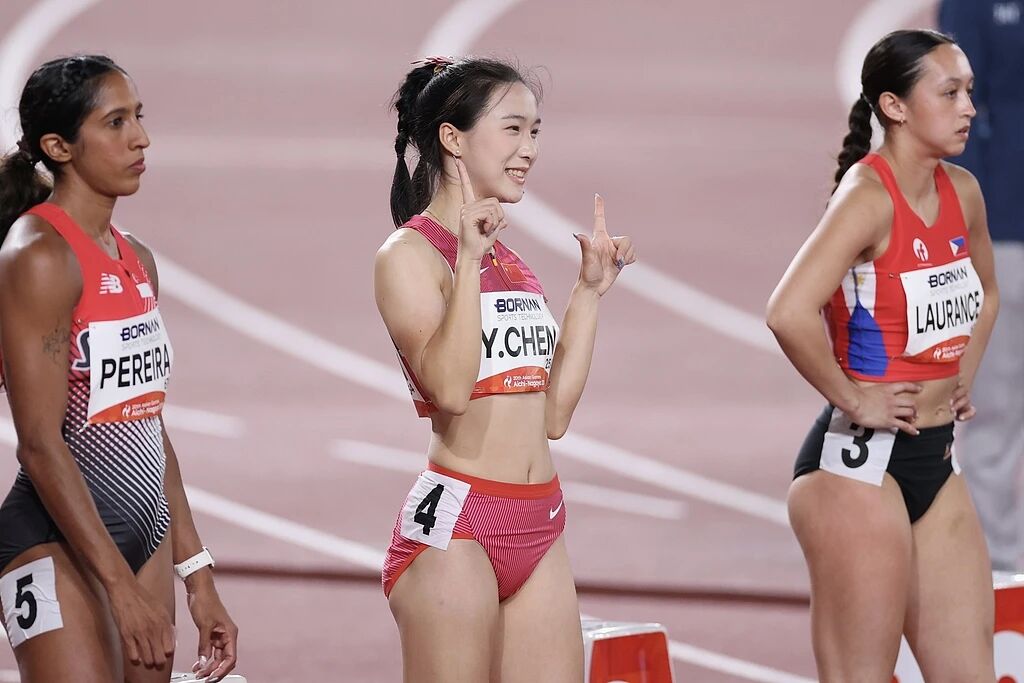
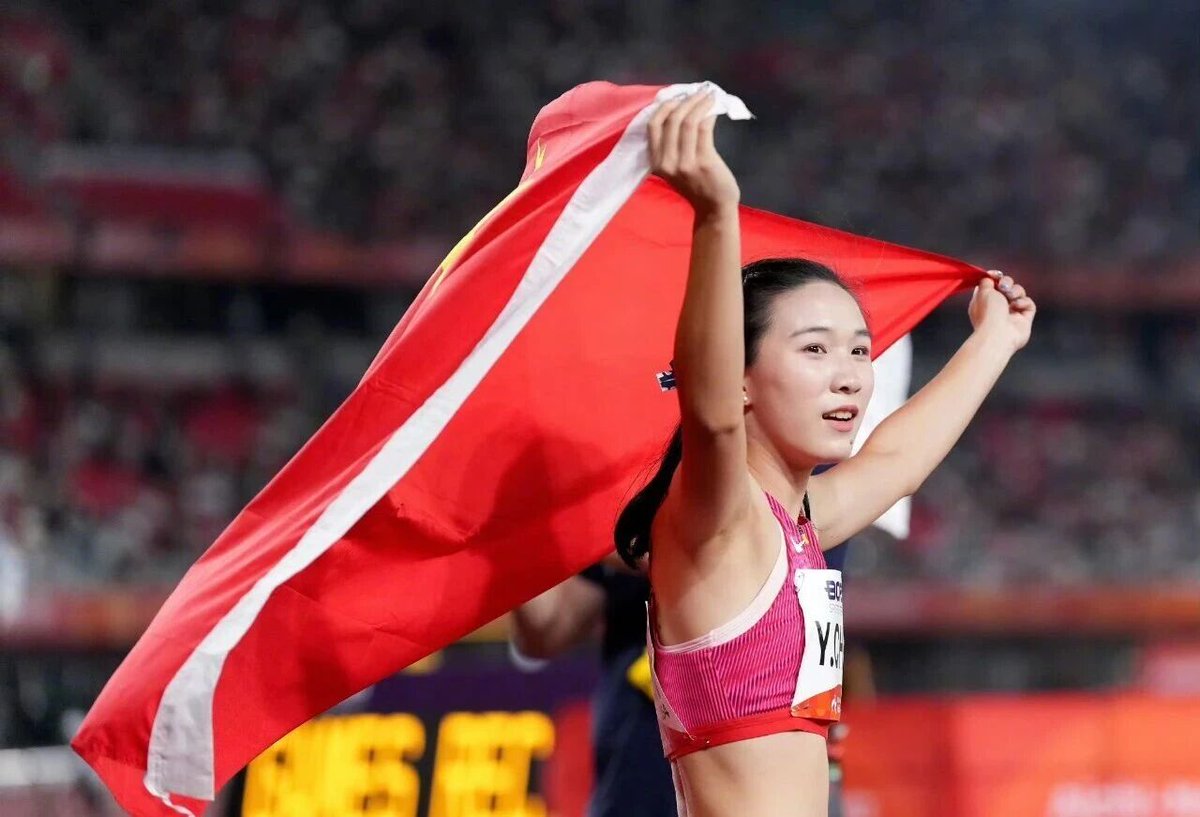
On September 25, at the 20th Asian Games in Nagoya, Japan, 17-year-old Chinese sprinter Chen Yujie (陈妤颉) crossed the line first in the women's 100m final with a time of 11.06 seconds, breaking the Games record and winning gold. It was her first Asian Games, and her final 100m race before adulthood. After the race, she said, "This result is the best coming-of-age gift I could give myself." That sentence is even more moving than the gold medal itself.
## From Spectator to Center Stage
Three years ago, at the Hangzhou Asian Games, Chen Yujie was just a spectator watching the races on TV with a drink in hand. Three years later, she stood on the track in Nagoya as the protagonist everyone was watching.
Of the eight finalists, she was the only Chinese competitor. Her senior teammate Ge Manqi had withdrawn due to injury, leaving all the pressure on her shoulders. But she didn't crack — a quick start, steady rhythm through the middle of the race, and in the final 30 meters she opened up the gap and hit the line first. 11.06 seconds — 0.16 seconds faster than the previous Games record, and also faster than the Asian U20 record she herself had set just a month earlier. As she crossed the line, she smiled with her little ponytail swinging.
## Talent? No — It's Thousands of Corrections
Many people call her a "genius little sister," but she says of herself: "Everyone is a genius — we just excel at different things."
She does have talent — both her parents are sprinters, and she was spotted by a coach in the fifth grade of elementary school. But what truly made her fast is that streak of being "hard on herself." The same arm-swinging movement, practiced hundreds of times in front of a mirror; a 40-second high-knee drill from her coach, which she pushed to a full minute; the planned 4 sets of 200m, which she voluntarily extended to 6, pushing herself until she vomited. She too has thought about giving up. Plateau periods, stubborn old habits, injuries that kept her from running — but every time, she gritted her teeth and got through it.
"Talent needs to be multiplied by hard work," she says. That sentence is more grounded than any motivational cliché.
## A Fearless Young Tiger
Before the race, she said, "My opponents are all seasoned veterans, but I'm not afraid of them. At worst, I'll wait four or eight more years and keep at it." That's the sharpness of youth. Not ignorance, not recklessness, but the confidence of someone who thinks, "I have all the time in the world, but I want to win now."
In the heats and semifinals she ran 11.41 both times, clearly holding back; in the final she exploded to 11.06, improving by 0.35 seconds in one go. That kind of calm restraint doesn't belong to a 17-year-old.
## After the Gold, a Longer Track Ahead
After winning, she only gave herself 60 points — because the competition wasn't over; the 200m and the relay were still ahead. Two days later, she took silver in the 200m final, candidly admitting she lacked the stamina and hadn't handled the curve technique well. But her eyes are already set further: the 2027 World Championships in Beijing, the 2028 Los Angeles Olympics, and even farther out — Brisbane. "You ask how fast I can run? I don't think there's a limit," she says.
The character "颉" in Chen Yujie's name was chosen by her mother; it means "a bird flying upward." At 17 — an Asian Games gold, a Games record broken, a high-school senior who still has to go back to class. She ran 11.06 seconds, and she also ran out the coolest look of a Gen Z athlete — no lying flat, no anxiety, no internal friction. She picked one path and charged straight down it. That is the real coming-of-age gift. Not that the age arrived, but that she truly had the ability to give herself an answer.
9月25日,日本名古屋第二十届亚运会女子100米决赛,17岁的中国选手陈妤颉以11秒06的成绩率先冲线,刷新赛会纪录,拿下金牌。这是她第一次参加亚运会,也是她成年前的最后一场百米大赛。赛后她说:“这个成绩,是给自己最好的成年礼。”这句话比金牌本身更动人。
【从观众到主角】
三年前杭州亚运会,陈妤颉还是电视机前喝饮料看比赛的观众。三年后,她站在了名古屋的跑道上,成了被所有人注视的主角。
决赛八个人里,只有她一个中国选手。师姐葛曼棋因伤退赛,压力全在她肩上。但她没有崩——起跑迅速,途中跑稳住节奏,后30米直接拉开身位,第一个撞线。11秒06,比原赛会纪录快了0.16秒,也刷新了她自己一个月前刚创造的亚洲U20纪录。冲线那一刻,她甩着小辫子笑了。
【天赋?不,是成千上万次的纠正】
很多人叫她“天才小孩姐”,但她自己说:“���个人都是天才,只是适用的范围不太一样。”
她的天赋确实有——父母都是短跑运动员,小学五年级就被教练看中。但真正让她跑出来的,是那股“对自己苛刻”的劲儿。同一个摆臂动作,对着镜子练几百遍;教练安排40秒高抬腿,她做到1分钟;原定4组200米,她主动加到6组,练到呕吐。她也想过放弃。瓶颈期、旧习惯改不掉、腿受伤不能跑……但她每次都咬牙扛过来了。
“天赋需要后天的努力来加成。”她说。这句话,比任何鸡汤都实在。
【初生牛犊不怕虎】
赛前她说:“对手都是赛场老手,但我不怕他们。大不了再过四年、八年,我继续干。”这就是少年人的锐气。不是无知,不是莽撞,而是一种“我有的是时间,但我现在就要赢”的底气。
预赛和半决赛她都跑了11秒41,明显留力;决赛直接飙到11秒06,一口气提升0.35秒。 这种“藏招”的冷静,完全不像一个17岁的孩子。
【金牌之后,还有更远的跑道】
夺冠后她只给自己打了60分——因为比赛还没结束,后面还有200米和接力。两天后,她在200米决赛拿到银牌,坦言体能不够、弯道技术没处理好。但她的目光已经放到了更远的地方:2027年北京世锦赛、2028年洛杉矶奥运会、甚至更远的布里斯班。“你问我能跑多快?我觉得没有极限。”她说。
陈妤颉的名字里有个“颉”字,是妈妈取的,意思是“鸟往上飞”。17岁,亚运会金牌,破赛会纪录,高三学生,还要回去上课。她跑出了11秒06,也跑出了一个Z世代最酷的样子——不躺平、不焦虑、不内耗,认准一条路,就闷头往前冲。这才是最好的成年礼。不是年龄到了,而是你真的有能力,给自己���个交代。
#ChinaGenZ
中国Z世代:“05后”在名古屋亚运会闪亮登场
China's Gen Z: Post-2005 Stars Shine at the Nagoya Asian Games
The Nagoya Asian Games opened on the 19th. The Chinese delegation's athletes have an average age of 24, and among the 815 athletes, 27% were born after 2005. New stars have emerged, ready to make breakthroughs, fighting for their dreams.
01
On the track and field stage, 18-year-old women's javelin thrower Yan Ziyi is undoubtedly one of the most watched rising stars of these Asian Games. She came from behind to win the 2026 World Athletics Diamond League Final, topping the world rankings with a perfect five wins in five events that season, becoming the youngest annual champion in the event's history. After the competition, Yan Ziyi said: "I plan to take first place in all the remaining competitions and win glory for my country!"
In fact, in May this year, just after turning 18, Yan Ziyi produced the second-best throw in the world at 71.74 meters, raising the previous Asian record by nearly 4 meters and falling just 54 centimeters short of the world record. At these Asian Games, what people are more curious about is whether this 18-year-old prodigy can surpass herself and reach new heights beyond 71.74 meters.
02
Not yet 14 years old, Yu Zidi is the youngest member of the Chinese swimming team and a rising star in the pool. Last year, at the National Swimming Championships, she reached the podium in multiple events including the 200m butterfly, 200m individual medley and 400m individual medley, making her a versatile young talent. At last year's National Games, in the women's 200m individual medley final, she broke a 13-year-old Asian record in one fell swoop to take gold.
Despite her dazzling results, Yu Zidi has also had moments of doubt. In 2024, before the National Swimming Championships, enormous pressure nearly made 11-year-old Yu Zidi give up swimming. The patient encouragement of her coach and family helped her pull through. She said: "The hardest moment may be the one closest to your goal — you must keep going."
03
Zhang Zhanshuo, who stood out at last year's National Games, is a new hope for China's men's middle- and long-distance freestyle. At this year's China Swimming Open, he won multiple men's middle- and long-distance freestyle titles in succession, especially in the 400m freestyle, where he swam a personal best of 3:41.55 — a time that even surpassed the winning time at the Paris Olympics.
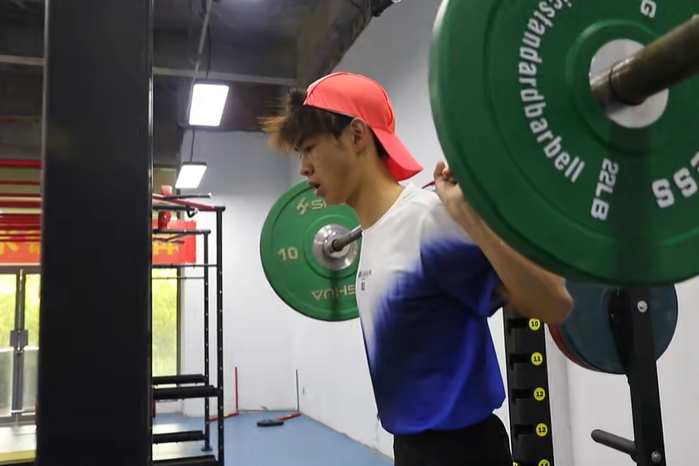
Some have noticed that Zhang Zhanshuo looks serious during competitions. He explained: "People who want to win don't have smiles on their faces. I'm always thinking about handling every detail in the next race, rather than focusing on other things." To improve his late-race sprinting ability, Zhang Zhanshuo deliberately gained over ten jin through strength training during winter training. At these Asian Games, he said outright that he will challenge for gold with the mindset of a contender.
04
Seventeen-year-old sprinting star Chen Yujie has won multiple domestic top-level titles. A month ago, at the 2026 Chinese National Track and Field Championships, Chen Yujie ran 11.08 seconds, setting a personal best and winning the women's 100m title, setting a new Asian U20 record in one stroke.
During preparations for the Asian Games, she wrote her wishes for the competition on the training hall wall with a marker: "Finish safely, break 11.05, aim for top three and strive for first." Chen Yujie said: "It's my first time at the Asian Games, and I'm both excited and nervous. This is also my last major competition before adulthood, and I hope to give myself a perfect 18th birthday gift."
05
Just turned 16, Ke Qinqin has already become a key member of the Chinese women's gymnastics team. At last year's Guangdong-Hong Kong-Macao Greater Bay Area National Games, Ke Qinqin took 5 golds and 2 silvers, earning the nickname "National Games Five-Gold Queen." When asked about her most unforgettable gold, Ke Qinqin said without hesitation it was the senior all-around title. She admits confidence is key: "As long as you dare to do the moves and don't get stage fright, there's no problem."
In June this year, at the 13th Asian Gymnastics Championships, Ke Qinqin and her teammates won the women's team gold, beating the runner-up by more than 5 points. At the same time, she won the women's individual all-around gold with a high score of 56.299. At these Asian Games, she is also the biggest favorite for the women's individual all-around title.
06
Fifteen-year-old Zhao Renjie began gymnastics training at age 4 and switched to diving at 7. At last November's National Games, Zhao Renjie finished third in the men's 10m platform final with 480.05 points, winning his first National Games medal. After the competition, he humbly said that some of his dives were unstable and needed improvement.
This year, Zhao Renjie's results have improved markedly. In February, he partnered with Cui Jiaxi to win the mixed team 10m platform gold at the 2026 World Aquatics Diving World Cup in Montreal, Canada; then at the second stop of the Asian Games diving selection trials, he beat Olympic champion Lian Junjie to win the men's 10m platform, securing his Asian Games ticket. Zhao Renjie is full of confidence about his Asian Games journey: "I hope I can win the championship."
07
Born in 2014, Cao Shiqi began practicing skateboarding before she was 5. At age 8, she won second place at the World Extreme Games (China) Skateboard U-Pool Tour Beijing stop, and has since achieved outstanding results in many major domestic competitions.
Cao Shiqi's main event is bowl. This sport requires athletes to complete high-difficulty moves such as aerials and spins on pool walls up to 4.5 meters high. Cao Shiqi's first hurdle is overcoming fear. With tenacity and a refusal to give up, she fell and got up again and again, gradually mastering the competition moves.
In the women's bowl final at the Asian Games skateboarding selection trials in May this year, Cao Shiqi took second place and earned her Asian Games qualification. She said her dream is to one day stand on the Olympic stage, and that dream has now officially set sail from the Asian Games arena.
With youth they head to the arena, fighting for their dreams. We look forward to the breakthroughs and surpassing achievements of China's post-2005 young stars.
19日,名古屋亚运会开幕。这届亚运会的中国代表团运动员平均年龄24岁,815名运动员中“05后”运动员占27%,新星已亮,蓄势突破,他们为梦想而战。
01
田径赛场上,18岁的女子标枪选手严子怡无疑是本届亚运会备受瞩目的新星之一。她在2026年世界田联钻石联赛总决赛中逆转夺冠,以赛季五战全胜登顶世界第一,成为该项目历史上最年轻的年度总冠军。赛后,严子怡说:“计划后面的比赛都拿第一,为国争光!”
其实,今年5月,刚满18岁的严子怡就创造了71.74米的世界第二好成绩,一举把原亚洲纪录提高了近4米,距离世界纪录仅差54厘米。这届亚运会,大家更好奇的是,这位18岁的小将能不能突破自己,在71.74米的基础上再创新高。
02
未满14岁的于子迪,是中国游泳队年龄最小的队员,也是冉冉升起的泳坛新星。去年,全国游泳冠军赛上,她在200米蝶泳、200米混合泳、400米混合泳多个项目都站上了领奖台,是一名全能型的小将。去年的全运会,女子200米个人混合泳决赛,她更是一举打破尘封13年的亚洲纪录,摘得金牌。
尽管成绩耀眼,于子迪也曾有过内心动摇的时刻。2024年,全国游泳冠军赛前,巨大的压力让11岁的于子迪险些放弃游泳。教练和家人的耐心鼓励,让于子迪挺了过来。她说:“最艰难的时刻,或许就是最接近目标的时候,必须坚持下去。”
03
去年全运会上脱颖而出的张展硕,是中国男子中长距离自由泳的新希望。今年的中国游泳公开赛上,他连夺多项男子中长距离自由泳冠军,尤其是400米自由泳项目,他游出3分41秒55的个人最好成绩,这个成绩甚至超过了巴黎奥运会的冠军成绩。
有人注意到,张展硕在比赛时状态严肃。他对此解释道:“想赢的人脸上是没有笑容的,我一直在想接下来比赛要处理好每个细节,而不是去关注一些其他的事情。”为了提升后程冲刺能力,张展硕冬训期间特意通过力量训练增重十几斤。这届亚运会,他直言,要以挑战者姿态冲击金牌。
04
17岁短跑新星陈妤颉,多次获得国内顶级赛事冠军。一个月前的2026中国田径全国锦标赛,陈妤颉跑出11秒08,刷新个人最好成绩,拿下女子百米冠军,一举创造亚洲U20新纪录。
在亚运会备战期间,她用马克笔把参赛心愿写在了训练馆的墙上:“安全完赛,冲击11秒05,赛事目标保三争一。”陈妤颉表示:“第一次参加亚运会,既兴奋又紧张。这也是我成年之前最后的一场大赛,希望给自己一个完美的18岁生日礼物。”
05
刚满16岁的柯沁沁,已经成为中国体操女队的主力队员。在去年的粤港澳大湾区全运会上,柯沁沁豪取5金2��,被称为“全运五金王”。聊起最难忘的金牌,柯沁沁毫不犹豫地说是成年组全能冠军。她坦言,自信是关键:“只要敢做动作,不怯场,就没问题。”
今年6月,在第13届亚洲体操锦标赛上,柯沁沁和队友携手获得女子团体金牌,领先亚军的优势达到5分多。同时,她以56.299的高分,获得女子个人全能金牌。本届亚运会,她也是女子个人全能项目的最大夺冠热门。
06
今年15岁的赵仁杰,4岁时开始体操训练,7岁改练跳水。去年11月的全运会上,赵仁杰在男子10米跳台决赛中以480.05分排名第三,首次获得全运会奖牌。赛后,他曾谦虚地表示,跳的动作有不稳定的地方,以后还需要改进。
今年,赵仁杰的成绩有明显提升。他先是在2月举行的2026年世界泳联跳水世界杯加拿大蒙特利尔站混合团体决赛中,与崔家溪搭档夺得双人10米跳台金牌;随后在亚运会跳水项目选拔赛第二站男子10米跳台比赛中,他力压奥运冠军练俊杰夺冠,由此锁定亚运门票。赵仁杰对亚运之旅充满信心:“希望自己能拿冠军。”
07
2014年出生的曹诗祺,不到5岁便开始练习滑板。8岁时便获得世界极限运动会(中国)滑板U池巡回赛北京站亚军,此后在多项国内大型赛事中屡创佳绩。
曹诗祺的主攻项目是碗池。这项运动要求运动员在最高达4.5米的场地道具池壁上,完成腾空、转体等高难度动作。曹诗祺的第一关就是要克服恐惧。凭借韧性和不服输的劲头,她一次次跌倒又爬起,逐渐掌握比赛动作。
今年5月亚运会滑板项目选拔赛女子碗池决赛中,曹诗祺获得亚军,取得亚运资格。她说,自己的梦想是有朝一日站上奥运会赛场,而这个梦想,已从亚运赛场正式启航。
以青春赴赛场,为梦想而战。期待中国“05后”小将们带来突破与超越。
#China #ChinaGenZ
16 岁孙心然:中国Z世代网球少女站上大满贯之巅
16-Year-Old Sun Xinran: A Chinese Gen Z Tennis Girl Reaches the Pinnacle of a Grand Slam
When the deciding set score froze at 6-0, 16-year-old Sun Xinran claimed the 2026 US Open girls' singles title. After suffering narrow defeats in two consecutive Grand Slam finals at the French Open and Wimbledon, this Gen Z tennis prodigy from Shenzhen, China, finally fulfilled her dream on the courts of New York, lifting her first junior Grand Slam singles trophy.
On September 12 local time, the US Open girls' singles final unfolded, with top seed Sun Xinran facing No. 5 seed Pushkareva. This was the second consecutive Grand Slam final between the two. In the Wimbledon final, Sun Xinran took the first set before being reversed, narrowly missing the title. Meeting again, she began the match with composure, seizing an opportunity in the fourth game to secure a key break and take the first set 6-4; her opponent quickly adjusted to take the second set 6-4. Dragged into a deciding set, everyone feared history would repeat itself, but Sun Xinran firmly controlled the rhythm, winning six straight games to deliver a "bagel" score and take the match 2-1, claiming the title in 1 hour and 47 minutes.
This victory was not just a revenge in a final, but the answer to Sun Xinran's entire season of perseverance. In the 2026 season, her Grand Slam journey was full of ups and downs: at the Australian Open at the start of the year she stopped in the quarterfinals, in June at the French Open she fought her way to the final and finished as runner-up while also reaching No. 1 in the ITF junior girls' world rankings; in July at Wimbledon she once again reached the final and once again finished as runner-up. Two consecutive runner-up finishes at the French Open and Wimbledon, standing on the highest stage repeatedly but never winning gold—the pressure was self-evident. At the US Open, she achieved a breakthrough, becoming the first Chinese player to reach the girls' singles final at three consecutive Grand Slams.
The road to the championship was never smooth. In the quarterfinals, Sun Xinran faced her own doubles partner, No. 7 seed Makarova, and trailed 2-5 in the first set, on the brink of elimination. She withstood the pressure, saved 6 set points, forced a tiebreak, and won it 7-2. In the semifinals against American local player Clark, she suffered a 0-6 loss in the second set, but under immense adversity quickly adjusted her mindset and completed a comeback with a 6-1 deciding set. Falling into desperate situations multiple times yet always managing to steady herself and complete reversals—this is the most striking trait of this 16-year-old girl.
With the US Open title, Sun Xinran wrote a new record for Chinese tennis. She became the third Chinese player to win the US Open junior singles title after Wu Yibing and Wang Xiyu, and the youngest of the three. The Chinese Tennis Association sent a congratulatory letter at the first opportunity, affirming her high-intensity battles throughout and her constant challenging of opponents and physical limits, praising her for "becoming a new role model for Chinese tennis while learning from role models and paying tribute to role models!"
As a Gen Z athlete, Sun Xinran's growth embodies a power passed down from generation to generation. She once said frankly: "Zheng Qinwen taught me not to give up." At the same US Open, her senior Zheng Qinwen started from qualifying and fought her way into the adult singles quarterfinals. Two generations of Chinese tennis girls fought their own battles on the same court. Zheng Qinwen's tenacity became the confidence that propelled young Sun Xinran forward; and Sun Xinran's rise also heralds the continued growth of China's new generation of tennis strength.
Gen Z is often labeled as diverse and individualistic, but Sun Xinran uses her racket to give her own interpretation of this generation: passion, tenacity, and no fear of failure. At 16, the very age of youthful growth, she has already stood on the world's top stage early, tasted the joy of reaching world No. 1, and experienced the regret of losing two finals. She did not become discouraged by consecutive runner-up finishes, but instead calmed down, honed her skills, and waited for the next opportunity.
A junior Grand Slam title is not the end, but only a new starting point for her career. Results on the junior circuit are proof of talent and hard work, but the road to the adult tennis world is still long, and more strong opponents and more tough battles await her in the future.
A young person naturally has lofty aspirations. The 16-year-old rising star Sun Xinran from Shenzhen accumulated strength through repeated failures and finally fulfilled her dream at the US Open. She represents the image of China's Gen Z athletes: goals in their eyes, role models in their hearts, able to lose and fight to the end. On the stage of world tennis, the young Chinese force is continuing to shine.
当决胜盘比分定格在 6-0,16 岁的孙心然拿下 2026 美网青少年组女单冠军。历经法网、温网连续两次大满贯决赛惜败,这位来自中国深圳的 Z 世代网球小将,终于在美国纽约的赛场圆梦,捧起属于自己的首座青少年大满贯单打奖杯。
当地时间 9 月 12 日,美网青少年女单决赛上演,头号种子孙心然迎战 5 号种子普什卡列娃。这是两人连续第二个大满贯决赛交手。温网决赛,孙心然先下一城后遭逆转,与冠军擦肩而过。再次相遇,她沉稳开启比赛,第四局抓住机会完成关键破发,以 6-4 拿下首盘;对手迅速调整,以 4-6 扳回一盘。被拖入决胜盘,所有人都担心历史重演,但孙心然牢牢掌控节奏,连拿六局送出 “送蛋” 比分,以 2 比 1 拿下比赛,耗时 1 小时 47 分钟夺冠。
这场胜利,不只是一场决赛的复仇,更是孙心然整个赛季坚持的答卷。2026 赛季,她的大满贯旅程跌宕起伏:年初澳网��步八强,6 月法网一路打进决赛收获亚军,同时登顶 ITF 青少年女单世界第一;7 月温网再度闯入决赛,再度屈居亚军。法网、温网两连亚,连续站在最高舞台却无缘金牌,压力不言而喻。而美网,她实现突破,成为**首位连续三站大满贯闯入青少年女单决赛的中国球员**。
通往冠军的晋级之路,从来都不是一路坦途。1/4 决赛,孙心然对阵自己的双打搭档、7 号种子马卡洛娃,首盘一度 2-5 落后,濒临出局,她顶住压力挽救 6 个盘点,拖入抢七并以 7-2 惊险拿下。半决赛对阵美国本土选手克拉克,她遭遇次盘 0-6 惨败,在巨大劣势下迅速调整心态,决胜盘 6-1 完成翻盘。多次身陷绝境,却总能稳住心神完成逆转,是这个 16 岁女孩最亮眼的特质。
凭借美网冠军,孙心然书写中国网球新纪录。她成为继吴易昺、王曦雨之后,第三位夺得美网青少年单打冠军的中国球员,也是三人之中最年轻的一位。中国网球协会第一时间发来贺信,肯定她一路高强度作战,不断挑战对手与体能极限,赞扬她“在学习榜样和致敬榜样中成为中国网球的新榜样!”
作为 Z 世代运动员,孙心然的成长,藏着一种代代相传的力量。她曾坦言:“郑钦文教会我不要放弃。” 就在同一届美网,前辈郑钦文从资格赛起步,一路鏖战闯入成人组八强。两代中国网球女孩,在同一片赛场各自奋战。郑钦文的坚韧,化作少年孙心然前行的底气;而孙心然的崛起,也预示着中国网球新生代力量接续成长。
Z 世代常常被贴上多元、个性的标签,而孙心然用球拍给出属于这一代人的注解:热爱、坚韧,不惧失败。16 岁,正是少年成长的年纪,她早早站上世界顶尖赛场,品尝过登顶世界第一的喜悦,也两次体会决赛失利的遗憾。没有因为接连亚军而消沉,而是沉下心打��技术,等待下一次机会。
青少年大满贯冠军,不是终点,只是职业生涯新起点。青少年赛场的成绩,是天赋与汗水的证明,但通往成人网坛的路依旧漫长,未来还有更多强敌、更多硬仗等待她去挑战。
少年自有凌云志。从深圳走出的 16 岁小花孙心然,在一次次失败里积蓄力量,终于圆梦美网。她代表着中国 Z 世代运动员的模样:眼里有目标,心中有榜样,输得起、拼到底。在世界网坛的舞台上,年轻的中国力量,正持续绽放光芒。
#China #ChinaGenZ
From 0‑5 to 7‑5: Zheng Qinwen, a Resilience Textbook for China’s Gen‑Z
从0-5到7-5:郑钦文,中国Z世代的“逆商”教科书
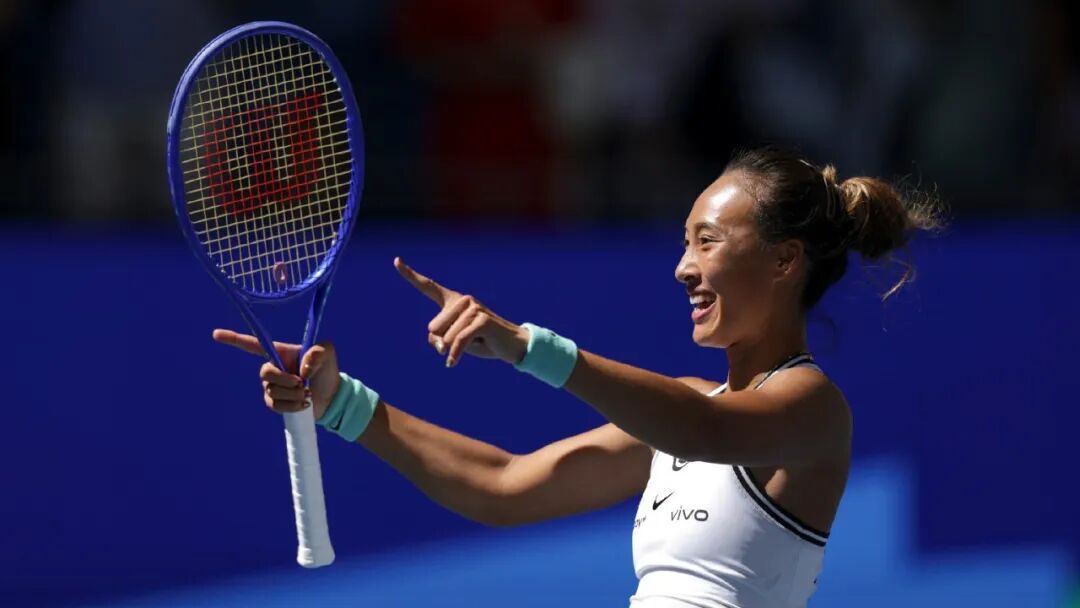
September 2026, Arthur Ashe Stadium at Flushing Meadows, New York. Twice in successive rounds, 23‑year‑old Chinese player Zheng Qinwen pulled off a miraculous comeback, winning seven straight games from a crushing 0‑5 deficit. Clawing her way back from World No. 121, she wrote the most electrifying story of this autumn with her racket. And audiences back home — Gen‑Z young people caught in the tug‑of‑war between hustle culture and lying‑flat mindset — found themselves deeply moved.
## Two “0‑5‑to‑7‑5” Comebacks, Nationwide Viral Sensation
Let’s walk through the matches.
In the early hours of September 6 (Beijing Time), during the US Open women’s singles third round, Zheng faced former Australian Open champion Madison Keys. She dropped the opening set 1‑6, and trailed 0‑5 in the decider, with her opponent holding match point. Even renowned commentator Zhan Jun admitted he switched over to watch Premier League football when the score hit 0‑5. Nearly everyone thought the match was over.
Then the miracle unfolded.
Zheng reeled off seven consecutive games to seal the set 7‑5 and complete the comeback. This marked the first time in the Open‑Era women’s Grand‑Slam history that a player had won seven straight games from 0‑5 down in a deciding set to close out a match. US Open official social‑media accounts posted repeatedly, hailing it as “Comeback of the Year” and declaring Zheng “the miracle itself.”
Even more extraordinary followed. In the early hours of September 8, in the fourth round against six‑time Grand‑Slam champion Iga Świątek, Zheng again fell behind 0‑5 in the opening set. Pre‑match AI gave her only a 12 % win probability, and her head‑to‑head record stood at one win against seven losses. Yet the identical drama repeated: seven games in a row, a 7‑5 first‑set victory, and eventually a 2‑0 sweep, returning her to the US Open quarter‑finals after a two‑year gap.
Back‑to‑back “0‑5‑to‑7‑5” epics. Seven straight wins, starting from qualifying rounds all the way to the quarter‑finals. The US Open put Zheng’s “0‑5 moments” alongside Michael Jordan’s iconic Game 6 and Tiger Woods’ legendary Sunday charge, labelling them “incredible.”
## “I just thought, I can’t get bageled — that would be too embarrassing.”
What truly resonated with Gen‑Z was not merely the scoreboard, but what Zheng said afterwards.
After beating Keys, reporters asked what had gone through her mind at 0‑5. Instead of stock phrases about unyielding faith or iron will, she replied with refreshing frankness: “My very first thought was, I can’t get bageled 6‑0. That would be so humiliating.”
That quote went viral overnight.
It felt so authentic. It echoes the inner monologue many young people face amid looming deadlines: “I have to hand this in; I can’t submit a blank page.” Free from polished elite‑athlete packaging, Zheng voiced the relatable, almost self‑deprecating instinct of ordinary youth — yet paired with superhuman execution.
Equally touching was her reference to lines from *Rainbow Sea*, a Chinese animated series from her childhood: *“Those who believe in miracles are just as extraordinary as miracles themselves.”*
A post‑00s athlete, standing under the bright lights of Arthur Ashe Stadium, quoting lines from a domestic cartoon she grew up watching. This was no deliberate cultural‑export performance; it was natural Gen‑Z cultural memory. It struck a chord with millions who remembered weekday evenings glued to TV screens, stirred by those passionate lines. Competitive spirit merged seamlessly with a generation’s childhood nostalgia.
Jay Chou shared her interview clip late at night with the comment “What a comeback,” while Hannah Quin‑livan echoed “the spirit of never giving up.” The story exploded beyond sports circles. Hashtags about Zheng’s historic comebacks topped social‑media trending lists.
## From World No. 121 to Seven‑Match Win Streak: A Narrative of Rock‑Bottom Rebuilding
Zheng’s story resonates so deeply with Gen‑Z because it mirrors many young people’s own life journeys.
At the 2024 Paris Olympics, she claimed China’s first‑ever women’s singles tennis gold, soaring to World No. 4. That was her shining peak, comparable to landing a dream offer, getting into graduate school or launching a successful project — brimming with optimism for what lay ahead.
Then reality delivered a heavy blow. Elbow surgery kept her sidelined for almost 10 months. After returning, she suffered at least six first‑round exits. Her 2026 tour record stood at 11 wins versus 13 losses, a win‑rate below 50 %, her worst run in five years. Her ranking plummeted from No. 4 all the way down to No. 121.
Falling from stardom to rock‑bottom, from nationwide high‑expectation to public doubts whether “she had lost her edge.” Gen‑Z knows this kind of whiplash all too well. Many young adults go through their own “ranking collapse”: failed postgraduate entrance exams, frustrating job‑hunts, workplace plateaus, or the sober realisation that hard work does not always guarantee reward.
But Zheng refused to lie flat. Having to play qualifying matches to reach the main draw was psychologically crushing for a former Olympic champion. She openly acknowledged feeling upset and demoralised upon learning she would start in qualifiers. Yet soon she reframed her mindset: “This is reality, so I might as well approach it positively. Qualifiers have produced Grand‑Slam champions before. I’ll give it everything I’ve got.”
Seven consecutive victories from qualifying into the quarter‑finals, her live ranking rebounding to No. 52. This is not hollow motivational fluff. It is genuine testimony of one person rebuilding herself brick‑by‑brick after total collapse.
## “Queen Wen”: What Kind of Icon Does Gen‑Z Need?
Zheng Qinwen embodies distinctly Gen‑Z qualities.
She is unapologetically confident. After her 2024 Olympic triumph, she stated plainly: “The title ‘Queen Wen�� is well‑deserved.” No false modesty, no awkward hedging, she gracefully embraced praise. That self‑assured sense of “I deserve this” strikes a chord with Gen‑Z, tired of old‑fashioned social pressure urging people not to stand out. Young audiences admire someone who can openly say “I am good.”
She is authentic. She lies flat on‑court overwhelmed by joy after victories; she sheds genuine tears in defeat. She does not sugar‑coat losses with empty phrases like “honourable defeat,” instead honestly admitting “I know I could have played better.” After matches, she stays on‑court practising serves when dissatisfied with her first‑serve percentage. That unpretentious authenticity carries far more power than any manufactured perfect public persona.
She carries herself globally. Fluent English, sharp logical thinking, calm and equal‑footed when interviewed by international journalists. She can pinpoint her own technical weaknesses, yet accept losses philosophically with “that is tennis.” As she once observed: “The younger generation views the world with equal respect. This mirrors China’s progress. Only by meeting the world eye‑to‑eye can we fully bring out our authentic, stronger selves.”
She does not stoke anxiety, nor peddle simplistic narratives that “hard work always guarantees success.” Instead, she presents a far more realistic blueprint for growth: falling low, feeling dejected, doubting yourself — yet choosing to stand back up, point‑by‑point, game‑by‑game.
Is this not exactly the story our generation needs to hear?
Why has Zheng Qinwen become a spiritual touchstone for Gen‑Z?
Not merely for winning matches, but for refusing to surrender while trailing 0‑5. Not merely for winning Olympic gold, but for refusing to give up when her ranking sank to 121. Not for being flawless, but for openly showing us **what it looks like to rebuild your life from the ruins**.
*“Those who believe in miracles are just as extraordinary as miracles themselves.”*
These words go to Zheng Qinwen — and to every one of us slogging through our personal “0‑5” moments, fighting point by point to turn things around.
2026年9月,纽约法拉盛公园的阿瑟·阿什球场,郑钦文连续两轮在0-5落后的绝境中连赢七局完成逆转。一个从���界第121位爬回来的23岁中国姑娘,用球拍写下了这个秋天最燃的剧本。而屏幕这头的我们——一群在"内卷"和"躺平"之间反复横跳的Z世代——突然被击中了。
【两场"让五追七",一次全网沸腾】
先说比赛。
北京时间9月6日凌晨,美网女单第三轮,郑钦文对阵前澳网冠军凯斯。首盘1-6速败,决胜盘0-5落后,对手手握赛点。解说员詹俊坦言"看到0-5就转台看英超了",几乎所有人都以为故事结束了。
然后,奇迹发生了。
郑钦文连赢七局,以7-5完成逆转。这是公开赛年代女子大满贯历史上首次出现决胜盘0-5落后连赢七局终结比赛的情况。美网官方连发推文,称其为"年度最佳逆转",直言郑钦文"就是奇迹本身"。
更炸裂的还在后面。9月8日凌晨,第四轮对阵六届大满贯冠军斯瓦泰克,郑钦文首盘再次0-5落后。赛前AI预测她的胜率仅为12%,两人历史交手1胜7负。但同样的剧本再次上演——连追七局,7-5拿下首盘,最终2-0横扫对手,时隔两年重返美网八强。
连续两轮"让五追七",从资格赛一路七连胜杀进八强。美网官方将郑钦文的"0-5时刻"与乔丹的神奇第6场、老虎伍兹的神奇周日并列,评价为"不可思议"。
【"总不能让她打个6-0吧,太丢人了"】
但真正让Z世代集体破防的,不是比分本身,而是郑钦文说的那些话。
逆转凯斯后,记者问她0-5落后时在想什么。她没有搬出"永不放弃""信念坚定"之类的标准答案,而是特别不好意思地说:"当时脑子里第一个想法就是,总不能让她打个6-0吧,那也太丢人了。"
这句话瞬间刷屏。
太真实了。这不就是我们面对deadline时的心理活动吗?"反正都要交,总不能交个空白的吧。"郑钦文用一种去精英化的、带着自嘲的真实感,拉近了和年轻观众的距离。她不是那种被包装出来的"完美运动员",她就是一个会在绝境中因为"丢人"二字激发斗志的普通年轻人——只不过这个普通人的执行力,强到逆天。
更让人共鸣的是赛后她引用的那句台词,来自童年动画片《星游记》:"相信奇迹的人本身就和奇迹一样了不起。"
一个00后运动员,在法拉盛公园的聚光灯下,引用自己小时候看过的国产动画台词。这不是刻意的文化输出,而是一种自然的、属于Z世代的文化记忆。它击中了无数人的童年——那些放学后守在电视机前的傍晚,那些被一句台词点燃的中二热血。竞技精神与一代人的文化记忆,在这一刻无缝连接。
周杰伦深夜转发郑钦文采访截图并配文"这个逆转",昆凌同步感叹"不放弃的精神",话题从体育圈炸向大众圈层。"郑钦文美网惊天逆转""郑钦文决胜盘连赢7局"等话题登顶热搜。
【从第121位到七连胜:一场关于"触底反弹"的叙事】
郑钦文的故事之所以让Z世代如此共情,还因为它太像我们自己的经历了。
2024年巴黎奥运会,她拿下中国首枚网球女单金牌,世界排名飙升至第四。那是她的高光时刻,像极了我们拿到offer、考上研、项目上线的那些瞬间——意气风发,觉得未来一片光明。
然后,现实给了她一记重拳。右肘手术,休战近10个月。复出后遭遇至少6次"一轮游",2026赛季巡回赛战绩11胜13负,胜率不足50%,创近五年新低。世界排名从第4位一路跌至第121位。
从云端跌到谷底,从被万众期待到被质疑"是不是不行了"。这种落差感,Z世代太熟悉了。我们中的很多人,正在经历类似的"排名暴跌"——可能���考研失利、求职碰壁、职场瓶颈,或者仅仅是发现"努力不一定有回报"这个残酷真相。
但郑钦文没有躺平。她需要打资格赛才能进入美网正赛,这对一个曾经的奥运冠军来说,心理落差可想而知。她坦言得知要打资格赛时"一时难以接受,甚至有些消沉",但几天后她想通了:"反正都要面对,不如用更加积极一点的态度。资格赛选手也有在美网夺冠的先例,放手一搏吧。"
从资格赛一路杀进八强,七连胜。即时世界排名回升至第52位。这不是鸡汤,这是一个人在废墟里一砖一瓦重建自己的真实记录。
【"Queen Wen":Z世代需要什么样的偶像】
郑钦文身上有一种气质,特别"Z世代"。
她自信。2024年巴黎奥运会夺冠后,她说"'Queen Wen'这个词,我实至名归。"没有谦虚,没有扭捏,坦坦荡荡地接受赞美。这种"我值得"的底气,是Z世代最欣赏的品质——���们厌倦了"枪打出��鸟"的规训,渴望看到一个人大大方方地说"我就是很强"。
她真实。赢球了会激动到躺倒在场地中央,输球了会哽咽落泪。她不会用"虽败犹荣"来粉饰失利,而是直接说"我觉得我应该打得更好"。她会在赛后拉着教练加练发球,因为对一发进球率不满意。这种"不装"的态度,比任何完美人设都更有感染力。
她国际化。流利的英语,清晰的逻辑,面对全球媒体时不卑不亢。她能具体分析自己的技术短板,也能在失利时保持"这就是网球"的豁达。正如她曾说过的:"年轻一代平视世界,同时代表了中国的进步,只有平视这个世界,才能把真正的、完整的自己更强地发挥出来。"
她不贩卖焦虑,也不鼓吹"努力就能成功"的简单叙事。她展示的是一个更真实的成长模型:会跌倒,会消沉,会怀疑自己,但每一次都选择站起来,一分一分地往回追。
这不就是我们这代人最需要听到的故事吗?
回到最终的问题:为什么郑钦文能成为Z世代的精神图腾?
不是因为她赢了比赛,而是因为她在0-5落后时没有放弃;不是因为她拿了金牌,而是因为她在排名跌至121位时没有躺平;不是因为她完美无缺,而是因为她真实地展示了"一个人如何在废墟中重建自己"的全过程。
"相信奇迹的人本身就和奇迹一样了不起。"
这句话,送给郑钦文,也送给每一个正在"0-5落后"的人生阶段里,咬牙一分一分往回追的你和我。
#China #ChinaGenZ
China’s Post‑00s “Dark Horse” Defeats the World No.1!
中国00后“黑马”击败世界第一!
On August 29, at the 2026 Wuhan Open Snooker final, Chinese post‑00s rising star Chang Bingyu beat newly‑crowned world No.1 Zhao Xintong 10‑7 to claim the first ranking‑event title of his professional career.
Fresh off claiming the world No.1 spot in Wuhan, Zhao Xintong had defeated two‑time defending champion Xiao Guodong 6‑2 in the semi‑final. He held a perfect record of seven finals, seven titles heading into this match. Chang Bingyu emerged as the tournament’s biggest dark horse, having knocked out top‑tier players including Judd Trump and Ronnie O’Sullivan en route to the final.
Ranked world No.45 prior to the event, Chang Bingyu had never won a professional tour title. Based on his career profile and ranking, his victory counted as an upset. That said, Chang had delivered numerous standout performances in past competitions. Judging by his proven ceiling, this title win was not entirely out of the blue.
Born on August 8, 2002 in Qinghai, Chang Bingyu was a promising young prospect before turning 20. Shortly after turning 20, he received a competition ban. He and Zhao Xintong were suspended over similar violations at roughly the same time, and their returns to the professional circuit fell close to one another. Throughout the 25/26 season, while Zhao Xintong racked up titles across multiple tournaments, Chang Bingyu began to show his true potential.
At the 2025 Scottish Open, Chang Bingyu defeated Stephen Maguire, Si Jiahui, Kyren Wilson, Mark Selby and Mark Allen to reach his maiden ranking‑event final. He eventually finished runner‑up after losing 2‑9 to Chris Wakelin.
In the opening round of the 2026 Welsh Open, Chang Bingyu whitewashed Shaun Murphy 4‑0, compiling breaks of 130, 136, 128 and 130 for a staggering aggregate score of 524‑1 across the four frames.
Chang Bingyu made his first and second maximum 147 breaks in the 2025 UK Championship qualifiers and 2026 World Championship qualifiers respectively. This qualified him for the bonus scheme rewarding two 147s across the season’s four major tournaments (Saudi Masters, UK Championship, Masters, World Championship), earning him a £147,000 prize. Though without a title last season, Chang had already demonstrated championship‑calibre ability. Building on that form at the start of the 26/27 season, he finally claimed top honours at the Wuhan Open.
Following his 2025 World Championship triumph, Zhao Xintong was widely tipped to become world No.1. Across the 25‑26 campaign, Zhao swept all three events of the Players Series (World Grand Prix, Players Championship, Tour Championship) alongside the Riyadh Season Championship. He became only the third player, after Judd Trump and Ronnie O’Sullivan, to surpass £1 million in prize money in a single season. Though he failed to defend his World Championship crown, he remained the most consistent performer of the whole season.
Prior to the Wuhan Open, Zhao boasted an unblemished record of seven finals and seven titles. His loss to Chang Bingyu gave him his first‑ever professional final‑defeat and a runners‑up medal. Upon the conclusion of the Wuhan Open, the official world rankings were updated. Zhao Xintong became only the second Chinese snooker player, after Ding Junhui, to reach world No.1. Elsewhere, Wu Yize sits at No.3, Xiao Guodong at No.11, Ding Junhui at No.15, with Si Jiahui, Zhou Yuelong and Zhang Anda holding 17th, 18th and 19th respectively. Newly‑crowned Wuhan champion Chang Bingyu jumped from No.45 to No.22. Notably, points are extremely tight among the top‑five players: Zhao Xintong, Neil Robertson, Wu Yize, Mark Selby and Judd Trump. Zhao Xintong and Wu Yize face considerable pressure defending China’s hold on the world No.1 spot.
Go for it, China’s Generation Z snooker talents!
8月29日,2026世界斯诺克武汉公开赛决赛,中国“00后”新星常冰玉以10比7击败新科世界第一赵心童,夺得职业生涯的首个排名赛冠军。
赵心童刚在武汉登顶世界第一,半决赛以6比2战胜连续两届冠军肖国栋,在本场比赛之前保持着“七进决赛、七次夺冠”的百分百胜率。常冰玉是本届赛事的最大“黑马”,晋级决赛之路上连续击败了特鲁姆普、奥沙利文等多位顶尖高手。
常冰玉之前的世界排名在第45位,没有获得过职业巡回赛冠军。从他的履历和排名来看,这次夺冠应该算是爆冷。但是另一方面,常冰玉在过往比赛中已经有过不少高光时刻。如果以他打出过的上限水平作为参考,此番夺冠倒也不算特别意外。
常冰玉出生于2002年8月8日,家乡青海。20岁之前,他是初出茅庐的小将,刚过20岁,他就被禁赛了。他和赵心童是因为相似的事件在同一时间被禁赛的,后来他和赵心童回归职业赛场的时间也没差多少。25/26赛季,当赵心童在多项赛事收割冠军的同时,常冰玉也开始显露锋芒。
2025年苏格兰公开赛,常冰玉先后战胜了斯蒂芬·马奎尔、斯佳辉、凯伦·威尔逊、马克·塞尔比以及马克·艾伦,首次闯进职业排名赛决赛。最终,他在决赛以2-9不敌克里斯·韦克林,收获亚军。
2026年威尔士公开赛首轮,常冰玉4-0完胜肖恩·墨菲,四局比赛分别得到130分、136分、128分、130分,四局总比分打出惊人的524-1。
2025年英锦赛资格赛和2026年世锦赛资格赛,常冰玉打出自己的第一杆和第二杆147,触发了单赛季四大赛(沙特大师赛、英锦赛、大师赛、世锦赛)累计两杆147”奖励计划,收获14.7万英镑奖金。回顾上个赛季,常冰玉虽然没有拿过冠军,但已经表现出冠军天赋。26/27赛季开始后,常冰玉再接再厉,终于在武汉冠军赛成功登顶。
赵心童在2025年世锦赛夺冠后,就成为很多人心中“世界第一”的热门人选。25-26赛季,赵心童包揽球员系列赛三项冠军(世界大奖赛、球员锦标赛、巡回锦标赛)还拿到利雅得狂欢季锦标赛冠军,成为继贾德·特鲁姆普和罗尼·奥沙利文之后,第三位单赛季奖金突破100万英镑的球员。虽然他在世锦赛没能卫冕成功,但依然是整个赛季整���表现最为出色的选手。
本届武汉公开赛之前,赵心童保持着7进决赛7夺冠军的纪录。这次输给常冰玉,赵心童才首次品尝到职业赛亚军滋味。武汉公开赛结束后,世界排名正式更新,赵心童成为继丁俊晖之后,第二位登顶世界第一的中国斯诺克运动员。另外,吴宜泽排名第3,肖国栋排名第11,丁俊晖排名第15,斯佳辉、周跃龙、张安达排在第17、18、19位,刚刚在武汉夺冠的常冰玉从第45上升到第22。值得注意的是,目前排名前5的赵心童、尼尔·罗伯逊、吴宜泽、塞尔比以及特鲁姆普之间积分非常接近,赵心童和吴宜泽为中国斯诺克守住世界第一的压力还是不小的。
中国斯诺克的Z时代们,继续加油吧!
#China #ChinaGenZ
Title: From Hindi Major to World Supercomputing Champion: The Extraordinary Daily Life of Huo Zihan, a Peking University Class of 2023 Undergraduate
从主修印地语到获得世界超算冠军:北京大学2023级本科生霍子晗的逆天日常
"Supercomputing" – also known as High-Performance Computing (HPC) – is a technological system that leverages multiple computing nodes and processors working in parallel, combined with hardware-software co-optimization, to dramatically improve the overall computational efficiency of large-scale complex applications. Building clusters, scheduling resources, optimizing applications, tuning performance... these core concepts of supercomputing have unexpectedly become part of the daily routine of Huo Zihan, a Class of 2023 undergraduate student majoring in Hindi at Peking University's School of Foreign Languages.
On May 20, as the 2026 ASC World University Supercomputing Competition Finals came to a close, Huo Zihan stood on the award podium with his teammates from Peking University's Supercomputing Team, jointly hoisting the championship trophy. During the competition, he was responsible for the climate simulation challenge, while also taking on some benchmark performance testing tasks.
As the only student from a humanities faculty on the team, Huo Zihan's connection to computers has been a subtle yet persistent thread throughout his academic journey. When he arrived at Peking University, he enrolled in the Hindi program at the School of Foreign Languages. The inclusive and diverse academic atmosphere, the wealth of multidisciplinary resources, and the School's encouragement of interdisciplinary exploration provided fertile ground for this passion to continue growing. In his freshman year, he took a general elective course titled "Linux Operating System and Open-Source Software." Starting from this practice-oriented introductory course, he joined the Peking University Student Linux Club – one of the university's most active academic and tech-innovation student organizations, and a true "hub for open-source and technology enthusiasts." Here, the boundaries between disciplines dissolved, interests flourished freely, and students from different majors came together through shared passions. And so, the seemingly distant threads of Hindi and supercomputing gradually converged on the Peking University campus, ultimately producing a powerful and resonant harmony.
Huo Zihan once said: "It's not just about learning the language – you also need to understand the culture and context behind it." Embracing the educational philosophy of "using language as a bridge and scholarship as a bond," the School of Foreign Languages offers a rich and diverse curriculum. It not only focuses on building oral and written proficiency in foreign languages but also provides specialized courses in linguistics, literature, and area/country studies. For Huo Zihan, these courses have helped him construct a deep understanding of India and South Asian society, while also greatly expanding his intellectual horizons and ways of thinking.
Upon joining the Linux Club, Huo Zihan took part in the development of the CLab cloud computing platform, contributing to testing and front-end development. Later, as the club's president, he became more broadly and deeply involved in leading and participating in various projects. It was here that his initial, rather abstract interest in applying computer knowledge to real-world problems gradually transformed into systematic, engineering-oriented practical skills. His learning path has always been driven by application-oriented needs. Beyond his computer science coursework, he places particular emphasis on enhancing his abilities through hands-on projects. For him, "interest" is the driving force that pushed him to devote most of his spare time to self-learning and club projects.
His ability to "learn by doing" in the club, coupled with his intense passion for computers, eventually brought him into contact with the university's Supercomputing Team. After a year of observing and learning, Huo Zihan officially joined the team. When asked about computers, the Linux Club, and the Supercomputing Team, he sums it up with three keywords: "Fate, Interest, and Practice."
"He is exceptionally meticulous and possesses a remarkably deep understanding of both hardware and software. I was genuinely surprised and delighted that a student from the School of Foreign Languages could take on such a role requiring comprehensive knowledge of both domains." This is how Fu Zhenxin, an engineer at Peking University's Computer Center and the Supercomputing Team's faculty advisor, describes Huo Zihan.
In 2024, Huo Zihan became the president of the Linux Club, bringing significant behind-the-scenes and structural reforms. He transformed the club from its previously relatively loose, project-based model into a more structured departmental system comprising five divisions: Technology, Academics, Events, Operations, and Public Relations. Thanks to these efforts, the club was awarded the prestigious title of "Brand Club" for the 2023–2024 academic year – one of the highest honors a student organization can receive at Peking University.
“超算”(Supercomputing),也称高性能计算(HPC),是利用多个计算节点和处理器并行协作,并通过软硬件协同优化,提高大规模复杂应用整体计算效率的技术体系。搭建集群、调度资源、优化应用、调优性能……这些超算的关键词,居然成了北大外国语学院主修印地语的2023级本科生霍子晗的日常。
5月20日,当2026 ASC世界大学生超级计算机竞赛总决赛落下帷幕,霍子晗与北大超算队的队友们站在颁奖台上,共同举起冠军奖杯。比赛中,他负责气候模拟赛题,同时承担部分基准性能测试工作。
作为队内唯一一名来自文科院系的学生,霍子晗与计算机的缘分,草蛇灰线般贯穿此前的求学经历。来到北京大学,霍子晗就读于外国语学院印地语专业,包容多元的学习氛围、多学科资源,以及外国语学院对跨学科探索的鼓励,为这份兴趣提供了继续生长的空间。大一选修的公选课“Linux 操作系统与开源软件”,霍子晗从这门以介绍为主、偏重实践的公选课出发,加入了“北京大学学生Linux俱乐部”(Linux Club of Peking University),这是北大最活跃的学术科创类社团之一,是“开源与技术爱好者的聚集地”。在这里,不同学科的门彼此敞开,兴趣可以自由生长,不同专业的同学也因共同的热爱相遇、并肩。于是,印地语与超算这两条看似遥远的线,在北大校园里��渐靠近,最终迸发出强有力的和声。霍子晗说:“不只是学习这门语言,也要了解它背后的东西。”贯彻“以语言为桥梁、以学术为纽带”的培养理念,外国语学院的专业课程设置非常丰富,着眼于对外语口头、书面表达能力的塑造,也提供语言、文学、国别研究等方向的专业课程。对于霍子晗而言,这些课程帮助他构建了对印度乃至整个南亚社会的认知,也对我的思维培养和视野开拓提供了很大帮助。”
初入社团,霍子晗参与到CLab云计算平台的开发项目中,着手了部分测试、前端开发的工作,并在担任社长期间,更广泛、深入地负责和参与各种项目。正是在这里,过去将计算机知识应用于实践的朦胧兴趣,逐渐转化为系统化、工程化的实践能力。霍子晗的学习路径以应用需求为导向,在所上的计算机相关课程之外,他尤其注重在项目实践中提升能力,“兴趣”是推动他将大半课余时间投入社团项目自学中的源动力。在社团中表现出的“在实践中学习”的能力,以及对计算机强烈的兴趣,让霍子晗逐渐与超算队产生联系。在进行一年的观摩学习后,霍子晗正式加入北大超算队。当谈起计算机、社团与超算队,“缘分、兴趣、实践”是霍子晗概括的三个关键词。
“他非常细致,对软硬件理解也很深。一名外国语学院的学生,能承担这样一个需要对软硬件都非常了解的角色,让我非常意外,也非常惊喜。”北京大学计算中心工程师、超算队指导老师付振新这样评价霍子晗。
2024年,霍子晗开始担任社团社长,为社团带来了幕后与架构的革新,社团由既往相对松散、扁平的项目制转向由技术部、学习部、活动部、运营部、外联部组成的部门制,���团由此获得2023—2024年度北京大学“品牌社团”称号,这是北京大学学生社团的极高荣誉。
#China #ChinaGenZ
Peking University Rugby Team: An Inclusive Community of Gen Z
北京大学橄榄球队:多元包容的Z世代共同体
July 25, 2026. At Yunding Rugby Park in Chongli, Zhangjiakou, Hebei Province, China, a fiercely contested final unfolded.
When the final whistle blew, the 2nd Yunding Bowl World University Flag Football Invitational came to an end amid roaring cheers. The Peking University Flag Football Team (Dragons) defeated HKG FLAG from Hong Kong Joint Schools 20:6, claiming the first championship trophy in the team’s history.
One Ball Unites a Group, Fuels a Dream
Turning our gaze from the mountains of Chongli back to the shores of Weiming Lake: rugby, a relatively niche sport on China’s university campuses, has brought together students across different academic years, majors and nationalities. Through running, catching passes and pulling flags, they have formed a diverse and inclusive community.
Founded in 2021, the association started with only a handful of members. Most core players touched a rugby ball for the very first time after entering university. Within just a few years, the association has built four well-equipped teams with regular training schedules and impressive competition records: American football, rugby union, men’s flag football and women’s flag football. Its membership exceeds 1,000, and the Peking University Yunding Rugby Scholarship has been established. Yuan Lin, a 2023 undergraduate from the School of Foreign Languages and former chair of the association, first encountered rugby after joining the group. “We gather out of shared passion and fight side by side. This sense of belonging to a team makes every effort worthwhile,” he said.
The National Touch Rugby Finals held late last year remain a memorable fixture for members of the rugby union team. Half of the competing players were newcomers, tasked with back-to-back high-intensity matches over two days. In the semi-final, PKU fell behind. Right before the buzzer, Yuan Lin scored a try to force a dramatic last-gasp draw. “That moment of breaking through the defence, and the unyielding looks in everyone’s eyes amid adversity, will stay with me forever.”
Seizing every opportunity to compete, refining skills, falling down, reviewing and getting back up — this embodies the pure spirit of rugby for many players. On PKU’s No.1 Sports Field, three to four evenings every week see players from all teams converge. They start with warm-ups, practise basic skills and fitness, then run tactical drills and intra-squad scrimmages. Zhang Kuimin, a 2023 undergraduate from the School of International Relations, commented: “Rugby is not a sport for quick wins; it demands long-term commitment and consistent participation.” Behind intense on-field contests and weekly solid training lies team resilience forged by generations of players hailing from 35 countries and regions across five continents. Within Peking University’s diverse and inclusive campus culture, rugby has built an even more international, varied and comprehensive sporting platform.
Once they pull on their jerseys, all members share one identity: part of the Peking University Student Rugby Association. This united spirit has driven the teams to constant breakthroughs in tournaments, emerging as a formidable force among university rugby programmes nationwide.
The American football team has made its mark in the Chuguang Bowl University League;
The rugby union team has travelled to Qingdao, Harbin, Hangzhou, Shijiazhuang and beyond, repeatedly setting new benchmarks for the programme;
The men’s flag football side has twice reached the national finals of the University Bowl;
The women’s flag football team has partnered with NFL China to organise the Weiming Bowl inter-university tournament hosted by Peking University.
In 2026, the team claimed victory at the 2nd Yunding Bowl World University Flag Football Invitational, completing a remarkable leap from participants to champions within a single year.
Frequent communication within the association, seamless coordination, and trust built through running and communication bind all teams together with a shared core. “This allows us to operate as one large association, share resources and build an even broader platform.”
“Celebrate together in victory; stand together to fight in defeat.” The spirit of teamwork, courage and perseverance embodied by rugby has enabled the community to thrive and grow, igniting greater enthusiasm for the sport among players. Lin Shenjun, a 2025 postgraduate student at Guanghua School of Management from Chinese Taiwan, speaks from experience. “It serves as my second classroom. I feel incomplete if I skip training for a few days. Back in Taiwan, I would avoid heading outdoors once temperatures dropped to 10 degrees Celsius, yet now even sub-zero weather cannot keep me off the pitch.”
Competitive matches on the field create opportunities for young people from all regions to meet and connect, with rugby acting as a vibrant vehicle for friendship. Values of friendship, leadership and honour become tangible in every embrace, high-five and cheer. As captain of the PKU rugby union team, Hung Ka Ying, a 2022 undergraduate from the School of Law originating from Hong Kong, reflected: “The fast pace of rugby requires athletes to make instant decisions under pressure, perform amid rapid shifts and adjust quickly after setbacks. This has greatly boosted my ability to adapt and respond to changes in the legal profession.”
Rugby brings like-minded people together to experience a sport, hone their craft and pursue a shared vision. It has forged this flourishing community: the steady grit of the American football team, the tenacity of the rugby union squad, and the collective drive of the flag football sides, leaving a string of solid, shining footprints both on and off the pitch.
2026年7月25日,中国河北张家口崇礼云顶橄榄球公园,一场激烈的决赛正在进行。
当终场哨声响起,第二届云顶碗世界名校腰旗橄榄球邀请赛落下帷幕,欢呼声不绝于耳。北京大学腰旗橄榄球队(Dragons)以20:6战胜香港联校HKG FLAG,捧起队史上首座冠军奖杯。
目光从崇礼山巅落回未名湖畔,橄榄球——这项在中国的大学校园中相对小众的运动,已然汇��起跨越学段、专业、国别的学子,在奔跑、接球、下旗的过程中,凝聚成多元包容的共同体。
2021年建队之初,这支球队仅有寥寥数人,绝大多数主力队员上大学后才第一次“摸到”橄榄球。短短几年,协会已建立美式橄榄球队、英式橄榄球队、男生腰旗橄榄球队和女生腰旗橄榄球队四支装备完善、训练常规、战绩频出的球队,规模已逾千人,并设立了北京大学云顶橄榄球奖学金。加入协会后才初次接触橄榄球运动的外国语学院2023级本科生袁麟,曾是协会理事长,在他看来,“大家因为共同的热爱聚在一起,彼此相伴‘战斗’,这种团队的归属感让一切付出皆值得。”
去年年末的全国触式橄榄球总决赛,是英橄队员们津津乐道的一场比赛。当时参赛队员中一半都是新人,需要连续两天参加高强度比赛。半决赛上,北大队一度落后。即将吹哨之��,袁麟成功达阵,实现了一次压哨绝平。“那个突围的瞬间,以及大家在逆境中不放弃的眼神,是我永远的记忆。”
抓住一切上场机会磨练技术,跌倒、复盘再爬起,是众多队员心里,橄榄球至为纯粹的一面。北大第一体育场上,每周都有三四个傍晚,各球队的队员们分别聚集到一块,从热身开始,进行基本功和体能训练,再进行战术演练和分组对抗赛。在国际关系学院2023级本科生张奎珉看来,“橄榄球并不是一项靠短期取胜的运动,而是需要长期性的参与和投入。”赛场激烈的比拼与每周扎实的训练背后,是来自五大洲、35个国家和地区的几代队员所钩织起的团队韧性。在北大多元包容的校园氛围中,橄榄球构筑起更为国际化、多样化、全面性的体育平台。
每当穿上球衣,队员们就有了同一个身���——北京大学学生橄榄球协会成员。这份“拧成一股绳”的劲儿,推动着球队在各类赛事中不断突破,逐渐成为全国高校橄榄球赛场上不可忽视的力量:美式橄榄球队在“初光碗”大学生联赛中崭露头角;英式橄榄球队足迹延伸至青岛、哈尔滨、杭州、石家庄等地,屡创队史新高;腰旗橄榄球男队两度闯入“大学碗”全国总决赛,女队携手NFL中国策划组织北京大学“未名碗”高校赛事,2026年,球队在第二届“云顶碗”世界名校腰旗橄榄球邀请赛中夺冠,用一年时间实现了从参与者到冠军的跨越。
团队内部的高频交流、手眼协调的配合,沟通与奔跑传达的信任默契,为各球队之间凝聚起共通的内核,“让我们能作为一个‘大协会’联合在一起,共享资源,构建起一个更宽广的平台。”
“胜则举杯相庆,败则拼死相救。”橄榄球所蕴含的团队协作、敢闯敢拼的��神,让这个团队持续拔节生长、发展壮大,激发愈来愈多队员对这项运动的热情。来自中国台湾的光华管理学院2025级硕士生林珅郡深有感触。“它是我的‘第二课堂’,几天不打球就觉得缺点什么。以前在台湾,10度的天气就不想出门了,但现在零下气温也无法阻拦我出门打球。”
赛场上的逐风与竞技,成为各地青年相知相识的契机。而橄榄球,也成为这份友谊的生动载体。“友谊、领导力、荣誉”,也在一次次拥抱、击掌、呐喊中变得真实可感。作为北大英橄队队长,来自中国香港的法学院2022级本科生洪嘉莹感触颇深,“橄榄球比赛的快节奏要求球员在高压下即时决策,在瞬息万变间出色发挥,在挫折中迅速调整,这大大提升了我在法律行业中适应变化、应对变化的能力。”
���榄球将一群志同道合的人联系在一起,共同感受一项运动、打磨一门技术、心存一份愿景,凝聚起这支欣欣向荣、蒸蒸日上的队伍——美式橄榄球队的稳扎稳打,英式橄榄球队的坚韧拼搏,腰旗橄榄球队的齐心协力,正在赛场内外镌刻一连串坚实而闪光的足迹。
#China #ChinaGenZ
Yin Zihao, born in October 2008, is a student of Class 1, Grade 11 at Hukou Middle School in Jiujiang City, Jiangxi Province, China. He fell in love with track and field at the age of 12 and has grown into an outstanding young middle-distance runner.
2008年10月出生的尹子豪,中国江西省九江市湖口中学高二(1)班学生,12岁开始喜欢上田径跑道,是一名优秀的青少年中长跑运动员。
He first rose to prominence at the 16th Jiangxi Provincial Games Athletics Competition in 2022, claiming gold medals in all three men’s Group C events: the 400m, 800m and 1500m.
2022年,他在江西省第十六届运动会田径比赛中包揽男子丙组400米800米、1500米三项冠军初露锋芒。
2025 marked his breakthrough year with continuously improving competition results:
In February, he claimed the title at the National Indoor Athletics Grand Prix and attained the qualification standard for a National Class I Athlete.
In June, he won the 1500m gold medal at the National Youth (U18) Athletics Championships. He also broke the national youth 800-metre record with a time of 1:49.07 and was awarded the title of National Master of Sports.
In August, he secured two individual gold medals and one relay gold medal at the National Youth Athletics Games.
In September, he competed at the 2nd East Asian U20 Athletics Championships, setting new personal and national youth records to claim the international 800m gold medal. He completed an impressive leap from provincial and national competitions onto the international arena.
2025年成为他的突破之年,赛事成绩节节攀升:
2月,在全国室内田径大奖赛���夺冠成功达标国家一级运动员。
6月,在全国少年(U18)田径锦标赛中斩获1500米冠军,并以1分49秒07打破全国少年800米纪录,晋升国家运动健将。
8月,拿下全国���少年田径运动会两项个人冠军及接力项目冠军。
9月,征战第二届东亚U20田径锦标赛刷新个人及全国青少年纪录斩获800米国际金牌,实现了从省赛、全国赛场到国际赛场的完美跨越。
#China #ChinaGenZ
A Willow Twig & a Song Dynasty Poem: Chinese Teen Yang Yuchan Claims Top Honor at Kering Generation Award for Sustainable Jewelry Innovation
一棵柔柳、一句宋诗:中国女孩杨雨婵夺冠斩获开云可持续创新先锋珠宝奖最高奖
“I only signed up for the competition to skip my final coursework, yet I ended up winning a global award.” The whole story sounds somewhat absurd, and its origin traces back to an offhand remark made by her professor for the elective course Traditional Element Design: “Participants of this contest can be exempted from final assignments.”
Born in 2005, Yang Yuchan is a junior majoring in Jewelry Design at the Beijing Institute of Fashion Technology (BIFT). On her first attempt at an international competition, she claimed the global top prize in the student category of the Kering Generation Award for Sustainable Jewelry Innovation.
Launched jointly by Kering Group, the French luxury conglomerate that owns top jewelry brands including Boucheron and Pomellato, and the World Jewellery Confederation (CIBJO), with https://t.co/L5FlFmptKW of Politecnico di Milano overseeing academic coordination, the award ranks among the most prestigious youth innovation competitions in the global jewelry industry. The contest aims to inspire jewelry designers to develop sustainable innovative materials and craftsmanship that deliver positive environmental and social impacts. This second edition drew participation from 44 startups and young talents across 10 world-renowned universities worldwide. Beyond honor, the student champion secures a six-month internship at Pomellato under Kering, making the competition fiercely competitive.
Yang’s award-winning piece is titled Perching Willow, drawing inspiration from Lu You’s celebrated line: After endless mountains and rivers that leave doubt whether there is a path out, suddenly one encounters the shade of willows, bright flowers and a lovely village. She cut discarded compact discs into willow-leaf shapes, built the base with traditional Chinese lacquer craft, and embedded tiny diamonds on the branches via micro-setting technique, crafting a distinctive brooch.
This design was not her initial proposal. “I first brainstormed concepts themed ‘emerging from a cocoon into a butterfly’ and ‘withered trees blooming in spring’, but my professor noted such motifs had been widely adopted by previous designers and would hardly stand out.” After intensive deliberation, she associated Lu You’s verse with the competition’s core theme of breathing new life into waste materials, for the philosophy of rebirth from despair aligned perfectly, thus finalizing the current design.
She began preparation last December. Within just one month of brainstorming and revising her rejected initial concept, she finished the renderings for Perching Willow. The work first went through internal screening at BIFT: over 30 students submitted designs, yet only three pieces were selected to represent the university for official submission, and Yang’s work made the cut. In February this year, she received official notice of selection, promptly refined her design logic and presentation renderings, and submitted her presentation PowerPoint right before the deadline. On June 16, an email arrived, granting her access to the final round. Instead of overwhelming excitement, she felt sheer surprise: “I never imagined I could advance to the finals; I was extremely nervous.”
On July 8, Yang Yuchan flew to Paris accompanied by Wang Weiqi, China Regional Director of the China-Italy Jewelry Association. The next day, the grand final was hosted at Kering Group’s Paris headquarters, a historic building renovated from an ancient hospital that still houses a small chapel, where the final presentations took place.
Contestants from all over the globe showcased ingenious ideas: an American contestant turned wood shavings from home carpentry into ornaments, a French researcher studied gemstone inclusions to identify gem origins, and a Japanese participant calcined cooked rice to cultivate synthetic gemstones.
In the student division, Yang competed head-to-head with an American rival, each allocated merely five minutes to elaborate their design concepts. Senior executives from Kering and international judges sat solemnly in the audience. Nervous with a racing heart, Yang kept sipping water to calm anxiety. When her turn came, she quoted Lu You’s famous line to interpret the spiritual core of her creation: finding light amid despair and a way out of hopelessness. She then explained her material exploration: discarded CD fragments feature iridescent luster identical to mother-of-pearl used in traditional nacre inlay craft, so she repurposed modern waste to replace precious ancient decorative materials. She further elaborated on her research into willow forms in traditional Chinese ink paintings, and explained that the fan-shaped outline echoes the aesthetic of traditional Chinese folding fans. Within minutes, she vividly shared how contemporary young Chinese designers inherit and revitalize traditional culture, alongside their reflections on innovative materials and craftsmanship.
At 6:30 p.m., the winner was announced — Yang claimed the championship.
After the award ceremony, Teacher Wang Weiqi learned from conversations with organizers and judges the reasons behind her victory. Judges highlighted three standout strengths of Perching Willow:
First, cross-cultural resonance in its cultural connotation. The philosophy of rebirth embodied in “willows shading bright blossoms after winding hills and rivers” is universal. International judges readily empathized with the vitality of discovering new possibilities amid desperation, which proved more infectious and relatable across cultures than symbolic Chinese elements such as dragons and phoenixes.
Second, breakthrough material innovation. Yang redefined people’s perception of waste and resources. As she put it, she gave discarded CDs a new lease of life, while recycled CDs in turn injected fresh vitality into traditional nacre craft.
Third, superior craftsmanship and durability. Integrating 18K gold diamond setting and traditional lacquer art, the brooch boasts remarkable longevity and refined luxury, satisfying the three fundamental criteria for fine jewelry: beauty, rarity and durability.
Following the award ceremony, Kering Group hosted a garden cocktail reception. Journalists from France’s iconic fashion magazine Marie Claire interviewed Yang, asking about her creative inspiration and understanding of sustainability. Yang responded: “We should not use waste materials for the sake of sustainability alone. Instead, we ought to identify the unique properties of materials and place them in irreplaceable positions within our works.” Her sincere presentation naturally showcased oriental aesthetics: the soft grace of willows, the poetic beauty of blank space in Chinese art, and the perseverance to rise above hardship. The predicament implied by “layered mountains and winding rivers” and the open optimism of “willows and blooming flowers” granted traditional cultural imagery innovative contemporary expression.
A plain willow twig, without elaborate sculpting, won over Parisian judges and jewelry enthusiasts, and earned her access to internships at top Kering jewelry workshops. Looking ahead to her overseas internship, Yang feels both nervous and expectant: “I hope to observe firsthand how seasoned designers capture inspiration and translate ideas into tangible finished works. Upon my return, I aim to seamlessly blend oriental poetic charm with Western craftsmanship, creating original jewelry that belongs to Chinese designers of our generation.”
As a Generation Z Chinese young designer brave enough to showcase traditional oriental poetry on the global stage, Yang Yuchan is unveiling a brand-new prospect for Chinese design to the whole world.
“本来是冲着不用做期末作业,没想到拿了个全球大奖。”说起来有点无厘头,这一切的起点,不过是大三选修课《传统元素设计》的任课老师随口说了一句:“参加这个比赛,可以不用做期末作业。”
杨雨婵,这个2005年出生的姑娘,是中国北京服装学院珠宝首饰设计专业大三学生,第一次参加国际比赛,就斩获开云可持续创新先锋珠宝奖学生组全球最高奖。
“开云可持续创新先锋珠宝奖”由法国奢侈品巨头开云集团(旗下拥有宝诗龙、宝曼兰朵等顶级珠宝品牌)携手世界珠宝联合会(CIBJO)联合发起,米兰理工大学https://t.co/IYUqAx6juD担任学术统筹,是国际珠宝行业极具分量的青年创新赛事。赛事旨在鼓励珠宝设计者研发可持续创新材料及工艺、为环境及社会带来积极影响。本次为第二届比赛,共吸引44家初创企业及来自10所全球知名院校的青年学子参与角逐。学生组冠军除荣誉外,更可进入开云旗下珠宝品牌宝曼兰朵进行为期6个月的实习,竞争激烈程度可想而知。
杨雨婵获奖的作品叫《栖柳》(Perching Willow),灵感来自陆游那句“山重水复疑无路,柳暗花明又一村”。她把废弃光盘切成柳叶形状,结合传统大漆工艺做底板,枝干上以微镶工艺嵌入钻石,制成了一个别具特色的胸针。
然而,这个设计并不是她的最初方案,“一开始我以‘破茧成蝶’‘枯木逢春’作为灵感来设计,老师说这些主题前人做得太多,不容易出彩。我回去苦思冥想,突然联想起陆游这句诗,觉得‘绝处逢生’跟赛事‘废弃物新生’的主题特别契合,就有了现在这版方案。”
去年12月着手准备,从最初构思到被否定后���改方向,不过一个月时间,她便拿出了《栖柳》的效果图。作品先要在北服校内参与筛选,全校30多位同学投稿,最终只选出3件代表学校提交主办方,她成功入围。今年2月份,她收到了学校的通知,自己的作品被选中,于是赶紧着手整理设计思路、完善效果图展示,几乎卡着截止日期,将PPT传了上去。6月16日,邮件从天而降,她收到了决赛圈的入场券。没有预想中的狂喜,涌上心头的反而是意外:“完全没想到能入围,特别慌。”
7月8日,杨雨婵在中意珠宝协会中国区总监王薇淇老师的陪同下飞抵巴黎。次日,决赛在开云集团巴黎总部举行,这是一座由古老医院改建而成的建筑,内部甚至还保留着一座小教堂,决赛就在教堂里进行。
决赛现场,五湖四海的选手各有巧思:美国女生把家里木工刨出来的木花做成了装饰品、法国选手研究宝石内含物以鉴定产地、日本选手用煮熟的大米烧成碳来培育宝石……
学生赛道中,杨雨婵和美国参赛者互为竞争对手,每人仅有5分钟阐述设计理念。台下坐着开云集团高层与国际评审,全场安静而肃穆。杨雨婵心跳得厉害,焦虑得一直喝水,轮到她发言时,杨雨婵引用“山重水复疑无路,柳暗花明又一村”这句诗,解释起这件作品的精神内核:从绝境转向光明、找到摆脱绝望的方法;接着,她讲述了材料的发掘,她注意到废弃CD碎片与螺钿一样拥有独特的虹彩光泽,于是选择用现代废弃物替代古老工艺中的珍贵材料;随后,又展示了自己对中国水墨画中柳树形态的研究、解释了选择扇形廓形是为呼���东方折扇的文化韵味……短短几分钟,她将一个中国女孩对传统的继承与发扬、对材料与工艺的思考娓娓道来。
下午六点半,获奖结果公布——她夺得冠军!
怎么就赢了?台下,王薇淇老师在和主办方、评委的交流中,听到了这样的评价:杨雨婵的《栖柳》综合表现非常突出。首先,胜在文化上,“柳暗花明”表达的“绝处逢生”是一种普世哲学,外国人能够共情“在绝望境地突然看到新可能”的生命力,这比龙凤等单纯符号化的中国元素更具感染力,也更容易引发跨文化共鸣;其次,胜在材料创新上,杨雨婵改变了看待材料和资源的方式,就像她说的“为废弃 CD 赋予了新生,而废弃CD 反过来又为螺钿注入了新的活力”;此外,杨雨婵的作品融合了18K金镶钻与大漆工艺,持久度和高级感更胜一筹,也符���珠宝的三个标准:美丽、稀少、耐久。
颁奖后,开云集团在后花园举办了酒会。法国时尚杂志《MARIE CLAIRE》的记者在现场采访了她,问她作品的灵感来源和对可持续的理解。杨雨婵回答:“挑选废弃物不能为了用而用,要关注材料本身的特性,让它在这个位置上不可替代。”她的表达足够纯粹,只是把自己理解的东方美学自然而然地呈现出来——柳树的柔、留白的美、绝处逢生的坚韧,“山重水复”的困顿与“柳暗花明”的豁达,在创作中让传统文化元素有了新的表达。
一棵柔柳,没有繁复的造型,却折服了远在巴黎的评委与珠宝爱好者,也让开云集团旗下的顶级工坊向她敞开了实习的大门。对于即将启程的海外之旅,杨雨婵既紧张又期待:“我想亲眼看看,那些成熟的设计大师是怎么捕捉灵感、怎么把想法落地的。等学成归来,我想把东方的诗意和西方的工艺真正融到一起,做出属于我们这一代中国设计师的作品。”
杨雨婵,一个敢于用传统诗意挑战国际舞台的Z世代中国女孩,正在让世界看到中国设计的另一种可能。