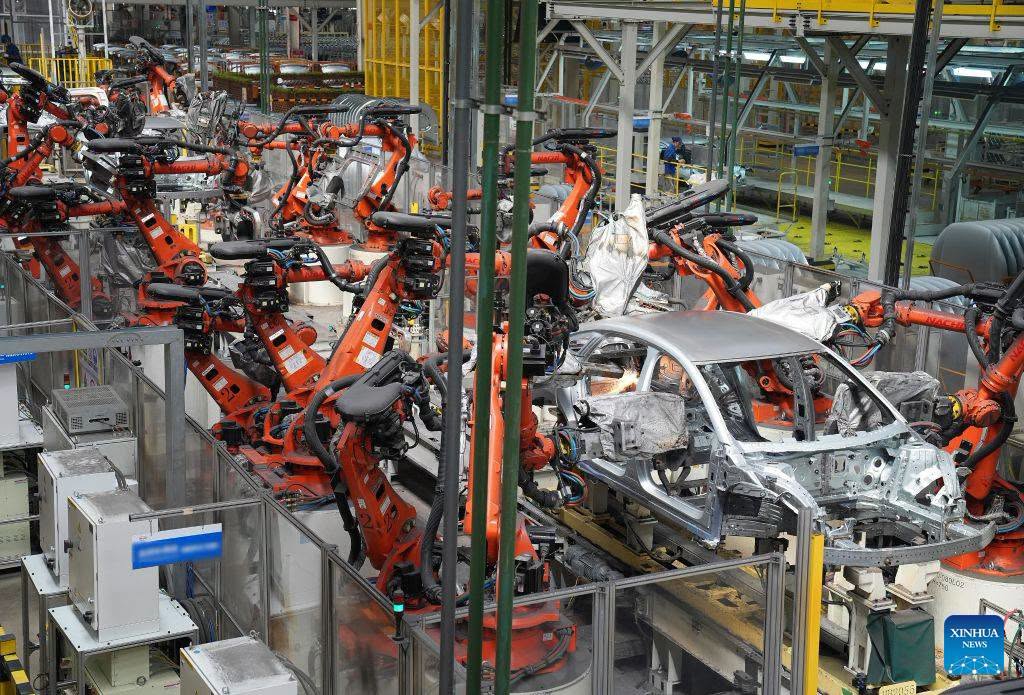
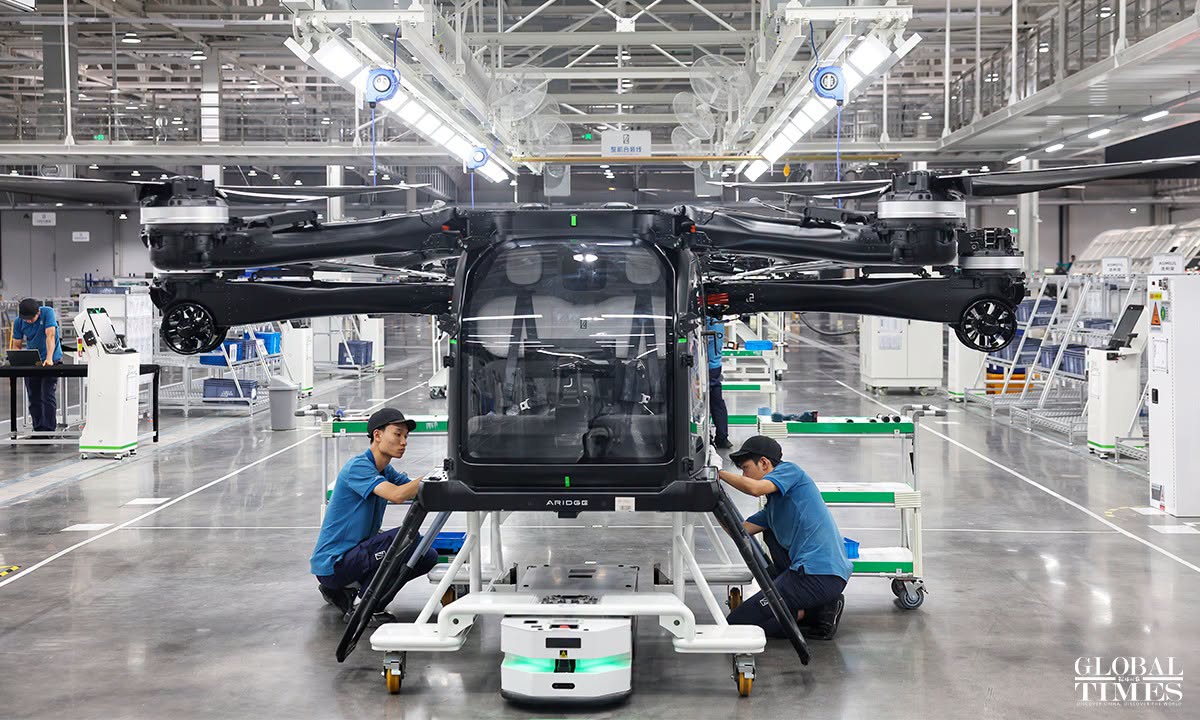
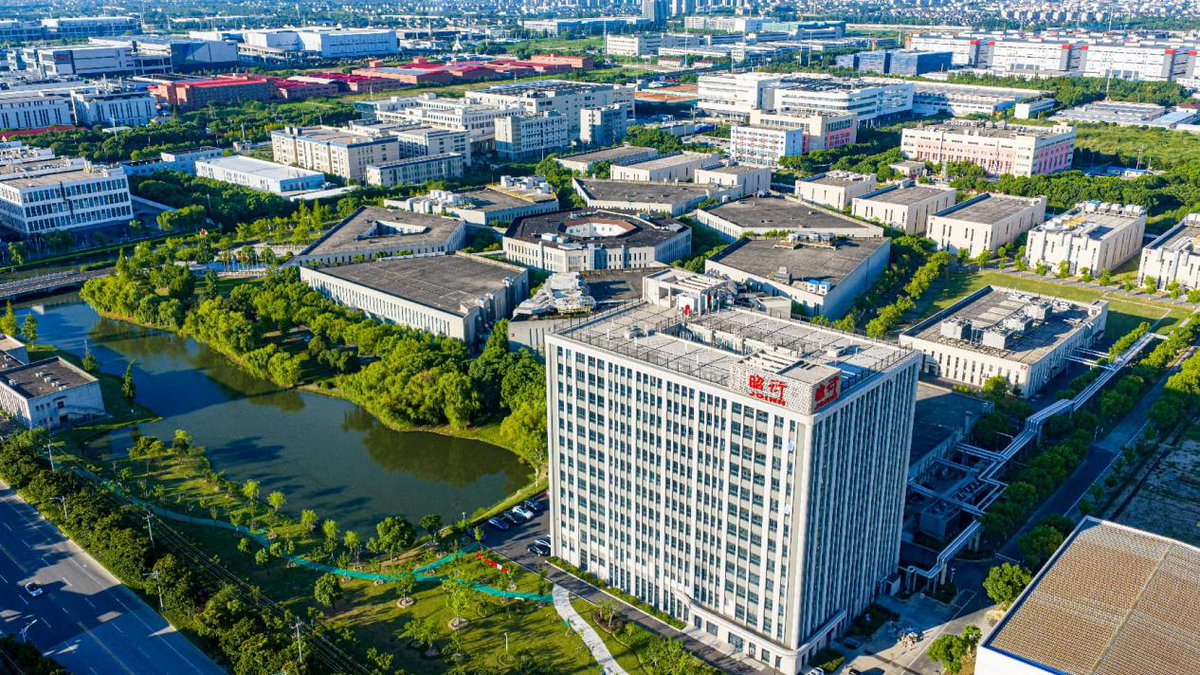
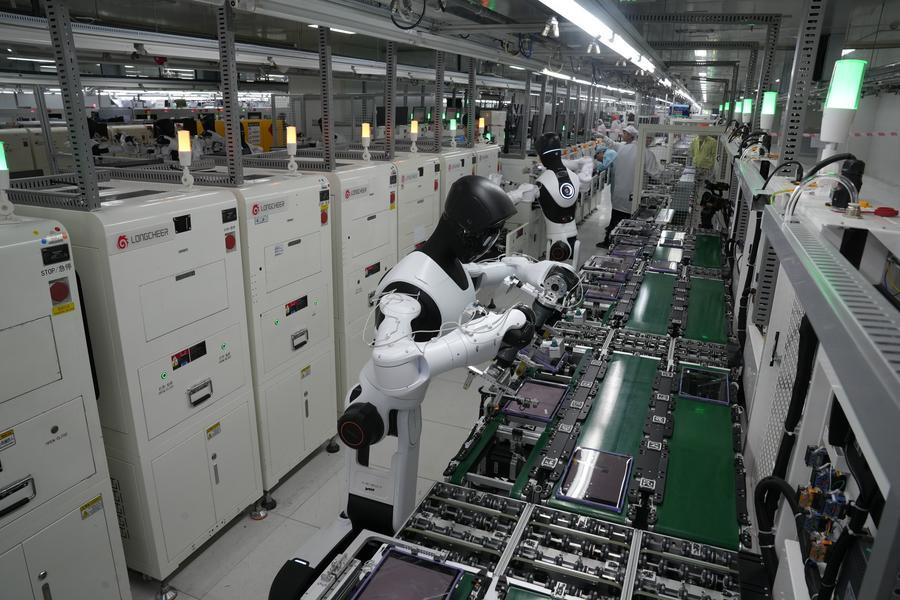
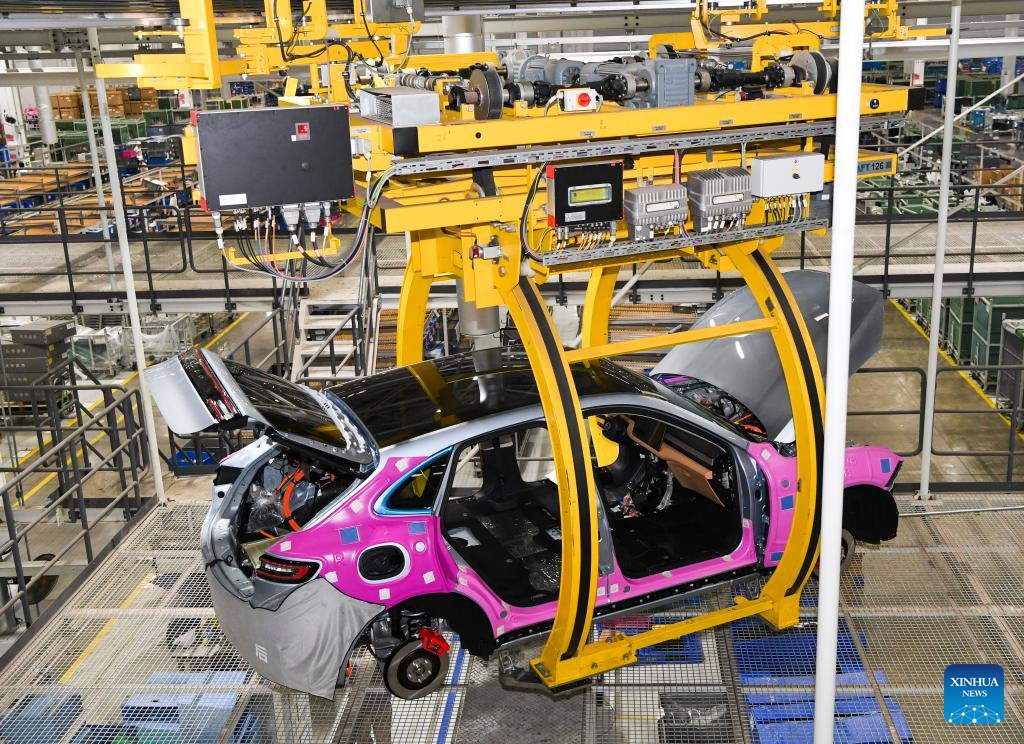
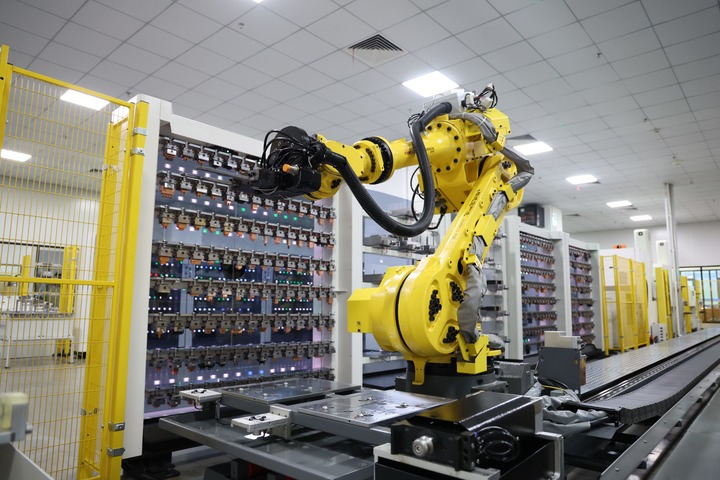
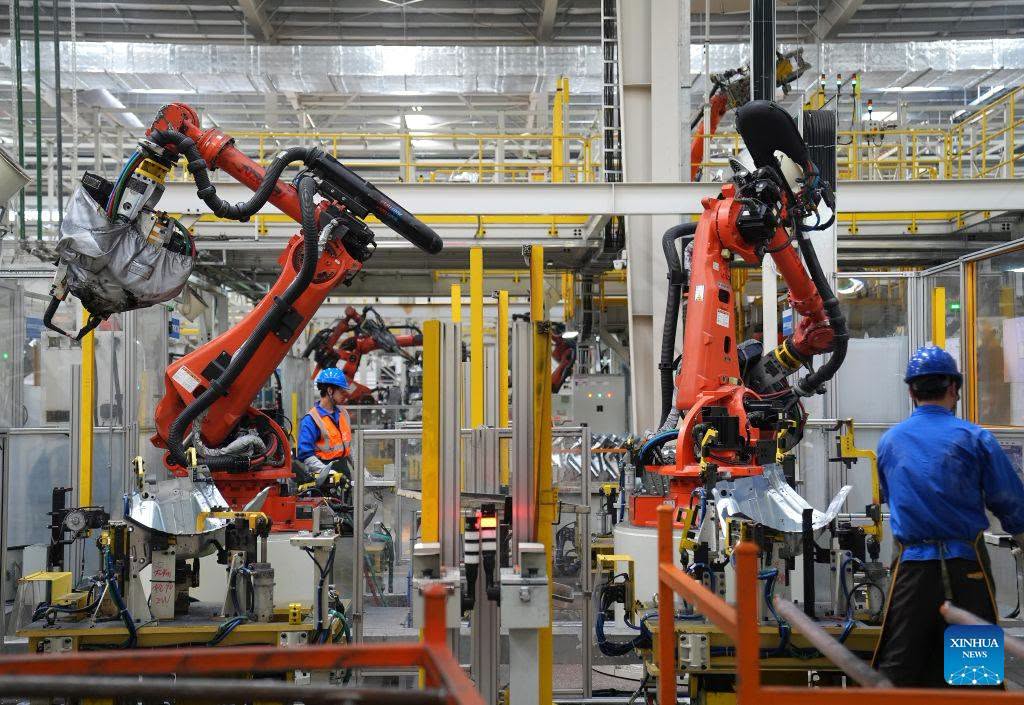
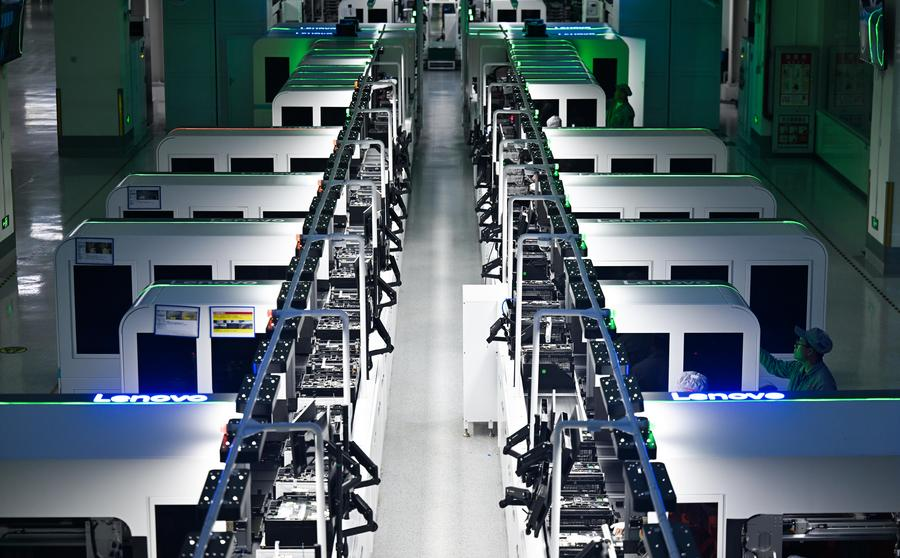
Look inside a Chinese automaker's workshop in Fuzhou, east China's Jiangxi Province, where industrial robots and automated guided vehicles work seamlessly together.
Stamping, welding, painting and final assembly processes run efficiently under full-process digital control here.
The future is here | Check out how AI is rewriting the classroom in China
In classrooms across China, AI is no longer a concept. It's is part of everyday teaching.
Blackboards that understand handwriting, experiments that unfold in 3D, and real-time language feedback are becoming part of daily teaching.
iFLYTEK's AI education solutions are helping teachers teach better and students learn more deeply. One step at a time, AI is making quality education more accessible and more engaging for the next generation.
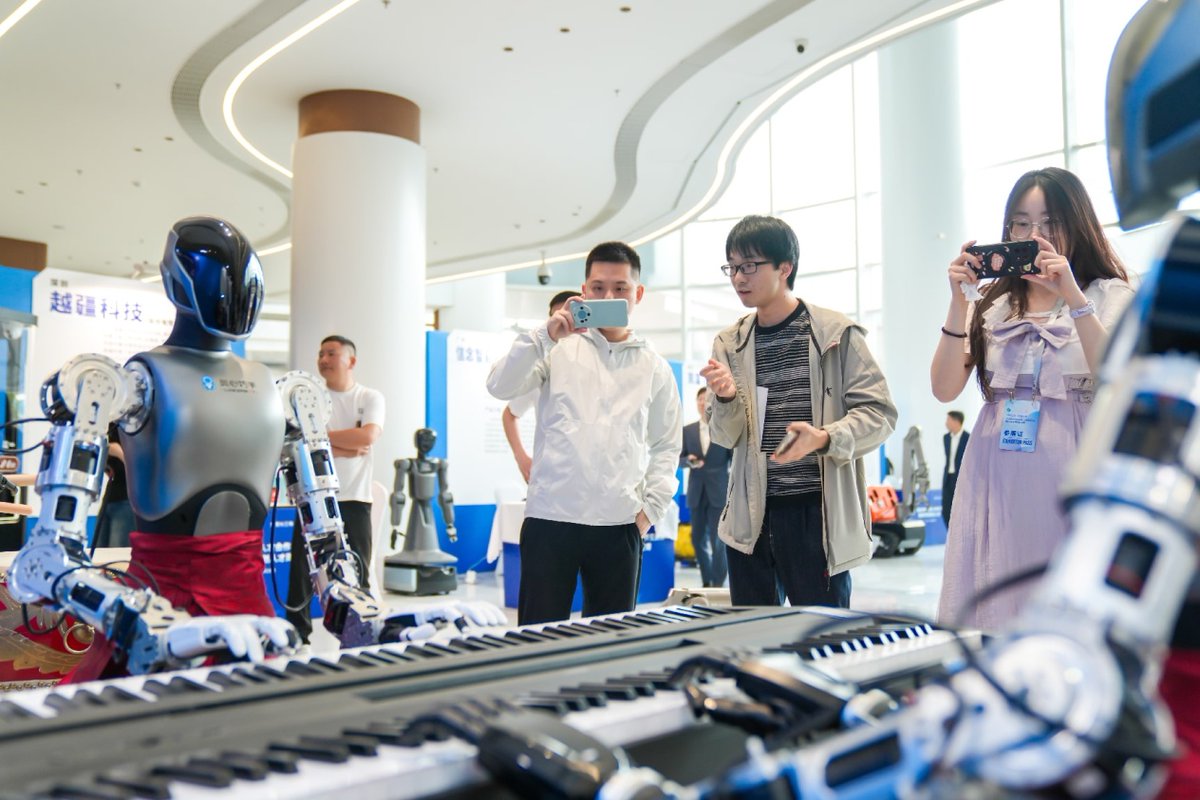
China's robots move from stage to shop floor
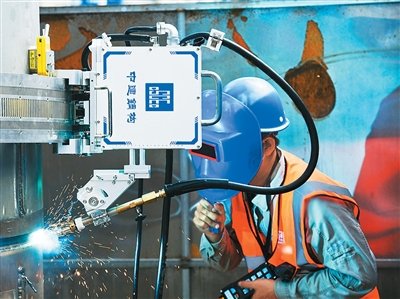
At a plant run by China Construction Steel Structure Corp. Ltd., a subsidiary of construction giant CSCEC, robots now handle high-altitude welding, rust removal and heavy material transport. Thanks to this, workers have shifted to overseeing equipment, monitoring automated systems and checking quality.
In the Tengger Desert, a wheel-legged robot made by Deep Robotics, a maker of quadruped and humanoid robots and core components, helps with sand control — its rugged casing keeping wind-blown grit out of its joints.
Scenes like these are becoming common across China's industries, as robots with more flexible limbs and stronger interactive abilities move out of controlled environments and into the field.
China became a net exporter of industrial robots in 2025, customs data shows, with exports surpassing imports for the first time — a milestone for a sector that has expanded rapidly in recent years.
Read Full: https://t.co/J39PZaNeGn
China rolls out "token factories" to drive AI economy
As AI applications gain momentum, China is accelerating the rollout of "token factories" in a bid to build an economic order suited to the AI era.
Every time a user prompts an AI model to generate code, images or video, tokens are consumed behind the scenes. In March, China adopted "ciyuan" as the official Chinese term for "token," giving its AI services a standard unit for measuring, settling and tracking usage -- similar to how electricity is measured in kilowatt-hours.
In late September, Beijing unveiled an action plan to accelerate the development of the token economy for 2026-2028. "This is the first provincial-level policy in China specifically dedicated to the token economy," said Zhang Jinrui, an official with the Beijing Municipal Bureau of Economy and Information Technology.
"With the rollout of Beijing's new policy, tokens are no longer just a technical term associated with large models. The token economy has officially entered a stage of industrial application and institutional development," said Liu Yong, president of the Beijing-based Zhongguancun Internet Finance Institute.
The Beijing action plan calls for building world-class token factories and establishing tiered evaluation standards, with throughput capacity, time to first token, PUE (power usage effectiveness) and cache hit rate as core metrics, to ensure the large-scale supply of high-quality tokens.
Read Full: https://t.co/zyNKPtVdkC
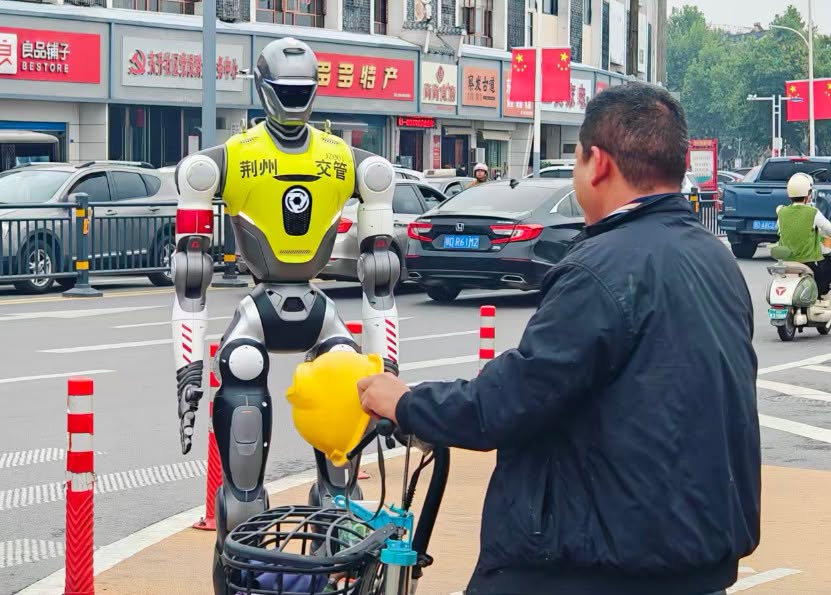
Smart traffic police robot directs traffic in Jingzhou, C China's Hubei
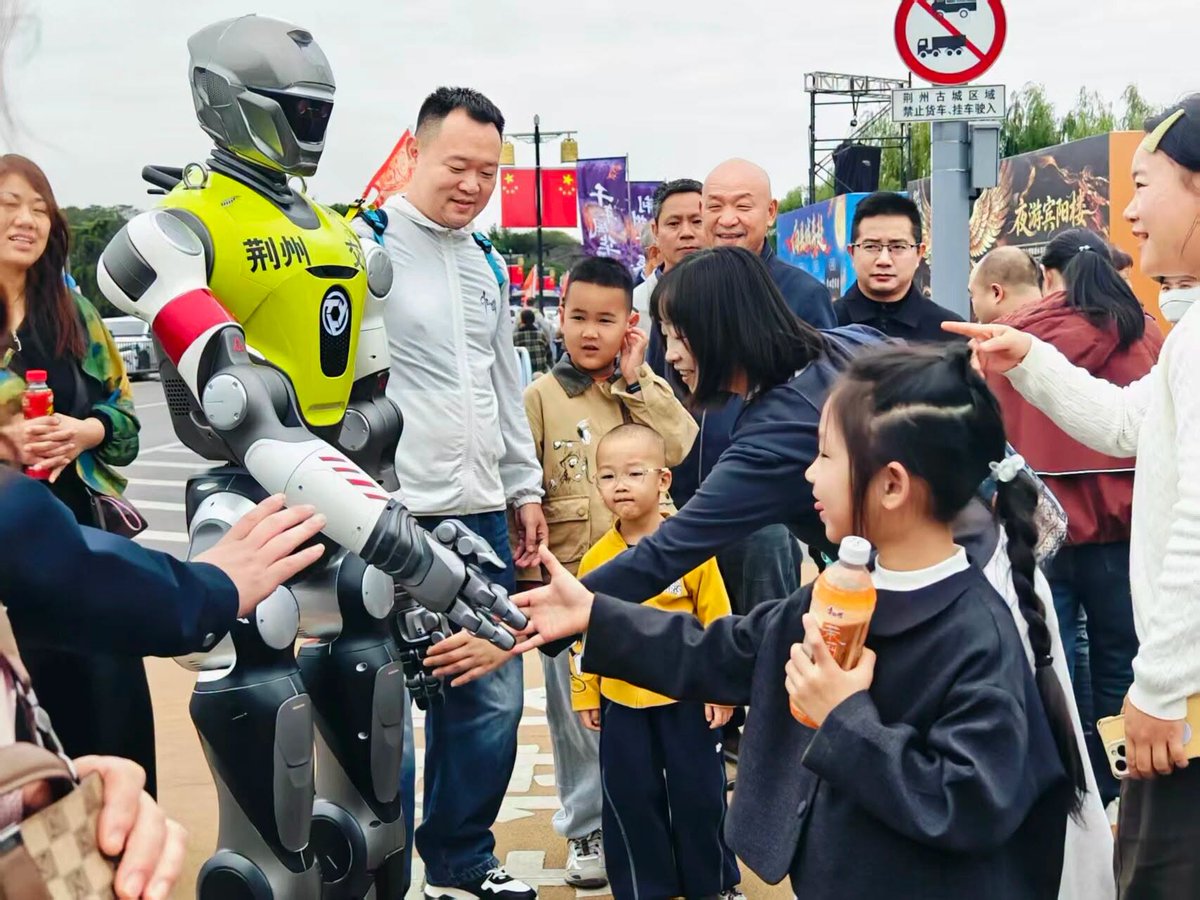
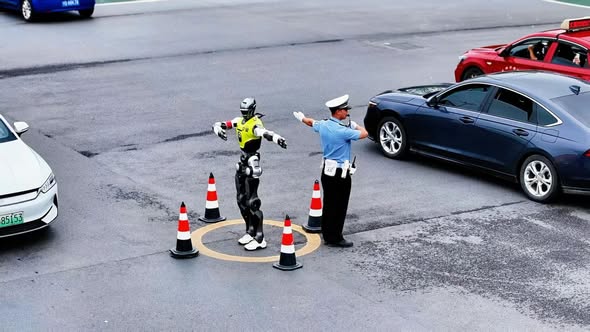
A smart traffic police robot has joined officers on duty at a busy intersection in the Jingzhou Ancient City, a national 4A-rated tourist attraction in central China's Hubei Province, helping direct traffic and keep pedestrians safe.
The robot — named Xiao'an, standing 1.73 meters tall and designated JZ001 — began working at the intersection outside the east gate of Jingzhou Ancient City on the morning of Oct. 3.
The robot coordinates with traffic lights and uses standard hand signals to direct vehicles, while audio prompts remind drivers and pedestrians to follow traffic rules.
It also supplements the officers during busy periods, when holiday crowds and heavier vehicle traffic put added pressure on the intersection.
Read full: https://t.co/NvI8xlSp7R
China's Long March legacy endures from trek to tech
One of the most visible legacies of the Red Army's Long March, a roughly 12,500-km military odyssey that ended 90 years ago, may well be an active rocket family that bears the same name.
Among the world's busiest launch vehicles, China's Long March rockets have for more than half a century carried satellites, crewed spacecraft and scientific probes into orbit and beyond, helping open the country's path to space.
The journey behind these Chinese rockets echoes that of the Red Army: both were marked by immense hardships, determined perseverance, and the resolve to press ahead against the odds.
Read full: https://t.co/MLWrqzC6Nk
Why the world is looking east: The growing global appeal of China's innovation ecosystem
One way to gauge a region's appeal to investors and entrepreneurs is to listen to those already embedded in its ecosystem. Take a European founder based in Shenzhen, south China's Guangdong province, who has called the city home for over a decade. He reports receiving daily inquiries from overseas startup leaders eager to visit, explore partnerships, or establish operations in China.
The steady stream of visitors eager to explore Shenzhen and its tech companies offers a glimpse into the growing global interest in China's innovation ecosystem.
This is no fleeting trend. It underscores investors' confidence in China and their optimism about the country's prospects. The steady flow of overseas technology delegations, increasingly regular cross-border business discussions, and growing interest in "looking east" go beyond conventional economic and trade ties. They offer a vivid illustration of how the world is gaining a new understanding of China and seeking opportunities for cooperation and shared development.
Increasingly, entrepreneurs, researchers, and investment institutions from around the world are traveling to China to learn firsthand about its innovation mechanisms, industrial dynamics, and development pathways. Looking back at China's evolving economic and trade ties with the world, this surging eastward focus marks a profound shift and more comprehensive, objective recognition of China's development.
Read full: https://t.co/hbwJAbYVKg
The first "Land Aircraft Carrier" flying car intended for use in the UAE's advanced low-altitude aviation regulatory demonstration zone rolled off the mass-production line in Guangzhou, south China’s Guangdong Province on Tuesday, marking a step forward in China-UAE cooperation on next-generation transportation.
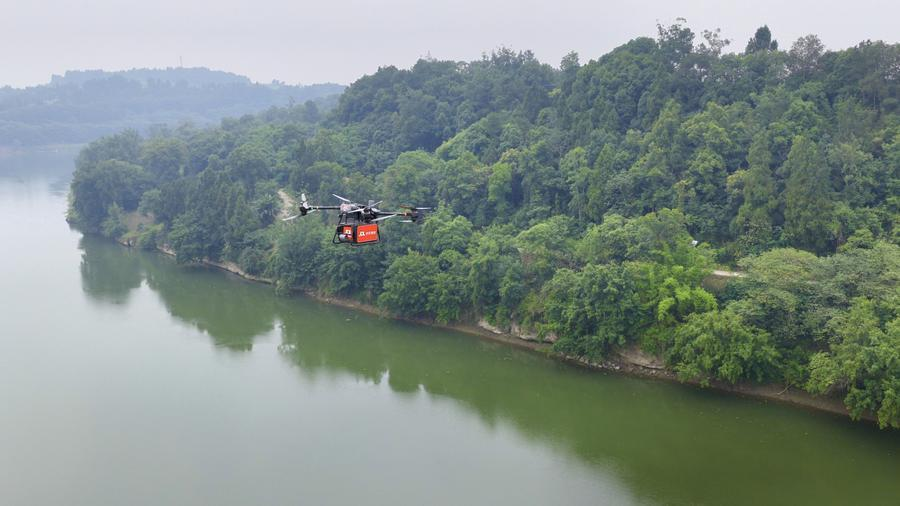
With around 85% of its terrain consisting of hills, Zizhong County in southwest China's Sichuan Province is turning to drones to speed up last-mile deliveries, where winding roads often slow down courier services. The county currently operates 131 drone routes serving 131 villages and plans to expand coverage to all 301 villages by the end of the year.
A “giant snake” on a power line? Not quite.
This is a self-developed snake-like power line inspection robot deployed by China Southern Power Grid in Kunming, southwest China's Yunnan Province, for detailed power line inspections.
Equipped with cameras, thermal imagers and other sensors, the robot can autonomously crawl and navigate obstacles for round-the-clock operations with intelligent diagnosis of power line safety hazards, effectively addressing the limitations of manual and drone inspections.
The future is here: Where city and nature coexist in China's smallest reserve
Nestled amid the hustle and bustle of Shenzhen, a metropolis in south China's Guangdong Province, the Futian Mangrove Nature Reserve is China's only national nature reserve located in the heart of a city — also the smallest — and serves as a vital stopover along the East Asian–Australasian Flyway.
Spanning 367 hectares, the mangrove wetland is home to 273 bird species, including 60 under national protection. In 2026, 341 black-faced spoonbills — out of a global population of just 7,746 — were recorded here, accounting for 4.4% of the world’s total.
To protect this precious habitat amid urban development, the reserve employs digital technologies such as AI-powered bird recognition, drone patrols, and intelligent sluice gate control, demonstrating how urban life and nature can coexist and thrive in harmony.
China leads the world in innovation clusters
The World Intellectual Property Organization (WIPO) recently released its 2026 ranking of the world's top 100 innovation clusters. China accounted for 25 clusters on the list, ranking first globally for the fourth consecutive year. The Shenzhen-Hong Kong-Guangzhou, Beijing, and Shanghai-Suzhou clusters all ranked among the top 10.
The ranking identifies regions with concentrated innovation activity based on indicators including international patent applications, scientific publications, and venture capital transactions. China's consistent strong showing on the list, with innovation clusters flourishing across multiple regions, demonstrates both the scale and depth of its innovation ecosystem.
This leadership reflects years of strategic investment in coordinated regional tech development. Regional innovation networks have become a key pillar of the national innovation framework and provide a vital foundation for building China into a leading country in science and technology.
Read full: https://t.co/o21fsMYW9x
China's space program opens new frontiers for international collaboration
On Sept. 14, a special gift from the far side of the moon went on display at the United Nations headquarters in Vienna, Austria. Lunar regolith samples collected by China's Chang'e-6 mission, formally donated to the United Nations, will be permanently exhibited there.
Brought back to Earth by a Chinese spacecraft, this carefully preserved material symbolizes humanity's collective pursuit of cosmic discovery.
Oct. 8 marked the 70th anniversary of China's space program. Milestones ranging from Tianzhou supply missions to China's space station, to breakthrough research based on Chang'e-6 lunar samples, illustrate a trajectory defined by both indigenous innovation and global partnership. China's ever-evolving "space suitcase" tells a story of remarkable advances in independent innovation over seven decades. It also reflects China's openness to the world and its commitment to space exploration through international cooperation.
Space exploration is a shared endeavor for all humanity. China's "space suitcase" has always had room for international partners.
Read Full: https://t.co/zVRFTW9WyV
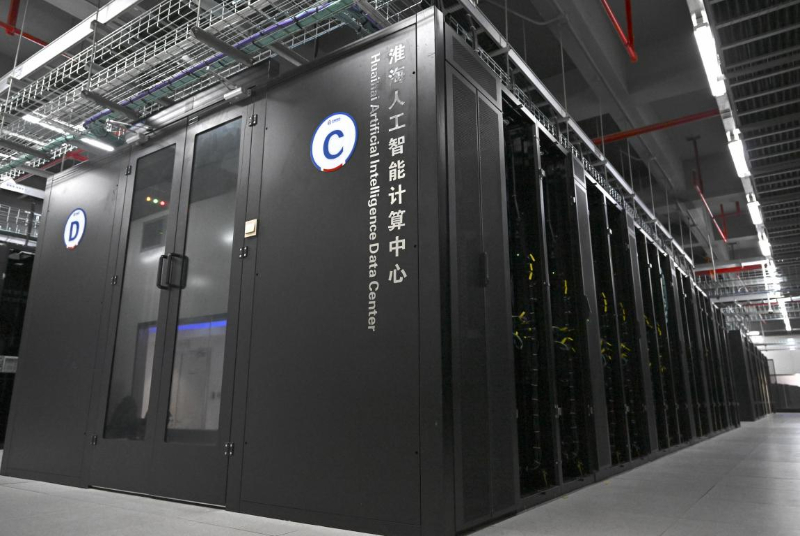
By the end of September, China's smart computing power reached 2,592 EFLOPS, up 146% YoY, according to the Ministry of Industry and Information Technology (MIIT).
EFLOPS refers to a unit measuring computing performance, with each unit representing 1 quintillion floating-point operations per second.
China is drafting policies for next-generation smart manufacturing to integrate AI across the entire manufacturing chain and develop new manufacturing models that help firms cut costs, raise efficiency and better meet diverse market demands, the Ministry of Industry and Information Technology (MIIT) said Tuesday.
A tiered approach will be taken to build smart factories and upgrade equipment, with basic and advanced factories expanding digital systems and AI use while top-tier plants explore next-generation architectures and future manufacturing models. Support will also target smarter machine tools, robots, inspection and control equipment, as well as industry-specific models and industrial AI agents.
Beyond domestic efforts, China will expand international cooperation in smart manufacturing, leveraging mechanisms such as BRICS to share standards and experience, and help partners build smart factories.
China has already built over 13,000 advanced-level smart factories, and more than 1,000 application scenarios have been formed across 20 industries including steel, automobiles and pharmaceuticals.
A group of Chinese scientists has uncovered the mystery behind how an ancient gene regulates the development of brain folds, shedding new light on the evolution of the human brain. The findings were recently published in Nature Genetics.
The traditional view holds that the expansion of the primate cerebral cortex was primarily driven by newly evolved genes. However, Chinese researchers proposed an alternative possibility: certain ancient and highly conserved genes could also play a key role in human brain evolution by reshaping their expression levels through changes in regulatory elements.
The team compared transcriptomic data from different layers of the embryonic cerebral cortex of mice, tree shrews, marmosets, macaques and humans. They found that an ancient gene called "CCNB1IP1" was already expressed in the brain of the tree shrew, a close relative of primates, long before primates emerged but at relatively low expression levels.
The team further discovered that during the following course of evolution, the expression level of this ancient gene showed a clear stepwise increase among tree shrews, marmosets, macaques and humans, reaching its highest level in the human brain.
China's commercial reusable rocket Nebula-2 is on track, its developer said, with structure, propulsion, recovery, navigation and ground control all advancing on schedule.
Highlights include:
-Carrying up to 25 tonnes to low Earth orbit.
-An 11-engine first stage producing 12,446 kilonewtons of liftoff thrust; a single vacuum-optimized Thunder-RS engine on the second stage.
-Designed for more than 20 reuses, with a "chopstick-style" system that catches the rocket at the launch site rather than landing it elsewhere, cutting turnaround time.
The Shenzhou-23 crew aboard China's Tiangong space station has made new progress in the country's first multi-generational rice cultivation in orbit, completing a new round of sample collection, sowing and storage for the groundbreaking space rice research project.
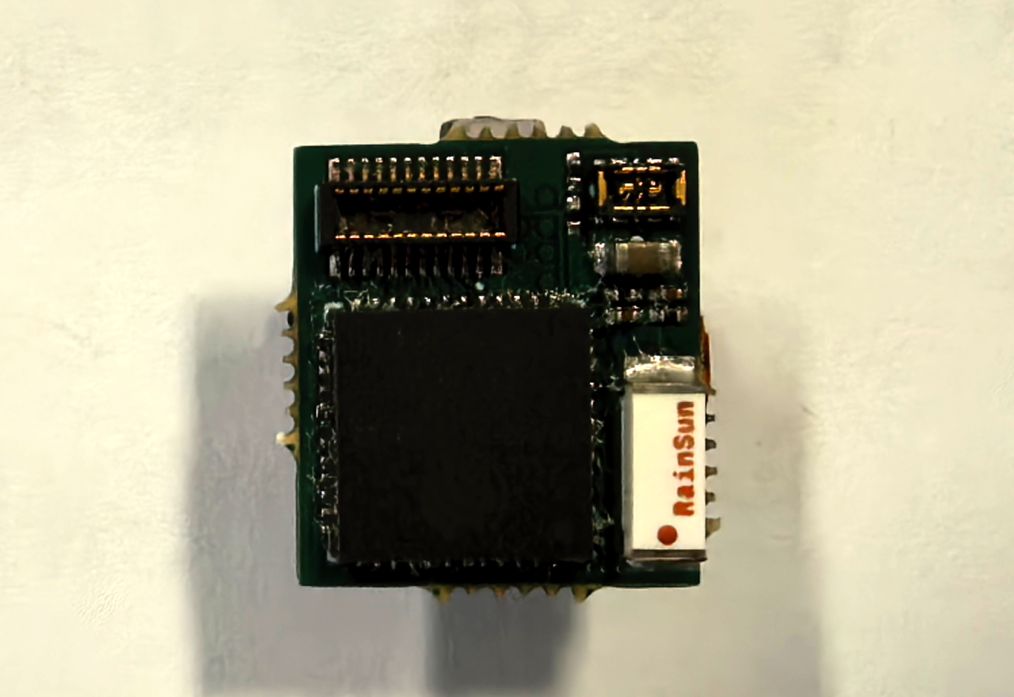
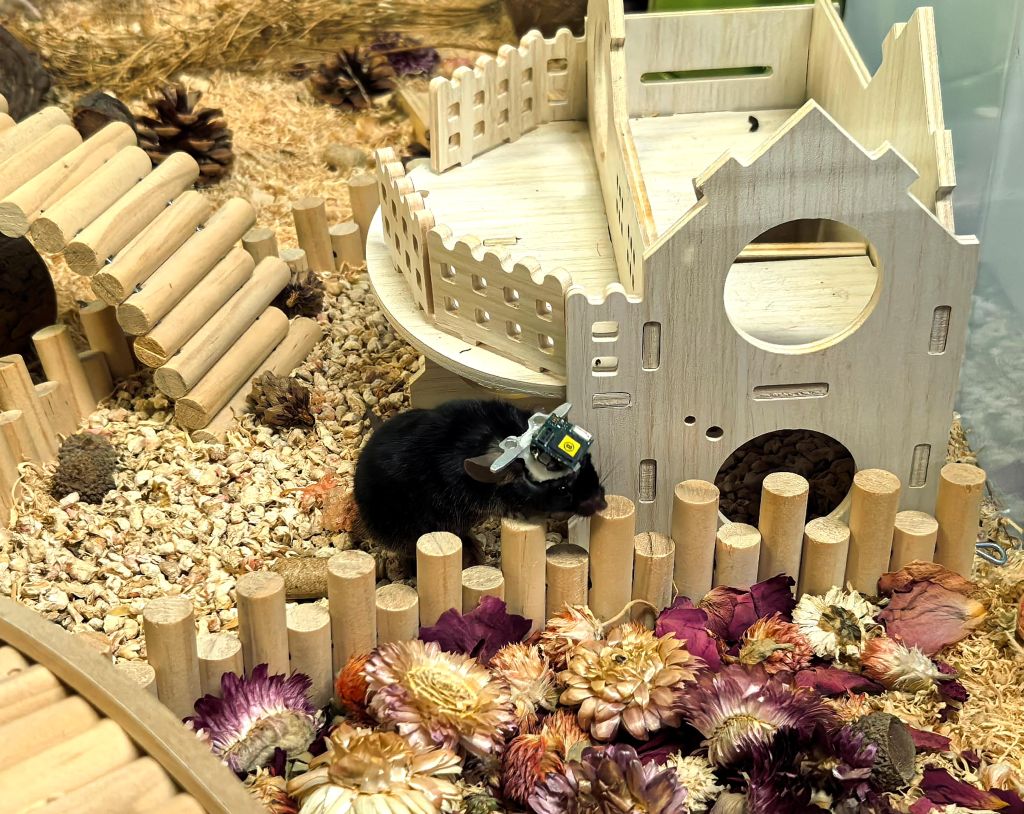
Chinese scientists have successfully developed a 1-gram wireless mesoscopic microscope called Airscope, billed as the world's lightest megapixel device of its kind. It enables large-scale, high-resolution wireless imaging of neural activity in the brains of naturally behaving animals, offering a new tool for neuroscience research and brain-computer interface (BCI) development.
In terms of imaging capabilities, Airscope can simultaneously record more than 8,500 cortical neurons in a single mouse, 25 times the capacity of existing wireless devices. It can also maintain stable recordings from the same brain region for more than 200 days, with signal quality comparable to that of conventional benchtop microscopes.
Chinese scientists have found genetic evidence that early millet-farming populations in northern China originated locally rather than emerging from a major influx of migrant agricultural groups, according to research published in the journal Science Advances.
The research analyzed genome-wide data from seven ancient individuals at the Donghulin site in Beijing and the Dengcaogouliang and Sitai sites in Zhangjiakou, North China's Hebei Province, combined with carbon-14 dating and stable isotope evidence. It covers a period from about 11,000 to 7,300 years ago. Combining ancient genomics, archaeological remains and dietary evidence, it has revealed the genetic continuity and local origin of millet-related populations in the region.