I guess too much talking about financial modelling, capital raising, business valuation, and co at work (as a marketer) have made me develop an interest in finance. Currently taking a financial modelling course 😭. Let's see where it leads me
These achievement milestones for women have really encouraged me 🥰.
Let’s make it a habit to discuss this more often, it encourages young ones like us to keep pushing 🥰.
As we have come to end of this cohort of financial modeling @FintelligenceA, I was going through the financial models built by our students and I am impressed by their performance.
A lot can now build three statements and balance it on their own, just from our life classes and-
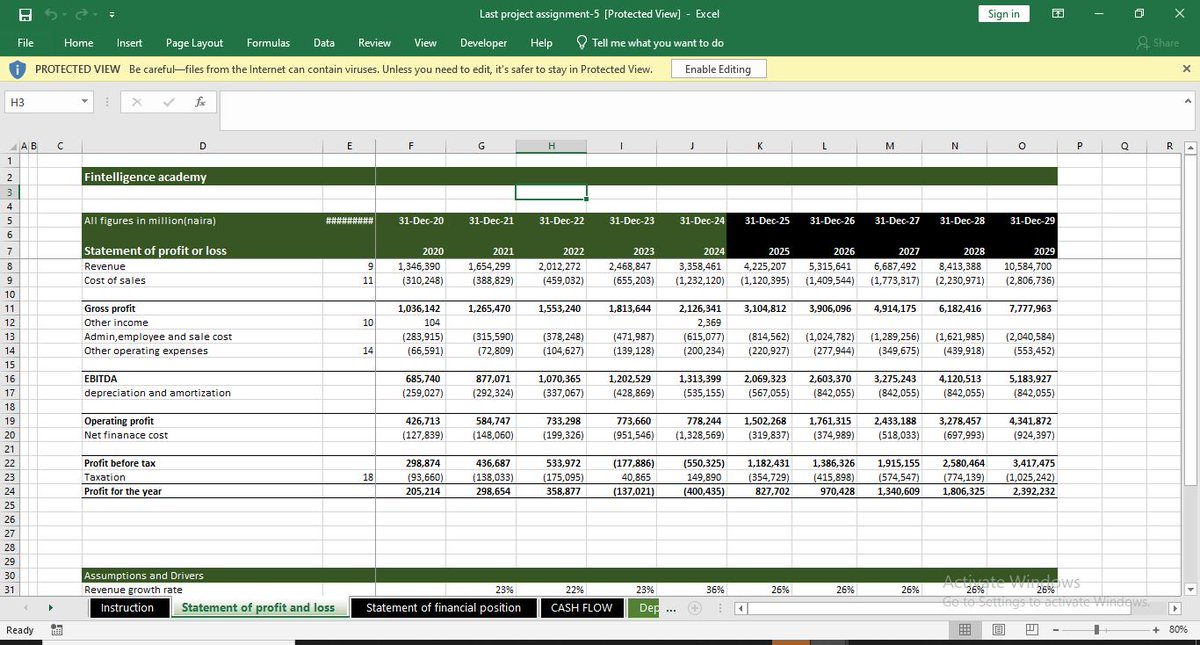
I think the fastest way to run mad is to try building a financial modeling from scratch as a beginner because even though I have managed to balance this model with some tricks, I know deep down that something is wrong with cash and cash equivalent line.
To anyone switching into accounting and finance without an accounting degree: here is my advice
You’re not behind, but you do need to close the gap fast. Accounting graduates have spent 4 years drilling debits, credits, and how the statements actually flow. You’ll be competing with that, so build the same foundation on your own terms.
Do the following:
1. Learn the basics while you chase the qualification
ICAN or ACCA won’t teach you what a trial balance is or why accruals matter. They assume you know it. Spend 4-6 weeks getting solid on double entry, ledgers, P&L vs Balance Sheet, VAT basics, and how cash flow links to profit. There are resources on YouTube or take courses on Udemy and coursera
2. Get practical skills recruiters test for
Excel is non-negotiable pivot tables, VLOOKUP/XLOOKUP, basic formulas. Add Xero, QuickBooks, or Sage if you can. Most graduate interviews will ask you to walk through a journal entry or explain a variance , you need to talk the language, not just pass exams.
3. Don’t do qualifications in isolation
ICAN is valuable in Nigeria, but it’s theory-heavy. Pair it with real work like internships, volunteer bookkeeping for an SME. Employers hire for proof that you can do the job, not just that you’re studying.
4. Find a mentor inside the profession
Someone 3-5 years ahead of you who can review your CV, tell you which roles to target, and talk you through your first month on the job when you’re stuck on reconciliations . Ask directly.
Most accountants remember what it felt like to start and will help if you’re specific about what you need.
The switch is doable. The people who make it aren’t the ones with the perfect degree but they’re the ones who treat the fundamentals like a job and get their hands dirty early.
You also need to ask yourself what area of accounting are you aiming for audit and assurance, tax, financial accounting, investment banking, management accounting etc, that changes what you should learn first.
Spending my little free time from work to complete this financial model practice I have been working on for the past two weeks now
How long should it take to complete a model ? I'm this close to madness who even send me🤔