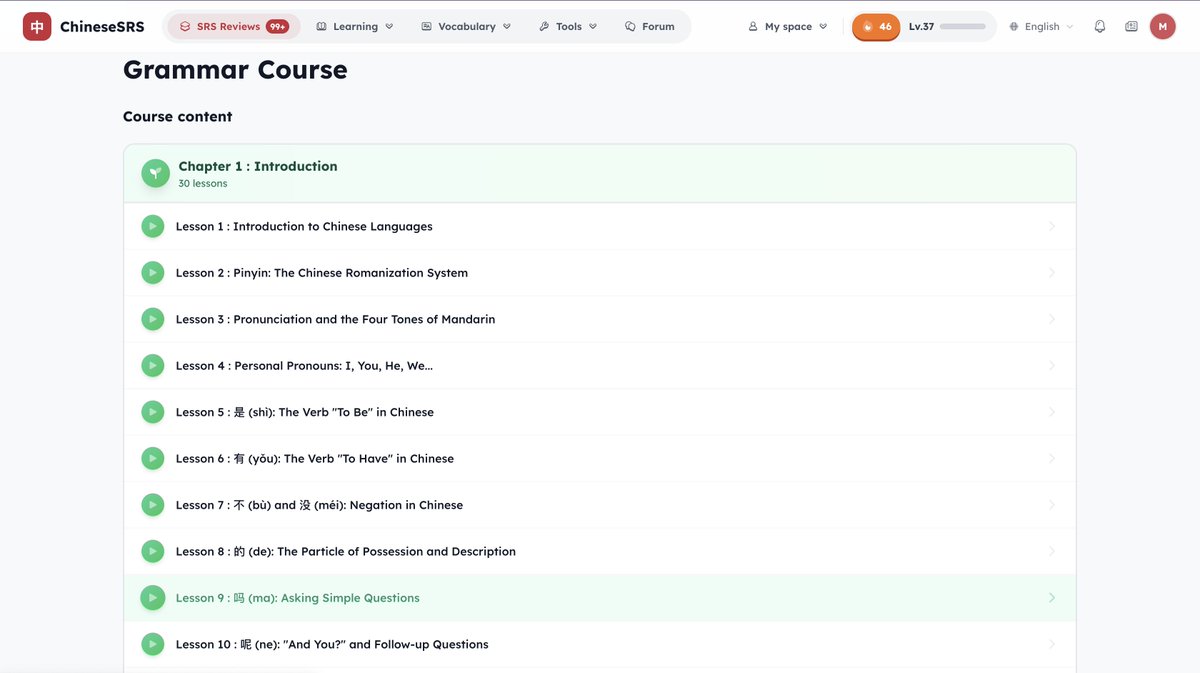
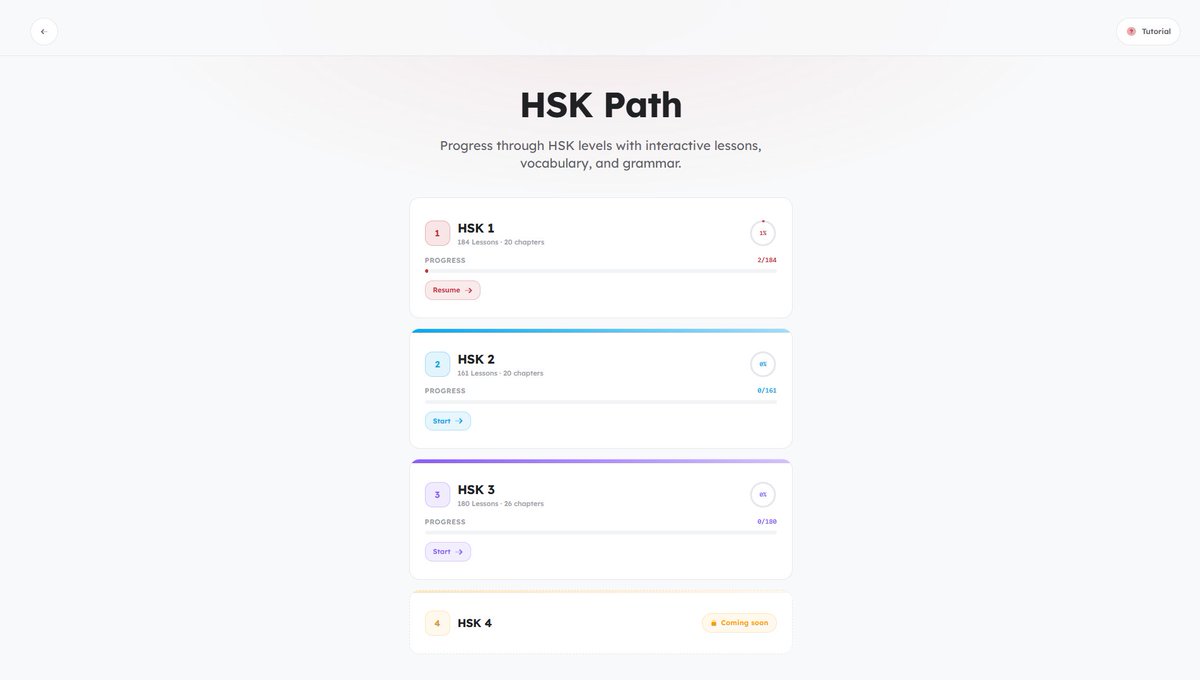
For anyone who wants to learn Chinese 🇨🇳 but doesn’t know where to start, this post is for you!
-Our SRS system (which allows you to review the words you need at any time)
-Grammar lessons (step-by-step)
-Writing Sheets (Select the characters you want to practice with)
-Our Graded Readings Graded reading + audio (context = faster progress)
If you want to try it: https://t.co/u5ahGWMMRN
👇Screens below (this is what it looks like in practice)
Phone & messaging vocabulary in Chinese 📱💬🇨🇳
To call: 打电话 (dǎ diànhuà)
To text: 发短信 (fā duǎnxìn)
Missed call: 未接来电 (wèi jiē lái diàn)
Voicemail: 语音信箱 (yǔyīn xìnxiāng)
To hang up: 挂电话 (guà diànhuà)
Signal: 信号 (xìnhào)
Notification: 通知 (tōngzhī)
Screen time: 屏幕时间 (píngmù shíjiān)
To mute: 静音 (jìngyīn)
Group chat: 群聊 (qún liáo)
Voice message: 语音消息 (yǔyīn xiāoxi)
To block: 拉黑 (lā hēi)
Are there any other useful vocab lists you'd like to see in a future post? 👇
Chinese everyday objects often explain themselves 🇨🇳
钱包 (qiánbāo)
money + bag = wallet
书包 (shūbāo)
book + bag = school bag
水杯 (shuǐbēi)
water + cup = water cup
房门 (fángmén)
room + door = room door
钥匙 (yàoshi)
key = key
雨衣 (yǔyī)
rain + clothes = raincoat
Useful vocab with 放 (fàng) 🕊️
🕊️ 放开 (fàngkāi) to let go / to release
🏖️ 放假 (fàngjià) to have a holiday / day off
😌 放松 (fàngsōng) to relax / to loosen up
🎆 放烟火 (fàng yānhuǒ) to set off fireworks
📺 放映 (fàngyìng) to screen / to project a film
🚿 放水 (fàngshuǐ) to run water / to let slide
🎙️ 放声 (fàngshēng) to raise one's voice / to sing out loud
Are there any other characters you'd like a vocab list for a future post? 👇
The fastest way to stop mixing up 刚 / 刚才 🇨🇳
Both can mean “just”.
But they are not used the same way.
刚 = just did something
Use 刚 right before the verb. It focuses on the action being very recent.
我刚到。
wǒ gāng dào
I just arrived.
他刚走。
tā gāng zǒu
He just left.
刚才 = just now / a moment ago
Use 刚才 like a time expression. It refers to a recent moment in the past.
刚才你去哪儿了?
gāngcái nǐ qù nǎr le?
Where did you go just now?
我刚才给你打电话了。
wǒ gāngcái gěi nǐ dǎ diànhuà le
I called you just now.
Easy rule:
刚 + verb = just did something
刚才 = just now / a moment ago
Putting it before a verb?
Use 刚.
Talking about the moment “just now”?
Use 刚才.
Some weeks you study Chinese every day.
Other weeks life happens and you touch nothing for 10 days.
Then you come back and half of what you knew feels gone.
That's not bad luck. That's how memory works.
Here's the real difference between sporadic and daily learning:
The forgetting curve hits hardest in the first 24 to 48 hours after learning something new, daily review catches words right before they disappear
A 10-day gap means relearning, not reviewing, you're not picking up where you left off, you're starting over on most of it
Sporadic learners spend 60% of their study time recovering lost ground instead of making new progress
Daily learners compound, each session builds on the last, vocabulary stacks instead of resets
Even 10 minutes a day maintains more than 2 hours once a week, the frequency matters more than the duration
The math is brutal.
7 sessions of 15 minutes = 105 minutes of real progress.
1 session of 2 hours after a week off = 30 minutes of real progress, the rest is recovery.
Learning by bursts feels intense. It's actually inefficient.
Daily learning feels slow. It's actually the fastest route to fluency.
The gap between these two learners doesn't show in week one.
It shows in month six, when one is holding conversations and the other is still relearning the same 200 words.
ChineseSRS is built around daily sessions short enough to never skip and smart enough to make every minute count.
👉 https://t.co/mamQOPetPf
Just followed us? Welcome 👋
If you’re learning Chinese, don’t do it alone.
We have a Discord server where you can ask questions, share your progress, meet other learners, and stay updated on ChineseSRS
Join us here: https://t.co/0sM1MKSP9L
Useful vocab with 找 (zhǎo) 🔍
🔍 找到 (zhǎodào) to find / to locate
💼 找工作 (zhǎo gōngzuò) to look for a job
💰 找钱 (zhǎoqián) to give change
🤝 找人 (zhǎo rén) to look for someone
📂 寻找 (xúnzhǎo) to search / to seek
❓ 找麻烦 (zhǎo máfan) to cause trouble / to look for trouble
🗺️ 找路 (zhǎo lù) to find one's way
Are there any other characters you'd like a vocab list for a future post? 👇
The fastest way to stop mixing up 马上 / 立刻 🇨🇳
Both can mean “immediately”.
But they don’t feel exactly the same.
马上 = right away / very soon
Use 马上 when something will happen soon. It’s common, natural, and flexible.
我马上来。
wǒ mǎshàng lái
I’ll come right away.
他马上就到。
tā mǎshàng jiù dào
He’ll arrive very soon.
立刻 = immediately / at once
Use 立刻 when there should be no delay. It feels stronger, stricter, and more formal.
请立刻离开。
qǐng lìkè líkāi
Please leave immediately.
他听到消息后,立刻出发了。
tā tīngdào xiāoxi hòu, lìkè chūfā le
After hearing the news, he left immediately.
Easy rule:
马上 = soon / right away / flexible
立刻 = immediately / no delay / stricter
Speaking naturally?
Use 马上.
Giving a strict or urgent instruction?
Use 立刻.
You said something wrong in front of a native Mandarin speaker.
Your face went red. You wanted to disappear.
Every learner knows that feeling. Here's how to reframe it completely:
Native speakers don't judge your mistakes, they respect the fact that you're even trying, most people never attempt a language as hard as Mandarin
A mistake in front of a native speaker is worth 100 mistakes alone at your desk, the emotional weight makes it stick in your memory permanently
The native speakers who correct you are doing you a favor, the ones who say nothing and smile are the ones slowing you down
Fluent speakers made thousands of embarrassing mistakes before reaching fluency, every single one of them
Perfection is not the goal of a conversation, communication is, and communication works even when grammar breaks
The mindset shift that changes everything?
Stop seeing native speakers as judges.
Start seeing them as free teachers.
Every correction is a free lesson you didn't have to search for.
Every awkward silence teaches you exactly which word you need to drill next.
The most dangerous learner is not the one who makes mistakes.
It's the one who stays silent to avoid them.
Speak badly. Speak often. Improve faster.
And the more words you know cold, the less your brain freezes under pressure, and the more confident you feel opening your mouth.
ChineseSRS builds that confidence word by word, review by review.
👉 https://t.co/mamQOPetPf
Asking for directions vocabulary in Chinese 🗺️🧭🇨🇳
Where is: 在哪里 (zài nǎlǐ)
Turn left: 向左转 (xiàng zuǒ zhuǎn)
Turn right: 向右转 (xiàng yòu zhuǎn)
Go straight: 直走 (zhí zǒu)
Near: 近 (jìn)
Far: 远 (yuǎn)
Crossroads: 十字路口 (shízì lùkǒu)
Traffic light: 红绿灯 (hónglǜdēng)
Bridge: 桥 (qiáo)
Landmark: 地标 (dìbiāo)
On foot: 步行 (bùxíng)
Lost: 迷路 (mílù)
Are there any other useful vocab lists you'd like to see in a future post? 👇
The HSK hack nobody talks about enough:
Read more Chinese.
Flashcards make you remember words.
Reading makes you recognise them fast.
And speed matters a lot in HSK.
You don’t have unlimited time to “think” about every character.
You need to see a word and instantly know:
• what it means
• how it fits the sentence
• what the sentence is saying
• what the question is asking
That comes from reading.
Especially graded reading.
Texts at the right level give you repeated exposure without destroying your brain.
Too easy = boring.
Too hard = painful.
Slightly above your level = progress.
That’s the sweet spot.
On ChineseSRS, readings are built for this.
You can remove pinyin when you’re ready.
Turn translations on or off.
Click words to see details.
Study grammar points inside the text.
Increase character size.
Listen to audio.
Slow it down.
Add words to your SRS.
Beginner → Advanced.
So you’re not just “reading Chinese”.
You’re training your brain to recognise Chinese faster.
And that’s exactly what helps in HSK.
If you want to try it 👉 https://t.co/u5ahGWMMRN
The fastest way to stop mixing up 可能 / 也许 🇨🇳
Both can mean “maybe”.
But they don’t feel exactly the same.
可能 = possible / maybe
Use 可能 when something is possible or likely. It can feel a bit more objective.
他可能不来了。
tā kěnéng bù lái le
He may not come.
这可能是真的。
zhè kěnéng shì zhēn de
This might be true.
也许 = perhaps / maybe
Use 也许 when you are guessing or making a softer personal assumption.
也许明天会下雨。
yěxǔ míngtiān huì xià yǔ
Maybe it will rain tomorrow.
也许他已经知道了。
yěxǔ tā yǐjīng zhīdào le
Maybe he already knows.
Easy rule:
可能 = possible / more objective
也许 = maybe / softer guess
Talking about a real possibility?
Use 可能.
Making a softer guess?
Use 也许.
You open your phone to study Chinese.
Then you check Instagram instead. Just for a minute.
An hour later, nothing.
This isn't laziness. It's your brain doing exactly what it's designed to do.
Here's what's actually going on:
Your brain avoids tasks that feel uncertain, if you don't know exactly what to study, avoidance wins by default
Sessions with no clear end point feel overwhelming before they even start
The bigger the gap since your last session, the more intimidating the next one feels
Perfectionism kills consistency, waiting to "have enough time" means never starting
Your brain associates Chinese with effort, and effort with discomfort, so it reaches for easy dopamine first
How to stop the cycle:
Make the decision zero-effort, same time, same place, every day, no thinking required
Cap your session at 10 minutes on hard days, starting is the only thing that matters
Keep your app on your home screen, friction kills habits, remove every obstacle between you and studying
Never break the chain twice in a row, one missed day is human, two is the beginning of quitting
Remind yourself that 5 minutes of review today saves 30 minutes of relearning next week
The session you keep postponing is never as hard as the version in your head.
You already know what you need to do.
The only variable is whether you start today or tomorrow.
ChineseSRS makes starting effortless. Open the app, your session is ready, your words are waiting, no decisions needed.
👉 https://t.co/mamQOPetPf
Just followed us? Welcome 👋
If you’re learning Chinese, don’t do it alone.
We have a Discord server where you can ask questions, share your progress, meet other learners, and stay updated on ChineseSRS
Join us here: https://t.co/0sM1MKShkd
If you’re preparing HSK 3, don’t just “study Chinese”.
Study what actually moves your score:
• core HSK 3 vocabulary
• common grammar patterns
• listening recognition
• reading speed
• sentence comprehension
• daily spaced repetition
HSK prep is not about studying more.
It’s about studying the right things repeatedly.
If you want to try it 👉https://t.co/u5ahGWMf2f
Chinese medicine & wellness vocabulary in Chinese 🌿🧘
Traditional medicine: 中医 (zhōngyī)
Acupuncture: 针灸 (zhēnjiǔ)
Herbal medicine: 草药 (cǎoyào)
Energy: 气 (qì)
Balance: 平衡 (pínghéng)
Meditation: 冥想 (míngxiǎng)
Tai chi: 太极拳 (tàijíquán)
Massage: 按摩 (ànmó)
Detox: 排毒 (páidú)
Well-being: 健康 (jiànkāng)
Immune system: 免疫系统 (miǎnyì xìtǒng)
Are there any other useful vocab lists you'd like to see in a future post? 👇
Useful vocab with 重 (zhòng/chóng) ⚖️
⚖️ 重要 (zhòngyào) important
🔁 重复 (chóngfù) to repeat / repetition
🏋️ 重量 (zhòngliàng) weight
🎯 重点 (zhòngdiǎn) key point / focus
🔄 重新 (chóngxīn) again / anew / afresh
😟 沉重 (chénzhòng) heavy / serious (burden)
🏆 重大 (zhòngdà) major / significant
Are there any other characters you'd like a vocab list for a future post? 👇
The fastest way to stop mixing up 必须 / 应该 🇨🇳
Both can express obligation.
But they are not the same.
必须 = must / have to
Use 必须 when something is necessary, required, or there is no real choice.
你必须今天完成。
nǐ bìxū jīntiān wánchéng
You must finish today.
我必须现在走。
wǒ bìxū xiànzài zǒu
I have to leave now.
应该 = should / ought to
Use 应该 when giving advice, making a recommendation, or saying what would be reasonable.
你应该多休息。
nǐ yīnggāi duō xiūxi
You should rest more.
我们应该早点出发。
wǒmen yīnggāi zǎo diǎn chūfā
We should leave earlier.
Easy rule:
必须 = strong obligation / no choice
应该 = advice / reasonable expectation
Is it required?
Use 必须.
Is it advice or what someone should do?
Use 应该.