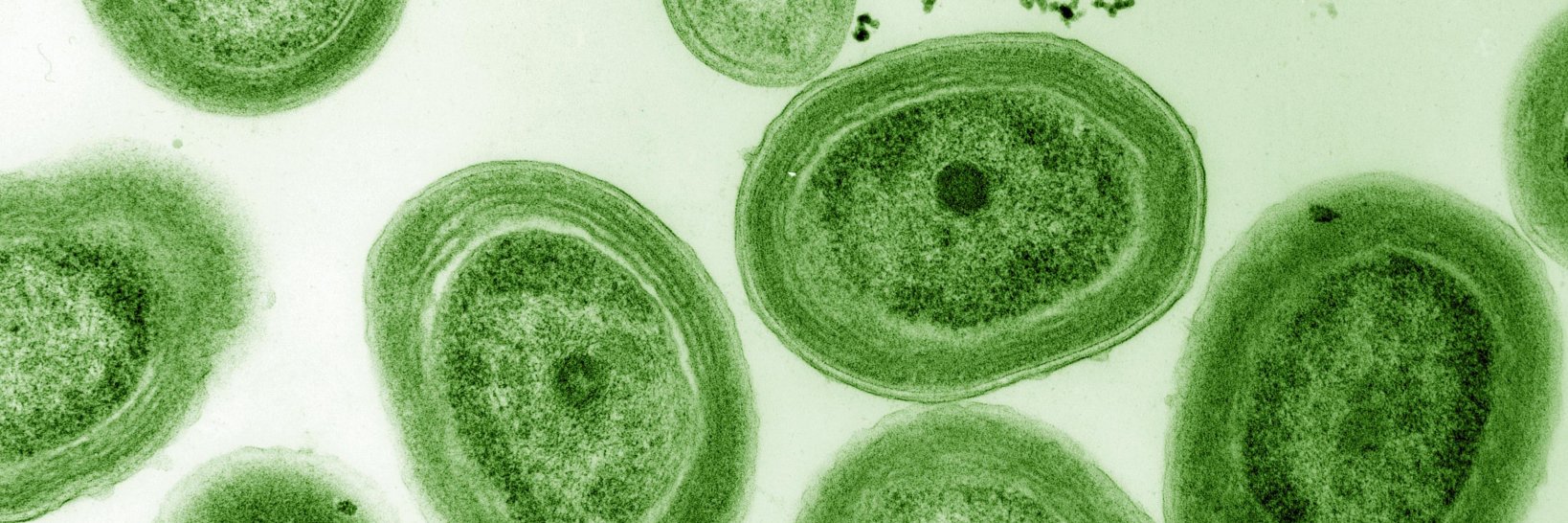
Microbial oceanography and cross-scale systems biology laboratory at MIT. All things Prochlorococcus, the smallest known photosynthetic cell on the planet.
The Chisholm Lab is hiring an entry level bioinformatics technician! If you have prior experience analyzing multi-omics datasets and are interested in learning more about Prochlorococcus (who isn't?!), please search and apply for MIT job 21923. Working remotely is a possibility.
The Chisholm Lab is hiring! If you are looking for a entry level technician position and want to join a group researching the ecology of marine microorganisms, please apply through the MIT careers site (search for job 21106).
Manuscript published today! Check out the method we used to isolate exocellular “free” DNA from the open ocean. Yes, nearly a THIRD of all the DNA in the ocean is nonliving! Available on LO Methods: https://t.co/ZwlC9hMLu2
How did it get there? Who is it coming from? Stay tuned!
What microbes come along when we isolate Prochlorococcus? Find out in our paper “Microbial diversity of co-occurring heterotrophs in cultures of marine picocyanobacteria” https://t.co/NqIFeE8MCA
How do abundant marine microbes maintain fast-adapting genomes in dilute open oceans?
With "tycheposons" - mobile genetic elements that move around in viruses and vesicles, shuttling genes and remodeling genomic islands
https://t.co/oifq5vwqyP
What is a pangenome, why is it valuable & how do you create one? Next up in our #Sequencing101 blog series: Looking beyond the single reference genome to a pangenome for every species. Hear thoughts from @ChisholmLab_MIT@sedlazeck & others on pangenomes: https://t.co/O8DWVhWIuY
Apply to take my job! Our incredible team (@ChisholmLab_MIT) is looking to hire two research associates interested in Prochlorococcus and the world of ocean microbes. I’m happy to answer any questions you have, so feel free to reach out.
https://t.co/NEVYb7UXKK
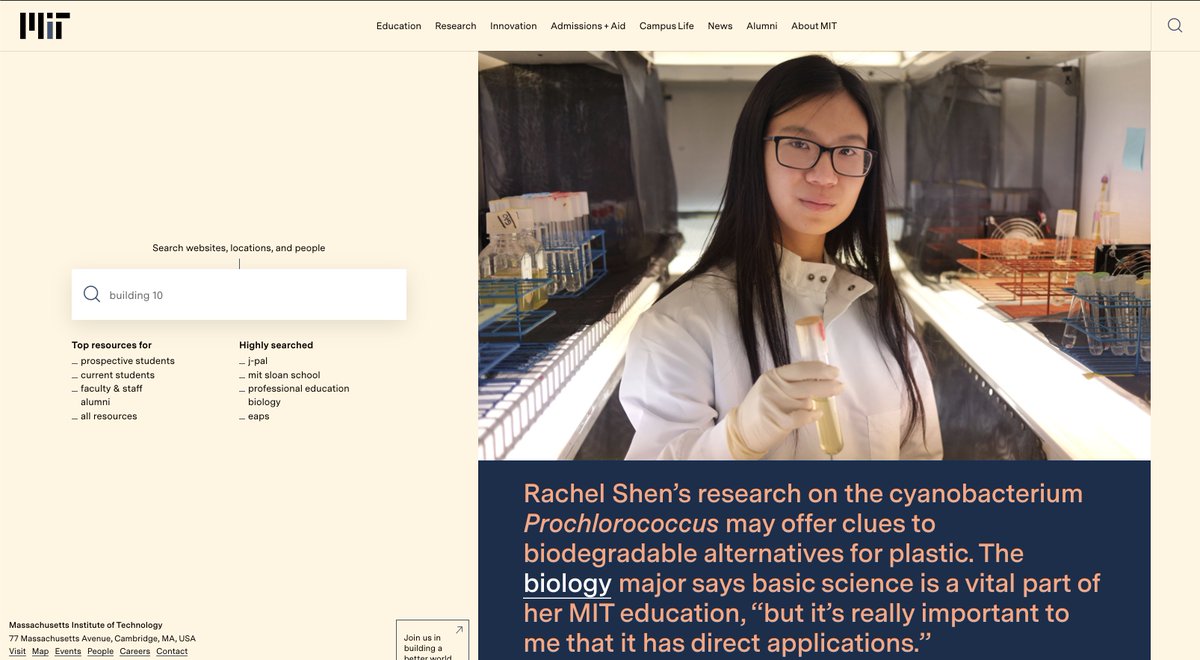
Today's MIT homepage spotlight features biology major Rachel Shen! A sophomore UROP in the @ChisholmLab_MIT, she looks for microscopic solutions to big environmental challenges by studying the invisible processes that cycle nutrients in the ocean. https://t.co/oAqZgn0fLm
Happy to see this out: >12,000 marine single cell genomes! An amazing data set, many more discoveries await within. Please take a look! Fun collaboration with @rstepanauskas and a fantastic group. https://t.co/m9CnaJ8hqW
@MelisaLKO @segrelab@FulweilerLab @MelisaLKO We obtain our seawater from the Evironmental Systems Laboratory (ESL) at WHOI. They have a direct pipe in from the ocean with a series of in-line filters (final size 100-10um). Email Allison Coe if you have additional questions.
@MelisaLKO @segrelab@FulweilerLab We obtain our seawater from the Environmental Systems Laboratory (ESL) at WHOI. They have a direct pipe in from the ocean and have a series of in-line filters (final filter 10-100um). Email Allison Coe and she can answer any additional questions.
The official launch of the ProSynFest2020!
Come and celebrate decades of research on Prochlorococcus and Synechococcus in Córdoba, Spain from 18-21 March 2020
https://t.co/WWzCHtDSKF
Description of the first (and only!) Prochlorococcus-SAR11 co-culture, as well as the global biogeography of this abundant pairing: https://t.co/l5cGmcj5pf Congratulations on a groundbreaking effort, Jamie Becker! Also to @brochlorococcus, Kali Rosendo and Penny Chisholm!
Our latest open access publication in @eLife by @pmberube et al. Emergence of trait variability through the lens of nitrogen assimilation in Prochlorococcus https://t.co/0zn6zW3Qf2