I absolutely love both Laravel and React. Both are incredible technologies that have had a profound impact on the web.
And they come together beautifully with @inertiajs ❤️
✅ Single-page apps with server-side routing
✅ You don't need a REST/GraphQL API
✅ Pass data from controllers to page components
✅ Integrates perfectly with server-side validation
✅ Supports persistent layouts
✅ Scroll preservation
✅ XHR forms that feel like classic form submissions
✅ Make POST/PUT/PATCH/DELETE page visits
✅ Link component and programatic visits
✅ File uploads with built-in progress tracking
✅ Server-side rendering
✅ TypeScript ready
✅ No need for 3rd-party auth (sessions auth ftw!)
✅ Supports code-splitting
✅ Auto cache breaking when JS bundle changes
✅ Works with Vite and webpack
✅ ...more!
In short Inertia.js allows you to build beautiful single-page apps using React, without building an API, using all the parts of Laravel (auth, Eloquent, queues, validation, etc.) that you know and love 🤝
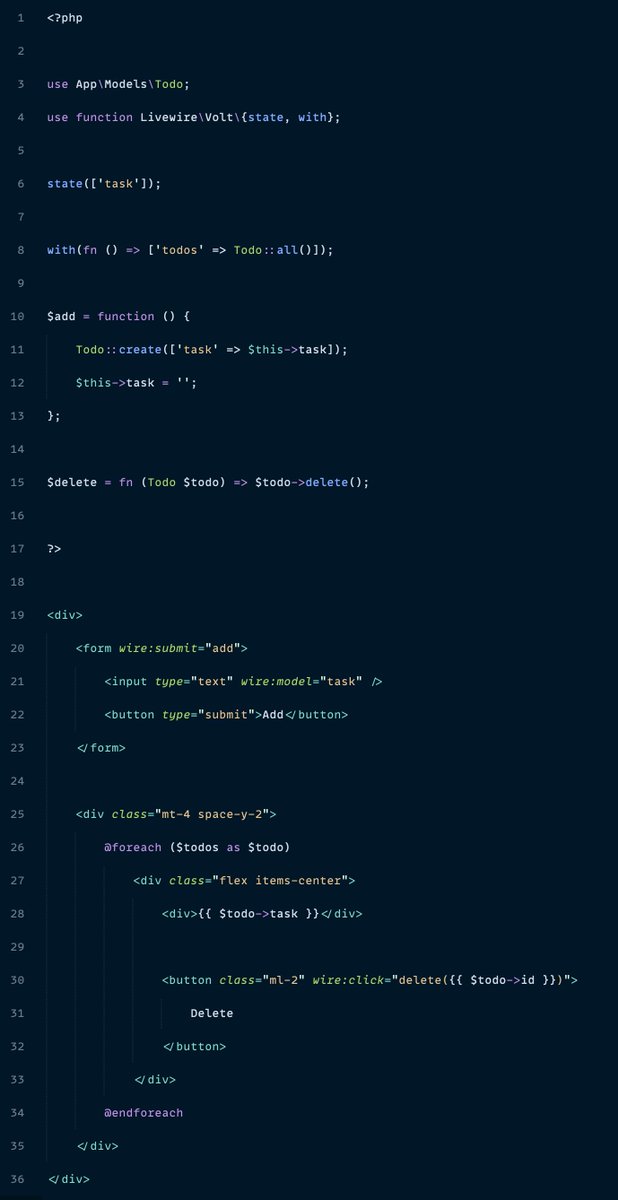
The todo application. 😅
But, seriously, here's the thing...
When Laravel and Rails developers say "full stack", they mean something totally different than when Next or Remix (React Router?) developers say "full stack".
In Laravel and Rails, it means there are built-in, opinionated solutions to things like validation, interacting with a database, authenticating users, scheduling background work, sending an email.
In Next and Remix, it seems to mean that there is simply the bare ability to run code on the server at all and an advertisement for Clerk. 🙃
From my perspective, Next and others are really, really great at the GET part of web development. Get data from some backend, show it on the page quickly. 👌
They are not mature for POST, PUT, and DELETE, especially when things start getting non-trivial.
And, I don't think this is really unique to Next or a single framework. It's something that seems to pervade current JavaScript as a whole - note the current proliferation of "starter kits" that try to bring some sanity to the full-stack story.
I think this has had actual consequences in the JavaScript ecosystem...
Rails and Laravel were built with the express purpose of allowing a single developer to build the next GitHub... or the next AirBnb... or the next Shopify. Prototyped from beginning to end.
That's what I'm passionate about. Empowering a single developer or small team to build something amazing.
I built the 1.0 of Laravel Forge, Envoyer, Vapor, Spark, and the backend of Nova by myself.
$40M in revenue over 10 years from my home office. That's an empowering tool for a solo founder.
I don't see a full-stack story in JavaScript yet that would allow me to realistically sit down and build something like Forge or Vapor from start to finish. Maybe I'm missing it. 🤷♂️
The MVP start-ups I do see fully built on current JS meta frameworks are much thinner. The stereotypical API call to an AI service. Not much meat on the bones.
Laravel / Rails have been building their modern front end story with Hotwire, Livewire, Inertia, and more... Next and others are building their modern back end story.
Smart people on both sides working on these problems, so I'm confident we'll both get to where we want to go. 💪
The reason you have an MTN in Africa today is not because a poor boy from South Africa got VC funding and became a billionaire. I know some others try to force a similar narrative but it is not true.
People gained experience, put together plans, and then got investors. No magic. Each base station was built one site acquisition and equipment deployment at a time. Financing was tough but they hired the best to get it.
You just have to work or create work. It is in the creating work that we end up building the things that likely become venture scale. Scale builds upon scale and we have very few things already at scale. Scale is not built upon dreams and wishes but upon solid ground first.
I remember my observations the first time I visited America. My cofounder Salil previously told me that America runs like a well oiled machine. Femi Edun also told me that they build scale by dumbing things down to the basics. I saw that both descriptions were true. The infrastructure exists to sell at scale and you dumb things down to sell more.
According to Ogilvy “we sell or else.” America always sells or else it is not America anymore. To be able to sell, there has to be a market to sell to. They created that market in many ways. Infrastructure, education, and advertising.
You can’t sell when you haven’t built. Prospecting for gold in California led to the great railroads. Mining solid minerals in Congo and Nigeria have only led to wars and terrorism.
In Africa, we build, or else…
Let us build and then sell. We can’t sell what we haven’t built yet. Building on cloud infrastructure far away and trying to provide services to those who don’t have access isn’t building.
The day it dawned on me that payments in Africa wasn’t a startup opportunity but an infrastructure play was the day the scales fell from my eyes. PayPal got licenses in 50 American states and not 50 countries before it started making a lot of money.
One African country will not deliver our version of PayPal without our version of EBay which can only happen because we have our version of UPS or FedEx and the logistics that support it. That is further built on universities and a prosperous middle class.
We don’t have to follow the same trajectory but one truth is evident. Scale builds upon scale. Let’s build scale carefully. We have wasted so much time and effort on trying to create magic on a continent where illusions lead to hunger and despair.