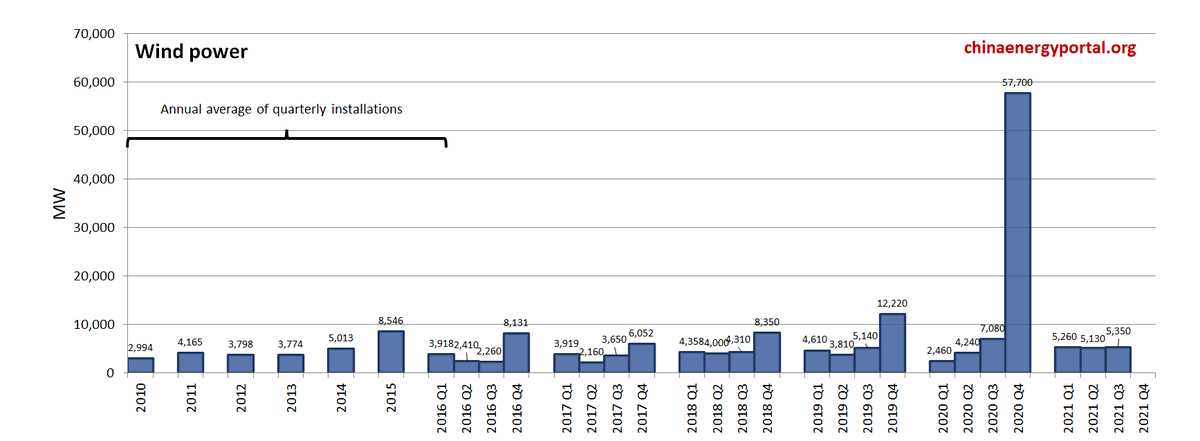
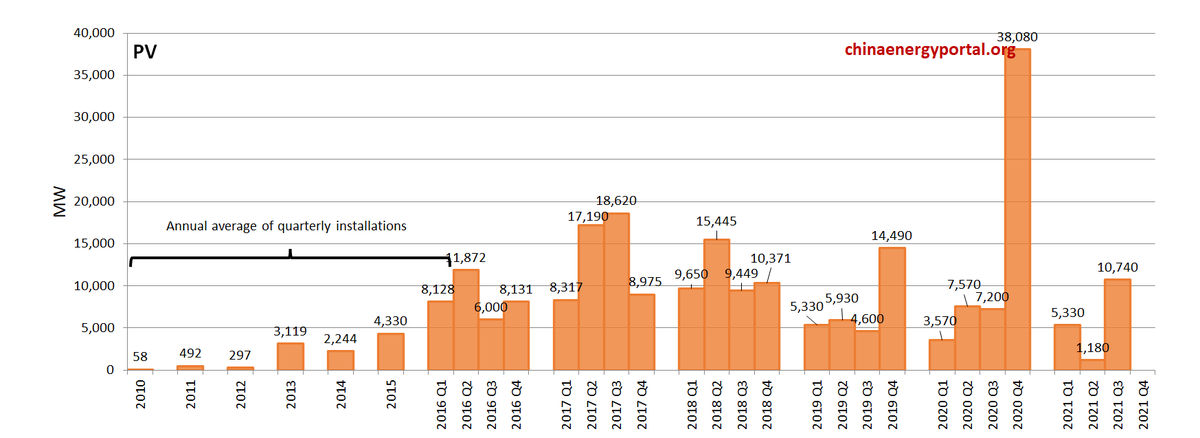
@DVMirchev @jikorsbakken@SuffolkJason@NatBullard@sjwrenlewis The question is if that pace keeps up with total demand growth.
Quite likely China will keep seeing record growth in renewables for the next few years.
But demand growth by smokestack industry stimulus, and/or electrification of transport and other industries will add to demand
Further crisis-level stimulus towards construction and other high carbon investment is unlikely.
Investment in wind was 3 times as large as that in fossil power over 2021, and investment in nuclear was up 40%.
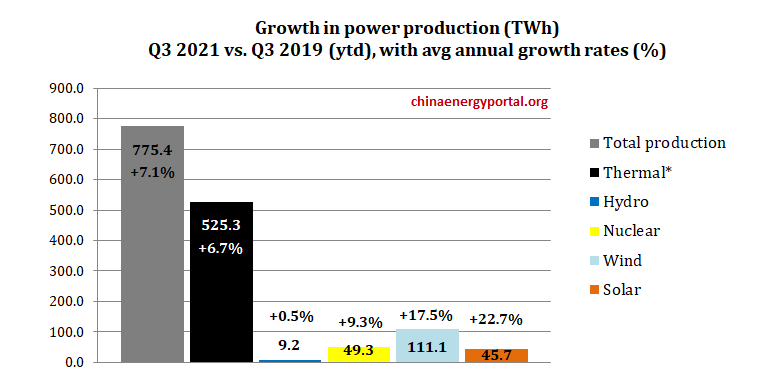
China 2021 power stats: huge jump in wind and PV installations and generation, although coal-fired power saw a big rebound as well.
Low-carbon power generation was up 280 TWh vs 469 TWh fossil generation. Vs 2019, these are up 450 vs 600 TWh
https://t.co/6Lf3mOPGxt
Next year will see a relatively stronger growth of low carbon sources next year, with fossil generation not just weakening but falling towards the end of the year, for stats see: https://t.co/pvJTm9wule
China's fossil fuel fired (thermal) power generation continued to fall in Dec, by 5%, with total power demand now falling too. Wind, solar and nuclear posted impressive increases of 30%, 14% and 11% for the full year 2021 and 30%, 19%, 6% in Dec.
@LHongqiao Yes, agreed that phase down, or trajectory, remains unclear.
But my point is also that coal cons reduction in 15th FYP is all but given. Even a scenario with peak coal by 2025 and absolute reductions from then onwards is pretty much business as usual.
U.S.-China Joint Glasgow Declaration on Enhancing Climate Action in the 2020s:
1) Methane plans incl agriculture
2) Coop on renewables and grid integration
3) Coal phase down in 15th FYP (2025-2030)
https://t.co/XEu4Ur6xAj
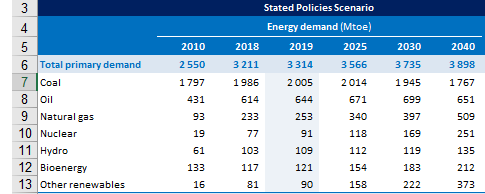
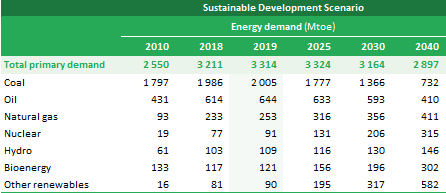
Last year's WEO from the IEA suggested 'business as usual' for China, (Stated Policies), would see coal cons. steady through 2025, effectively falling from shortly after 2020.
Stating that coal consumption will be phased down in 15th FYP is close to China saying 'not so quick'.
The message to phase down coal in 15th FYP (2025-2030) is more of a let down than an ambition.
That suggest the 'peak emissions before 2030' will likely be closer to 2030 than 2025.
Despite record installations of wind and PV at te end of last year, and despite recent disruptions in coal-fired power, coal supplied the bulk of the growth in power cons over the pandemic. Also thanks to weak hydro output.
https://t.co/kSKtGxFfow
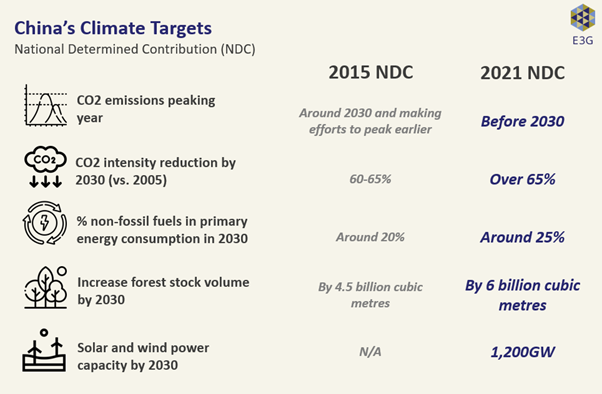
🇨🇳has just summitted new climate targets to the UN climate body – the headline targets are a step up from the 2015 submission but not new – these are the same numbers that President Xi announced during the climate action summit hosted by @AlokSharma_RDG last year.
Further: "low-cost renewable energy hydrogen production", which would seem to rule out hydrogen from natural gas or nuclear.
Lastly "low-cost CCUS technology", which is not surprising given the 2060 target of "fossil fuel use below 20%": they'll need a lot of CCS
Apty from NDC, China also submitted an Long-Term Strategy document.
Unfortunately, again mostly repeats stated goals. No further interim targets towards 2060 net-zero goals. It does break up overall target in more fine-grained sectoral actions, but little numerical targets
A few noteworthy items: plans for 50% of new housing and factory buildings to have rooftop PV.
Also mentions "vigorously develop renewable energies and advanced nuclear energy technologies", which is a stronger than usual support for nuclear