It's That Simple. But The problem is we Humans r too full of ourselves. We r only considering Soil now not because we feel inclusive to mother earth, it's only because our lives are threatened by Nature for all the gruesome things we have done on this 🌎. Pay Back Time #SaveSoil
If we want to fix climate change, we have to save soil.
By revitalizing soil, we can mitigate up to one third of global warming by reducing greenhouse gas emissions (based on a 2023 FAO report), with the only side effect being a richer, healthier soil.
Action now: https://t.co/uVnQCIZBeZ
#SaveSoil #SaveSoilFixClimateChange #SoilforClimateAction
Whose Deaths Matter? Three Cases and a Question for Tamil Nadu's Media!
Recently, a visitor to the Isha yoga centre in Coimbatore tragically died by suicide. A state political party has called for a CBCID investigation. On its face, that's a reasonable demand, and I support a thorough investigation of any suspicious death anywhere.
What I want to draw attention to is not whether this particular investigation should happen. It should.
What I want to draw attention to is the "pattern of coverage" around such incidents, and what that pattern suggests about how Tamil Nadu's media and political establishment decide which deaths to amplify and which to overlook.
The party's statement refers to "repeated deaths" at the centre. The most recent prior incident I'm aware of involved a participant who completed a programme and later died by suicide outside the premises - an inquiry concluded the cause was unrelated to the institution but was related to her family situation.
Whether there is, in fact, a documented pattern of "repeated deaths" tied to the institution, or whether this framing is itself the story, is a question I find Tamil Nadu's public discourse is not asking.
What I find even harder to reconcile is the contrast with how comparable incidents have been covered.
Consider three publicly reported incidents in Tamil Nadu over roughly the past two and a half years:
Incident 1 - June 2026, Coimbatore: A 27-year-old man's half-burnt body was discovered in a roadside drainage channel adjacent to a church compound. Police recovered the body with stab and cut injuries, and the local station officially upgraded the case from a missing-persons file to a homicide investigation. To my knowledge, the story received only routine local crime-page coverage; it did not become a sustained prime-time conversation in Tamil media.
https://t.co/p8gFLskvfj
Incident 2 - February 2026, Erode: A senior official of a major Christian denomination, recently appointed to a newly created diocesan post, died after a fall from a roadway overpass during what was reported as a routine morning walk. Police filed a case under Section 174 CrPC (suspicious/unnatural death) to determine whether the death was accidental, intentional, or otherwise. The incident did not, to my knowledge, generate sustained discussion in mainstream Tamil-language media.
https://t.co/2k3ALyM9jY
Incident 3 - January 2024, Kanyakumari district: A 45-year-old local political-party functionary was killed during a confrontation at a parish residence, in a dispute connected to a church-run institution. Police registered a murder case naming 15 individuals, including two clergy members. The case received wire-service and English-paper coverage but did not, in my recollection, drive sustained Tamil prime-time debate.
https://t.co/aGDG4LbWBa
I list these not to assign guilt, but to make a narrower point: each of these is, on its face, the kind of incident that ordinarily generates loud and sustained coverage. A homicide investigation. A senior religious figure dying in unclear circumstances. A murder case in which clergy are named.
In comparable circumstances involving certain other institutions in Tamil Nadu, prime-time debates would and have, in my experience, run for weeks.
That asymmetry is the thing I feel is worth examining.
Selective coverage rarely needs coordination. It can emerge organically from the political alignments, audience preferences, and ideological priors of editors and anchors. Except that it does not look like that here.
But the "effect" is real, and the effect is what citizens experience: a public square in which some deaths trigger weeks of demands for accountability, while others are quietly closed.
A few questions I think are worth asking, regardless of where one sits politically:
- Why does a "repeated deaths" framing get amplified for one institution, but never applied to others where comparable or more serious incidents are publicly documented?
- When investigations into hyped allegations conclude with no wrongdoing, does the same media cover those findings with anything close to the prominence they gave the initial allegations?
- What does it say about the health of a state's public discourse when which deaths matter (and which don't) appears to track the political or institutional affiliation of those involved?
I am explicitly "not" arguing that every death should be sensationalised. Quite the opposite - I'd prefer none of them were.
What I am arguing is that selective amplification, applied consistently in one direction, is itself a form of bias. And those who claim the mantle of "liberal," "secular," or "guardians of truth" should, in my view, be the first to call it out.
That they don't is the reason I find Tamil Nadu's self-styled progressive establishment increasingly hard to take at its word.
PS: These views are my own and reflect publicly reported information. Where investigations are ongoing, no individual is being accused of wrongdoing; the piece is about coverage patterns, not guilt or innocence.
Wonderfully initiated project by Govt of Bihar & Isha Foundation. It is indeed best Govt works with spiritual organisations like Isha for such a sensitive process of cremation. Well Done!
Can a crematorium be a place of peace, or is it a front for something far more sinister?
Right now, a quiet war is being fought over how we treat the dead in India. On one side, Isha Foundation is expanding its municipal crematorium model out of Tamil Nadu and directly into 6 districts in Bihar. On the other side, critics are calling it a dangerous corporate monopoly over sacred space.
Let’s look at the facts first. Traditionally, local public crematoriums in India are often associated with neglect, dirt, and severe grassroots corruption. A place where grieving families are routinely extorted for thousands of rupees in unauthorized "fees" just to cremate their loved ones.
To counter this, Isha started Kayantha Sthanam. These are not private facilities built inside the Isha Yoga Center; they are public, government-owned properties managed under strict Memorandums of Understanding (MoUs).
Under this model, operators only charge government-mandated rates. Better yet, under a recent government-backed rollout, services are completely free for Below Poverty Line families. It is reported that these spaces feel like temples rather than graveyards.
Also, legally, every single cremation managed by Isha requires a strict medical death certificate and ID verification, which is directly uploaded to local government portals before a death certificate is ever issued. These attacks are never about public safety at all, but are politically motivated attempts to target the organization.
But the real testing ground isn't Tamil Nadu anymore, it is Bihar. Isha recently signed a major MoU with the Bihar government to manage 6 districts.
While the state government wants to replicate Tamil Nadu’s clean, corruption-free model, local friction is brewing. Local traditional priests and community workers worry that bringing in a massive, institutionalized foundation will completely displace local caretakers and strip away decentralized, regional death rituals.
Dear @kaankit and those who want to know more about the importance of death rituals, I suggest you read the Death book by Sadhguru.
@gargiuvacha Critics burn 🔥 with envy while Isha's Kayantha Sthanam burns away corrupt middlemen. In TN, Isha has run gas crematoriums for 15 years, handling over 1 lakh dignified cremations. Former Tamil Nadu State Minister KN Nehru even launched their 100% free service for BPL families.
@gargiuvacha If Isha offered such services at 200 rupees, then these people may say Isha is killing local businesses. They only need a reason to complain.
Kuch logo ko Vikas(Improvement/Development/Systemization) hajam nahi hota.
When the Government of Bihar has done the fact checking of the process, why do these folks have sleepless nights. Oh, they are losing business it seems.
Dhanda aur Ghus band,
Well done Govt of Bihar
This person talking on Isha running crematoriums is either uninformed or deliberately dishonest.
Isha is not “entering the cremation business.” It has been running Kayantha Sthanams in partnership with government bodies for years, with 33 crematoriums.
In Tamil Nadu, Isha also offers free cremation services for below-poverty-line families. Its facilities use LPG, pollution-control measures, hygienic amenities, mortuary vans, mandapams for rituals, and trained staff.
Why were they invited to Bihar? Because the model has worked.
A decade-plus track record of dignity, efficiency, transparency, and corruption-free functioning is precisely why governments are trusting Isha with more such crematoriums. Bihar is not a random experiment. It is an expansion of a successful model. Similar requests have come from many other places too, because the need is real.
The purpose is simple: dignity in death.
A fixed standard fee, decided by the government, is charged to prevent exploitation. This fee is not randomly decided by Isha. It goes towards operation and maintenance of the facility.
That means the family knows the cost upfront.
No hidden bargaining.
No random tips.
No ad hoc “adjustments.”
No middlemen turning grief into a revenue opportunity.
This matters because everyone knows how crematorium costs often work on the ground. The official rate may look low on paper, but by the time wood, transport, rituals, informal payments, queue handling, priest/barber charges, “tips,” and local pressure are added, the real cost can become many times higher.
Isha’s model cuts through that by putting the cost, process, and responsibility into a transparent structure.
What exactly is the “profit” here?
Cremation is not a money-making business. It is dignity in death. It is a service that requires staff, fuel, maintenance, vehicles, infrastructure, cleanliness, waste management, and operational responsibility. A government fixed charge for running such a facility is not profiteering. It is transparency.
Bihar’s Bans Ghat arrangement reflects the same logic. The Patna facility has 18 cremation platforms, can handle around 50 cremations a day, and the fee is ₹3,500. The point is dignity, order, cleanliness, and freedom from exploitation.
So the real question is not: “Why is Isha charging?”
The real question is: why is he uncomfortable when a corrupt, opaque, exploitative system is replaced by a fixed-cost, cleaner, dignified, government-trusted model?
When the poor get free service, the common family gets a fixed cost, and the departed get a dignified farewell, calling that “premium business” is not fact-checking.
It is propaganda.
Isha Foundation was a great choice by the Government of Bihar for this sensitive project. Isha has not only proven its credibility over the last 30-40 years especially in Outreach Projects, but has also made a huge overall global impact.
अंतिम संस्कार जीवन के सोलह संस्कारों में सबसे अंतिम तथा महत्वपूर्ण संस्कार है। सरकारी शवदाह गृह में यह संस्कार कैसे किया है, जिन्होंने करवाया वही जानते हैं। रही बात ईशा फाउंडेशन द्वारा संचालित अंतिम संस्कार स्थलों की, तो कभी देखिएगा कैसे इस संस्कार कर्म किए जाते हैं। जिन्होंने देखा है वे अंतर समझ सकते हैं।
रही बात पैसों की, जब जीवन के बाकी पन्द्रह संस्कारों में इतना खर्चा किया जा है, तो अंतिम संस्कार में क्यों नहीं? वैसे, ईशा वाले जबर्दस्ती किसीको लेके नहीं जाएंगे, जिनकी मान्यता उचित संस्कार करवाने में होगी वे स्वेच्छा से जाएंगे। आप क्यों रो रहे हो ?
बाकी जिनको ईशा फाउंडेशन द्वारा संचालित इस सेवा के में जानना है, वे मेरी यह लेख पढ़ सकते हैं।
https://t.co/Kj0GgzxY0Q
This is in fact a great initiative by the Government of #Bihar to streamline & make the cremation process more easily available and accessible. Most importantly Collab with Isha Foundation who have proved their willingness towards human upliftment over several decades now. Kudos
किसी परिवार ने अपने घर के किसी प्रिय व्यक्ति को खोया हो, उस समय उसकी सबसे बड़ी चिंता क्या होनी चाहिए?
अपने प्रियजन को सम्मानपूर्वक विदा करना।
लेकिन हमारे देश में कई जगहों पर अंतिम संस्कार भी एक संघर्ष बन जाता है। दुःख से टूटे परिवार को व्यवस्था, खर्च, लोगों की मनमानी और अनिश्चितताओं से भी जूझना पड़ता है।
शायद यही कारण है कि जब कोई संस्था इस प्रक्रिया को अधिक व्यवस्थित, स्वच्छ और पारदर्शी बनाने की कोशिश करती है, तो उसका स्वागत होना चाहिए।
ईशा पिछले कई वर्षों से सरकारों के साथ मिलकर श्मशानघाटों का संचालन कर रही है। यह कोई नई बात नहीं है और न ही कोई अचानक शुरू हुआ प्रयोग। यही वजह है कि अलग-अलग राज्यों की सरकारें इस मॉडल में रुचि दिखा रही हैं।
मुझे हैरानी तब होती है जब कुछ लोग इसे ऐसे प्रस्तुत करते हैं मानो कोई बड़ा व्यावसायिक साम्राज्य खड़ा किया जा रहा हो।
श्मशानघाट चलाना कोई सोने की खान नहीं है।
यह ऐसी जगह है जहाँ रोज़ लोग अपने जीवन का सबसे कठिन दिन लेकर आते हैं।
यहाँ ईंधन चाहिए, वाहन चाहिए, सफाई चाहिए, कर्मचारी चाहिए, प्रदूषण नियंत्रण चाहिए, रखरखाव चाहिए और सबसे बढ़कर संवेदनशीलता चाहिए।
इन सबकी एक लागत होती है।
अगर सरकार एक निश्चित शुल्क तय करती है और परिवार को पहले से पता है कि कितना खर्च होगा, तो इसमें आपत्ति क्या है?
क्या यह उस व्यवस्था से बेहतर नहीं है जहाँ दुःख में डूबे परिवार को हर कदम पर अलग-अलग भुगतान करने पड़ें?
जहाँ अंतिम संस्कार भी कभी-कभी सौदेबाज़ी का विषय बन जाता है?
अगर किसी गरीब परिवार को मुफ्त सेवा मिलती है, बाकी लोगों को स्पष्ट और निश्चित लागत मिलती है, और पूरी प्रक्रिया सम्मानजनक तरीके से पूरी होती है, तो इसे "व्यवसाय" कहना मुझे समझ नहीं आता।
दरअसल समस्या शुल्क की नहीं है।
समस्या यह है कि कुछ लोगों को हर उस काम में खोट दिखता है जो सनसनी पैदा करने के उनके प्रयासों को कमजोर कर देता है।
बिहार ने किसी पर एहसान करके यह जिम्मेदारी नहीं सौंपी।
सरकारें रिकॉर्ड देखती हैं, अनुभव देखती हैं, क्षमता देखती हैं।
अगर वर्षों से एक मॉडल सफलतापूर्वक चल रहा है, लोगों को सुविधा दे रहा है और शिकायतों के बजाय विश्वास अर्जित कर रहा है, तो उसका विस्तार होना स्वाभाविक है।
अंतिम संस्कार कोई राजनीतिक मुद्दा नहीं होना चाहिए।
यह मानवता का विषय है।
मृत्यु के बाद कम से कम इतना तो सुनिश्चित होना ही चाहिए कि किसी परिवार को अपने प्रियजन को सम्मानपूर्वक विदा करने के लिए अतिरिक्त पीड़ा न झेलनी पड़े।
अगर कोई व्यवस्था यह सुनिश्चित कर रही है, तो उस पर चर्चा तथ्यों के आधार पर होनी चाहिए, कल्पनाओं और प्रचार के आधार पर नहीं।
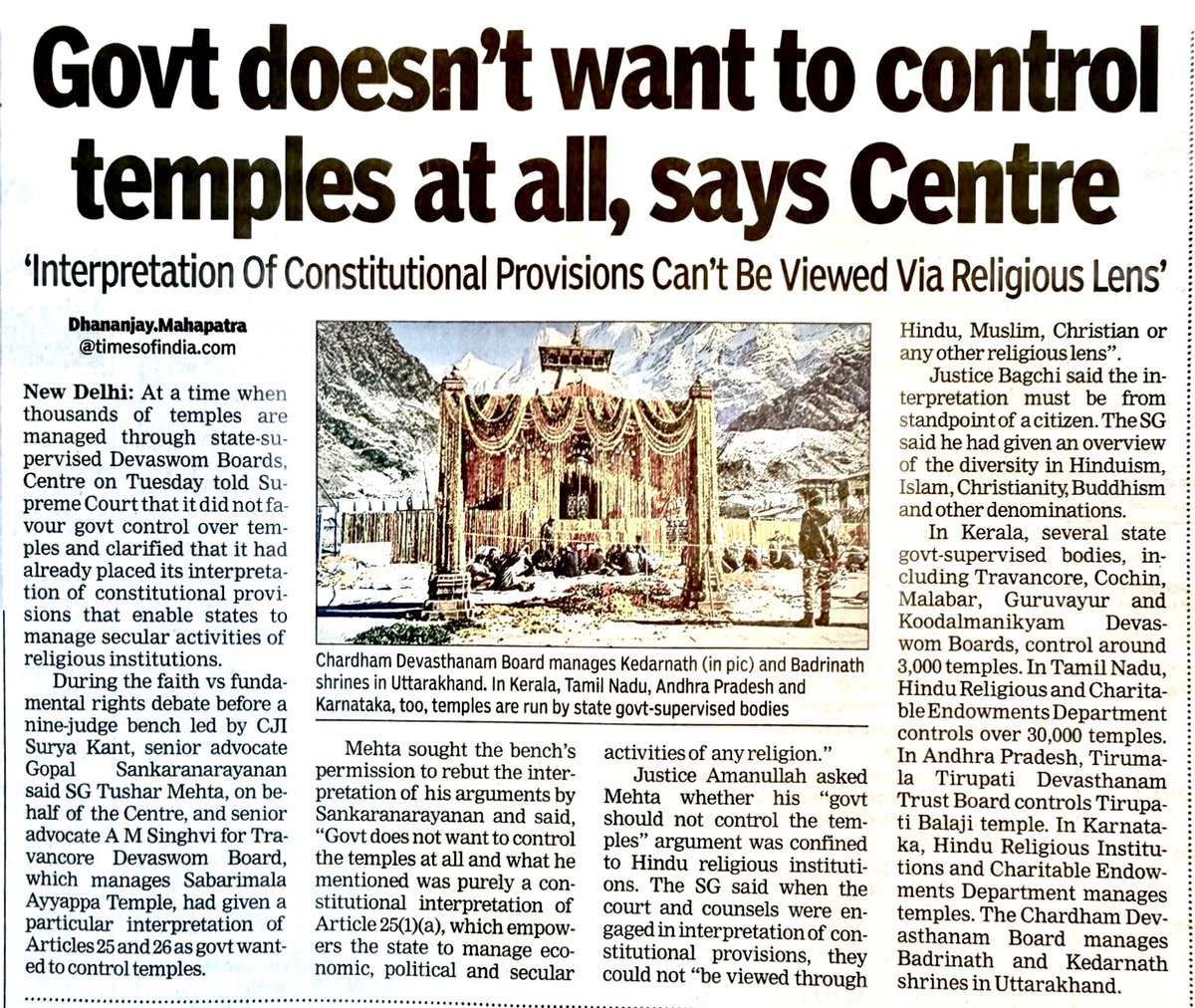
A temple is not just a structure of stone and mortar but an outpouring of devotion. A paid government official cannot run it - it takes the heart of a devotee. Encouraging to see the Government’s statement. Must translate into action. -Sg
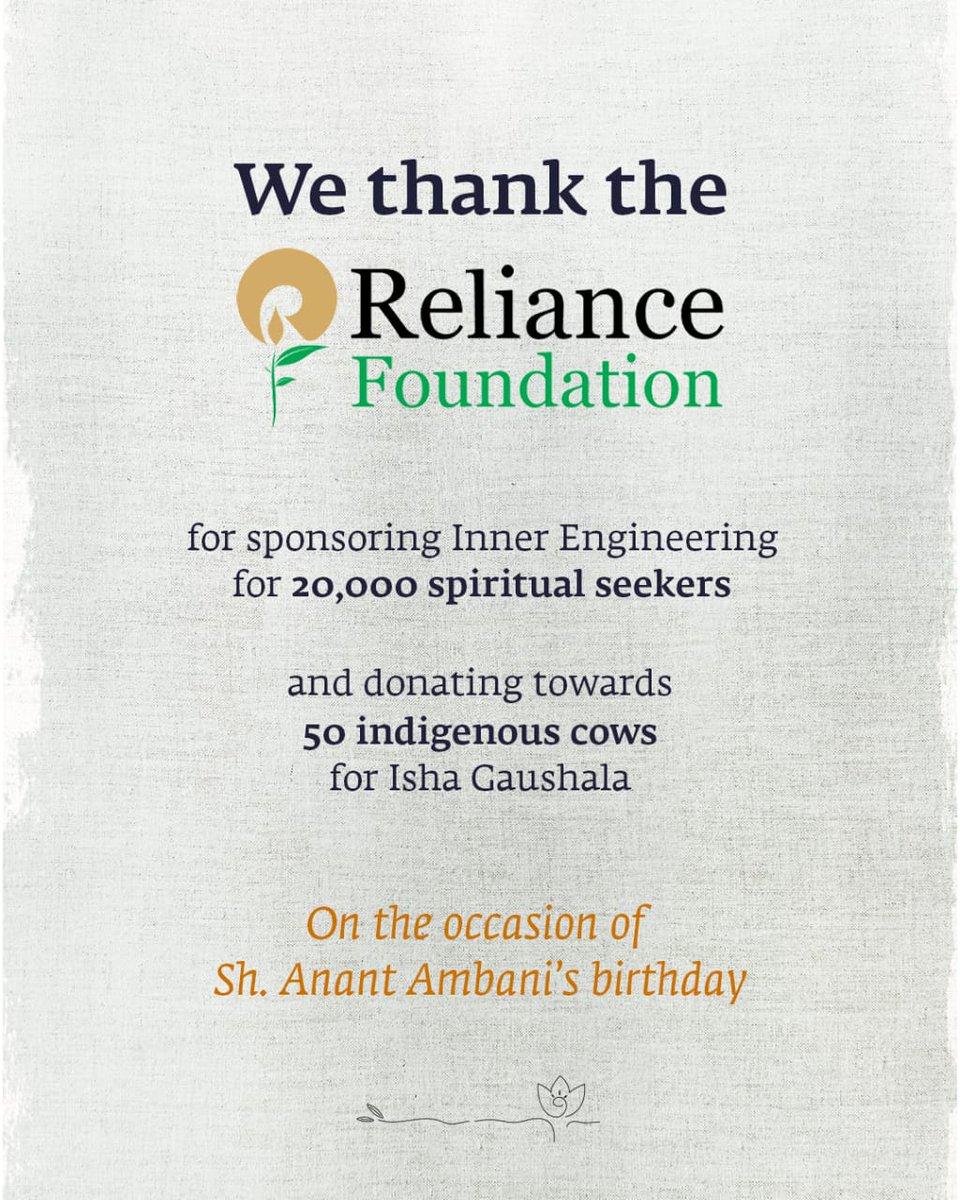
We wish Sh. Anant Ambani a happy birthday and thank the Reliance Foundation for supporting Isha Gaushala as well as Isha Foundation’s efforts to offer spiritual process to all through the Inner Engineering program
The 2025 edition of Anukampa is officially here. This isn’t just an impact report; it’s a blueprint for rural transformation. From a 100% pass rate at Isha Vidhya to a 300% increase in farmer income through Cauvery Calling, we are proving that sustainable change is measurable.
Know More: https://t.co/YXpYdR9L8c
Mere Pyaare Sandeep,
I genuinely love the way you stand your ground and give it back when it matters. There’s a real honesty and belief in that and it’s something I truly respect.
I’ve always looked up to how you back your cinema without any doubt or noise.
That kind of conviction reminds all of us to trust our voice and just go for it.
Give my love to the Legend Prabhas sir!
❤️🤩
Big love and all the best for Spirit.
Really looking forward to it.
And if there’s ever anything I can do, I’d genuinely love to help a brother.
Thanks again! 🙏🤗
Writers & actors built careers on propaganda, and the industry stayed quiet like cats. Now the same clan mock Dhurandhar. You don’t get to call yourself liberal if your first instinct is to Mock.
Don’t know when truth started getting labeled as propaganda...... strange times.
COMING TO THE POINT.....
I want to tell @AdityaDharFilms & @RanveerOfficial yeh kaala drishti aise nahi jaayega... Muthi bhar ke laal mirch se kaam nahi chalega.... poora khet jalana padega 🔥
Watched #Dhurandhar2TheRevenge last night.... Outstanding film 🙏
You Are Early!
She asked Sadhguru a question, and He replied - You are early!
In her English podcast with Humans of Isha, Moumita Akka who played a critical role in standardising Isha’s internal Operations pertaining to Sadhguru, shares why He said this, listen..
Volunteers share their heartfelt experiences of volunteering for the Shoonya Intensive program at Sadhguru Sannidhi Bengaluru, and how it has been a stepping stone on their spiritual path.
So your thought is just recycled data from the past. Thought is about survival, not for exploration or enlightenment because your thought is only a permutation and combination of what you already know – nothing new can happen. Only if you create a distance between what is you and what is your body and mind, can you experience something new. ##SadhguruWisdom
Project Samskriti’s Anubhava is a 4-day residential program at the Sadhguru Sannidhi Bengaluru that explores classical arts of Bharat as a pathway to inner growth. Open to ages 14+, it offers immersion into Kalaripayattu, Bharatanatyam, and sacred chants and songs in a consecrated space. Experience these traditional arts not just as performance, but as a powerful tool for enhancement of the body, mind, and emotions. https://t.co/f5EX85ccg9
Classical Hatha Yoga will be a major differentiator in the Defence Force because it isn't about just fitness. The awareness peaks with Hatha Yoga and awareness can make a world of difference in Defense Personals life when they are at it. #Yoga365
77 Indian Navy Personnel who are undergoing a 15-day Classical Hatha Yoga "Train The Trainer" Residential Program for Indian Defence Forces at Isha Yoga Center donated to Annadanam and served food in Bhiksha Hall.
@IndiannavyMedia