@Almonty_ has commenced processing operations at Sangdong, with stockpiled ore now being fed through the newly commissioned plant to produce saleable tungsten concentrate.
A major step forward for secure, non-China tungsten supply.
https://t.co/eWPPZxcpvF
#Mining#Almonty
Strom kann jederzeit wieder billig werden: Eine neue Studie belegt, dass 14 AKW schnell und vergleichsweise günstig wieder an das Netz angeschlossen werden können. Man muss es nur wollen: https://t.co/VeN955RFtb
@HagelManuel so geht es in d. industr. Abgrund. Wie kann man ernsthaft mit den Grünen regieren? Wir brauchen eine Rückkehr zur Kernenergie, ein radikales Sparprogramm (Halbierung der Ministerien und des Landtages), Abschaffung der CO2-Steuer und noch viel mehr Vorfahrt für Wirtschaft
@AlgaRata Ja aber mit Spezialkräften eine Flagge zu platzieren und auf dumme Aktionen der Russ Armee zu spekulieren, kann evtl sehr sinnvoll sein. Hoffen wir das Beste
@xtreameddy10@EmenaIo What happened with Gittens? You mean shitty Chelsea destroyed another great young players career? You can't blame BVB for Chelsea's team management...
Two Japanese firms just shut down their production line, cutting 25% of the world’s tungsten hexafluoride (WF₆) capacity. This is what Chinese critical minerals dominance looks like in action — slowly choking allies’ high-tech economies
Kanto Denka Kogyo (sometimes referenced with Showa Denko ties) and Central Glass have notified big chipmakers like Samsung, SK Hynix, and TSMC: inventories run out in June, lines shut for good from July 1. Boom — 2,200 tons of annual global WF₆ capacity gone. This specialized gas is essential for depositing ultra-thin tungsten layers in advanced semiconductors (3D NAND, DRAM, logic chips). Without it, fabs slow or stop
Why? China controls ~80% of global tungsten supply and refining. Beijing tightened export controls and licensing on strategic minerals (tungsten included) — hitting Japan hard. Shipments to Japan have plunged, raw material costs spiked, and these specialty gas producers can’t keep operating profitably or at all. Japanese firms were high-quality, reliable suppliers that Korea and others depended on for ~80% of their WF₆ in some cases
This isn’t random. Japanese PM Takaichi hostile posturing against China and plan to remilitarize Japan brought about Chinese sanction of dual use critical minerals (tungsten, rare earths, etc.) to Japanese companies. Higher costs, supply chaos, lost competitiveness, and eventual factory pain ripple through the semiconductor chain. Auto, electronics, defense… all feel it downstream.
Japan’s been diversifying and stockpiling, but decades of over-reliance on Chinese inputs make this a slow bleed. Allies need to accelerate onshoring, friend-shoring, and alternative processing FAST. Relying on an adversary for the guts of your chip industry isn’t strategy — it’s vulnerability
The “just-in-time” global supply chain was efficient until it wasn’t. Now it’s a national security risk. Wake-up call for anyone still sleeping on critical minerals
https://t.co/KLyOokj2CC
@RADHardTech Question : Could Lewis please give a breakdown of what he wants to do with the more than 600m USD net proceeds from the convertible despite KFW refinancing?
@Almonty_ ceo Lewis Black stops by to discuss hard assets, exploration, mining and Tungsten opportunities globally and locally.
https://t.co/Gxh0KJx4AI
@Micha_weiss_es@ProfRieck Ne Batterie produziert auch keinen Strom und ist nach ein paar Stunden leer. Dann schmeißt man die Kohle oder Gas wieder an. Doppelt sinnlose Argumentation. Das System ist unglaublich teuer
@apollo_news_de was ist wenn eine Regierung zerbricht und dann neu gewählt werden muss? Lässt man dann die Wahlen einfach ausfallen, damit alles im Takt bleibt? :-D
@sparbuchfeinde Ich finde man sollte aus dem System aussteigen dürfen: wieso sollte ich Renten von anderer Leute Eltern bezahlen müssen? Ich will dann auch keine Rente, wenn ich das Loch ohne Boden nicht weiter finanzieren muss.
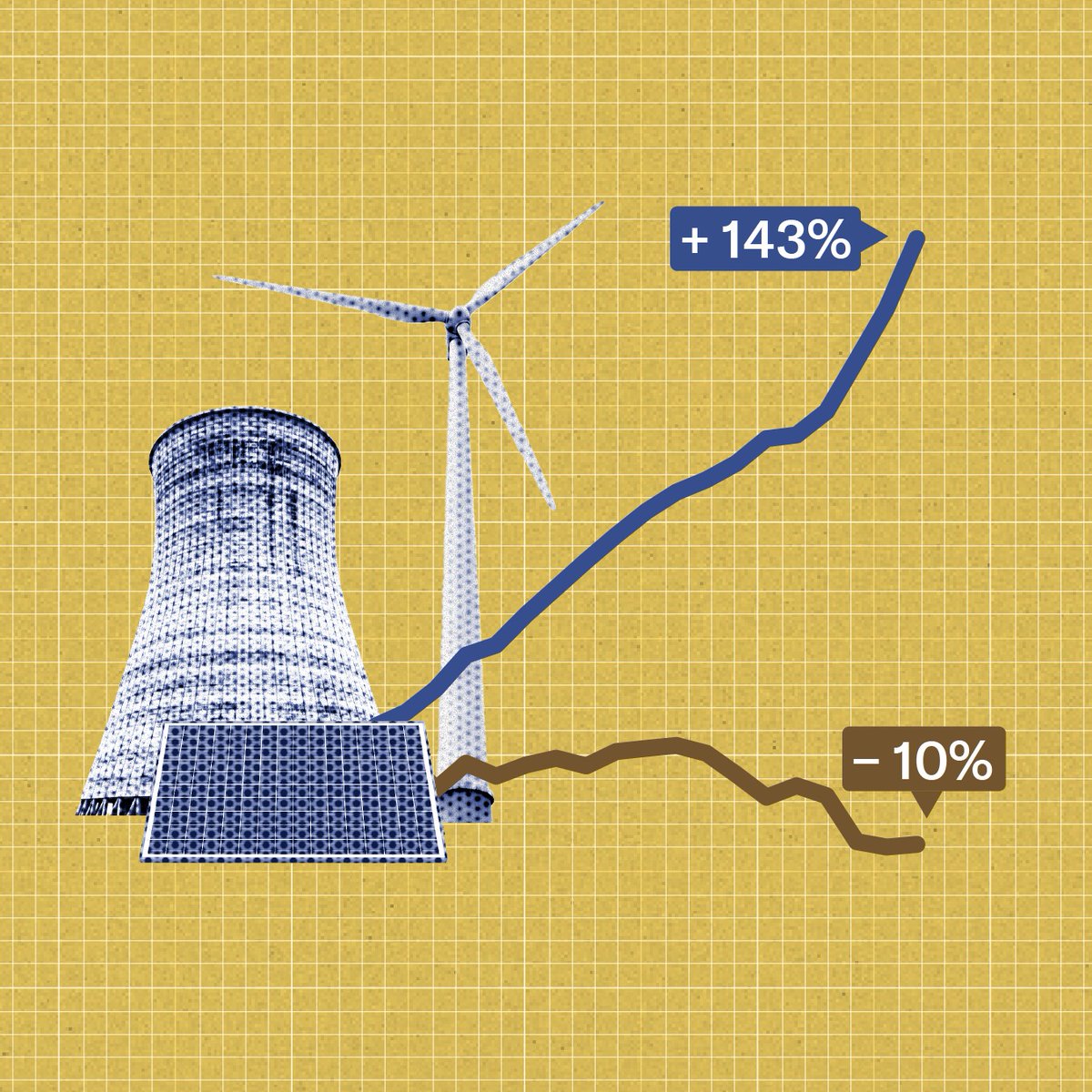
Fehlschlag Energiewende? Trotz Rekordausbau von Wind- und Solarenergie erzeugt Deutschland weniger Strom. Eine NZZ-Auswertung zeigt: Von einem entscheidenden Fortschritt kann keine Rede sein. Hier der ganze Artikel aus «Der andere Blick»: