I run nearly a dozen companies. I don't get hours a day for my own portfolio.
So my team and I built the thing I needed. Every feature came from a problem that was costing me money.
Buying on instinct with no way to check myself → 34 tests on any ticker, and I can open every single one and see the actual numbers and data behind it.
Never knowing if something was expensive or if I just felt like it was → DCF fair value, and how far price sits from it.
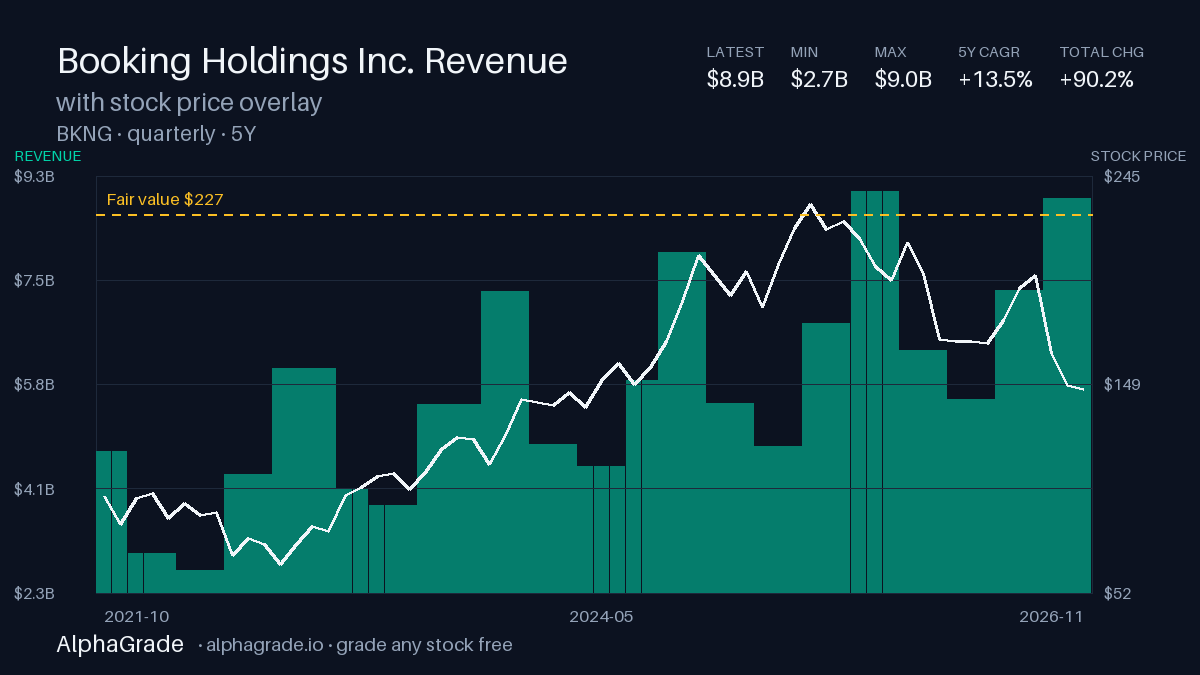
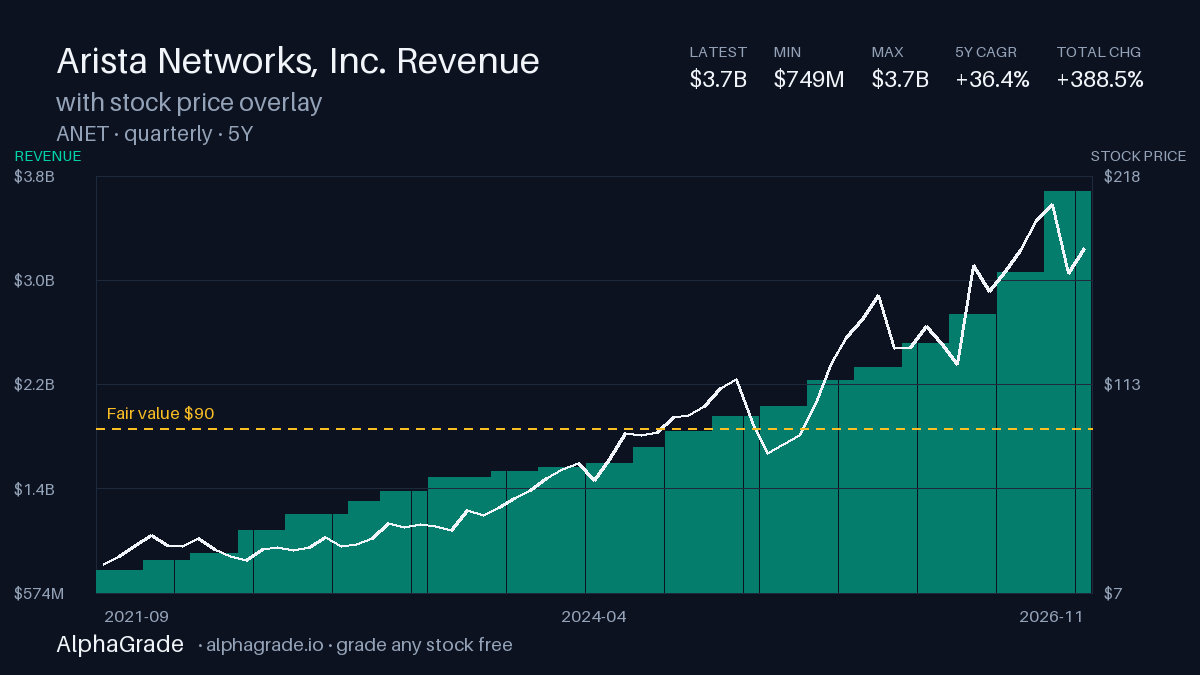
Not knowing if the business grew or just the multiple → 10 years of revenue, free cash flow and earnings with the price laid over the top.
Buying decent companies at bad moments → 10, 21, 50 and 200 day averages, golden cross, and how far price has stretched from the 200.
Owning a dozen things that were secretly one bet → correlation maps. Any stock against the macro panel, plus a cross asset grid of what actually moves together.
No feel for my portfolio as a whole → concentration, sector tilt and overlap, read in one pass.
Missing the tape because I was in meetings → sectors, movers, fear and greed, and the news behind the move, on one page.
Getting chopped up in conditions that never favored risk → a macro read that scores the backdrop and tunes every score to it.
And the cherry on top... Forgetting why I owned half of it → an AI analyst that knows my positions, remembers the last conversation, screens for ideas, builds the watchlist, and will argue with me at 11pm.
Stocks, ETFs, funds, crypto. All graded the same way.
I didn't build a terminal. I built the shortcut that lets me stay in the game while running everything else.
Grade any stock free. No account.
https://t.co/1nqh34xSvf
I like Cadence over Ashr Test Systems. Cadence is growing revenue while the stock goes the other direction. Some of that has to do with FCF, but ultimately, I’m thinking even more granular than that. I’m looking at companies like $CRDO, $TER, and $MRVL when I think about the connectivity layer.
Humanoid robots in warehouses are a headline but still more experiment than solution. The real action is quietly in edge AI silicon, tiny chips running inference on-device to slash latency and power. I’d rather own the hardware and software that make that possible than a humanoid body hoping for a breakout. If humanoids find a killer app beyond labs and pilots, I’ll reconsider. Until then, it’s about smart silicon at the edge.
Altria is still the income staple everyone talks about but few trust fully. The yield looks tempting until you remember inflation quietly eats away at that payout every year. Quality and setup feel solid, but paying dividends through tougher markets is way harder than headlines admit.
The Pentagon wants autonomy tied tightly to software, not just hardware platforms. That means integration and control layers will be the real battle, not the drones or vehicles themselves. Whoever owns that stack shapes future contracts and locks in revenue, not the traditional primes, but software and AI specialists. The ripple hits beyond defense too: commercial robotics and logistics firms with adaptable command systems stand to gain as military tech trickles out. The first big break won’t be a drone falling, it’ll be a failure in software coordination under pressure.
The Vulcan rocket’s multi-month grounding is getting a lot of airtime, but what makes me pause is that military flights shifted to SpaceX. That quietly confirms SpaceX’s grip on national security launches, which means them owning not just volume but strategic access. Everyone talks about Amazon’s delayed launches. I’m more interested in how the launch provider landscape shifted permanently. That’s the game changer for who wins the bigger space infrastructure race.
Error correction breakthroughs are reshaping the quantum race. But better qubits won’t unlock new industries until software and algorithms adapt to that reliability. The real winners will be those building next-level compilers and apps, not just the hardware makers.
Running a business teaches me to care about what actually moves the needle, not just flashy ideas. Same with investing. I want companies turning their tech into real, steady cash flow, no matter how exciting the hype sounds. It’s patience, not buzz.
Most still see digital assets as either regulation headaches or wild speculation. I’m convinced the quiet pivot under the surface is way bigger, miners turning into AI data center hosts. Those $10 million per megawatt retrofits aren’t just costs, they’re a bet on where real compute demand lives. Regulation won’t kill crypto, it’ll shape the pipes through which AI compute and digital finance flow together. If those data centers don’t generate steady, growing revenue beyond mining, I’ll rethink. But right now the two are locking in, not drifting apart.
BKNG’s new B2B push sounds like what the market needed but is anyone else wondering if this is more playing catch-up than leading? Travel’s strong but the real delta will be how this division scales and AI actually shapes partner value years out. The buzz alone won’t move it.
The FDA clearing NeuroDR and TumorSight Risk feels like the quiet AI turning point in healthcare. Most chatter is about AI in drug discovery, but these approvals show real clinical tools making it into daily practice. The detail everyone will miss is how these aren’t just diagnostics but prognostics and visualization aids, they actually shift decision-making in treatment, not just speed data crunching. That to me is where AI’s real healthcare edge starts.
The shift from per-seat to outcome-based AI SaaS pricing means fewer seats but more demand for integration and customization services downstream. That puts system integrators and consulting shops in a stronger position, at least until buyers figure out what outcomes are really worth. The established SaaS vendors will also feel margin pressure as usage unpredictability breaks their old models.
Running a business taught me patience with tech bets. You build processes that take years to pay off, just like investments in AI or biotech. If it can’t show progress over a couple of years, I stop looking for shortcuts and reevaluate.
Google’s 20-year deal with Constellation to fund upgrades and new nuclear builds is the game-changer here. Most people skim past that it’s not just about buying power but guaranteeing revenue for nuclear plants to get off the ground. That’s the kind of long lead-time investment the grid desperately needs but rarely sees.
Running multiple businesses taught me to value how a company handles messes, not just wins. Same with investing. I watch how management reacts under pressure because that’s where real durability shows up, not just in good quarters. You want resilience baked in.
The humanoid rollout in warehouses is teaching us that the real limit isn’t robot design but how these robots plug into existing systems. That means the software integrators and middleware makers behind the scenes will get the biggest payoff before the robots do. The question is which sector breaks first under that complexity: logistics or enterprise automation.
Cisco just crushed its AI revenue forecast but the stock is getting hammered. That disconnect says a lot. The market smells something more than just a quarter here, probably worries that the AI boom won’t translate to durable growth for a hardware-heavy business like Cisco.
The AI buildout isn’t just about who’s spending the most anymore. The real question is who actually captures the profit as this massive investment moves through the stack. The U.S. lead feels shaky, not because demand isn’t huge, but because the supply side is already straining under delays, political hurdles, and fading investor appetite. If the bottlenecks clear and financing stays solid, this remains a multi-year growth story. But if investors keep turning cautious and delays stretch out, the U.S. edge could erode faster than most expect. That’s what I’m watching, not just the next capex number.
Texas Instruments is a weird one right now. The stock’s up big this year on AI hype and strong cash flow, but the pricing strategy for 2027 feels iffy. Customers pushing back on price hikes is a real risk most aren’t talking about. I’m not sure the rally can run much longer without a real catalyst beyond raising prices.
Arista just popped 9% but the AlphaGrade still calls it neutral. That feels right to me. The company’s quality is solid but the market isn’t fully convinced yet. This looks more like a squeeze on momentum than a fundamental rerate. I like the company and the product, but I'm still watching the overall market for more confirmation.
Honestly Greg, I think the biggest beneficiaries are likely Vertiv, GE Vernova, Eaton, Quanta, Constellation, Vistra, Equinix/DLR, and the more beta or speculative plays could be names like IREN or CORZ because they already have convertible power. If I had to pick the cleanest public plays, I’d start with VRT for cooling/power infrastructure, GEV/ETN for electrification, PWR for grid buildout, and CEG/VST for scarce power. IMO…
The AI datacenter buildout hitting infrastructure limits means the real bottleneck soon won’t be chips, but physical capacity and logistics. Whoever owns that scarce space and gets ahead in supply chain moves will capture more margin than GPU makers. That changes which players get paid and where the real moat forms.