well, it's been a ride. See my fintech peeps anywhere but here. Seriously, @LinkedIn@SlackHQ@discord I'm there & they're all light years better than what this place has been turned into. what a waste. onward.
If I wanted to scroll for reels, I’d be on a different app. “For you” continues to be a duckin joke. I, & I’m sure so many others, have to now look up content that was previously in the feed & part of what made this app so useful. What a waste.
Recognizing this is one moment in time in a long history of judicial rulings & still I wonder how opening the flood gates to litigious proceedings in the most litigious nation on the planet is a good thing. Please enlighten me.
Given today’s news cycle. Here’s something to provide some quick perspective. A simple search of the CFPB’s interactive rule tool for “reasonable” will yield 497 results w/ 204 of the results coming from just 1 banking regulation. (1/x)
& folks that rule set is not even comprehensive for fintech in the US. & further I’m still only considering the fintech sector. & don’t event get me started on if existing rules ponder AI…
Mentioned this one a few months back as it was approaching on the SCOTUS calendar. Thanks for also highlighting @bank_reg.
I have yet to hear from actual operators about how this & Chevron are good for their business long-term. Anyone have any commentary they can share?
A North Dakota convenience store is allowed to sue the Fed over its Durbin Amendment regulations, the Supreme Court ruled today.
https://t.co/VTaWpiI5qf
We're proud to welcome @DiamondCUinPA to the Upstart family of lending partners! 🎉
Learn more about how we're helping our partners step into the AI-enabled future of credit here: https://t.co/bMeVNTJs3C
We’re hosting a live #AMA for graduates of our AI in Financial Services course on June 27!
Bring your questions for instructors Annie Delgado and Jeff Keltner and hear from other professionals.
Wanna join? Get certified by June 26: https://t.co/xyH3WIPduo
See you there!
🚀 Big news! 🥁
Digits has acquired @BasisFinance – supercharging our FP&A capabilities! 🙌
Learn more about how we’re reshaping the future of accounting 👉 https://t.co/F6tPRIeWvZ
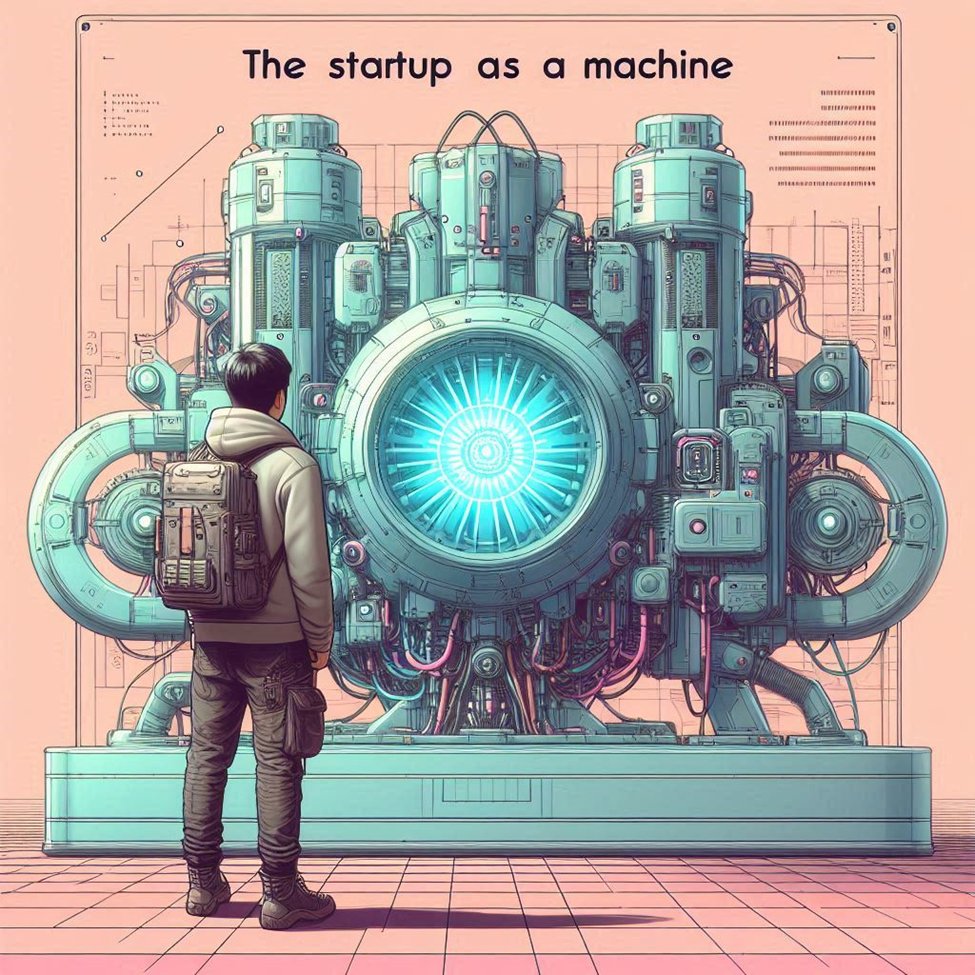
The Startup As A Machine
The allure of the Startup world is undeniable. The potential for explosive growth, the thrill of innovation, and the chance to change the world fuel Founders. However, the road from a bright idea to a sustainable business is riddled with complexities. Getting a startup to "work" isn't simply about doing one thing well. Most startups are extremely complex and require many interconnected parts to all function in concert.
When a Startup is finally “working”, it can feel like an efficient machine with parts that fit together nicely and inputs and outputs that are well controlled. Unfortunately, the whole machine can’t be designed and assembled perfectly from day 1. Founders invest in building and testing pieces of the machine over time and when a piece is kind-of-sort-of-working they shift their focus to other pieces of the machine that need more attention.
And every Startup can be thought of as a machine being assembled that has three critical components: The front of the machine, the middle of the machine, and the back of the machine. By monitoring how well each part of the machine is working, Founders can prioritize their efforts and allocate resources more effectively.
The Front Of The Machine: Customer Acquisition and Onboarding
The front of the machine is designed around customer acquisition and onboarding. Every business needs to attract potential users, convert them into paying customers, and ensure a smooth and positive first experience. This is a pure “tax” in the system and can break a Startup if the front of the machine can’t be scaled efficiently.
Focus Areas Include: Identifying your target audience, crafting compelling marketing messages, selecting effective channels, balancing customer acquisition costs (CAC) with customer lifetime value (CLTV) and onboarding customers such that they use the product or service in the intended ways.
The Middle Of The Machine: Profitably Delivering Value
The middle of the machine represents the core of a Startup’s value proposition. This is where a Startup’s solution solves a customer’s problem in such a way that it generates healthy margins. Selling a product for more than it costs to manufacture is essential and it requires a machine that can deliver a solution with minimal waste.
Focus Areas Include: Ensuring your product or service meets or exceeds customers’ expectations, streamlining your internal processes to deliver your product or service efficiently and pricing your product or service to balance revenue generation, competitive positioning and growth.
The Back Of The Machine: Retention and Upselling
The back of the machine focuses on customer retention and upselling. Cultivating long-term relationships with your customers and encouraging them to purchase more from you extends the lifetime value of your customers and is the foundation for building a durable franchise.
Focus Areas Include: Creating a loyal and sticky customer base that will recommend your product to others and offering additional products or services that complement your core offering and generate additional CLTV.
Prioritizing What The Machine Needs NOW
No single component of the startup machine operates in isolation. They are interdependent and influence each other's effectiveness. However, at any given time, one area WILL require more attention than others.
The Founder's role is similar to that of a chief mechanic who constantly assesses the machine's performance and makes adjustments to optimize its efficiency. This involves being a great asset allocator (people and money) and assigning resources towards fixing the most critical area that needs improvement now.
Building a great business also requires making long term investments, but until a Startup is “mostly working”, it doesn’t have the luxury of making many of these investments when they’d like. The future state only matters if you have enough cash to get there and Startups earn their right to exist one fundraise at a time until they’re sustainably profitable.
So, as an asset allocator, a Founder’s main job is to turn over cards and hope for positive proof that their Startup is on track. While VC investing is about analyzing cards as they’re turned over and helping Founders sharpen their skills as investors in their own businesses, being a Founder is about lining up the cards and being the ultimate decision maker around the order they’re turned over. This is the Startup’s learning agenda and getting it right is one of the most important responsibilities of a Founder.
A startup’s learning agenda should turn over enough cards that the startup is “materially different” when the next fundraise begins. Proving out critical assumptions and scaling is important. But too many Founders raise capital and immediately grow OpEx and G&A too quickly. They’re of the belief they can bite off a bold learning agenda and make significant progress on multiple drivers within all three parts of the machine at the same time.
The unfortunate truth is that doing too much is a recipe for generating “anti-proof” because spreading talent and money thinly increases waste and mistakes. Resources need to be allocated and the team needs to execute with such precision that the business can produce the right “upwards and to the right” results that serve as evidence that the business is on track. And making a little progress on many dimensions typically doesn’t produce a “materially different business” when it’s time to raise more capital. A Startup with a slightly bigger customer base with marginally better CAC and modestly improved margins isn’t the same as a Startup that said it was going to focus on a specific component of the machine and as a result of putting people and money to work, that part of the machine improved dramatically.
And it’s not like the other parts of the machine are going to stay stagnant or get worse. People are in charge of every piece of the machine and constantly trying to make progress. But there are usually 5-7 key drivers for each piece of the machine and working on all of them at the same time is a common mistake. The key is for a Founder to focus resources against the right sized learning agenda to deliver the proof needed to materially improve the business and raise additional capital in the future.
It’s Just A Framework
The machine framework is just that – a framework. Constantly monitoring the machine's performance can guide a Founder to allocate resources strategically and de-risk their Startup in big chunks. Great companies are almost always built on top of good companies, and great machines are built by constantly focusing on components that need improvement. The biggest mistake many Founders make is trying to do everything in parallel vs. sequencing efforts that require resources and attention. Founders just need to remember that generating too much “anti-proof” and wasting resources can kill their business so putting the right learning agenda in place is essential!
Sad thread. But hopefully it will be informative to those who could benefit & a balm for those experiencing something similar. In early May, my Mom’s “forgetfulness” took a startling turn. I don’t want to share the details, but it was/is very sad.
#fintech thought leaders, riddle me this? If this ledgering mess poses an existential threat to the sector via any of the positions you’re taking, then why are bank associations, arguably the most powerful such groups in the US, silent? Could it be that you’re missing something?
1/ Wanted to share some thoughts on the Synapse issues. Thanks to @mikulaja for all the tracking and glad to see folks like @Hugh_Son and @ddayen help push this news mainstream.