The blind refusal of much of the AI ethics community to take LLMs seriously in the 2020-2025 period was a colossal strategic error, and amounted to squandering a once-in-a-generation opportunity to contribute to the normative foundations of a new technology.
You can just ban RSI and then it’s illegal and if someone’s about to do RSI the government can stop them. It’s very simple. Could go into effect a week from now if we locked in.
Just finished my IASEAI reviews. Beyond general LLM nausea the AI writing quirks that pissed me off are
- hedging contributions before making them
- lists of Things (often "constraints", etc), with no structure or argument they're exhaustive
- naming too many concepts
The main way to build up trust in institutions is to get institutions to work better.
The first and biggest step is to change the ethics of elites and public servants toward something more democratic (‘I oughtn’t to do stuff that the public would object to in reflective equilibrium, or that the public has expressly objected to’) and more tolerant/decoupling (‘All of the views of the bulk of my countrymen are worthy of respect and acceptable to hold, even if I personally disagree with them.’)
But there is a secondary factor. Trust is a two-way street. Just as you probably shouldn’t become a crack dealer on the basis of the justification that someone else will do it if you don’t, nor should you contribute to declining state capacity by undermining it.
I received an email this morning from a major newspaper: ‘How Labour is spending your tax money’. In the grand scheme of things it’s pretty trivial, but it’s an exemplar of slightly degrading low-trust developing world behaviour. Every little instance like this is like a tiny wave against rock.
Low standards, which are nearly universal across the rest of the world, beget bad outcomes. Demand results and you are more likely to get them.
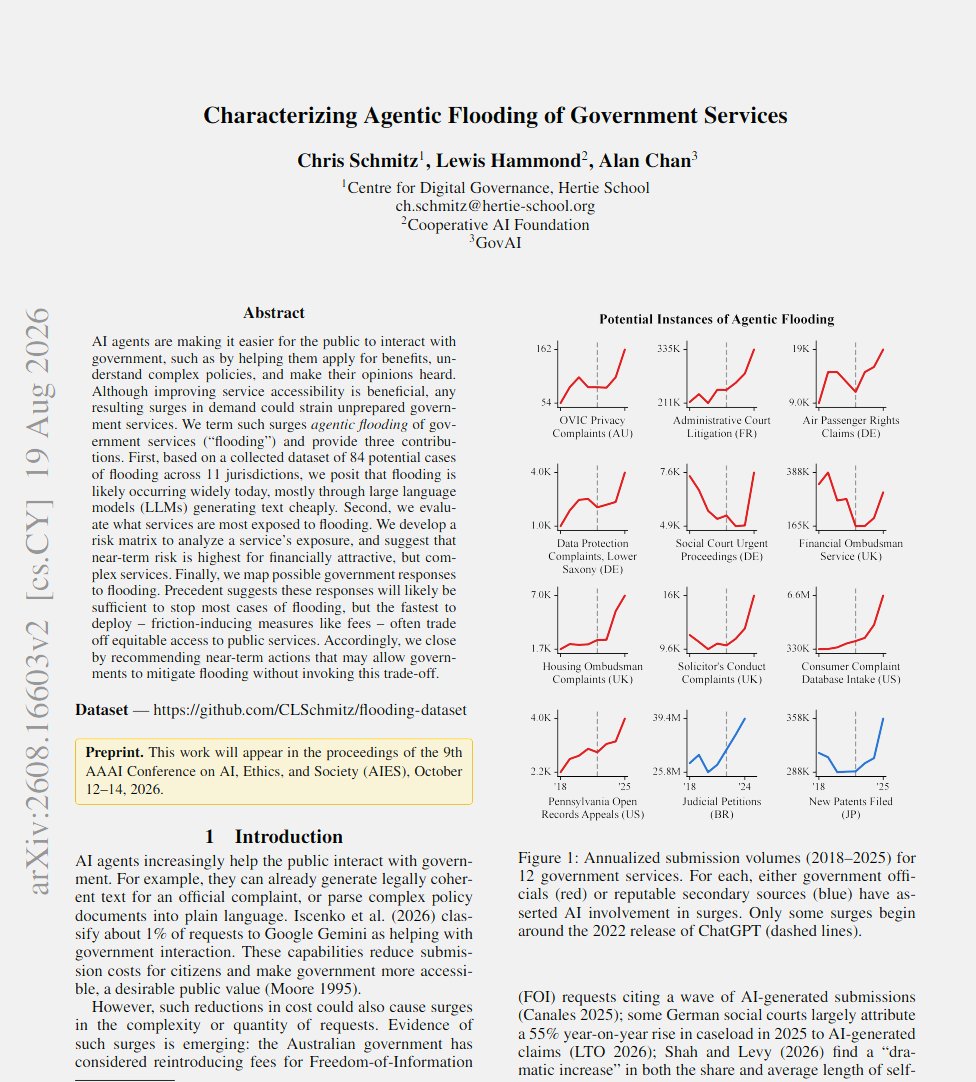
A consequential choice will be made soon by government and companies as they are increasingly flooded with agentic AI inquiries that overcome the frictions that gated access (see the graphs - it has already started!)
Two options: do you make services worse or better as a result?
On Linkedin an agent (I presume) commented with a video of this post. It's very good!
Though there's a certain irony to it being on a flooding post, given videos are now clearly so cheap to produce that making them is no longer proof of work.
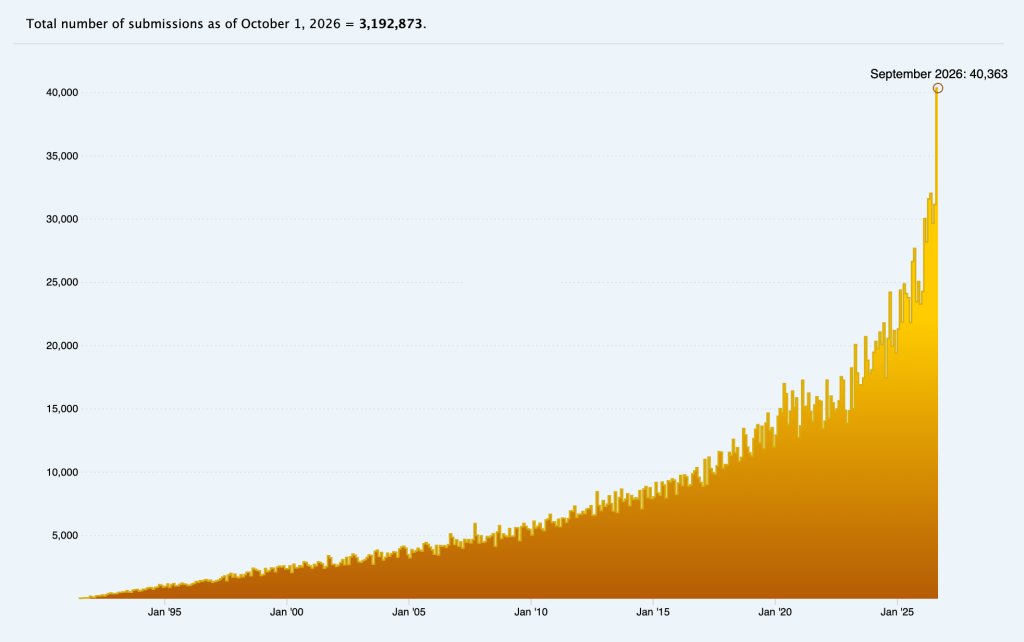
I talked to John Herrman of @NYMag for an (excellent) article about agentic flooding of ~everything, inspired by the Muse release.
In our flooding paper, we posit that "text-only" floods may not be the status quo for long as capabilities mature. It looks like that's happening.
I talked to John Herrman of @NYMag for an (excellent) article about agentic flooding of ~everything, inspired by the Muse release.
In our flooding paper, we posit that "text-only" floods may not be the status quo for long as capabilities mature. It looks like that's happening.
But governments may retreat, given little incentive to undertake expensive modernization in response. So we could be heading to a world where (a) you depend on Muse or some other proprietary bot to partake in these systems, and (b) your experience doesn't even improve!
For example, EU air passenger rights usually get enforced by bodies outside the court system. Those bodies could in principle monitor flight schedules and passenger manifests, and proactively sort delay compensation. I suspect there's many such models.
In a new piece for @PaxMachinaMag, @curl_justin suggests courts should introduce fully AI-led arbitration tracks to handle rising caseloads, instead of focusing on using AI to increase the productivity of human judges. I got to write the introductory blurb!
Though as I note in the blurb, passing cases to AI might not be the only way to keep human attention where it's needed most. I think there's a lot of potential in changing the format and incentives of lawsuits.