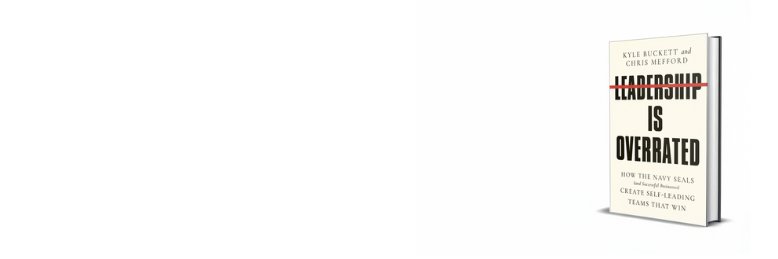
In our society, we often place a lot of emphasis on the importance of having a strong leader. But the truth is, a team of empowered individuals can achieve far more than any one person alone. #leadership#teamwork#selfleadership
Research shows self-managed teams are 20-30% more productive than traditional hierarchies. Yet 90% of companies still organize around command-and-control. We have the data. We're just ignoring it.
I wrote 'Leadership is Overrated' after watching brilliant people quit because they were tired of asking permission to do their jobs. Autonomy isn't a perk. It's a requirement for high performance. Period.
Here's what nobody tells you about leadership: The best leaders make themselves obsolete. If your team can't function without you, you haven't built a team—you've built a dependency. That's not leadership, that's ego.
Companies with flat structures grow 3x faster than hierarchical peers. They also have 40% lower turnover. The evidence is overwhelming. Traditional leadership is a competitive disadvantage.
If we eliminated middle management tomorrow, what would actually break? Be specific. Because I've studied companies that did exactly this, and the answer might surprise you: almost nothing.
I wrote 'Leadership is Overrated' after watching brilliant people quit because they were tired of asking permission to do their jobs. Autonomy isn't a perk. It's a requirement for high performance. Period.
From the book: 'The best predictor of team performance isn't the leader's skill—it's the team's autonomy.' This isn't theory. It's data from 1,000+ teams across 50 companies.
Traditional leadership creates exactly three things: bottlenecks, politics, and burnout. Self-organizing teams create innovation, ownership, and results. The data is overwhelming. So why do we keep defending hierarchy?
Gallup found that 70% of employee engagement is determined by the manager. Know what that really means? 70% of your engagement problem is a leadership problem. Maybe the solution is less leadership, not better leadership.
The dirty secret of corporate America: Most 'leadership' is just gatekeeping. Ideas die in approval chains. Innovation waits for permission. Talent leaves for autonomy. We don't need better leaders. We need fewer of them.
Your best employee just quit. Exit interview says 'lack of autonomy.' Your response: A) Hire a replacement B) Add more management 'support' C) Eliminate the approval process that drove them away. Be honest—what would your company actually do?
From 'Leadership is Overrated': 'Self-led teams aren't the absence of leadership—they're the distribution of it. Everyone leads. No one rules.' This is the future of work, whether traditional leaders like it or not.
If leadership is so important, why do the most innovative companies have the flattest structures? And why do the most hierarchical companies struggle with innovation? Connect the dots.
The leadership industrial complex wants you to believe you need more training, more coaches, more frameworks. Here's the truth: Your team already knows what to do. They just need you to get out of the way.
Your team needs approval to spend $1,000 but not to waste 40 hours in pointless meetings. Which costs more? Which requires oversight? We've got this backwards.
Serious question: If your leadership team disappeared for a month, would your company get better or worse? If the answer is 'better,' what does that tell you about your organizational design?
The Leadership Trap: Promote your best individual contributor into management. Now you've lost a great IC and gained a mediocre manager. Repeat until your entire leadership team is people who were good at something else.
The dirty secret of corporate America: Most 'leadership' is just gatekeeping. Ideas die in approval chains. Innovation waits for permission. Talent leaves for autonomy. We don't need better leaders. We need fewer of them.
Your team needs approval to spend $1,000 but not to waste 40 hours in pointless meetings. Which costs more? Which requires oversight? We've got this backwards.