I feel the efficiency argument needs some more nuance.
Large utility-scale gas turbines still dominate when the goal is maximum thermal efficiency. Modern 300-600+ MW combined-cycle plants can exceed 60% efficiency because they benefit from higher pressure ratios, higher turbine inlet temperatures, larger components with lower relative aerodynamic losses, and the ability to recover waste heat through steam turbines.
The 40-50 MW class is not replacing those machines on efficiency, its advantage is flexibility, manufacturability, and faster deployment where a giant turbine is impractical.
The real trade-off is not efficiency versus inefficiency, it is maximum efficiency versus optimal economics for a specific use case.
A smaller turbine may lose on fuel efficiency but win on installation speed, modularity, and deployment cost for a decentralised use case but fails significantly if you wish to power mega projects or cities.
This tweet is burying the lede. Seven power plants would increase climate pollution by 25%, or equivalent to doubling the cars and trucks on the road in PA. Abundant power = more pollution, unless we build clean.
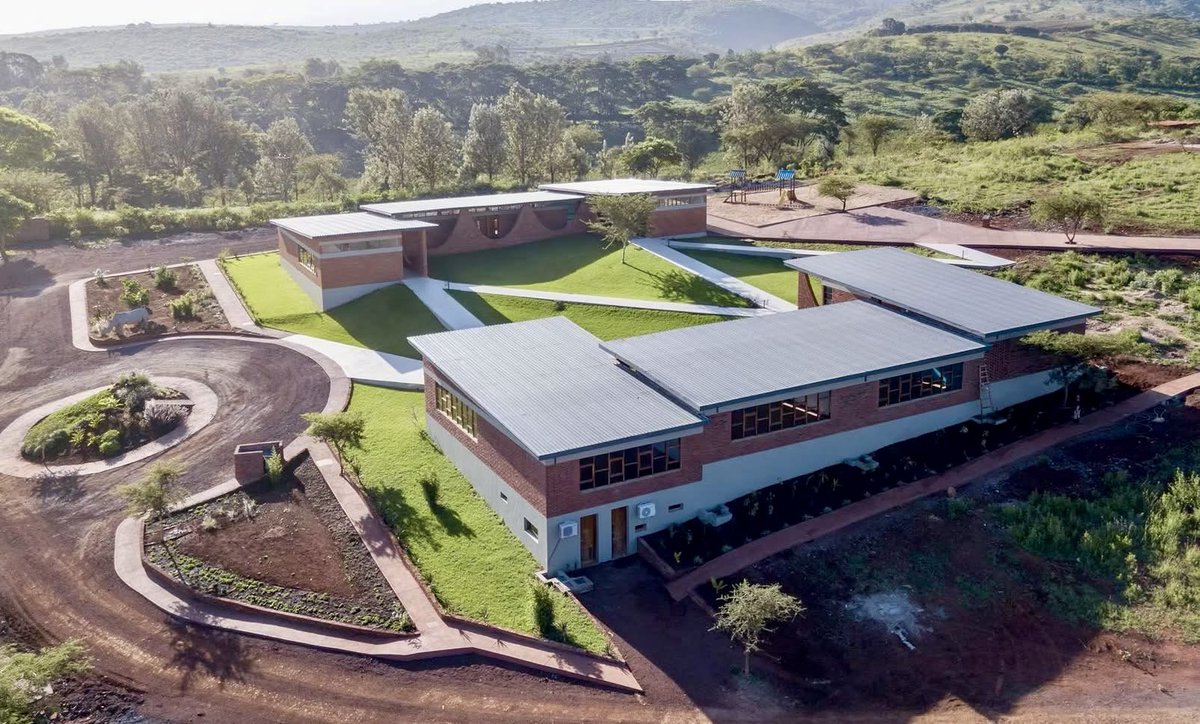
When we build for our environment it directly suits our needs. This school is a clear example of what a typical school on this continent should look like.
Black Rhino Academy in Karatu, Tanzania sits at the edge of the Ngorongoro Crater, designed by NLÉ, the architecture firm led by Kunlé Adeyemi. The entire campus is built from locally made earth bricks, formed into catenary arches by hanging a chain under its own weight, reversing the curve, and using it as the natural line of compression. No complex engineering software. Physics and brick. The arches expand and contract across the uneven landscape, adapting to every slope, connecting classrooms and retaining walls into one continuous flowing structure. The masterplan is drawn directly from the Iraqw and Masai Boma settlement pattern, protective rings of clustered buildings organized around shared open space.
Grass. Plants. Brick. Open air corridors. The temperatures inside these classrooms will always be balanced because the building was designed for this climate, not borrowed from a catalogue meant for a different one. The ventilation is natural, which means fewer fans pushing recycled air into lungs and fewer children with chronic catarrh and coughs that disrupt their ability to focus and learn. The research on thermal comfort and learning performance is clear: children learn better when they are not overheated and uncomfortable.
Now compare this to the white cement boxes with tiny windows we paint and pretend are schools. The white boxes should be banned from this continent. This is the standard. Brick, catenary arch, open courtyard, grass underfoot and the landscape as part of the curriculum.
Karatu, Tanzania | NLÉ, Kunlé Adeyemi | Completed 2018
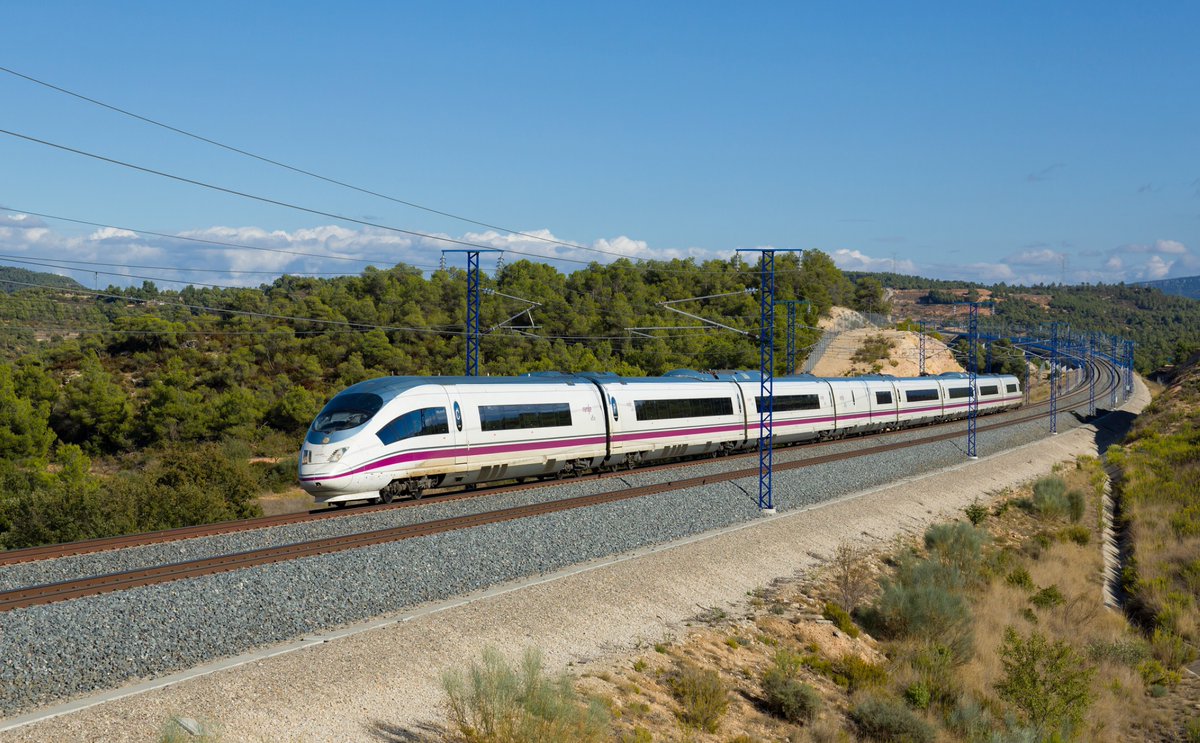
Spain built a high speed line from Madrid to Seville for £1.89 billion in 1992.
Politicians at the time called it a failure.
HS2 (so far) has cost £44.2 billion. It will cost more than £100 billion.
And we are tunnelling through ... fields.
What are we doing so, so wrong?
Gas still setting wholesale electricity price the majority of the time but it’s starting to crack.
An addition 5GW of clean energy may bring this down to 66% of the time which is significant progress.
That should be achieved in the near term.
“At the moment, most municipalities do not have special rules for data centres, with most of them simply falling under general industrial zoning bylaws.”
Provincial guidelines are also too vague. For Waterloo, which is 80% dependent on ground water - may require new “rules”.
Virginia Lawmakers Approve First-of-Its-Kind Data Center Power Tax: Governor Spanberger signed Virginia's biennial budget on June 30, establishing a $0.011/kWh consumption tax on all data center electricity (incl. behind-the-meter generation) effective July 1, 2026. Estimated to raise ~$600M annually over a two-year sunset period (expires July 2028). Collections exceeding $600M in any fiscal year are refunded pro rata to operators.
As our nation turns 250 this Independence Day, #Voices4Transit is celebrating the freedom to connect with the people and places that matter most!
#Publictransit helps keep our communities moving, making all summer celebrations more enjoyable for everyone.🎆
Show us how you're celebrating! Share your story here: https://t.co/b77Xw1n07e
👷> 'Hey, we would like to build a motorway from A to....'
👨> Stop talking! Take our money and start!
👨👩👧👦> 'We would like to have a safe bicycle path!'
👨> Are you sure? Well, please follow the steps in the procedure:
TOD towers do not solve the deeper problem that all we build now is high-density rental apartments for young adults, and low-density sprawl for families and homeowners.
Families also want transit, shops, schools, parks, and daily life within walking distance. They lack multifamily housing forms that support ownership, children, privacy, storage, outdoor space, and long-term commitment to place.
Did you know planning studies help shape future transportation investments?
Join CDOT for the first public meeting on the Access Edgebrook PEL Study.
📅 July 8, 2026
🕠 5:30–7:30 p.m.
📍 Edgebrook Elementary School
Learn more: https://t.co/yCcYEO9Twh
This is mostly a denominator issue. McKinsey’s data-center case is a colo facility case excluding chips, not a full AI factory TCO case. In that narrower denominator, energy can explain most of the geographic levelized-cost gap because electricity prices vary a lot by region while much of the facility stack is more similar.
But once you include GPUs, servers, networking, and depreciation, energy is a much smaller share of total AI compute economics. So the statement is directionally fair for colo location competitiveness, but wrong if generalized to hyperscaler AI capex or cost per token.
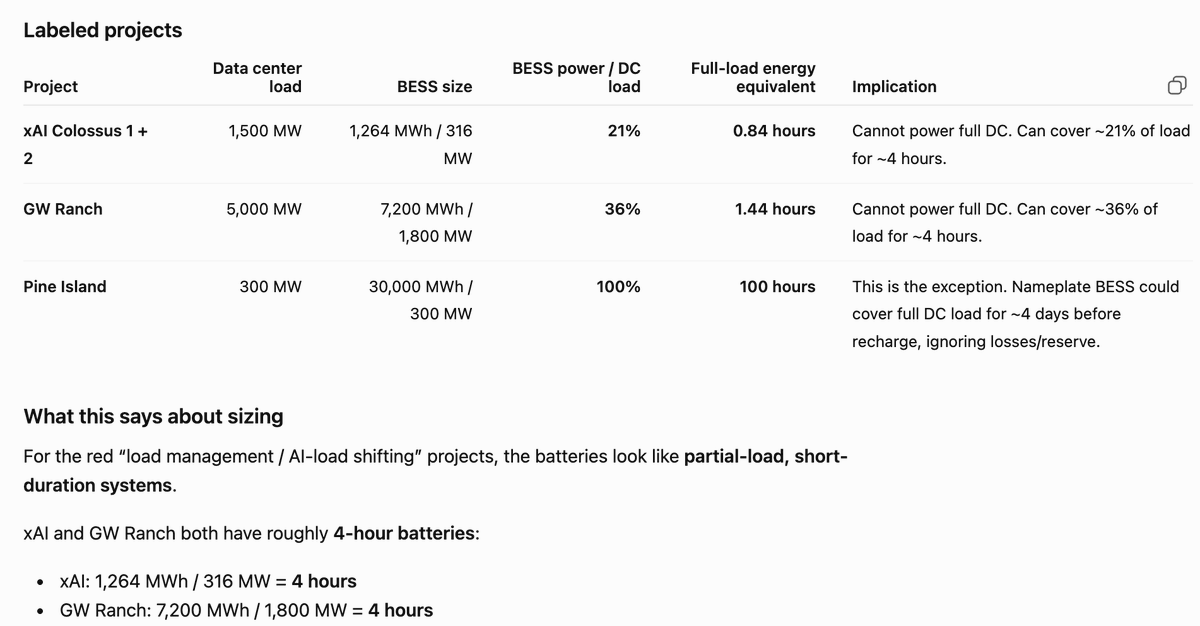
Takeaway: Most BESS projects in this sample are not sized to power the full data center for meaningful duration. They are usually sized to manage a slice of the load for a few hours.
That makes them better understood as grid-interactive infrastructure around the data center: peak shaving, load shifting, backup for selected loads, interconnection support, or partial renewable firming, rather than full replacement power.
The clear exception is Pine Island: 300 MW data-center load / 300 MW BESS / 30,000 MWh, which screens as genuine long-duration full-load backup or renewable firming at roughly 100 hours of stored energy. By contrast, xAI and GW Ranch are closer to 4-hour partial-load batteries: xAI covers ~21% of the data-center load for ~4 hours; GW Ranch covers ~36% for ~4 hours.
Last night the City showed new plans for the final part of the Downtown Crossing project which fills in part of the old Oak Street Connector urban renewal highway. 2 Church St. will feature plazas and a pedestrian promenade as well as a swooping bridge they're calling Arc Bridge
Parking operators used CEQA to fight a bike lane. And won. CEQA challenges are slow, expensive, and effective even when the plaintiff has no environmental interest at stake. That's the problem.
This really isn't that bad?
The buildings could be prettier but ultimately they don't make much noise, don't emit smoke, and aren't at all dangerous. Once those trees grow you won't even notice them.
Data centers are the easiest compromise we've ever faced between residential and industrial land use.