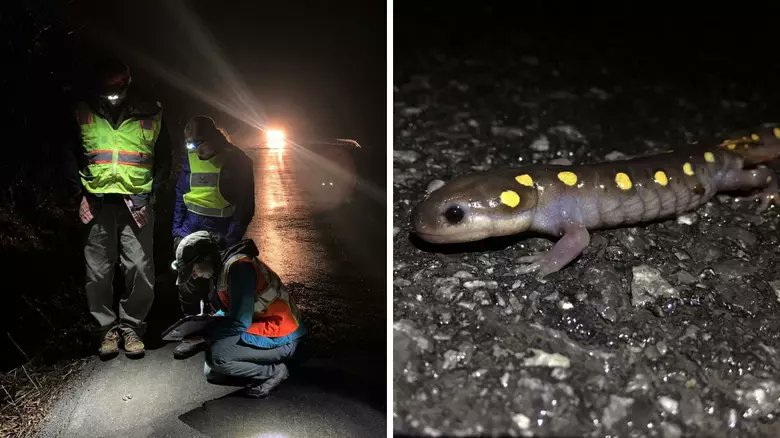
On the first warm, rainy nights of spring, people in New York's Hudson Valley stand beside roads carrying salamanders across one at a time.
The animals are trying to reach the same breeding pools their ancestors used before the roads existed.
Spotted salamanders, wood frogs, and other forest amphibians spend most of the year hidden beneath leaves, logs, and soil.
Then conditions line up. The ground thaws. Night temperatures rise. Rain begins.
Thousands may leave the forest and move toward temporary woodland pools where they breed. A road crossing the route turns that ancient migration into a few minutes of extraordinary danger.
Since 2009, volunteers with New York's Amphibian Migrations and Road Crossings Project have documented crossings, counted animals, helped them move safely when conditions allow, and recorded where roads are cutting through important habitat.
They also create the data communities need to identify important crossing sites and plan culverts, road closures, or other lasting solutions.
@berniemoreno It's been exactly two months since this story broke, you absolute effing coward. I hope your daughter and granddaughter never speak to you again. Your grandstanding in hearings makes this even worse. You're the best disgusting example of how broken our political system is.
@Brett_A_Taylor That's the kind of move you make for a rental of you can taste the Series, not trying to get to the NLCS. If we were sitting where the Brewers are, yes. There are enough quality starters under club control.
@MatthewCappucci That's fascinating to think about, if I understand you. Moisture in soil's impact on storms? May be late to the party. Dad's a retired career NOAA man (as a kid, watching W TX weather balloons launch and seeing the bulbous 80s CRT screens' radars was cool), but that's new.