Legally blind professor @PaceUniversity. Previously T32 @VA_PTSD_Info + Clinical Psych PhD @HofstraU | #Gamer | Player for the @LI_Bombers_BB | Views = My own
Dr. Matthew Warburton and I put together a guide on how to conduct behavioural experiments online—something we wish we had when we were getting started.
Hopefully it’s useful, and we’d very much welcome any feedback. @NatureHumBehav
Doctoral programs in clinical psychology are too expensive. Students are dividing their attention between their academics (including clinical training) and having an unrelated part-time job to survive. This will only exacerbate the mental health treatment access gap.
People often talk about how mental health professionals create dependence to keep clients as a revenue stream.
The real money in the mental health system is in these degree programs and trainings. These poor people are told they’re saving humanity and they’re part of a special club. And they take out these massive loans to pursue this path.
Last chance to apply for our virtual summer workshop on R Programming for Psychology and Neuroscience. Funded by NSF, this FREE workshop provides direct training in using R to analyze data. Open to students from any university. Apps due May 15!
https://t.co/Ghjnv6Buk6
“Broken record” is a great skill. But it’s used for a specific context, where you are trying to have a conversation with someone, and they are attacking, side-stepping, interrupting, or otherwise not responding clearly to your requests or your communication. Like when you’re asking your teenager to take the trash out and they are telling you what a horrible parent you are.
It’s meant to help you stay focused on the results you want, the relationship you’re trying to maintain, and the purpose of the conversation, instead of getting swept up in unnecessary side arguments.
But if you take a skill out of context, you get this 👇
This is a gross and negligent interpretation of the function of the DEAR MAN skill and DBT in general, especially from a licensed mental health professional who should know better.
When we teach Borderline girls "DEAR MAN" skills (DBT) like the "broken record" technique- are we teaching empathy, or are we reinforcing sociopathic traits?
I don't mind folks having criticisms of treatment approaches: that's free speech. But I do take issue with presenting inaccurate statements as fact. At the most surface level, all cognitions are treated as important in CBT approaches. That's why the treatment has it in its name.
Here I'm going to explain the problem with treatment approaches that in some form endorse the idea that thoughts are meaningless or should be ignored (CBT, ACT, ERP).
Let's say a patient has a thought of stabbing their newborn baby. It terrifies or disgusts them. They fear that this thought means they're going to actually harm their child, or they're going crazy and need to be locked up, or just that they're in fact a very bad person.
We call it an "intrusive" thought because that's how it's experienced. Something "not me" is attacking "me". But where else could this thought be coming from except from "me"?
But the patient doesn't really want to hurt their baby, so this thought is nonsensical and therefore meaningless, right? Or at least just ignore it, right? This is what CBT, ACT, and ERP tell us.
And at first glance, this seems like a good way to think about it. In fact, some people are able to take a degree of comfort from the idea their thoughts are meaningless and they sometimes find their symptoms do lessen a bit: "Oh good, I'm actually not a bad or dangerous person."
So what's so bad about this? If it helps, it helps, right?
The problem is that the patient does continue to suffer in some form. Maybe the symptoms persist at a mild or moderate level. Maybe they come back later. Maybe they have intrusive thoughts about other things. Maybe they become depressed. Etc etc etc.
Why do they continue to suffer? Because the thoughts actually do have meaning. Just because a thought isn't literally true, doesn't mean it's not symbolically true. Or carrying meaning in some form.
Intrusive thoughts are parts of ourselves that we can't integrate into our conscious understanding of ourself, but it's still us and it comes back to haunt us in symbolic form and will continue to do so until we integrate it.
So what could thoughts of harming a newborn baby mean? Here's a patient who maybe can't tolerate their own aggressive feelings towards people they also love. So no matter how much we present evidence that they'll not physically harm their child, this completely misses the mark of the true source of their suffering.
We can't just treat the fever and ignore the underlying infection.
People with ADHD do not automatically high rejection sensitivity or RSD. Executive functioning and rejection sensitivity are independent constructs. Stop making things up.
People with ADHD have what’s called Rejection Sensitive Dysphoria (RSD). It’s an extreme emotional response to perceived criticism or rejection.
Your brain can’t regulate the emotional pain, so a small comment feels like a devastating attack. A minor correction feels like total failure. Someone’s tone feels like hatred.
It’s not oversensitivity. It’s not being dramatic. Your brain literally can’t modulate the intensity of that emotional response.
It’s neurological, not a character flaw
Opportunities for students and early career researchers are dwindling as the U.S. political landscape shifts. How can researchers navigate these challenges? #Academia#ScientificResearch@BriaGresham@armerner_psych
https://t.co/i2mjsZwJa8
Many fitness spaces exclude people with physical disabilities
From inaccessible gyms to limited adaptive programming, staying healthy while disabled isn't easy.
That’s why I proudly support @sitgrit.
SitGrit is a free, fully seated, live fitness program designed specifically for people with physical disabilities. It meets weekly on Zoom, bringing expert-led movement and real community directly into people’s homes.
They are raising $5,000 to fund one weekly SitGrit class for the next 52 weeks.
Help me help them. Sponsor a week for $100. Together, we can fuel an entire year of classes!
Link below.
#TeamSitGrit #InclusiveFitness #DisabilityInclusion #SocialHealth #SocialCreatures
A bit of a long shot, but does anyone reading this have a link or a copy of an applic match phase 2 survival guide? All I remember was that it was written by one or two students from a Colorado University about how to get through phase 2. Any info would be greatly appreciated!
Keeping a dream journal is associated with better recollection of dream content (we always have dreams since REM sleep is part of the regular cycle). Doing this is part of most nightmare treatments, but it depends on the type of nightmare (repetitive/trauma vs stress/random).
While I’m preparing my talk for this year’s GDC, I’ve been looking up dates of events from the past. While going through my smartphone notes, I came across a nightmarish memo I wrote at the beginning of 2017. I’ve always had a lot of bad dreams. Someone once suggested, “Why not keep a kind of dream diary? Maybe you’ll stop having nightmares.” So I started jotting down quick notes on my phone as soon as I woke up each morning. But the nightmares didn’t stop, and I eventually gave up. Let me share just a small part of those notes from that time.
APS has compiled a list of 2025 guides, tutorials, and manuals designed to support psychological scientists as they expand their toolboxes of research practices and methods. #PsychScience#research https://t.co/IiuSgtwQ3s
We are deeply saddened to share that Dr. Paul Ekman has passed away. His groundbreaking research transformed our understanding of emotion, facial expression, deception and compassion. We are creating a memorial page if you would like to share a reflection: https://t.co/39ctcg8E9w
🚨 GIVEAWAY ALERT 🚨
We're giving away one Voyager III Core gaming PC with YOUR CHOICE of case print!
🎁 To Enter 🎁
• Follow @StarforgePCs 👤
• Like this post! ♥️
• RT this post! 🔄
• Reply with the first game you'd install on your new PC! 🎮
🤞 Good luck! 🤞
Dr. Bethany Teachman and I are seeking a research coordinator to assist with a study focused on designing and testing a new intervention to help youth engage with social media in healthier ways. Please share & apply!
https://t.co/xlGo43GF8l
It's so wild to me that people put so much trust in ai to "be a therapist" when it can't even reliably give me an example paper on a specific topic that isn't fabricated.
I’ve been shocked how often when I tell people I research AI advice, they’re like “Oh yeah Chat’s my therapist!”
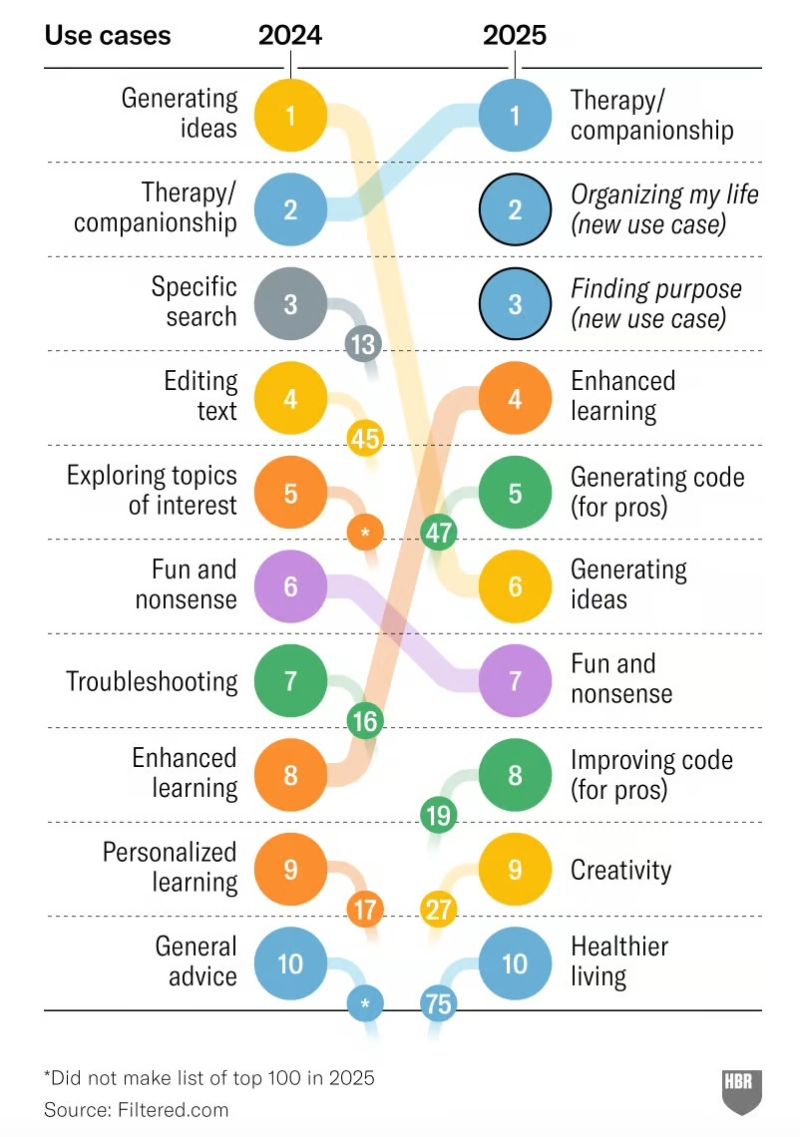
Turns out Harvard Business Review found the #1 use of generative AI this year is therapy & companionship.
@ErikaFens I only used AATBS. Studied from March to June and took it in June. During the week after postdoc, I would read chapters/take content quizzes. Used weekends to take and review full length exams. This seemed to work for me, but others have gotten by with less. Good luck!
Big Impact in Just 30 Minutes ⏳✨
PE therapy is thriving in primary care.
40% remission in 4–8 sessions—each just 30 mins.
Now with PC-TIME, tackling PTSD and alcohol use together.
Fast. Focused. Life-changing.
#PTSDRecovery#PC_TIME#EfficientTherapy#PrimaryCareMentalHealth